SELF-CARE CORNER
Many people have experienced the pain that even a minor burn can cause. The home can have many burn hazards, such as touching a hot stove, getting splashed with hot water, or even biting into food with hot spots. Children, especially, can be prone to burns when they accidentally touch something hot. Adults need to be careful too: burns are painful – and possibly dangerous – at any age.
What to do after a burn
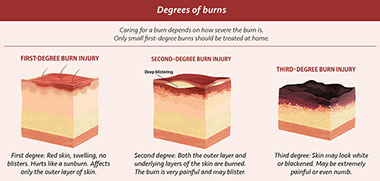
If you do get a minor (first-degree) burn, know how to care for it at home so it heals as quickly as possible. If the skin isn’t broken, you should:
* Run cool water over the burn or soak it in cool water. Do not use ice: it’s too harsh. Keep the area under water for at least 5 minutes. You may also use a clean towel or cloth soaked in cold water.
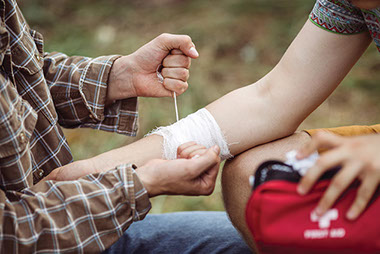
* After soaking or rinsing the burn, cover it with a clean, dry bandage or gauze pad.
* Pain relievers like ibuprofen (e.g., Advil®) or acetaminophen (e.g., Tylenol®) can help if advised by a doctor.
What not to do
Treat burns with care. Do NOT:
* Use oil, ointment, butter or other greasy substances on the burn.
* Breathe or blow on the burn.
* Touch or pop blistered or dead skin.
When it’s an emergency
Always call 911 or seek emergency medical care if:
* You’re not sure how bad the burn is.
* A child gets burned.
* Burn is caused by chemicals or electricity.
* You think it might be a second or third-degree burn.
* It covers a large area of skin, bigger than 2 to 3 inches wide.
* The burn is on a hand, foot, face or genitals.
Sources: American Academy of Family Physicians, American Academy of Pediatrics

© American Institute for Preventive Medicine