Category: Healthylife® QuitWell™

  • Cleaning Up Mind Pollution

    Healthylife® QuitWell™

    Part 4

    Image of women relaxing while thinking.

    Start with changing how you react to minor annoyances, like traffic or a chatty co-worker. Work to reduce the number of things that push your buttons. It is not the event itself that determines your feelings-it is what you tell yourself about it. You may have some truly big, serious stressors in your life. Avoid piling the little things on top.

    “Men are not disturbed by things, but by the views they take of them.”  – Epictetus

    Let’s pretend you got stuck in a traffic jam on the way to work today. You feel angry and upset. But it is not the traffic jam that makes you upset. It is what you tell yourself that upsets you: “I’m going to be late for work.” “I have so much to do.” “This is such a waste of time.”

    You cannot change the fact that you are stuck in traffic. Getting angry serves no purpose. If you can look at the delay as a minor problem that you can’t control, rather than a major event, you will feel much better. When your mind stays calm, you may even see ways around the issue, like taking another route or using hands-free calling to join a meeting you’re running late for.

    Your outlook on quitting is also very important. If you tell yourself that quitting will be awful, chances are the process will be as bad as you think. If you accept the fact that you will have urges, but nothing you can’t handle, you will have an easier time quitting. Focus on what is gained from quitting, not on what is being lost or the minor discomfort along the way.

    Thinking Differently

    You can change how you think, feel, and react to any event. The ABCDE model can help you do this.

    Activating Event:An event that triggers thoughts and feelings. Example – “I am trying to quit smoking and this event is making me anxious.”

    Belief:What you think or say to yourself about the activating event. Examples – “I just can’t quit.” “I don’t have any willpower.”

    Consequence:How you feel in response to your beliefs. Examples – “I feel discouraged.” “I feel embarrassed and defeated.”

    Dispute:Question your earlier beliefs. Examples – “Wait a minute here, I can do hard things!” “I don’t need to rely on willpower to quit. I can apply skills I’m learning in QuitWell™.”

    Effect:How you feel after you dispute your earlier beliefs. Examples – “I can succeed.” “I feel my actions are within my control.” “I can handle this.”
    © American Institute for Preventive Medicine

  • Day 9

    Healthylife® QuitWell™

    Part 6

    A colorful parrot.

    Banish the Bully in Your Head

    Imagine you have a parrot. This parrot repeats everything you say about yourself, over and over again. It comments on your life, especially the things that go wrong.

    For example, you snap at a co-worker and say something you later regret. The parrot squawks, “You can’t handle a tough day without a cigarette. You’re just not a nice person without your fix. You can’t change. You’re going to be this way forever.”

    How do you feel? How long would you put up with this parrot? Don’t put up with a bully in your head. Notice this “parrot” and cover the cage to silence it. Dispute these unhelpful thoughts. Remind yourself of your strengths and what you are working to improve.

    Today’s Affirmation:

    I control how I think about myself.

    I choose kindness and believe in myself.

    © American Institute for Preventive Medicine
  • Look Ahead

    Healthylife® QuitWell™

    Part 1

    Image of women thinking.

    It can be easy to stay in the day-to-day of our lives. Looking ahead can help you see further down the road at where you are headed. Think about how you picture the next year of your life and answer the questions below:

    *  Who are the important people in your life?

    *  Where do you live?

    *  What are you working on?

    *  What is the most important thing in your life?

    *  At the end of one year, will you be using tobacco/nicotine?

    Now, jump ahead 10 years. Ask yourself the same questions. Imagine how you want your life to be. Be realistic and think about where the things you are working on now may take you.

    *  Who are the important people in your life?

    *  Where do you live?

    *  What are you working on?

    *  What is the most important thing in your life?

    *  In 10 years, how will you think of tobacco/nicotine?

    © American Institute for Preventive Medicine

  • Nutrition 2

    Healthylife® QuitWell™

    Part 5

    Variety of vegetables.

    Here are more ways you can choose healthy foods to manage cravings and any weight gain.

    Healthy Eating Behavior

    How you eat is as important as what you eat. Weight control involves developing and maintaining healthy eating behaviors. Diets are hard to stay on for a long time because they are usually boring or too rigid. If you make a lasting change in your eating behavior, you will be able to maintain a healthy weight without depending on diets.

    *  Try to always eat in the same spot in your home. Eat at a table, if possible, and avoid eating on the couch or in bed.

    *  When you eat, only eat. Avoid TV or looking at your phone.

    *  Slow down your eating pace. While tobacco/nicotine raised your blood sugar in seconds, food takes a bit longer.

    – Chew and swallow each bite before the next.

    – Pause frequently to take a drink of water or engage in conversation.

    – Put your fork or food down between bites.

    *  Start your meal with a small salad or hot soup.

    *  Before having a second serving, wait 5-10 minutes to see if you begin to feel full or satisfied with your meal.

    *  Keep less healthy foods hidden in cupboards or in the back of the fridge.

    *  Use smaller plates and utensils-this will help you feel satisfied with a healthy portion and may help you eat more slowly.

    Avoid turning to food to manage difficult emotions. Address what is bothering you, go for a walk, or call a friend. Emotional eating can lead to choices higher in sugar, salt, and saturated fat.

    Choose Healthy Snacks

    Your body may be giving you hunger cues more frequently when you quit. Your body’s natural way of managing blood sugar and metabolism takes time to go back to normal. Choosing healthy snacks can help you manage your weight and energy level.

    *  Celery stalks

    *  Bell peppers, cut into slices

    *  Cantaloupe, cut into cubes

    *  Raw carrot sticks or baby carrots

    *  Cucumber slices

    *  Tomato wedges or cherry tomatoes

    *  Broccoli or cauliflower florets

    *  Green beans

    *  Frozen veggies, microwaved

    *  Apples

    *  Peaches

    *  Oranges or grapefruit

    *  Strawberries or other berries

    *  Bananas

    *  Dried fruit

    *  100% fruit juice

    Other Healthy Snacks & Combinations:

    *  Cut-up veggies with hummus, salsa, or nut butter

    *  Pita bread with hummus

    *  Granola bar (with less than 5g sugar)

    *  Raw nuts (low-salt or no-salt)

    *  Natural peanut butter on low-salt crackers, apple slices or celery sticks

    *  Mini whole-wheat bagel with natural peanut butter or cream cheese

    *  Hard boiled eggs

    *  Trail mix with nuts, dried fruit, and seeds

    *  Yogurt with berries and nuts (with less than 10g sugar)

    *  Whole-grain crackers with cheese

    *  Oatmeal with dried fruit and nuts

    *  Scrambled eggs with veggies

    *  Nut butter on a slice of whole-grain toast

    *  Whole-grain cereal with milk

    *  String cheese and low-sodium crackers

    *  Smoothie with fruit, protein powder, and milk. Try adding avocado or leafy greens.

    © American Institute for Preventive Medicine
  • I’M Ready To Plan To Quit

    Healthylife® QuitWell™

    Part 1

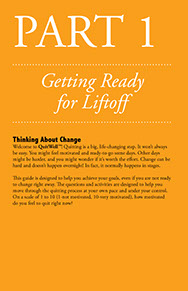
    Image of quit now tag cigarettes in ashtray.

    Planning can help you feel more ready for this big change and help you navigate life changes.

    What has helped you move from ‘maybe’ to ‘being ready’ to make a plan? Has anything changed in your life? In your mind?

    Part of your plan should be to work through each section of this book. While it may feel like thinking about your motivation and support team is not the exciting “action” you are looking for, these steps will help the action phase work much better for you.

    Our goal is to help you feel confident and prepared. It can be easy to get discouraged if you stumble early on. Making a plan and thinking through the problems that may come up can help you avoid stumbling or help you get up more quickly if you do.

    On a scale of 1 to 10, how confident are you that you will be successful with quitting?

    What do you think is going to help you be successful?

    This program is full of tools that will help you get there! Keep an eye out for small wins you can achieve from the beginning. These will help keep you motivated.

    © American Institute for Preventive Medicine

  • I’M Thinking About Quitting, But I’M Not Sure

    Healthylife® QuitWell™

    Part 1

    Image of man with his eyes closed.

    Reasons for not changing are probably still on your mind. However, a few reasons to quit may be feeling stronger. Maybe you’re a little worried about health problems or have a new child or grandchild on the way.

    What has changed for you since you started smoking, dipping, or vaping?

    Some of the reasons people quit go hand-in-hand with the reasons they started:

    *  Friends/family have quit or you have more friends/family that now disapprove of the habit.

    *  A cigarette, dip, or vape just doesn’t give you the same “high” anymore.

    *  The ritual interrupts day to day life, special occasions, movies, etc. more than it once did.

    *  What used to be a cheaper product has gotten more expensive.

    *  While tobacco/nicotine feels like an escape from problems, the stressors and issues that needed solving are still there.

    It’s true: tobacco ends up taking control of your health, your finances, and your life! What started out as fun or relaxing becomes expensive, demanding, and harmful over time.

    Parts 1 and 2 of this program will help you explore your choice to quit. Spend some time with each section, answering the questions as best you can.

    © American Institute for Preventive Medicine
  • Creative Imagination

    Healthylife® QuitWell™

    Part 5

    Image of smiling women.

    Creative imagination is the acting out of an event or activity in your mind before it really happens. It allows you to work through the event or activity ahead of time so that you will be better prepared to deal with it. Many athletes practice an upcoming game in their heads before stepping onto the playing field.

    A study was done to compare “creative imagination” to actual practice with a group of basketball players. Three groups of students were used.

    *Group 1– Practiced making free throws every day for 20 days.

    *Group 2– Threw the ball on the 1st and 20th days, but did not practice in between.

    *Group 3– Threw free throws on the first day and then spent 20 minutes a day for the next 20 days imagining that they were throwing the ball. If they missed, they had to imagine changing their aim.

    On the 20th day:

    *  Group 1 – Improved their scores by 24%

    *  Group 2 – No improvement

    *  Group 3 – Improved their scores by 23% by using creative imagination

    Mental practice can help you change your feelings about day-to-day events. Picture yourself succeeding with your goals and getting through trigger situations. The power of your mind to change what you imagine to be real is vast; all it takes is a little thinking and practice.

    What would you like to imagine doing differently? Picture yourself doing things the way you want. Repeat this practice every day for at least 2 weeks.

    © American Institute for Preventive Medicine
  • Deep Natural Breathing

    Healthylife® QuitWell™

    Part 4

    Man with eyes closed taking deep breaths.

    This skill is very much like Smokeless Inhalation, but it takes 3 to 5 minutes. It involves both your abdomen and your chest. You will focus on the sound and feel of your breathing.

    1. Sit in a chair. Put your arms at your sides and uncross your legs and feet. Or, lay down on a bed or couch.

    2. Note any tension in your muscles.

    3. Put one hand on your chest and the other hand on your abdomen.

    4. Take a slow, deep breath through your nose. The hand on your abdomen should rise first. When your abdomen is full of air, the hand on your chest should rise.

    5. Hold the air for 3 seconds.

    6. Purse your lips and blow out through your mouth, making a whooshing sound.

    7. Keep taking long, slow deep breaths in through your nose and letting long slow breaths out through your mouth.

    8. Focus on the sound and feel of your breathing. Do this for 3 to 5 minutes. After a while, you can lower your hands.

    When I will try this?

    (After) How did your body feel after this activity?

    (After) How did your stress level change after this activity?

    © American Institute for Preventive Medicine

  • Make A “Butt Bottle”

    Healthylife® QuitWell™

    Part 3

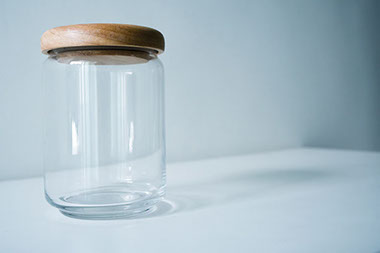
    An empty clear glass jar.

    Save your cigarette butts or spit from smokeless tobacco in a bottle or glass jar. You will learn what to do with these in the next part of this program.

    © American Institute for Preventive Medicine

  • Other Aids For Quitting

    Healthylife® QuitWell™

    Part 3

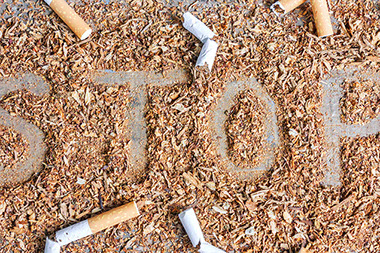
    Image of the word Stop spelled out in tobacco.

    Pharmaceutical:

    *  Buproprion (brand names Zyban and Wellbutrin) is a prescription, non-nicotine pill. This medication is used to treat depression and help with quitting smoking. To use, begin taking 1 to 2 weeks before your quit date. It must build up in your system before you quit. It can be taken for 7 to 12 weeks. It may cause dry mouth and insomnia.

    *  Varenicline (brand name Chantix) is another prescription, non-nicotine pill. It works by cutting the pleasure of smoking and reducing withdrawal symptoms. To use, begin taking one week before your quit date. It must build up in your system before you quit. It is taken once or twice daily for 12 weeks. If quit, it can be taken for another 12 weeks. It can cause nausea, headache, vomiting, gas, insomnia, abnormal dreams, and a feeling that food tastes different.

    Non-Pharmaceutical:

    *  Counseling or coaching can help you identify triggers and challenges, give you support and encouragement, and help you set personal goals. Coaching can double your chances of success.

    *  Text or smartphone apps offer goal setting, reminders, and encouragement. Some even send text messages to keep you motivated.

    *  Hypnosis helps you learn to relax and identify triggers. It also helps your subconscious mind look at your habit differently.

    *  Acupuncture uses special thin needles placed in specific spots to help you relax and fight cravings for nicotine.

    Hypnosis and acupuncture are not proven ways to quit tobacco/nicotine, but they have helped many people. Be a smart consumer when choosing one of these therapies. Continue to work on behavior change and stress management. You will still need these skills to prevent relapse.

    © American Institute for Preventive Medicine