Category: Healthylife® QuitWell™

  • Recovery Signals

    Healthylife® QuitWell™

    Part 4

    Image of a couple dining out.

    Quitting may cause certain changes in your body due to the withdrawal of the many toxins found in tobacco. Some of these changes you may enjoy-food tastes and smells better. Some changes may be a little unpleasant. Everyone will have a different reaction. However, most people will only have a few signals, and these usually last less than a week.

    Some of these signals, of course, may be related to a health issue or illness. If you are concerned about how long a recovery signal is lasting or it feels more serious, contact your physician right away. You may be feeling that way because of something other than quitting.

    Increased Hunger

    The taste buds in the mouth become more keen when you quit and food tastes better.  You may find yourself eating more, which could add up to weight gain. Be mindful to increase physical activity, avoid emotional eating, and avoid snacks high in sugar and saturated fat. Choose crunchy vegetables or a high-protein snack instead.

    Irritability and anxiety

    Studies offer two reasons for this signal:

    1. Smoking, chewing, and other tobacco behaviors serve as a mild calming agent for some. Take it away and the body is very tense until it adjusts.

    2. Your whole life has been disrupted by quitting. Try a relaxation tool, take a hot shower, or call a close friend.

    Coughing

    The hair-like fibers (cilia) that line the bronchial tubes are starting to work to get rid of the mucus that tobacco produced. As the mucus loosens, you cough.

    Sweating

    One way the toxins leave the body is through the skin’s pores. This may show up as sweat. If this affects you, it should only last 3 to 4 days.

    Frequent Urination

    This may happen because of the extra liquids you’re drinking.

    Constipation

    The toxins in tobacco cause the release of the hormone adrenaline. For some, this helps in moving the bowels, so not smoking can lead to constipation. Eat high fiber foods, fruits, vegetables, bran, and whole grains. Drink plenty of water as well.

    Loss of Sleep

    Quitting may cause you to be restless at night. Increase your daytime activity to make you feel more tired. Try drinking a warm glass of milk before bed.

    Sleepiness

    For many people, tobacco provides a “lift.” Take that away and you feel more sleepy. Try to get as much sleep as you need.

    Dizziness

    With carbon monoxide no longer in the blood and the bronchial tubes clearing up, more oxygen may be entering the body. The result could be dizziness. Sit down and rest until it passes.

    Mouth Sores or Bad Taste

    Sores or bad tastes in the mouth may be due to the body chemicals that used to counteract the effects of the toxins in tobacco. Use an oral pain reliever for sores or see a doctor or dentist. Use mouthwash or breath mints for a fresher taste.

    Lack of Focus

    Turning your life around by quitting may make it harder for you to focus. A short walk is helpful.

    Dreaming of Using Tobacco

    Many people find they dream about using as they are trying to quit.

    Sense of Loss

    Quitting an activity that has been a major part of your life can make you feel very sad. There may be a feeling of missing something. This sense of loss will pass with time.

    Headache

    Your blood vessels open up due to withdrawal from nicotine. This could produce headaches during the first few days of quitting. Deep natural breathing, getting fresh air, and making sure you are eating healthy foods regularly can help.

    Notice the unpleasant recovery symptoms-and make sure they are going away over time (otherwise, see a doctor). Try not to focus on the unpleasant recovery symptoms. You might overlook the good recovery signals that are taking place. Blame all the unpleasant changes on tobacco/nicotine. Focus on the good changes that have happened because you no longer use this addictive, body-damaging product. Keep in mind, no one ever died from quitting.

    *  If you have quit, which of these recovery signals have you noticed so far? Have they started to go away yet?

    *  If you are still thinking about quitting, imagine welcoming these changes as a sign that positive changes are happening in your body.

    *  If you are cutting back (but haven’t quit yet), do you have any of these recovery signals already? While there is no healthy level of tobacco use, your body may begin to heal as you get close to quitting completely.
    © American Institute for Preventive Medicine

  • Time Management 2

    Healthylife® QuitWell™

    Part 2

    Clock sitting on top of keyboard.

    Deciding to make a change and taking the steps to succeed will take some of your time. It’s an investment that will pay off down the road-it is worth it to take the time to plan and execute change.

    First, think of “time” management as “me” management. Time continues on, no matter how much we want it to slow down or speed up sometimes. The one thing you can work on is how you manage yourself given the time that you have.

    Look at how you currently spend your time. Get a piece of paper and write down how you spend each half hour of your day. A lot of this time may be sleeping or working, but there are probably blocks of time you have some flexibility (even if they are small).

    Think of quitting as a high-priority project that you would schedule into your day. Identify two 15-minute blocks of time that you could spend planning your day and what you are going to do when you have an urge. Try to make at least one of these blocks of time early in the day, as this will set the tone for the rest of your day.

    If you are having trouble finding a 15-minute block of time, look for the ‘low-hanging fruit’ in your day- time you spend doing things that are relatively mindless and don’t take a lot of thought. This could be when you are usually looking at your phone, watching TV, or walking the dog. Your dog will still need a walk, but this could be time you think through what you want the rest of your day to look like.

    Think about tomorrow-when can you spend 15 minutes reviewing the guide or thinking through your goals?

    © American Institute for Preventive Medicine
  • Cutting Back

    Healthylife® QuitWell™

    Part 4

    Women smiling with 2 thumbs up.

    While there is no healthy level of tobacco/nicotine use, it can be helpful to cut back before quitting completely. This allows you to:

    *  Reduce the amount of tobacco/nicotine your body must process every day, reducing the damage and toxic load on the body.

    *  Practice strategies without the pressure of quitting completely.

    *  Build confidence as you show yourself how strong and capable you are with making changes.

    *  Get used to going through different times of the day without a cigarette/dip/vape.

    *  Learn which strategies are going to work for different triggers.

    *  Gradually change habits and how you respond to triggers.

    Remember, every less cigarette, dip, or vape gives your body a break.

    Cutting back can be helpful for all stages of quitting.

    *  If you aren’t ready to quit completely, cutting back can still give you all the benefits listed above. You may find that the new tobacco/nicotine-free habits stick and you now are at a lower level of tobacco/nicotine. While it can be hard to stay at a low level for a long time, due to the addictive nature of nicotine, you are now more ready to quit in the future.

    *  If you are thinking about quitting but not fully ready, cutting back can get the ball rolling. As you see yourself succeed with small steps, you may be ready to take more small steps. Eventually, all those small steps take you to the finish line.

    *  If you are fully ready to quit, taking a week to cut back before your quit date can help you prepare for the triggers you may face. It gives you time to try the strategies in this guide and prepare your environment.

    © American Institute for Preventive Medicine

  • E-Cigarettes & Your Health

    Healthylife® QuitWell™

    Part 1

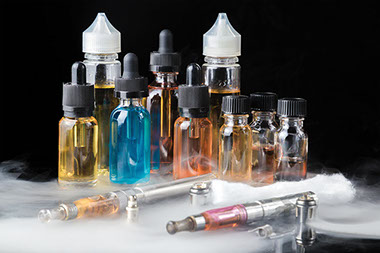
    Variety of vape equipment.

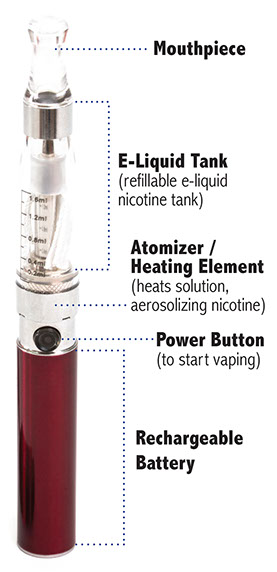
    Electronic cigarettes, or e-cigarettes, are battery-powered nicotine delivery systems. They have a cartridge that contains a liquid, an atomizer to heat the liquid, a power source, and a mouthpiece. The liquid contains a chemical mix of nicotine, propylene glycol, glycerin, and flavorings. The heat source and atomizer turn the liquid into a vapor, and the mouthpiece delivers the vapor to your lungs. That’s why it’s also called vaping.

    Chart showing the different parts of an e-cigarette.

    E-cigarettes go by lots of other names: vapes, vape pens, mods, hookah pens, e-hookahs, e-cigs, e-juice, e-liquid, smoke juice, juuls, and more. While some are made to look like regular cigarettes, others look more like pens or flash drives. Some larger devices look very different and bear little resemblance to cigarettes at all. There are hundreds of different e-cigarettes on the market.

    E-cigarettes don’t contain tobacco and don’t produce smoke. Those are the only good things you can say about e-cigs! Most still contain nicotine, and all have toxic chemicals. Like cigarettes, e-cigarettes are harmful to your lungs and addictive. Nobody has invented a healthy e-cigarette yet!

    The FDA regulates the production of e-cigarettes by licensed manufacturers, but there are many unlicensed cartridges being sold from pop-up shops or on the street. These black-market cartridges can contain additional dangerous additives like solvents or pesticides. These products should be avoided at all times.

    Can they hurt if they’re not “real” cigarettes?

    It may seem like e-cigarettes are a safer option because they don’t contain tobacco or because they are available with different amounts of nicotine. Even though they do not have tobacco, e-cigarettes still contain addictive nicotine and toxic chemicals just like “real” cigarettes. Heating these chemicals and inhaling the vapor brings dangerous substances into your body. Some of these can cause cancer. Some of these may cause serious lung injury.

    In the summer of 2019, the rapid rise of hospitalizations and deaths among e-cigarette users prompted emergency action by the Centers for Disease Control & Prevention (CDC) and many state governments. While many health issues from smoking cigarettes do not show up until many years of use, serious lung illness and death has occurred in relatively young, short-term users of e-cigarettes. Long-term problems are still unknown, as e-cigarettes are new and researchers do not know what will happen to the body after 20 or 30 years of usage.

    If you use e-cigarettes and have any of the following symptoms, ask your healthcare provider to check for lung injury. Vaping-associated pulmonary illness is very serious and can be deadly.

    *   Cough, shortness of breath, or chest pain

    *   Nausea, vomiting, or diarrhea

    *   Fatigue, fever, or abdominal pain

    “Fun-flavored” Danger: E-Cigarettes and Teens

    E-cigarettes have quickly become popular with teenagers, partly due to e-juice that comes in “fun” flavors like cinnamon roll and bubble gum. These flavors, the myth that vaping is harmless, and the lack of lasting odors, create the perfect storm for teens who want to experiment or “fit in” without the stigma of smoking cigarettes. What they don’t realize is the danger of addiction and health problems.

    Can E-Cigarettes Help You Quit Regular Cigarettes?

    Some people have used e-cigarettes to cut back on the amount of nicotine they smoke until they are ready to quit entirely. The FDA has not approved this method of quitting, as there is no evidence that it leads to long-term cessation. Some studies have shown that adults who used vaping to quit cigarettes were more likely to relapse.

    Nicotine is a highly addictive substance that can damage the cardiovascular system. The narrowing of coronary arteries and breakdown of heart tissue can increase the risk for hypertension, increase inflammation in the body, and complicate existing heart conditions. If you previously smoked cigarettes, the heart is already damaged and additional use of nicotine could worsen this damage. Continued nicotine use also complicates diabetes management and associated conditions, such as eye health, risk for stroke, weight management and circulation problems.

    If you are using an e-cigarette to quit smoking, it is important to reduce the amount of nicotine you are consuming and plan to quit using the device completely. Continuing to use an e-cigarette will increase your risk of returning to regular cigarettes, along with all the problems that come with the e-cigarette itself.

    Relying on the e-cigarette as a way to cope with stress, as entertainment when bored, or to mimic smoking while driving in the car, does not change much about your smoking habit. Without making changes to your routines or learning to cope with challenges, it may make it easy to have a cigarette when the e-cigarette is unavailable, needs a re-fill, or a cigarette is offered.

    If you are looking for a way to step down nicotine safely and feel a little better when quitting, the QuitWell™ program recommends FDA-approved options in addition to support:

    *Nicotine Replacement Therapy (NRT):FDA approved, can safely be used by most people, available in a patch, gum, lozenge, nasal spray, or inhaler

    *Pharmaceutical Aid (e.g. Chantix, Zyban):Requires a prescription from your doctor, does not contain nicotine

    © American Institute for Preventive Medicine
  • Make The Connection

    Healthylife® QuitWell™

    Part 2

    Parents giving kids piggy-back rides, laughing and having fun.

    Keeping your motivation and values in mind is a great way to encourage yourself when quitting gets tough. Look for ways to connect your motivation and values to your attitude and actions.

    How do your attitudes and actions show what is important to you? If you feel there is a mismatch, it might be time for a new point of view!

    Old view:Quitting is going to be horrible. I like to do what I want, when I want.

    New view:I value time with my family and want to be a good role model for my kids. It will be awesome to enjoy family time without the interruption of smoke breaks. I can model healthy behavior for my kids.

    © American Institute for Preventive Medicine
  • Getting Ready For Liftoff

    Healthylife® QuitWell™

    Part 1

    Two people climbing a mountain.

    Thinking About Change

    Welcome to QuitWell™! Quitting is a big, life-changing step. It won’t always be easy. You might feel motivated and ready-to-go some days. Other days might be harder, and you might wonder if it’s worth the effort. Change can be hard and doesn’t happen overnight! In fact, it normally happens in stages.

    This guide is designed to help you achieve your goals, even if you are not ready to change right away. The questions and activities are designed to help you move through the quitting process at your own pace and under your control. On a scale of 1 to 10 (1-not motivated, 10-very motivated), how motivated do you feel to quit right now?

    HealthyLife® QuitWell™

    QUICK LINKS: PART 1

    Stages of Change

    Moving Through Stages

    I’m Not Ready to Quit

    I’m Thinking About Quitting, But I’m Not Sure

    I’m Ready to Plan to Quit

    I Am Quitting!

    I Quit & Want to Stay Quit

    I’ve Relapsed

    Look Ahead

    What Motivates You?

    My ‘Why Quit’ List

    Why Does It Matter If I Quit?

    Smoking & Your Health

    How Smoking Hurts the Body

    Smokeless Tobacco & Your Health

    Warning Signs of Oral Cancer

    E-Cigarettes & Your Health

    Secondhand Smoke

    Money Talks

    The Big Picture

    © American Institute for Preventive Medicine
  • Reflect On Your Past Change Attempts

    Healthylife® QuitWell™

    Part 2

    Profile image of man, sitting thinking.

    This may be your first time thinking about quitting or trying to quit. If you are like many, though, this is not your first rodeo. Think about the times you thought about quitting in the past.

    If you have never tried to quit before, think about another major change you have made in the past. It doesn’t have to be health-related. The point is to identify strengths from your experience-and see what tripped you up.

    *  What motivated you then? How important was it for you to change?

    *  How did you try to make this change?

    *  What went well? What did not go well?

    *  What will you do the same this time?

    *  What will you do differently this time?

    With your experiences, you probably have ideas of what might work for you. Use the strategies in this guide to build on what you already know helps you succeed.

    © American Institute for Preventive Medicine

  • Smokers: Use Matches Instead Of A Lighter

    Healthylife® QuitWell™

    Part 3

    A box of matches.

    If you smoke, use matches instead of a lighter to light your cigarettes. When you reach for your lighter and it isn’t there, you will interrupt your usual routine. This can be a reminder to wait 5 minutes or to question how strong that urge really is. Using a match is also more difficult and may change the taste of your cigarette. This can interrupt and weaken the routine even more.

    © American Institute for Preventive Medicine

  • Day 1

    Healthylife® QuitWell™

    Part 6

    Reflection in mirror of three friends.

    Mirror Talk

    Stand in front of a mirror and be your own cheerleader. “I am tobacco free. I want to be a healthy dad/mom/grandma/grandpa/friend (say an important role you have). I am going to succeed!”

    What you say to yourself is powerful. These strong statements are called affirmations. You may not strongly believe it at first, but keep going.

    1. State your affirmation in the present tense.

    2. Say what you want, rather than what you don’t want.

    3. Include feeling words that add positive emotion.

    4. Be specific about what you want, rather than being vague.

    5. Make the words simple and easy to remember.

    Here Are a Few Affirmation Ideas

    I am special and unique.

    I take care of my body.

    I am thankful for my life.

    I am a good friend.

    I am courageous.

    I am strong.

    I choose to respect myself.

    I am proud to be me.

    I trust myself.

    I love to play and have fun.

    I love to learn.

    I am lovable.

    I am learning from this experience.

    I choose to be in control.

    Write today’s affirmation, using the tips and examples above. Write this statement on a sticky note and put it where you will see it, like the bathroom mirror or in your wallet. Create a reminder on your phone that will pop-up during the day. Say it out loud or repeat it to yourself.

    © American Institute for Preventive Medicine

  • Fill In The Void

    Healthylife® QuitWell™

    Part 4

    Hand squeezing a stress ball.

    Hands:

    To take the place of holding a cigarette or e-cigarette, try holding one of these:

    *  A paper clip

    *  A hand grip or stress ball

    *  A rubber band

    *  A hair tie

    *  A pen or pencil

    Mouth:

    These can be placed in your mouth instead of tobacco:

    *  Toothpicks

    *  Coffee stirrers or cocktail twisters

    *  Sugarless gum or candy

    *  Sugarless breath mints

    *  Cinnamon sticks

    *  Crunchy vegetables (e.g. carrots or celery sticks)

    Mind:

    Make use of the gaps of time when you used to use tobacco. You might:

    *  Play cards

    *  Sketch an idea or make a list

    *  Do yard work

    *  Crochet or learn a new skill that uses your hands

    *  Stretch or exercise

    *  Write a letter or send an email

    *  Read

    *  Learn the words to a new song-or how to play it on an instrument

    *  Wash and wax your car or motorcycle

    © American Institute for Preventive Medicine