Category: Healthylife® QuitWell™

  • A Strategy For Stress

    Healthylife® QuitWell™

    Part 4

    Image of friends playing cards.

    Many people use tobacco to manage stress-and return to old habits in times of stress. If you currently use tobacco/nicotine products to manage stress, it is very likely your mind will go there in times of stress in the future. If you have quit, having a plan for when stress increases will help you from returning to tobacco/nicotine.

    What is stress?

    Stress is normal and can be a healthy, productive force in your life. Stress can have a good or bad effect on you depending on:

    *  The type of stress

    *  The amount of stress

    *  How well you deal with stress

    “Good” stress can help you pay attention, stay focused, feel challenged, stay interested, and complete tasks.

    “Bad” stress or chronic stress is intense stress over a long period of time. You may not be able to manage this stress as you would like. You tend to stay tense and don’t or can’t relax after things are once again under control. In our modern world, there are many things that can “push your buttons” and stress can become a way of life.

    When we have too much stress to manage, our bodies can be more prone to illness-heart disease, cancer, ulcers, asthma, and colitis.

    The stress response is the way your body and mind react to change. Our bodies have an inborn “fight or flight” response to a stressor:

    *  Heart rate and breathing speed up

    *  Blood pressure rises

    *  Blood moves away from the internal organs to the muscles

    *  Muscles tense

    *  Sweating occurs

    *  Blood sugar (glucose) increase which gives the muscles and brain a lift

    Create Your Stress Strategy

    1. Explore what causes you stress and how you react to these stressors.

    2. Identify stressors that can be reduced.

    3. Learn tools to reduce the feeling of stress, even with the same trigger.

    4. Learn ways to manage the stress that remains.

    Know Your Stressors

    Everyone reacts differently to stress. In order to manage stress, you need to find out the source of your stress and how you react to it.

    1. Look at the list that follows and think about stressors in your life. Check off any that apply to you right now or that are common stressors for you. Knowing your stressors will help you better prepare for triggers.

    2. In the space next to each, write how you react to these stressors. What do you do? How do you feel?
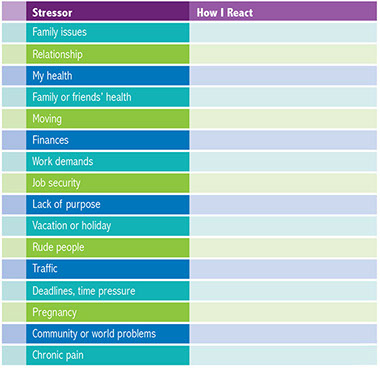
    Chart of different stressors with an empty space to fill in how to react.

    © American Institute for Preventive Medicine

  • Day 11

    Healthylife® QuitWell™

    Part 6

    Top view of friends eating together.

    Do Things a Different Way

    Remember how strong your old routines were? There were probably very predictable times of the day you would find yourself reaching for your pack or can. These urges that are linked to certain events, times, or places can be tough to break. Here are some reminders of how to handle common triggers.

    After a Meal:

    *  Don’t linger at the table.

    *  Take a brisk walk or do some deep breathing.

    *  Help with the dishes-wet hands and cigarettes don’t mix.

    *  Brush your teeth and/or rinse your mouth with mouthwash.

    With Coffee:

    *  Switch to another drink: tea, water, etc. Or, cut down on coffee.

    *  Pick up coffee to-go instead of having your coffee at home.

    *  Try to find people who don’t drink coffee or smoke when on a break.

    Watching TV:

    *  Keep your hands busy- fidget with a rubber ball or binder clip.

    *  Don’t sit in your usual spot.

    *  Chew gum, a mint, toothpick, or other oral substitute.

    With Alcohol:

    *  Do not drink liquor for awhile.

    *  Switch to a different drink or water down your usual choice.

    *  Make sure someone you are with knows you are quitting.

    Today’s Affirmation:

    I can learn new habits and unlearn old ones.

    © American Institute for Preventive Medicine
  • Get Enough Sleep 2

    Healthylife® QuitWell™

    Part 5

    Women sleeping.

    Not getting enough sleep can affect nearly every aspect of your day:

    *  Less energy and desire to work on your goals

    *  Feeling down, anxious, or other negative feelings

    *  Decreased creativity, making it harder to solve problems or imagine doing things differently

    *  Increased cravings for tobacco/nicotine to stay alert

    *  More unstable blood sugar levels, leading to less healthy eating and stronger cravings for nicotine

    Tips for Improving Sleep

    *  Get to bed a little earlier than normal when quitting. This may help cut out an evening cigarette and can help your body recover.

    *  Create a comfortable place to sleep. Make sure your bed, pillows, and bedding are comfortable.

    *  Maintain a slightly cooler temperature in the bedroom.

    *  Avoid looking at a screen (TV, laptop, smartphone, tablet, etc.) 30 minutes before bed.

    *  Create a bedtime and waketime routine.

    *  Reserve the bed for sleep and sex. Avoid doing other activities in bed, like work or having a tough discussion.

    *  Have a small snack before bed if you are hungry.

    * Avoid foods high in sugar or refined carbohydrates just before bed. The rise in blood sugar can provide a burst of energy that keeps you alert and makes it difficult to fall asleep.

    *  Avoid foods that are likely to cause acid reflux (heartburn), gas, cramping, or indigestion if you are prone to these problems. Fatty or spicy foods, beans, garlic, peanuts, and dairy cause discomfort for some people.

    What action can you take tonight to improve your sleep?

    © American Institute for Preventive Medicine

  • Medications To Help You Quit

    Healthylife® QuitWell™

    Part 3

    Seven people holding white cards with letters to assemble the word SUPPORT.

    There are medications available to help you quit. Some of them contain nicotine and some do not. The idea behind nicotine replacement therapy (NRT) is that by replacing the nicotine with nicotine in another form, one can focus on becoming comfortable with the new behavior with less withdrawal/symptoms. Then, later, the nicotine can be cut down in a systematic way. Studies have shown that users of NRT are about twice as likely to quit tobacco.

    You should check with your doctor before using these products if you are:

    *  Younger than 18

    *  Pregnant or nursing

    *  Have heart disease or had a recent heart attack

    *  Have high blood pressure not controlled by medication

    *  Take insulin for diabetes

    *  Have a stomach ulcer

    Always follow the instructions for NRT carefully to avoid complications. Any questions that you have about the products should be addressed with your doctor or pharmacist.

    Common side effects of NRT include nervousness, a racing heart, dizziness, headache, and nausea. These are caused by the nicotine and may be a sign of too much nicotine. If you have any of these symptoms, cut back on the total nicotine you are getting. Chew less gum or use your inhaler less frequently, for example. Avoid smoking, dipping, or vaping while using NRT.

    A rare, but dangerous complication is nicotine overdose. Symptoms include a racing heart, headache, weakness, dizziness, nausea and/or vomiting, and cold sweats. If you are having symptoms like these, get immediate medical attention.

    © American Institute for Preventive Medicine
  • Review & Prepare 2

    Healthylife® QuitWell™

    Part 3

    Image of older women.

    Summary of Small Steps You Can Take:

    *  Keep tracking your habit.

    *  Wait 5 minutes when you have an urge to use.

    *  Buy your cigarettes by the pack (not the carton), your chewing tobacco by the can, or a lower concentration of e-cigarette cartridge.

    *  Store tobacco/nicotine products in a different place then usual.

    *  Set up a buddy system. Write goals in S.M.A.R.T. ways.

    *  Add to your list of “pros” for quitting. Star what is important to you.

    Change Is Your Choice

    The decision to make changes is up to you. You can decide which changes you want to make, how long it takes you to make them, and who you will tell. Answer the following:

    *  What do I want to do? Am I willing to do this?

    *  What am I going to do right now (within the next hour)?

    *  How will today be different for me?

    © American Institute for Preventive Medicine

  • Relaxation Techniques

    Healthylife® QuitWell™

    Part 4

    A couple resting on sofa with their dog.

    We will teach you four skills to relax:

    *Relaxation Reflex:Getting rid of muscle tension.

    *Mental Imagery:Thinking of calm, restful places.

    *Deep Natural Breathing:Feeling relaxed by breathing in more oxygen.

    *Spend Time with Animals:Feeling relaxed, happy and secure.

    These relaxation strategies are not designed to take your stress away. Done correctly, they will help you calm your body and mind so that you can think more logically, see major problems as manageable challenges, and get through a tough day.

    If something helps you-even a little-add it to your quitting tool kit. Remember, you will probably need a lot of strategies to be successful in the long run. One strategy may work on Monday morning, but you’ll need another tool on Friday afternoon!

    © American Institute for Preventive Medicine
  • Warning Signs Of  Oral Cancer

    Healthylife® QuitWell™

    Part 1

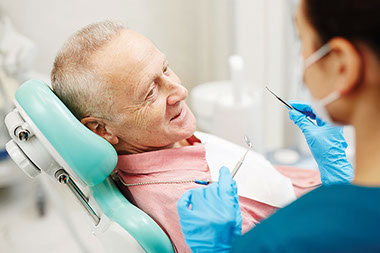
    Man at the dentist office.

    If any of these conditions are present, simply quitting the use of smokeless tobacco may not be enough. Contact your physician immediately. The 5-year survival rate of those with localized oral cancer at diagnosis is 76% compared to only 19% for those whose cancer has spread to other parts of the body.

    1. White patches on the tissue of the oral cavity

    2. A lump or thickening in the oral soft tissue

    3. Soreness or feeling that something is caught in the throat

    4. Difficulty chewing or swallowing

    5. Ear pain

    6. Difficulty moving the jaw or tongue

    7. Hoarseness

    8. Numbness of the tongue or other areas of the mouth

    9. For denture wearers: swelling of the jaw that causes dentures to fit poorly or become uncomfortable

    Regular dental check-ups and physician visits can help you catch a problem early on. Be sure to tell your dentist and physician that you use smokeless tobacco products. Of course, quitting is the best thing you can do to prevent long-term health problems from smokeless tobacco.

    © American Institute for Preventive Medicine

  • Action Planning

    Healthylife® QuitWell™

    Part 4

    Women writing in notebook.

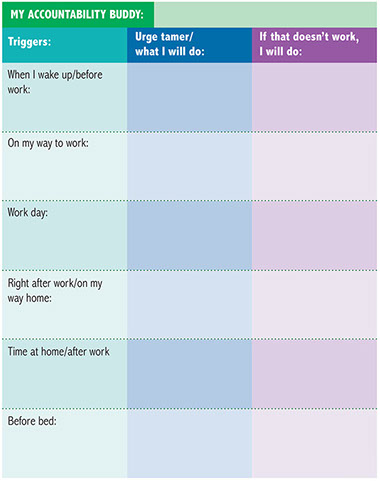
    Remember, an “okay” plan today beats a “great” plan tomorrow. Use this template to write out your quit plan. By this point, you probably know most of your expected triggers during the day. Write both your planned urge tamer/response to the trigger and another idea to try, in case you need it.

    Chart to help with Action Planning.

    © American Institute for Preventive Medicine

  • Day 12

    Healthylife® QuitWell™

    Part 6

    Man on computer.

    Now Awareness

    Where your mind goes, you will go too. You can redirect your mind when you get an urge. Now Awareness is a simple, powerful tool to help you do this.

    When an urge (or any unwanted thought) comes to mind, say to yourself, “Now I am aware of ____________.” Finish the sentence by naming objects you can see. For example, if you are sitting in your kitchen, you might say: “Now I am aware of the stove”; Now I am aware of the clock”; “Now I am aware of the sink”, etc. Keep this up until your urge passes.

    Keep your thoughts focused. You are flexing the muscle of awareness and mind control when you do this. This tool can also be used to get through a stressful situation or when you feel your thoughts spiraling out of control.

    Come back to the present. You can use your own body for Now Awareness as well. Notice your hands. Notice your arms. Notice your shoulders. Notice any tension in your body and try to release it. Notice your breath.

    When you are able to bring your mind under control, solutions to problems you may not have noticed before may appear. You may feel that something that seemed hard is now easier. You may feel more at peace. Try it!

    Today’s Affirmation:

    I will direct my mind to calm, present thoughts when I have an urge.

    © American Institute for Preventive Medicine
  • How Smoking Hurts The Body

    Healthylife® QuitWell™

    Part 1

    Concept image of doctor with icons of different human organs.

    Heart Disease

    Smoking is the greatest risk factor for heart disease. A smoker’s chance of having a heart attack is 3 times that of a non-smoker. High blood pressure is a major cause of stroke and a prime risk factor for heart disease. High blood pressure is more severe in smokers. People with high blood pressure can lower their risk of heart disease by 50% when they quit.

    1. Carbon monoxide reduces oxygen going to the heart.

    2. The heart works harder to move  the oxygen through the body. Breathing speeds up.

    3. Nicotine causes the blood vessels to constrict. Blood pressure goes up. The heart becomes more stressed.

    4. A greater amount of cholesterol forms on the blood vessel walls.

    5. Over time, less oxygen puts strain on the heart and heart cells die.

    Cancer

    Cigarette smoke has been proven to contain cancer-causing agents (carcinogens) and co-agents (co-carcinogens). The parts of the body that come into direct contact with smoke are more likely to develop cancer: lungs, mouth, trachea, esophagus, and larynx. The breakdown products in smoke also affect other organs that do not come into direct contact with smoke:  the pancreas, kidney, and bladder.

    Chronic Bronchitis

    Chronic bronchitis can make it very hard to breathe. This is because the lining of your bronchial tubes (the tubes that air goes through to get to your lungs) becomes inflamed and irritated. While acute (temporary) bronchitis caused by a cold or virus usually goes away within a few weeks, excess mucus and lung damage can mean months and months of coughing and breathlessness.

    1. Cigarette smoke paralyzes hair like fibers (cilia) that line and clean the bronchial tubes.

    2. Excess mucus is produced in the tubes. The result is a mucus plug.

    3. Chronic coughing is the way a smoker removes the plug so oxygen can get in.

    Emphysema

    Emphysema can also make it very difficult to breathe. This problem develops in a different way than chronic bronchitis:

    1. Oxygen enters the blood stream through air sacs in the lungs. The ‘tars’ from cigarette smoke gather on the lung walls and burst the sacs.

    2. These heavy tars also make the lungs longer and less able to stretch.

    3. Breathing becomes difficult.

    © American Institute for Preventive Medicine