Category: Healthylife® QuitWell™

  • Making A Quit Plan

    Healthylife® QuitWell™

    Part 3

    Healthy green meal prep containers with rice and vegetables.

    By the time you arrive at this section, you have already taken steps towards successfully quitting. Even if you haven’t changed any behaviors yet, lining up your mindset will pay off as you go forward. Wanting to quit is just part of success. Willpower is not very reliable but having a plan in place with lots of support can carry you through.

    * If you are not ready to quit, use the strategies in this section to experiment with changing a habit or two-even if just for a day. You can practice these activities for a quit attempt in the future.

    * If you are ready to quit, dive in! Try to do as many activities as you can, noting what helps you and adding that to your quit plan. The more tools you add to your quitting toolkit, the more prepared you will be for that first day without tobacco/nicotine.

    * If you have already quit, add these strategies to your plan to manage any lapses or a relapse. Having a plan for when a slip-up happens can keep you tobacco/nicotine free in the long run.

    HealthyLife® QuitWell™

    QUICK LINKS: PART 3

    You Don’t Need a Great Plan

    Take Small Steps to Get Started

    Keep Track

    Wait 5 Minutes

    Buy Smaller Amounts

    Smokers: Use Matches Instead of a Lighter

    Make a “Butt Bottle”

    Carry & Store in a New Place

    Buddy System

    How to Help Me Quit

    Identify S.M.A.R.T. Goals

    Medications to Help You Quit

    Nicotine Replacement Therapy

    Other Aids for Quitting

    Review & Prepare

    © American Institute for Preventive Medicine

  • Tobacco Scorecard & Action Planning

    Healthylife® QuitWell™

    Part 6

    Person writing in notebook.

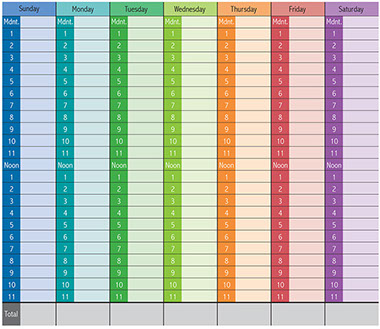
    You can make copies of this page to use. Place a slash in the box which indicated the time you used tobacco or nicotine.

    Action Planning

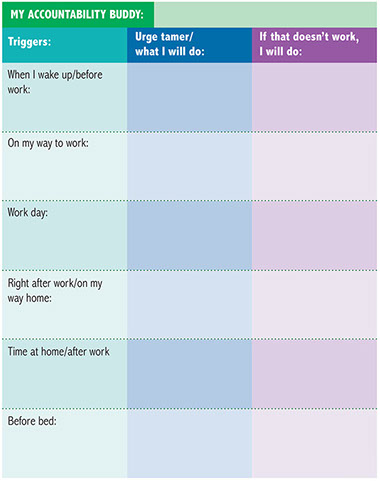
    Remember, an “okay” plan today beats a “great” plan tomorrow. Use this template to write out your quit plan. By this point, you probably know most of your expected triggers during the day. Write both your planned urge tamer/response to the trigger and another idea, in case you need it.

    Chart of Action Planning.

    © American Institute for Preventive Medicine

  • What Assertive Looks Like

    Healthylife® QuitWell™

    Part 5

    Warehouse worker smiling with good posture and eye contact.

    *Body Posture:Be relaxed and natural. Avoid slouching, putting your hands in your pockets, or facing away from the person you are speaking with.

    *Eye Contact:Good eye contact is vital to convey self-confidence and interest. Don’t stare at the other person-this comes across as a challenge.

    *Voice, Tone, and Quality:Use a strong, varied tone. Speak clearly and firmly. Don’t shout or speak too softly. Don’t whine.

    *Distance from the Person:Don’t position yourself too far or too close.

    *Facial Expression:Let your face convey the same message as what you are saying.

    *Content:Use short sentences. Be specific, clear, and firm.

    Practice First

    Plan or write down what you want to say. Have responses ready ahead of time to deal with questions and comments. Reinforce your remarks by saying what positive outcomes will occur for you and the other person. Practice in front of a mirror or with a friend.

    Benefits of Being Assertive:

    *  You can feel comfortable saying “no.”

    *  You have more confidence to ask others for help.

    *  You gain more respect from others.

    *  You feel less angry with yourself and with others.

    *  You feel justified to say what you want to say.

    *  You feel comfortable requesting clarification.

    *  You accept compliments graciously.

    *  You can change your mind without feeling guilty.

    © American Institute for Preventive Medicine

  • Address Anxiety 2

    Healthylife® QuitWell™

    Part 2

    Zen garden with massage stones and waterlily.

    Anxiety is a feeling of dread, fear, or distress over a real or imagined threat to your mental or physical well-being. Smoking, chewing, or vaping may be a way that you have coped in the past with these feelings. At all stages of change, you can learn to address anxiety in healthy ways.

    First, try to calm your body physically. Calming the physical body can make working through what is in your mind easier.

    *  Breathe deeply and evenly.

    *  Take a walk or get some other form of exercise.

    *  Take a long, warm bath or shower. Or, go for a swim.

    *  Listen to soothing music. Or, go somewhere quiet.

    *  Connect with people. Visit or call someone who will listen to you and support you.

    *  Drink a warm cup of decaf coffee or tea-avoid caffeine, which can make anxiety worse.

    As you take a step back, use these tips to manage the thoughts that are causing your anxiety:

    *  Ask: is your thought based on facts?

    *  Identify what you are trying to do. Know your purpose.

    *  Consider many different outcomes and their effects.

    *  View the situation from many perspectives.

    *  Don’t assume a situation will have the same outcome as it did in the past.

    *  Have good evidence for a generalization before you make it.

    *  Avoid assuming one event caused another just because they happened at the same time.

    You will likely feel calmer after you quit. Nicotine only makes you more nervous. Nicotine is a stimulant. After you get over the initial stress of quitting, you’ll find that without all that nicotine in your body, you feel calmer and more relaxed.

    © American Institute for Preventive Medicine

  • Day 13

    Healthylife® QuitWell™

    Part 6

    Man with arms up.

    You can be very proud of your success so far. But, don’t be so secure that you drop your guard. It can set you up for “just that one.” In the next few days and weeks, resisting “just that one” will make the difference between long-term quitting and a cycle of relapse. Keep in mind, one smoke, one smoker. Or, one chew, one chewer. Or, insert whatever your habit was before quitting.

    The first month of quitting is the “crawling” stage. Most people who return to tobacco do it during the first few weeks after stopping.

    Cautious Optimism

    You should be hopeful, yet careful, about the fact you have quit. Feel proud of yourself for having quit, but don’t let your guard down.

    Continue to use the urge tamers and other strategies in this guide. You may find that what will help you now is different than what helped you get started.

    The program works when you make it work for you!

    Today’s Affirmation:

    I choose to be on this path to quitting for good.

    © American Institute for Preventive Medicine

  • How To Help Me Quit

    Healthylife® QuitWell™

    Part 3

    Friends sitting talking and drinking tea.

    1.Be patient.I am trying to free myself from tobacco/nicotine. Quitting may make me tense, anxious, and prone to sudden mood swings. This is because I am doing without something I was used to having. Soon I will be secure in my ability to manage and I will be better than ever. Please bear with me a little longer.

    2.Be curious.For years I have been using tobacco/nicotine to pass the time, to reward myself, to calm myself, to wake up, to help me think, and to get through stressful events. Now I am coping all on my own. Ask me how I am managing; ask me what my life is like without nicotine. It’s all very new to me and I may want to talk about it.

    3.Be sensitive.All day long I must deal with the urge to use tobacco/nicotine. Sometimes it seems as if just about everything makes me think about it: getting ready for work, talking on the phone, ending a meal… I could really use your help to distract myself from these thoughts. Unless I mention it first, please don’t bring up the subject of my quitting.

    4.Be supportive.I really need someone to root for me right now, someone to be on my side. I enjoy the special attention (like rewarding my first week without tobacco/nicotine with a special treat) that you give me while I am in the “crawling” stage of quitting.

    5.Be positive. Sometimes I feel it is hard to remember all the good things that come with quitting. I like it when you notice the positive changes that you see in me. It means a lot to know that you are proud of me.

    6.Be confident.I want to make it, but sometimes I am not sure that I have what it takes to quit. I need the people around me to believe that I can do it… and to say so.

    What else will be helpful to you? Share this with those who want to support you.

    © American Institute for Preventive Medicine

  • Mindfulness 2

    Healthylife® QuitWell™

    Part 2

    Image of man walking his dog.

    Mindfulness means you are fully aware of what you are sensing in the current moment. Mindfulness can help you get through a stressful or uncomfortable time without your usual tobacco/nicotine use. It can also:

    *  Give your mind a chance to think creatively and come up with the answers to tough questions.

    *  Help you gently pull yourself back to the present when your mind wants to go somewhere else.

    *  Exercise greater control over your actions and your energy.

    *  Understand yourself more.

    *  Lower inflammation in the body.

    *  Activate areas in the brain that give you feelings of calmness.

    Mindfulness Exercise

    Practice mindfulness while you listen to music, walk, run, eat, or sit in traffic. You can also try this the next time you feel the desire to have a cigarette, dip, or puff from your vape:

    *  Try to physically pause your body. Sit or stand still. Maybe you can lean against the back of a chair or a wall. Get comfortable.

    *  Focus on your breathing or anything in the present, such as the sounds you hear or an object in your sight.

    *  As thoughts pop up in your mind, notice them without judging them. Picture your thoughts like clouds floating by-let them go by. Return your focus to what you see, hear, and feel.

    *  Notice the feelings you have about smoking/your habit and what may be making you feel that way. Be aware of what is helping you do what you want and what is not helping.

    *  When your mind starts to drift, imagine gently guiding it back to the present, as if you’re helping a child that has strayed off the path.

    The craving may have gone away or is now much less. If this is the case, try to do something else while the craving continues to fade.

    © American Institute for Preventive Medicine

  • Review And Prepare 7

    Healthylife® QuitWell™

    Part 4

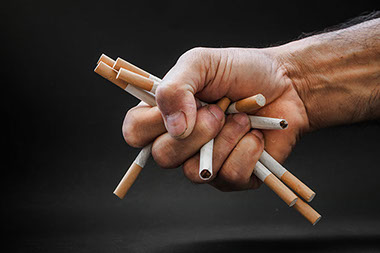
    Image of hand crushing a bunch of cigarettes.

    This section provided strategies to manage urges that you have for tobacco/nicotine. You also learned tools to manage yourself in a demanding, often stressful world.

    *  Which urge tamers and other strategies have you practiced already?

    *  Which tools have worked well for you? Add these to your quit plan.

    *  What gaps do you have in your quit plan? What is still a big challenge?

    Review this section often. What may have helped you get started may not be what takes you all the way to quitting completely. You may need to use new strategies as your life changes, new stressors arise, or new people enter your life. As you feel more and more ready to take action, strengthen your action plan by assigning urge tamers to triggers.

    © American Institute for Preventive Medicine

  • Secondhand Smoke

    Healthylife® QuitWell™

    Part 1

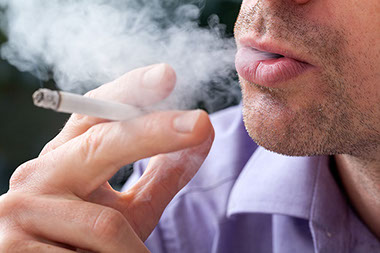
    Image of cigarette and smoke.

    Secondhand smoke is the smoke that occurs when a cigarette, pipe, or cigar is lit. The secondhand smoke going into the room from the end of a burning cigarette is not filtered. People breathing in secondhand smoke are breathing in this smoke, as well as what the smoker blows into the room. Secondhand smoke puts non-smoking bystanders (maybe your loved ones) at risk for the same health problems as the smoker.

    Some of the toxins found in secondhand smoke are tar, nicotine, carbon monoxide, carbon dioxide, methane, nitrogen dioxide, cadmium, benzpyrene, ammonia, hydrogen cyanide, acetone, pyridine, and formaldehyde. Although secondhand smoke becomes mixed with the air, there are safety risks for both the smoker and non-smokers, as well as pets who breathe these vapors in.

    Infants & Children

    Children of smokers are at a higher risk for respiratory infections, tonsillitis, pharyngitis, and middle ear infections. Asthma can become more severe. Children of smokers are also much more likely to start smoking.

    Pets

    Your beloved fur ball can develop serious health problems, including nose and lung cancers, from secondhand smoke. Secondhand smoke can also cause respiratory illness in cats and dogs and make skin conditions worse. Thirdhand smoke, or the smoke residue that settles on surfaces, can be especially damaging to cats. When cats lick their fur to clean themselves, they lick the toxins from smoke. This makes cats more than twice as likely to develop malignant lymphoma, a type of cancer.

    Protect Your Loved Ones

    To protect others from secondhand smoke, avoid smoking in enclosed spaces that you share with others, like your house or car. If you are going to smoke, go outside and make sure windows are closed to the house near the area you are smoking. Avoid using a “smoking room” in the house or smoking in an attached garage-smoke will still get into the rest of the house.

    © American Institute for Preventive Medicine