Category: Healthylife® QuitWell™

  • Smokeless Tobacco & Your Health

    Healthylife® QuitWell™

    Part 1
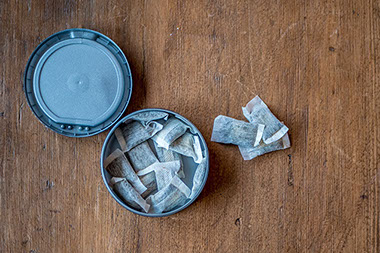
    Image of chewing tobacco.

    Smokeless tobacco includes chewing tobacco, which may also be called oral tobacco or spit tobacco. Smokeless tobacco also includes both moist and dry snuff, snus, and dissolvable tobacco products. Smokeless tobacco is not a safe form of tobacco, even if that is often how it is marketed by tobacco companies. Smokeless tobacco carries many serious risks.

    Smokeless tobacco can cause cancers of the:

    *  Mouth, tongue, cheek & gums

    *  Esophagus

    *  Pancreas

    Smokeless tobacco can also cause:

    *  Sores in the mouth called leukoplakia that can become cancer

    *  Stained teeth

    *  Bad breath

    *  Gum disease, cavities, tooth decay, and tooth loss

    *  Bone loss around the teeth

    *  Heart disease

    *  High blood pressure

    *  Increased risk of heart attack and stroke

    *  Pregnancy complications and low birth weight
    © American Institute for Preventive Medicine

  • You Don’T Need A Great Plan

    Healthylife® QuitWell™

    Part 3

    Person writing in a notebook.

    An “ok” plan today beats a “great” plan a few months from now.

    Motivation and willpower can ebb and flow-if you have even an ounce of motivation today, it’s probably a good day to take action. You don’t need to wait until your motivation is very high or you feel like you have a perfect plan laid out.

    Having some kind of plan, though, WILL help you succeed. Trying to quit without a plan can lead to frustration and relapse, as you find yourself unprepared for nicotine urges and trigger situations.

    Use the tools in this book to build your personal toolkit and action plan. Try out strategies even before you’re ready to dive into quitting fully. You might cut out a few cigarettes or a dip or two, putting yourself on the road to quitting completely!

    Start setting yourself up to be successful and confidence will follow!

    © American Institute for Preventive Medicine
  • Break Down Barriers

    Healthylife® QuitWell™

    Part 2

    Image of smiling man with thumbs up.

    Maybe you don’t feel like you have time to read the QuitWell™ program or answer the questions in each section. The tips on time management in this section can help. Other barriers may seem to be unchangeable until a powerful motivator enters the picture. More information or skills to get through a challenge can also help you overcome what felt impossible in the past.

    Be Open to Powerful Motivators

    Have you ever started a new relationship or made a new friend and suddenly you want to spend all your time with that person? You may even get into a new hobby in order to spend more time with them. Or, maybe you got concerning test results and want to improve before your next visit to the doctor. Or, maybe you just found out you are going to be a parent or grandparent.

    These are examples of powerful motivators. They usually seem to come out of nowhere or when you are least expecting them. Some seem to knock you off your feet and you can’t ignore how powerful they are. Others you may not notice unless you are paying attention. These may be negative and scary or joyous and exciting. As you think about quitting and look at your barriers, try to be open to power motivators.

    Do you feel any powerful motivators in your life right now?

    What could be a powerful motivator in the future? Imagine what it would take to suddenly make nearly all the barriers on your list seem less important.

    © American Institute for Preventive Medicine

  • Day 4

    Healthylife® QuitWell™

    Part 6

    Father and adult son talking.

    One Day at a Time vs. “I’ll Never Smoke/Dip Again”

    There are two common outlooks in people who have quit. They are:

    1. “I am taking this one day at a time-I am not going to use tobacco/nicotine for the next 24 hours, but I am not looking beyond that.”

    2. “I have used tobacco for the last time and I will never use it again.”

    Either outlook that works for you is fine. In time, most everyone reaches  “I’ll never use again,” and it’s a wonderful feeling of freedom.

    However you view this change, let others know you have kicked the habit. By admitting this openly, you will be more likely to resist future urges. In most cases, people will admire you for your efforts and cheer you on.

    Of course, there may be some who view your quitting as a threat. It may be that their own failure to quit causes them to tease and tempt you. How do you deal with “saboteurs”? Have an answer ready for them that is assertive, but not aggressive.

    When in doubt, keep it simple. “No thanks, I don’t smoke.”

    The more you repeat this statement to yourself and others, the more likely your new healthy habit will stick.

    Today’s Affirmation:

    I chose to quit my own way. I can talk about it my own way too.

    © American Institute for Preventive Medicine
  • Identify S.M.A.R.T. Goals

    Healthylife® QuitWell™

    Part 3

    Hand writing on a notepad with colored pencils all around.

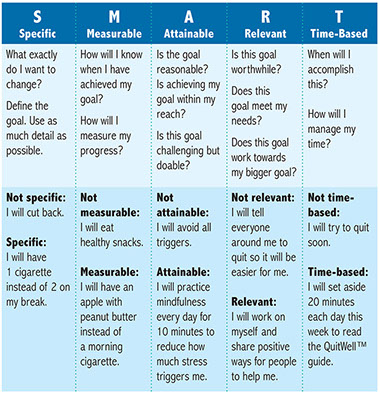
    Think of the actions you take on a daily basis as small steps towards your bigger goal. This guide will give you many ideas for small steps, such as putting your cigarettes in a different place or buying one tin of chew at a time. Identify your next step and use the S.M.A.R.T. tool to improve the chances of reaching your goal.

    SMART goal chart.

    S.M.A.R.T. in Action

    Before: “I want to cut back.”

    S.M.A.R.T. Goal: “Today I will put 12 cigarettes in an empty pack instead of the 15 I usually have. I will keep my emergency pack of substitutes (gum, toothpicks) with me and will leave my cigarettes behind. I will cut back by 1 cigarette each day this week.”

    Practice Goal-Setting

    Strengthen your goal using the S.M.A.R.T. tool. Start with a simple statement about what you want to do. Next, write how your goal will be specific, measurable, attainable, relevant, and time-based.

    © American Institute for Preventive Medicine

  • My ‘Why Quit’ List

    Healthylife® QuitWell™

    Part 1

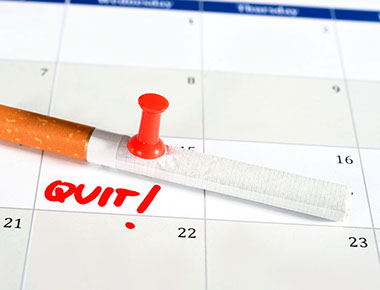
    Image of a cigarette on a calendar with the word "Quit!" next to it.

    What motivates you to try quitting? How might your life change if you quit? If you feel something on that list is one of your reasons to try quitting, write it here. You can also write this list on a separate piece of paper or keep a list in your phone. You can also post this list where you can see it often, like on your fridge or by your desk at work.

    © American Institute for Preventive Medicine
  • Maintaining Your Course

    Healthylife® QuitWell™

    Part 6

    Variety of ice cream cones.

    This section will help you stay quit. If you haven’t quit yet, you can still read through this part. Continue to use the tools and thought guides in Parts 1-5 of this guide to get to your first tobacco/nicotine-free day.  If you are practicing quitting, read ahead to help you get through your practice days. Practice days can turn into weeks!

    Once you have quit, your task will be staying quit. You can expect future urges to be shorter and milder. They will happen, so get ready for them.

    This section will help you stay on course.

    There are 14 maintenance messages that follow, one a day for two weeks. Read only one message per day. You can read your daily message any time-first thing in the morning, on a break, last thing at night, or with the first urge of the day (if you have one).

    HealthyLife® QuitWell™

    QUICK LINKS: PART 6

    Day 1: Mirror Talk

    Day 2: Unscramble Slowly

    Day 3: Note Positive Changes & Celebrate Success

    Day 4: One Day at a Time

    Day 5: Stay Accountable

    Day 6: Embrace the Ripple Effect

    Day 7: Post-Quitting Depression

    Day 8: Shake a Stale Feeling

    Day 9: Banish the Bully in Your Head

    Day 10: Put Off Starting Again

    Day 11: Do Things a Different Way

    Day 12: Now Awareness

    Day 13: Cautious Optimism

    Day 14: A Day to Remember

    Tobacco Scorecard & Action Planning

    © American Institute for Preventive Medicine

  • Smoking & Your Health

    Healthylife® QuitWell™

    Part 1

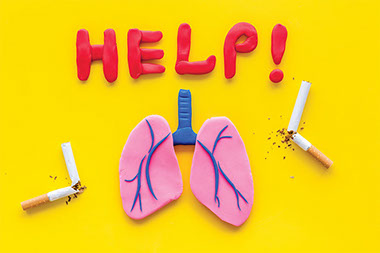
    The word "Help" spelled out in clay, as well as lungs and cigarettes.

    Smoking is the number one cause of premature, preventable deaths in the United States. According to the Centers for Disease Control and Prevention (CDC), more than 480,000 Americans die each year due to smoking. Many of those are from cancer, heart disease, stroke, and lung disease. Very few, if any, smokers go through their lives without having harmful effects. Smoking affects more than just your lungs-every part of the body is damaged.

    Smoking can also cause:

    *  Chronic obstructive pulmonary disease

    *  Aortic aneurysm

    *  Diabetes

    *  Osteoporosis (brittle bones)

    *  Rheumatoid arthritis

    *  Macular degeneration (age-related)

    *  Cataracts

    And contributes to:

    *  Airway infections

    *  Impaired immune responses

    *  Miscarriage

    *  Pregnancy complications

    *  Low birth weight, cleft lip/palate, and risk of SIDS

    *  Erectile disfunction

    *  Frequent colds and a weakened immune system

    After You Quit

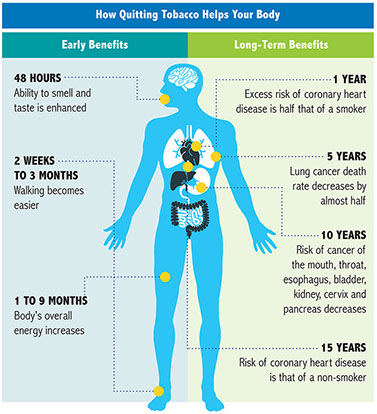
    As soon as you stop smoking, your body responds. Changes in your body start happening right away.

    Chart showing how quitting tobacco helps your body.

    © American Institute for Preventive Medicine
  • Buddy System

    Healthylife® QuitWell™

    Part 3

    Image of 3 friends talking over tea and coffee.

    Who could support you in your effort to quit? Having someone to hold you accountable-and who you want to share success with-can be a powerful part of your quit plan. Support from others can help:

    *  Motivate you and lift you up when you stumble.

    *  Hold you accountable.

    *  Give you new ideas and inspiration-especially if they have gone through quitting themselves.

    *  Make activities more fun, like taking a walk together instead of a smoke break.

    Start With One Person

    1. Choose a buddy-someone you will talk to daily. This person should be someone you trust and who you can be completely honest with.

    2. Let them know what you are trying to do.

    3. Ask them if they would be willing to support you. If they are, thank them!

    4. Let them know how to help you. This may change over time.

    5. Share your feelings and actions truthfully with your buddy. If you don’t, you are losing out on the benefits of an accountability buddy.

    6. Thank this person often. Let them know the impact they are having on your lifestyle change.

    Involving Others

    Even when someone wants to help you, they may not know how. You have probably experienced this already, like when someone gives you cliché advice or says “just one won’t hurt.”

    Be specific when you tell others how to help you. These are suggestions for those people who want to help you. Read over the list and choose the ones you think will be most helpful. Write these down and show your list to the people who want to help.

    © American Institute for Preventive Medicine
  • Day 5

    Healthylife® QuitWell™

    Part 6

    Two friends sitting at a cafe talking.

    Stay Accountable

    Make a point to stay in touch with your accountability buddy. If you have moved, changed jobs, or just drifted from this person, you may need to find a new person to help you stay accountable. It is okay if this person changes over time-it likely will. It’s more important that you have someone who deeply supports your goals and wellbeing.

    There are other people besides your buddy who can help make things easier for you. There are millions of ex-smokers and ex-chewers in this country. Find one among your friends or online on social media or a chat forum. Share your story, whether easy or difficult. Learn how others manage triggers and share what works for you as well.

    Feel encouraged by their success. Know that others may benefit from your experience as well. Don’t be surprised if you find others looking to you as living proof that it is possible to make big changes.

    If you are a parent, your kids may also learn this lesson too. Just because you have done something for a long time doesn’t mean you are stuck doing it forever. Change is possible-especially if you work with others to succeed.

    Today’s Affirmation:

    I am not alone. Others can help me, and I can help them.

    © American Institute for Preventive Medicine