Category: Healthylife® Weigh

  • Say Nice Things To Yourself

    Healthylife® Weigh

    Part 4

    Woman holding red heart shape.

    These nice things are called affirmations. What you say to yourself is powerful. You may not strongly believe it at first, but keep going.

    1. State your affirmation in the present tense.

    2. Say what you want, rather than what you don’t want.

    3. Include feeling words that add positive emotion.

    4. Be specific about what you want, rather than being vague.

    5. Make the words simple and easy to remember.

    Here are a few ideas.

    *  I am special and unique.

    *  I am proud to be me.

    *  I take care of my body.

    *  I trust myself.

    *  I am thankful for my life.

    *  I love to play and have fun.

    *  I am a good friend.

    *  I love to learn.

    *  I am courageous.

    *  I am lovable.

    *  I am gentle and strong.

    *  I am learning from this experience.

    *  I choose to respect myself.

    *  I choose to be in control.

    *  I am in control of many things, but not all things.

    Start today.Choose one or two affirmations. Write this statement on a sticky note and put it where you will see it, like the bathroom mirror or on your computer monitor. Say it out loud or repeat it silently to yourself.

    The Poisoned Parrot

    Imagine you have a parrot. This parrot repeats everything you say about yourself, over and over again. It comments on your life, especially the things that go wrong.

    For example, you come home with several bags of treats and soda. The parrot squawks, “There you go again. You’re never going to lose weight. You could have made a list, but you didn’t. You keep saying you’re going to change, but you aren’t. You’re never going to change your habits.”

    How do you feel? How long would you put up with this parrot? Don’t put up with a bully in your head. Notice this “parrot” and cover the cage.
    © American Institute for Preventive Medicine
  • Tackle Limitations

    Healthylife® Weigh

    Part 5

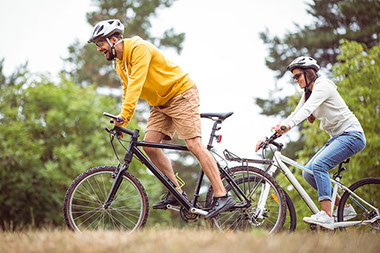
    Couple enjoying a bike ride.

    Think of getting started like riding a bike. You feel the most resistance when you are stopped and trying to start pedaling. Once you get going, the going gets easier. What is stopping you from getting started? Which of the following apply:

    *  Mental Concerns (fears, doubt, low motivation)

    *  Lack of Skills/Knowledge

    *  Equipment/Physical Needs

    *  Other (time, people, etc.)

    © American Institute for Preventive Medicine
  • What Is My Healthy Weight?

    Healthylife® Weigh

    Part 1

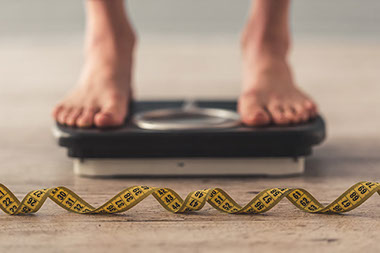
    Person standing on scale, with tape measure in the foreground.

    Ways to Measure Weight

    There are several ways to determine your healthy body weight. While weight is not the only way to determine health, aim to weigh within a healthy range to reduce health risks. Three measures can help determine your weight-related health status:

    1. Body Mass Index (BMI)

    2. Waist Circumference

    3. Risk Factors for Health Problems

    Body Mass Index

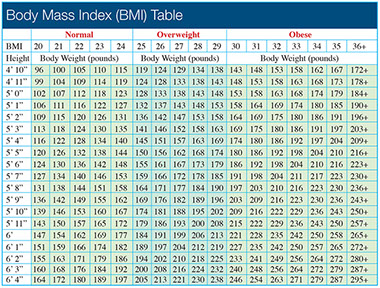
    *  Find your height in the left column under “Height.” Move across to find your weight in the row next to your height.

    *  The number at the top of the column where your height and weight meet is your BMI.

    You can also find your BMI using the BMI calculator atwww.nhlbi.nih.gov/health/educational/lose_wt/BMI/bmicalc.htm.

    Waist Circumference

    Excess abdominal fat puts you at greater risk for heart disease, high blood pressure, and type 2 diabetes than excess fat in the hips and thighs. One way to tell if you have excess abdominal fat is to measure your waist circumference.

    1. Stand relaxed with your feet together (avoid pulling in your stomach).

    2. Waist measurement: Place a measuring tape around your waist near your belly button (men) or the smallest part of your waist (women).

    4. Using a calculator, calculate: Waist measurement ÷ Hip measurement =

    Risk Factors for Health Problems

    You may be putting yourself at higher risk if you have a BMI of 30 or greater. If your BMI is between 25 and 29 and you have two or more risk factors listed below, you may also be at risk.

    © American Institute for Preventive Medicine
  • Address Anger

    Healthylife® Weigh

    Part 6

    Women with hands on head screaming.

    Ways you can deal with anger, without eating:

    *  Count to ten at the first twinge of anger. Then count back down to zero.

    *  Take three or four slow, deep breaths. Picture the angry impulse passing you by.

    *  Take a walk until you can calm down. Or, do some other form of exercise. If you cannot exercise right away, plan to do it as soon as possible. Look forward to this opportunity to blow off some steam.

    *  If someone says or does something that bothers you, discuss it calmly or wait until you feel you can discuss it calmly. Use assertive communication tools.

    *  Distract yourself. Do a task that has to get done today or in the near future.

    *  Repeat to yourself or out loud, “I’m angry because: ____.” List what is making you angry. Ask yourself, “Are these rational thoughts?”

    *  Listen to music. Make a playlist of songs you know help to calm you down. Or, turn to a radio station that plays soothing music or music you can sing to.

    *  Help someone in need.

    © American Institute for Preventive Medicine
  • Build On Your Current Habits

    Healthylife® Weigh

    Part 4

    Group of friends sitting at table full of healthy snacks, salads and organic dishes.

    Your day-to-day activities include hundreds of habits. Some may be second nature or automatic, like reaching for your seatbelt when you get in a car. Some may be weaker and subject to change, like including fruits or vegetables with your meals and snacks. Be patient. It can take several weeks to form a new habit.

    As you went through Parts 1 to 3 of this online guide, you may have noticed differences between your habits and the healthy ones suggested. As you start to make changes, first focus on a habit that you do every day. Or, think of a habit that you do many times a day. Changes to everyday habits are going to make a big difference, as they are repeated more.

    Using the examples below, compare the impact of making changes to occasional habits versus making changes to everyday habits.

    *  Example A: Change an occasional habit, such as choosing healthy snacks at the airport.

    *  Example B: Change an everyday habit, such as having a glass of water with meals and snacks.

    Breaking old habits is not easy. It takes more than willpower. It takes a plan.

    © American Institute for Preventive Medicine

  • Deep Breathing

    Healthylife® Weigh

    Part 6

    Women doing deep breathing exercises outdoors.

    An increased amount of oxygen allows your heart rate to slow down. This produces a calming effect.

    1. Sit in a chair, arms at your sides, with your legs uncrossed. Or, lie down on a comfortable surface, like a bed or couch.

    2. If you are able, close your eyes. Do not close your eyes while driving or operating machinery.

    3. Note any tension in your muscles.

    4. Slowly inhale through your nose, expanding your abdomen first. Fill your lungs next.

    5. Hold your breath for 2 to 4 seconds.

    6. Slowly exhale.

    7. Repeat this exercise for several minutes.

    Your chest should feel less constricted. You should feel less stress and tension physically and mentally. Problems haven’t gone away, but you may feel more ready to tackle them or cope with a negative emotion.

    Practice Deep Breathing: Take a Rest from Your Emotions

    Detach yourself from your thoughts and emotions. Imagine sitting on a hill and viewing your thoughts and feelings at the bottom of the hill. Observe your thoughts as they pass by. Or, you can stop and think about them. Tell yourself: “I have control over when and how I think about a situation.”

    Put your emotional reactions to a situation or issue to rest for awhile. This helps your mind use logical thinking.

    © American Institute for Preventive Medicine

  • Food Labels 2.0

    Healthylife® Weigh

    Part 7

    Woman choosing and reading label on bread in market.

    You have learned the clues on a food label that can point you toward a healthy choice or away from an unhealthy one. Here are some other common labels on food packaging and what they mean.

    Organic produceis grown without synthetic pesticides, herbicides, fertilizers, ionizing radiation, or genetically modified organisms (GMOs).

    Organic meat, poultry, eggs, and dairy productsare produced without antibiotics or growth hormones.

    Benefits of Organic Food

    *  Organic food may be tastier to you.

    *  Organic growing practices may be more sustainable and produce more nutritious food, though this is not always the case.

    *  You may avoid potentially harmful chemicals that may be added during conventional growing and processing.

    The Environmental Working Group publishes a list each year of the “Dirty 12™” and “Clean 15™.” Many plants, like avocados and corn, are naturally disease resistant and hardy. This means fewer pesticides are used on these plants, even when conventionally grown. These plant foods make up the “Clean 15™.” Other plants are less hardy and conventional growing tends to apply more synthetic pesticides. Prioritize buying the “Dirty 12™” organically. Go towww.ewg.orgto learn more about organic farming and see the year’s list.

    Clean all produce before use, whether it is grown organically or conventionally.

    Make your own veggie wash:Mix 2 cups cold tap water with ¼ cup white wine vinegar and 2 tbsp. lemon juice. Pour into a spray bottle. Squirt on your produce and let rest for 2 minutes. Rinse in tap water.

    Non-GMO Project Verifiedfoods do not contain GMOs. This means that the plant was not derived through genetic engineering. The most common products containing GMOs are corn, soy, sugar, and products made from these plants.

    Few studies have been done testing the long-term effects of consuming GMOs. However, GMO farming practices have led to increased use of synthetic pesticides and herbicides. Labeling laws and regulations surrounding GMOs are in development at the time of this guide’s publishing.

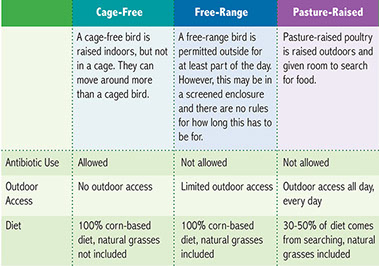
    Cage-Free, Free-Range, and Pasture-Raisedlabels refer to the living conditions of poultry. These labels indicate standards for animal welfare.

    Chart showing Cage-Free, Free-Range, and Pasture Raised definitions.

    © American Institute for Preventive Medicine
  • How Much Energy Do I Need?

    Healthylife® Weigh

    Part 2

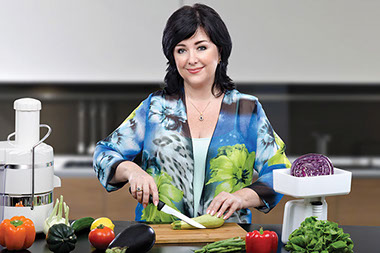
    Women cutting vegetables.

    Calories are units of energy that fuel your body for daily functions like breathing, eating, and thinking. Calories are also burned during physical activity. The more active you are, the more energy your body needs. Use the chart below to find your estimated daily energy needs. Calories needed vary by sex, age, and activity level. To determine your activity level, consider how you spend most of your day.

    *  Sedentary: You sit most of the day and do little to no physical activity (e.g., you walk once a week or do light gardening).

    *  Moderately Active: Your work involves movement, such as cleaning or light industrial work. You do some moderate-intensity physical activity a few times a week, like brisk walking or cycling.

    *  Active: Your work involves a lot of movement, such as heavy industrial work, construction work, or farming. You do physical activity most days during the week, such as jogging, swimming laps, intense walking, weight lifting, or sports.

    Chart showing calories needed per day by age, gender and activity level.

    These are roughly the calories you need per day to stay at your current weight.

    To lose 1 pound per week, you need to take in 500 fewer calories than you use/burn through daily activity. This guide encourages gradual, long-lasting weight loss.

    You can get your specific daily energy needs using the USDA’s SuperTracker online tool. Find this atwww.choosemyplate.gov/resources/MyPlatePlan.

    You can lose weight without severely restricting calories. Eating fewer than 1,200 calories per day can make it difficult for you to get all the nutrients you need. Eating this way can also be hard to follow long-term. A diet with fewer than 1,200 calories should be supervised by a doctor or dietitian.

    Special nutrition needs

    Talk to your doctor or dietitian before choosing an eating plan if you have special nutrition needs, such as:

    *  You are pregnant or breastfeeding

    *  You have a health condition or take medications

    © American Institute for Preventive Medicine

  • Limit Artificial Sweeteners

    Healthylife® Weigh

    Part 3

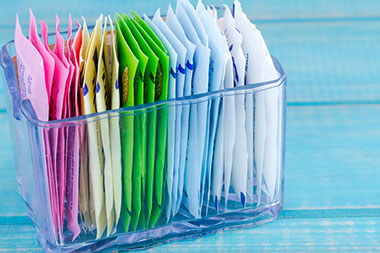
    Packets of artificial sweeteners in glass container.

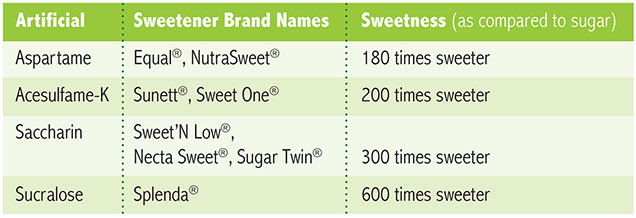
    Artificial sweeteners give a sweet taste without adding the calories you get with sugar. They don’t contribute to tooth decay and don’t raise blood sugar levels. However, consuming these sugar substitutes can have significant drawbacks. They may:

    1. Raise your sweetness threshold. This can make it harder to break a sugar “addiction.” Artificial sweeteners are hundreds of times sweeter than regular sugar. This may cause you to crave sweeter foods.

    2. Cause you to eat more. Eating and drinking sweet things signals the brain to want more. Even if the artificial sweetener doesn’t have any calories, it can lead to overeating and consuming extra foods that do.

    3. Cause discomfort. This can be headaches, exhaustion, and digestive discomfort, including gas, bloating, and constipation.

    4. Harm your gut bacteria. Artificial sweeteners may promote the growth of gut bacteria that store energy as fat. Gut bacteria that is not working properly also contributes to high blood sugar.

    Stevia (Truvia®, Pure Via®) is a non-caloric sweetener made from an herb. It has not been studied as much as artificial sweeteners, but it is still super sweet (300 times sweeter than sugar) and may cause digestive discomfort for some people.

    Sugar Alcohols (e.g., xylitol, sorbitol) are not sweeter than sugar and contain fewer calories than sugar. However, they may also cause digestive discomfort and headaches for some people.

    © American Institute for Preventive Medicine
  • Mental Health

    Healthylife® Weigh

    Part 5

    Group of people with thumbs up in yoga studio.

    Emotional Health

    Exercise releases endorphins and increases levels of serotonin and dopamine in the brain. These brain chemicals help create feelings of happiness and euphoria. You may start to feel these benefits after just a few minutes of moderate exercise. This leads to a quick happiness buzz and an overall mood boost!

    Stress Management

    Norepinephrine is a chemical that can moderate the brain’s response to stress. Exercise helps to increase that chemical. Exercise can decrease worry and tension. It also enhances the mind’s ability to deal with daily stressors. Managing stress can reduce emotional eating and cravings for sweets and high-fat foods. The calming effect of exercise can last at least four hours after the exercise is over.

    View physical activity as a break from your day. Use this time to focus on the present, instead of past or future problems and worries.

    Connect to My Values:

    Example: Having good emotional health will help me enjoy what I am doing in the moment. Enjoying life’s pleasures, such as the beauty of fall colors, is important to me.

    © American Institute for Preventive Medicine