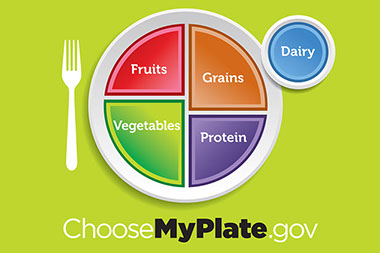
Grains & starches make up one quarter of MyPlate. This section includes foods made from grains, such as wheat, rice, quinoa, and oats. It also includes starchy vegetables like potatoes, winter squash, peas, and legumes.
1 ounce of grains & starches counts as:
* 1 slice of bread
* 1 ounce ready-to-eat cereal (about 1 cup cereal flakes)
* ½ cup cooked rice, pasta, or cereal
* 1 tortilla (6-inch diameter)
* 1 pancake (5-inch diameter)
* ¼ cup cooked beans or lentils
* 5 whole wheat crackers
* ½ English muffin
* 1 small potato (2-3 inches in diameter)
* ½ cup mashed potatoes
* 1 cup green peas
* 3 cups popped popcorn
Grains and starchy vegetables are a healthy source of carbohydrates. They provide important vitamins, minerals, dietary fiber, and phytochemicals (plant chemicals). Some are also good sources of protein.
Limiting grains to a quarter of your plate may be a change for you. Here are some tips to modify your favorite foods:
* Lose the top. Create an open-face sandwich or hamburger.
* Double the veggies. In a casserole, use a 2 to 1 or 3 to 1 ratio with vegetables to whole grain pasta or rice.
* Add extra veggies to a whole grain pizza crust. You’ll feel fuller with fewer slices of pizza.
Choose Whole Grains
Whole grains are nutrient-dense carbohydrates. Whole grains contain the entire grain kernel, including the endosperm, bran, and germ. The bran and germ contain vitamins, minerals, fiber, protein, antioxidants, and healthy fats. The endosperm contains carbohydrate, protein, and trace amounts of vitamins and minerals.
When grains are processed, the bran and germ are removed. The endosperm by itself does not have as many nutrients as the whole grain.
Enriched grains have nutrients added back into the food during processing. However, the vitamins and minerals that are added back in are only some of the nutrients lost during processing. Consuming the whole grain is the best way to obtain the nutrients originally found in that food.
Make at least half of your grain choices whole grains.
Look for “whole grain” on an ingredients label. For a grain product like bread, cereal, or pasta, this should be the first ingredient. If there is a blend of whole and enriched grains, the product may not have as much nutritional value as a product made with only whole grains.
Try different whole grains. Each variety offers different nutrients and flavor. Swap out white pasta or rice for one with whole grains this week. Or, use half white and half whole grain choices. Work up to using all whole grains.
* Whole wheat, rye, or oats
* Millet
* Whole grain barley, flour, or cornmeal
* Oatmeal
* Bulgur
* Quinoa
* Buckwheat
* Brown rice
Limit your intake of refined grains like white flour and white rice. These grains have been stripped of many nutrients and fiber. Limit foods made with refined grains like cookies, cakes, and some snack foods. These foods may be high in saturated and trans fats, added sugars, and sodium. For the calories those foods have, you may not be getting many nutrients. Eating these foods does not give you a “bang for your buck.”
Eat Foods Rich in Fiber
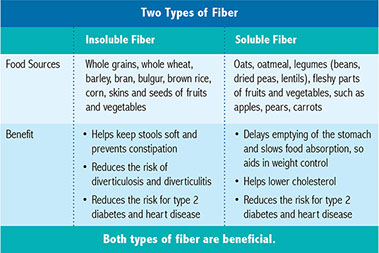
Fiber is a carbohydrate. It does not provide 4 calories per gram that other carbohydrates do because the body does not break down fibers and absorb them. Foods with fiber do, however, have calories. Fiber is found in plant foods. Animal foods do not have fiber. Include fiber from a variety of sources. Include vegetables, fruits, seeds, nuts, legumes, and whole grains in your diet.
How Much Fiber Do I Need Each Day?
Men: About 38 grams daily
Women: About 25 grams daily
How Can I Meet this Goal?
The average American consumes only 15 grams of fiber a day. Here are some easy meal and snack suggestions for increasing your fiber consumption.
* Make half of your plate fruits and vegetables.
* Add legumes (beans, lentils, etc.) to salads, soups, chili, etc.
* Snack on raw veggies.
* Choose whole fruits over fruit juices.
* Swap white and refined breads/cereals/pastas for whole grain breads/cereals/pastas.
* Add flaxseed meal to oatmeal, smoothies, yogurt, and baked goods.
* Add berries to salads, oatmeal, and yogurt.
* Purée cooked vegetables and add to sauces and stews.
* Slice or grate spinach and carrots to add to banana bread, shakes, eggs, or stir fry.
* Soak chia seeds in water for an hour or more. They will form a goopy gel that can be used for thickening smoothies, making pudding, or replacing eggs in baked goods.
Increase your fiber intake gradually. Your digestive system needs time to catch up. Adding too much fiber too quickly can cause gas, bloating, cramps, and diarrhea. Add 5 grams of fiber a day at two-week intervals until you are meeting the Institute of Medicine goal (25 grams daily for women; 38 grams daily for men).
As you increase your fiber intake, be sure to increase your water consumption as well. Fiber needs water to function properly and to comfortably clear your colon.
Legumes (Beans and Peas)
Legumes include all kinds of beans (kidney, pinto, white, black, garbanzo, lima), split peas, lentils, and edamame (green soybeans). Legumes are an excellent source of dietary fiber, protein, iron, zinc, potassium, and other important nutrients. Their nutrient profile puts them in the starchy vegetable group as well as in the protein group. They can be counted toward either of the MyPlate food groups.
Ways to include legumes in your diet:
* Add different kinds of beans to a chili or soup. Each type of bean offers something different and helpful for your body.
* Pack edamame as a grab-and-go snack.
* Toss cooked, washed beans onto a salad for a filling meal with long-lasting energy.
* Add black or pinto beans to a burrito with grilled vegetables and brown rice. Top with salsa for an extra source of vegetables.
Starchy Vegetables
Include starchy vegetables to fulfill the grain/starch requirement. Aim for at least one of your daily starch choices to be from this group.
Starchy Vegetables (1 serving = 1/2 cup to 1 cup)
* Corn
* Green peas
* White potatoes
* Parsnips
* Butternut squash
* Acorn squash
* Plantains
* Pumpkin
* Sweet potatoes
Ways to include starchy vegetables in your diet:
* Use potatoes and squash as a thickener in soups.
* Add corn to a breakfast burrito with beans, eggs, and salsa.
* Cube peeled winter squash, such as butternut squash, and roast in the oven with oil and spices.
* Spiralize squash for a colorful cold salad.
* Blend pumpkin purée into muffins for a punch of vitamin A and fiber.