Category: Healthylife® Weigh

  • Keep It Going: Weight Maintenance

    Healthylife® Weigh

    Part 7

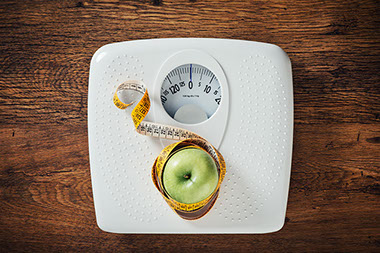
    Green apple wrapped in a tape measure on a white scale.

    This section will help you maintain a healthy lifestyle. The tools that got you to this point may be different than the tools you’ll need to keep going. Your body has physiologically changed during weight loss. Your mind has also changed. This section will help you to:

    *  Understand why weight maintenance is difficult.

    *  Modify the strategies and skills you use daily, if needed.

    *  Further improve your eating habits.

    *  Seek out long-lasting motivation and connection to others.

    HealthyLife® Weigh

    QUICK LINKS: PART 7

    Weight Loss & Metabolism

    Overcome a Plateau

    Other Eating Patterns

    Food Labels 2.0

    Supplements

    Be A Wary Weight Loss Consumer

    Visit Farmers’ Markets

    Grow a Garden

    Look Beyond Your Weight Goal

    Be Persistent

    © American Institute for Preventive Medicine

  • Set Goals

    Healthylife® Weigh

    Part 3

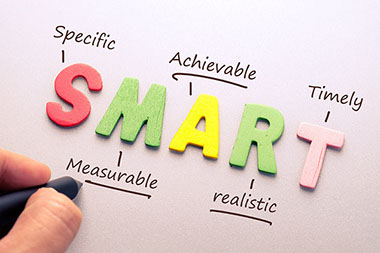
    The word Smart spelled out with wood lettering and hand writing definition for setting a smart goal.

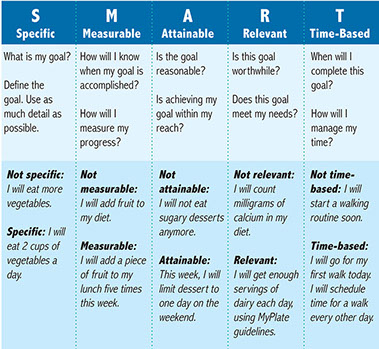
    Think of the actions you take on a daily basis as small steps toward your bigger goal. This guide has already given you many ideas for small steps, such as making half of your plate fruits and vegetables and choosing fewer sugar-sweetened drinks. Identify your next step and use the S.M.A.R.T. tool to improve the chances of reaching your goal.

    Stay motivated with the small successes you achieve along the way. Use yourEating & Exercise Tracker™every day for feedback on the effect your actions have on your energy level, mood, and weight.

    S.M.A.R.T. chart.

    © American Institute for Preventive Medicine

  • Track Your Daily Food Intake And Physical Activity

    Healthylife® Weigh

    Part 1

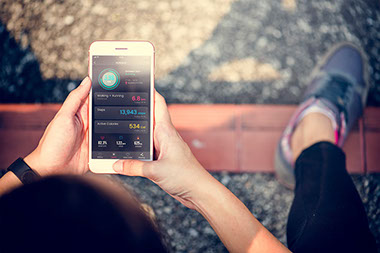
    Person using digital device to track fitness and calories.

    Use theHealthyLife® Weigh Eating & Exercise Tracker™throughout this program. It will help you monitor and better understand your habits.

    Before making changes to your eating and exercise habits, complete the Eating & Exercise Tracker™ for one week (7 days). Do the activities in Part 1 during this week while you are tracking your eating and exercise.

    Tracking Tips

    *  Log every day. This will keep your efforts at the front of your mind.

    *  Log before or after you eat. Logging before you eat can help you plan. This guide will talk more about meal planning in Part 3.

    *  Be honest with your portions and the extras you add to your food (e.g., sauces, dressings, cheese).

    *  Reflect on your mood and energy throughout the day. What you eat and drink can affect how you feel. And, how you feel can affect what you eat and drink.

    The first step towards getting somewhere is to decide that you are not going to stay where you are.  – Author Unknown

    © American Institute for Preventive Medicine

  • Alter Your Eating Cues

    Healthylife® Weigh

    Part 4

    Rye sandwich with ricotta, herbs and basil.

    Eating cues are things that prompt you to eat. They come from links your brain has made between eating and other events. When done over and over again, the event itself triggers eating. Some examples of events that trigger eating are:

    *  Morning coffee breaks: Doughnuts, sweet rolls

    *  Watching football on TV: Potato chips, beer

    *  Shopping at the mall: Big cookies, soft pretzels, soda, specialty coffee

    *  Going to a movie: Buttered popcorn, soda, candy

    *  Going out to celebrate: Large meals, desserts, alcoholic beverages

    *  Attending sporting events: Beer, hot dogs, nachos with cheese, peanuts

    Focus on triggers that you face most often and that lead you to eat foods high in added sugar, saturated fat, and/or sodium.

    It is possible to break these links. The more you practice a new behavior, the stronger it becomes. You may want to replace eating with a non-eating behavior. Or, you may want to practice choosing a healthier food or drink at that time.

    Ways to Alter Eating Cues

    *  Eat a snack before going somewhere (including out to eat).

    *  If allowed, bring your own healthy snack.

    *  Bring or buy a “fun-sized” or small portion of the treat you are craving (if available).

    *  Eat meals and snacks in one specified place at home, such as the kitchen or dining room table.

    *  Never eat while standing-always be seated.

    *  Do no other activity, such as watching TV, while eating.

    *  Try to eat meals at the same time each day.

    *  Take along bottled water and high fiber snacks to places that trigger high-calorie drinking and eating.

    *  Take a walk break instead of a morning coffee break.

    *  Avoid walking by places that tempt you to eat while you shop.

    *  Go to places, be with people and/or do things not associated with eating.

    *  Take longer to eat a meal.

    *  Use utensils to eat.

    *  Put your fork or spoon down between bites.

    *  Chew & swallow each bite before taking another one.

    *  Take sips of water between bites.

    *  Split a meal or snack with someone else.
    © American Institute for Preventive Medicine

  • Check Your Current Exercise Habits

    Healthylife® Weigh

    Part 5

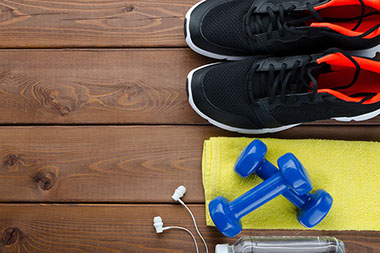
    Fitness concept with sneakers dumbbells headphones and bottle of water.

    How would you describe your current exercise habits?

    *  I do not engage in additional exercise beyond my daily activities.

    *  I exercise 1-3 times per week, for at least 30 minutes at a time.

    *  I exercise most days of the week, for at least 30 minutes at a time.

    *  I sit most of the day for my job.

    *  I am on my feet most of the day for my job.

    *  I am very active during most of the day for my job.

    What are your favorite ways to be physically active?

    Recommendation: Be physically active for at least 2 ½ hours (150 minutes) per week. You can do this in blocks of time that you choose. Any amount of physical activity counts toward the weekly amount.

    *  Have a chronic health problem, such as heart disease or diabetes.

    *  Have high blood pressure.

    *  Feel faint or very dizzy when you try to exercise.

    *  Have an injury or bone or joint problems, such as arthritis, that has been or could become aggravated by exercise.

    © American Institute for Preventive Medicine

  • Eating At A Restaurant

    Healthylife® Weigh

    Part 3

    Two people eating at a restaurant.

    Use the same guidelines for choosing food at the grocery store to help you make healthy choices at a restaurant. Compared to preparing food at home, you have less control over what is in your food, how it is prepared, and how much you are served. However, you DO have some control. Here are a few tips to help you follow your eating goals when you eat out:

    1. Choose a restaurant that offers healthy options.

    *  If you are dining with a group, offer to make the reservation.

    *  Read reviews to learn about experiences other people have had at the restaurant.

    *  Avoid all-you-can-eat buffets or anything that is offered in an “endless” supply.

    2. Look up menus ahead of time. Many restaurants, especially fast-food restaurants and other chain restaurants, offer nutrition information online for items on their menu.

    3. Look for clues in the menu. Menus can offer information about what is in the food and how it is made.

    *  Look for meat, poultry, and seafood that has been baked, broiled, steamed, poached, or grilled. Avoid fried choices. Or, ask if a fried food can be prepared with one of these healthier cooking methods.

    *  Pictures, if on the menu, can show you the size of the food groups on the plate. If you need more vegetables to meet your daily needs, ask for an extra serving or order a side salad.

    *  Choose from the “heart healthy” section of the menu, if available. These choices are usually lower in saturated fat and sodium.

    4. Ask for changes to an item, if needed. Menu items can usually be modified by the restaurant. Use the menu to learn what the restaurant has in the kitchen. Mix and match to create a meal that fits your goals. *Be kind and tip your wait staff generously if you are asking for a lot of changes to your order!

    5. Follow your healthy eating plan during the day. Skipping meals or ignoring hunger earlier in the day can lead to overeating or choosing foods higher in sugar, saturated fat, and salt at the restaurant.

    6. Choose your portion. Order your meal as a half-size order or split a meal with a friend. Take some of your food home for another meal.

    7. Set yourself up to be successful. Decline the bread basket, politely. If you are with a group that wants the basket on the table, keep it at the other end to avoid grabbing a piece out of habit. Or, share a piece.

    8. Limit alcohol. This can be a big source of added calories. Stick with one glass of wine or one beer. Or, avoid alcohol altogether.

    Most importantly, enjoy yourself!

    Restaurants can be places to try new foods and flavors and make wonderful memories with family and friends. Take your time. Use your napkin between bites and sip your water often. Engage in conversation. Appreciate the restaurant’s décor and the courtesy of the staff.

    © American Institute for Preventive Medicine

  • Grains And Starches 2

    Healthylife® Weigh

    Menus & Recipes

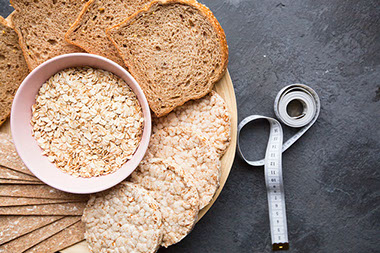
    A bowl of oat flakes, wholegrain bread, crisps and tape-measure.

    Grains & starches include foods made from grains, such as wheat, oats, rice, and quinoa. It also includes starchy vegetables and legumes. These foods provide a healthy source of energy for your body. They contain vitamins, minerals, dietary fiber, and phytochemicals. Some are also good sources of protein. Starchy vegetables like potatoes, peas, and legumes are also included in this group.

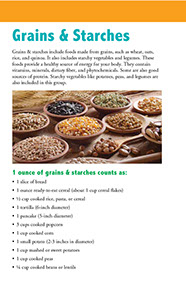
    1 ounce of grains & starches counts as:

    *  1 slice of bread

    *  1 ounce ready-to-eat cereal (about 1 cup cereal flakes)

    *  ½ cup cooked rice, pasta, or cereal

    *  1 tortilla (6-inch diameter)

    *  1 pancake (5-inch diameter)

    *  3 cups cooked popcorn

    *  1 cup cooked corn

    *  1 small potato (2-3 inches in diameter)

    *  1 cup mashed or sweet potatoes

    *  1 cup cooked peas

    *  ¼ cup cooked beans or lentils

    Eat foods rich in whole grains & fiber

    Choose whole grains or grains with more fiber more often. Try to make at least half of your grain choices whole grains. Look for “whole grain” on the ingredients label. It should be the first ingredient for bread, cereal, or pasta. Here are some examples of whole grains:

    *  Whole wheat, rye, or oats

    *  Millet

    *  Whole grain barley, flour, or cornmeal

    *  Oatmeal

    *  Bulgur

    *  Quinoa

    *  Buckwheat

    *  Brown rice

    In addition to whole grains, fiber is found in fruits, vegetables, seeds, nuts, and legumes.

    © American Institute for Preventive Medicine

  • Ingredients List: What’S In This?

    Healthylife® Weigh

    Part 3

    Man reading food label in the grocery store.

    Ingredients are listed in descending order by weight. The most common ingredient is listed first, down to the least common ingredient.

    Follow these easy steps to compare foods:

    1. Look for a short list of ingredients. In general, better choices have fewer ingredients listed. Products with many ingredients often have more forms of sugar (including artificial sweeteners), artificial colors and dyes, and artificial starches/thickeners. These ingredients can add sugar and calories without adding nutrients. Learn more about these ingredients inPart 7of this guide.

    2. Avoid ingredients that your body can’t tolerate. Food allergies are serious. Talk to your doctor if you suspect you have a food allergy. You may also have an intolerance, such as to lactose in milk. Or, you may have a sensitivity, such as getting headaches after consuming artificial sweeteners.

    3. Choose real foods. The first item listed should be a food you recognize. If you are buying pre-made turkey burgers, the first ingredient should be turkey. If you are buying a whole grain cereal, the first ingredient should be a whole grain, such as whole wheat or oats. The second ingredient may also be a large part of the food. This should also be a food you recognize.

    4. Avoid added sugars. Avoid foods and drinks with sugar listed as one of the first 5 ingredients. Sugar can be listed in many forms. Be extra careful with ready-to-eat breakfast cereals, tomato sauce, salad dressings, and other foods you may not think of as “sweets.” Look for clues that sugar has been added.

    © American Institute for Preventive Medicine

  • Make Your Kitchen A Healthy Eating Zone

    Healthylife® Weigh

    Part 4

    Three generation family eating dinner at home.

    You walk into the kitchen and see a box of cereal sitting out. You fill your cereal bowl and eye the leftover pie next to a bag of chips on the counter. It’s been a long day and you deserve a treat, right? When you are hungry, tired, bored, or stressed, food choices can be influenced by what is around you.

    First, learn about your kitchen. Your kitchen may be a place where you socialize with family and friends. It may be a place where you cook or pack lunches for children. Or, you have to walk through the kitchen to get to other rooms.

    *  How many times do you walk into your kitchen each day? If you aren’t sure, keep track for a day.

    *  List a few reasons you go into your kitchen.

    *  Without opening any doors (pantry, fridge, etc.), what foods can you see?

    *  If you were to select a snack right now, what would you choose? Why did you choose this snack?

    The kitchen can be one of your biggest allies in managing your weight. A kitchen can also be a battle zone that trips up your goals.

    © American Institute for Preventive Medicine