Category: Healthylife® Weigh

  • Plan A Balanced Day 2

    Healthylife® Weigh

    Menus & Recipes

    Person holding a shrimp bowl with seaweed, avocado, cucumber, radish, sesame seeds.

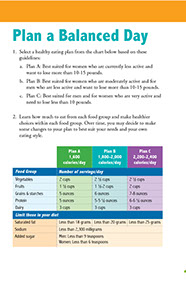
    1. Select a healthy eating plan from the chart below based on these guidelines:

    a. Plan A: Best suited for women who are currently less active and want to lose more than 10-15 pounds.

    b. Plan B: Best suited for women who are moderately active and for men who are less active and want to lose more than 10-15 pounds.

    c. Plan C: Best suited for men and for women who are very active and need to lose less than 10 pounds.

    2. Learn how much to eat from each food group and make healthier choices within each food group. Over time, you may decide to make some changes to your plan to best suit your needs and your own eating style.

    © American Institute for Preventive Medicine

  • Find Reasons To Care About Physical Activity

    Healthylife® Weigh

    Part 5

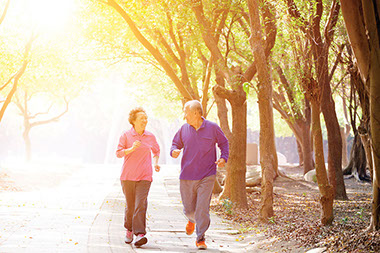
    Elderly couple jogging.

    Being physically active helps you manage your weight. When you engage in physical activity, you burn calories. The more intense the activity, the more calories you burn. However, all exercise boosts your metabolism. Exercise builds muscle, the biggest fat burner in the body. Even in a state of rest, muscle burns calories efficiently (you’ll still be experiencing the benefits of your morning workout in the afternoon). Losing weight can slow your metabolism, but exercise can balance this effect.

    There are many other reasons to be active that may motivate you. Being physically active may help you live out the values you identified in Part 1.

    © American Institute for Preventive Medicine

  • Stretching And Rehabilitation

    Healthylife® Weigh

    Part 5

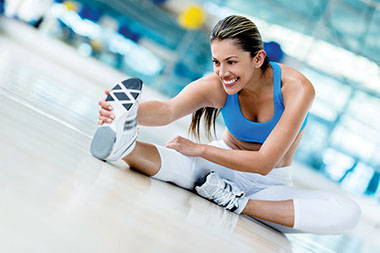
    Smiling women stretching.

    These exercises make your body more flexible. This helps you prevent injury during exercise and everyday activities. Stretching can also help you relax and is a tool for stress management. Tips:

    *  Stretch all muscle groups. Induce mild tension (not pain or burn) for 10 to 30 seconds.

    *  Don’t bounce while stretching. Make movements slow and controlled.

    *  Breathe slowly. Inhale while stretch is released. Exhale when moving into the stretch.

    *  Stretch after each cardio or resistance training workout.

    *  Stretch as a stand-alone workout or as a way to wind down at the end of the day.

    Examples of Stretching Exercises:

    Shoulder Shrug: Shrug your shoulders up toward your head. Then lower them. Repeat 4 times. Slowly circle your shoulders forward 8 times and then backward 8 times.

    Hamstring Stretch: Sit on the floor with your right leg straight. Bend your left leg and touch your foot against your straight leg. Stretch forward to touch the toes of your right foot. Hold for 4 counts. Then do this on the other side.

    © American Institute for Preventive Medicine

  • Variety Bingo

    Healthylife® Weigh

    Part 2

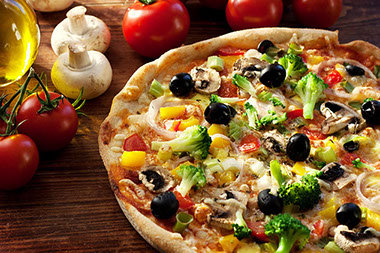
    Veggie pizza.

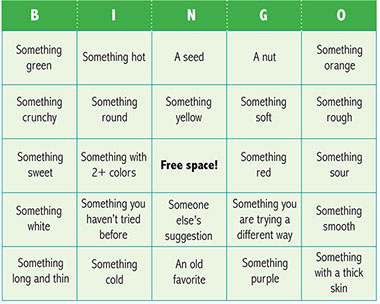
    This game is perfect for when you are making a salad, looking for pizza toppings, filling an omelet, or scoping out a buffet for healthy choices. Involve kids by having them identify different shapes, colors, textures, tastes, and experiences with their food.

    Game Rules

    1. Write down the options on pieces of paper and place them in a bowl.

    2. Have someone pull the pieces of paper out one at a time. Have them read out loud what’s on the paper.

    3. Have someone cross off the spaces that are read out loud.

    4. When someone gets an entire row, either across, down or diagonal, yell “Bingo!”

    5. Prepare a meal using the ingredients included in the Bingo! row.

    © American Institute for Preventive Medicine

  • Balance Of Choice

    Healthylife® Weigh

    Part 1

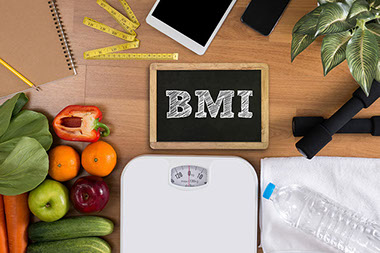
    Dumbbells, scale, towel, fruit, BMI body mass index formula rate formula in a board.

    Learn what is pulling you toward your goal and what is holding you back. All thoughts and feelings are valid. Is your goal more important to you than the challenges to achieve it? Are you pursuing this goal just because someone said you “should” do it? If you think of something later, come back to this to add another point.

    Benefits – “Pros” vs Costs-“Cons”

    Making a change.

    Pro Example: I will have more energy.

    Con Example: I won’t be able to have sweets as often as I do now.

    Not changing.

    Pro Example: I can keep all of my current habits.

    Con Example: I could keep putting on more weight.

    © American Institute for Preventive Medicine

  • Control Catastrophic Thinking

    Healthylife® Weigh

    Part 4

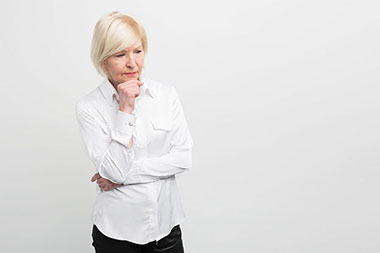
    Woman thinking.

    Seeing the worst possible outcome for a situation can lead to anxiety and racing thoughts. Avoid focusing on the negative aspects of a situation or how it could be even worse. The unknown future can seem scary and full of negative potential. Dispute each irrational thought with a rational one. Challenge your “worst case scenario” with a “best case scenario” and options in between.

    *  What is statistically likely in this scenario?

    *  How might this situation turn out better than expected?

    *  What can I do to reduce the chances of the situation getting worse?

    Think of a “mountain” that you build out of a “molehill.” Challenge your thought with rational thinking. Complete the following chart with two examples of your own.

    Catastrophic Thought

    Example: The more weight I lose, the more I am going to gain back later. I am better off staying overweight.

    Alternative Thought

    Losing weight will help my health now and in the future. I can learn tools to maintain my weight loss. Even a small weight loss will have a big impact on my health.

    © American Institute for Preventive Medicine

  • Exercise And Eating

    Healthylife® Weigh

    Part 5

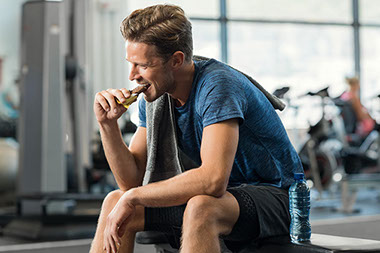
    Man eating a power bar at the gym.

    Exercise is not a solution for overeating or for eating unhealthy foods. Avoid treating exercise as a way to “make up” for eating more than your body needs. This can lead to feelings of guilt. It can also make exercise feel like a punishment.

    We tend to overestimate the calories burned through exercise and under-estimate the calories in food. The number of calories burned during exercise also varies from person to person. Factors like age, gender, and physical fitness can increase or decrease the caloric burn. The number in a chart or on a cardio machine monitor may not be accurate for you.

    Pre-Workout Eating

    You don’t have to eat before working out early in the morning, but it may give you more energy and help your body recover faster.

    Eat foods low in fat and fiber that can be digested easily. Include small amounts of protein in your pre-workout meals and snacks. This will help reduce muscle soreness. Experiment to find out what works best for you and allows you to feel your best.

    Pre-workout snack ideas (30-60 minutes before exercise):

    *  Piece of fruit

    *  Low-fat or non-fat yogurt

    *  Trail mix

    *  Whole-wheat toast with banana slices

    *  Smoothie with plain yogurt, frozen berries, and protein powder

    *  Oatmeal with fresh fruit

    Post-Workout Eating

    Exercise can increase your appetite. Your body wants to replace the calories you burned during exercise. Avoid overeating after exercise.

    Eat foods rich in protein, fiber, and healthy fats. Drink water to replenish fluids.

    Post-workout snack ideas (within 2 hours of exercise):

    *  Smoothie with plain yogurt, frozen berries, protein powder and avocado

    *  Banana with peanut butter

    *  Whole-wheat pita with turkey and veggies

    *  Protein bar (choose a bar with fewer than 5g of sugar)

    *  String cheese, apple, and whole grain crackers

    *  Veggie omelet with avocado

    If you are close to your normal meal time, just have that. Or, if you are not close to your normal meal time, have a small snack.
    © American Institute for Preventive Medicine

  • Healthy Body Clues

    Healthylife® Weigh

    Part 1

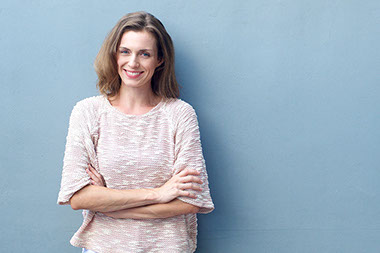
    Adult woman smiling with arms crossed.

    As you explore the pros and cons of making changes, consider how eating and exercise habits affect your body on a daily basis. These can provide clues to how your system is working. A serious nutrition deficiency can only be determined by your doctor, but there are ways to assess your nutritional health on a day-to-day basis.

    Dry skin & hairmay be caused by a deficit of healthy fats or a lack of B vitamins.

    Premature aging(wrinkles, sagging, dark spots, and dull skin) can reveal the body’s natural repair processes are being overwhelmed by poor lifestyle habits.

    Urinecolor can reveal dehydration or other problems in your intestines and kidneys.

    Eczemamay be linked to food allergies and/or food sensitivities, microbial imbalances, or gut-level irritations. Some research suggests that eating processed foods can cause inflammation which may lead to inflammatory disorders, like eczema.

    Nailsthat are weak or splitting could be due to a deficiency in vitamin A, vitamin C, or biotin, a B vitamin.

    Eye healthcan be hurt by a deficiency in vitamins C and E, zinc, lutein, and omega-3 fatty acids.

    Mood & energymay suffer if you are not giving your body enough fuel. You may feel cranky and easily irritated. Eating very sugary foods can also trigger headaches, discomfort, and tiredness as blood sugar spikes and drops sharply.

    Regular bowel movementsmay be a worry for you. How easy or difficult it is for you to clear toxic waste from your body can reveal clues about your fiber intake, hydration, and absorption of nutrients. Certain foods may also be more difficult for you to digest, leading to stomach pain and problems going to the bathroom.

    Benefits to healthy eating and exercise go beyond reducing long-term health risks. What you put in your body affects how you look and feel right now!

    © American Institute for Preventive Medicine

  • Keep Food Safe

    Healthylife® Weigh

    Part 3

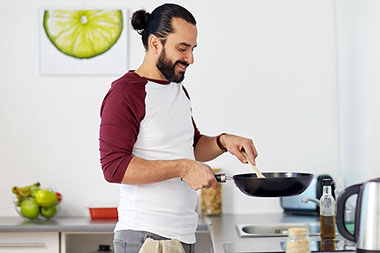
    Man with frying pan cooking food at home.

    *  Freezing: Keep freezer temperature at or below 0°F. Keep frozen foods in airtight containers.

    *  Refrigerator: Keep refrigerator temperature at or below 40°F. Store foods made from animal products in a drawer or in the back of the refrigerator, where it is cooler.

    *  Thawing: Thaw food on the bottom shelf of the refrigerator. Or, submerge the sealed container in cold water. Or, use the defrost settings on your microwave. Never thaw food on the counter.

    Heat to Safe Temperatures

    Use a food thermometer to make sure foods are safe to eat.

    *  145ºF: Fish, roasts, steaks, chops (beef, pork, veal, and lamb)

    *  160ºF: Egg dishes and ground meats (beef, veal, and lamb)

    *  165ºF: Stuffing, all poultry, casseroles, reheated leftovers

    Simple Cooking Methods

    When you cook vegetables, do so quickly and in little water. Some vitamins, like vitamin C, are lost when soaked in water or overcooked.

    Microwave: Place chopped vegetables in a microwave-safe dish with a lid. Or, use plastic wrap with a few holes poked for venting. Add 2 Tbsp. of water, or enough to cover the bottom of the dish. Microwave on high for 5 minutes. Check firmness. Add time to reach desired softness.

    Stove Top: Add 1 to 2 inches of water to a pot. Add vegetables. Simmer until tender, checking vegetables often after the first 5 minutes. Greens will cook faster, so check these after 2 minutes.

    Oven: Preheat oven to 450ºF. Coat a baking sheet with non-stick cooking spray or use a sheet of parchment paper. Toss vegetables with 1 Tbsp. of canola oil. Spread vegetables evenly and bake for at least 15 minutes. Check for desired softness. Add cooking time, if needed. Experiment with spices to flavor vegetables to your liking.

    © American Institute for Preventive Medicine

  • Map Your Meal Plan 2

    Healthylife® Weigh

    Menus & Recipes

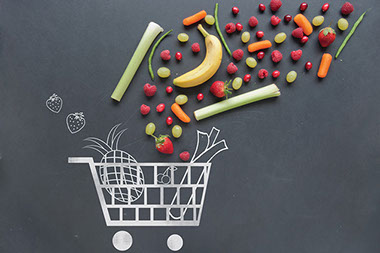
    Chalk drawing of shopping cart with fresh fruit above.

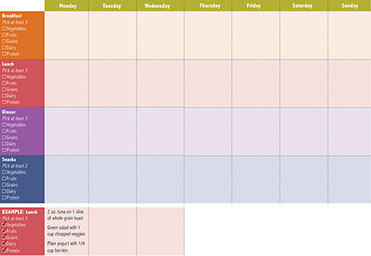
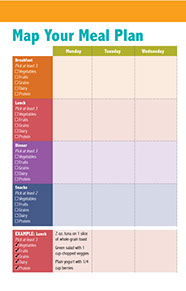
    Print this page or download the “Print on Demand” to map your meal plan.

    Chart to map your meal plan.

    © American Institute for Preventive Medicine