Category: Systematic Stress Management Program – Step 5: Thinking Differently

  • Steps To Developing The Most Effective Creative Imagery

    Systematic Stress Management Program

    Step 5: Thinking Differently Section

    Introduction

    Match the Self-Talk to the Theory

    Catch Questionable Comparisons

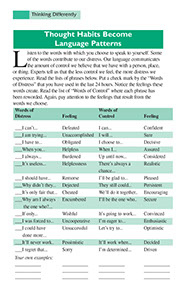
    Thought Habits Become Language Patterns

    How to Dispute a Belief

    Thought Control Techniques

    The Power of Creative Imagination

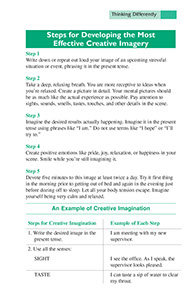
    Steps for Developing the Most Effective Creative Imagery

    General Stress Management Guidelines

    Step 1

    Write down or repeat out loud your image of an upcoming stressful situation or event, phrasing it in the present tense.

    Step 2

    Take a deep, relaxing breath. You are more receptive to ideas when you’re relaxed. Create a picture in detail. Your mental pictures should be as much like the actual experience as possible. Pay attention to sights, sounds, smells, tastes, touches, and other details in the scene.

    Step 3

    Imagine the desired results actually happening. Imagine it in the present tense using phrases like “I am.” Do not use terms like “I hope” or “I’ll try to.”

    Step 4

    Create positive emotions like pride, joy, relaxation, or happiness in your scene. Smile while you’re still imagining it.

    Step 5

    Devote five minutes to this image at least twice a day. Try it first thing in the morning prior to getting out of bed and again in the evening just before dozing off to sleep. Let all your body tension escape. Imagine yourself being very calm and relaxed.

    Page from the Systematic Stress Management book by the American Institute for Preventive Medicine. www.HealthyLife.com. All rights reserved.

    © American Institute for Preventive Medicine

    Step 1: Understanding Stress

    Step 3: Type A & B Behavior Patterns

    Step 5: Thinking Differently

    Step 7: Communication & Stress

    Step 2: Stress Management at Work

    Step 4: Biofeedback Training & Relaxation

    Step 6: Time Management

    Steps to Systematic Stress Management™

    RELATED ARTICLES

    © American Institute for Preventive Medicine  –  All Rights Reserved.Disclaimer|www.HealthyLife.com

  • How To Dispute Beliefs

    Systematic Stress Management Program

    Step 5: Thinking Differently Section

    Introduction

    Match the Self-Talk to the Theory

    Catch Questionable Comparisons

    Thought Habits Become Language Patterns

    How to Dispute a Belief

    Thought Control Techniques

    The Power of Creative Imagination

    Steps for Developing the Most Effective Creative Imagery

    General Stress Management Guidelines

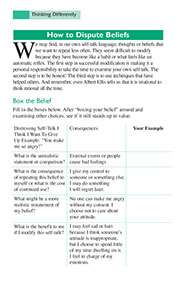
    We may find, in our own self-talk language, thoughts or beliefs that we want to repeat less often. They seem difficult to modify because they have become like a habit or what feels like an automatic reflex. The first step in successful modification is making it a personal responsibility to take the time to examine your own self-talk. The second step is to be honest! The third step is to use techniques that have helped others. And remember, even Albert Ellis tells us that it is irrational to think rational all the time.

    Box the Belief

    After “boxing your belief” around and examining other choices, see if it still stands up in value.

    Distressing Self-Talk I Think I Want To Give Up

    Example: “You make me so angry!”

    *  What is the unrealistic statement or comparison?

    *  What is the consequence of repeating this belief to myself or what is the cost of continued use?

    *  What might be a more realistic restatement of my belief?

    *  What is the benefit to me if I modify this self-talk?

    Consequences

    *  External events or people cause bad feelings

    *  I give my control to someone or something else. I may do something I will regret later.

    *  No one can make me angry without my consent. I choose not to care about your attitude.

    *  I may feel sad or hurt because I think someone’s attitude is inappropriate, but I choose to spend little of my time dwelling on it. I feel in charge of my emotions.

    Read Into the Reality Roots

    Sometimes stretching a point to the limit can help us to think about a different point of view. Take a belief that you would like to change. Then ask yourself the questions listed below as they relate to this belief. You may find that some questions seem ridiculous. Try to find humor in the ridiculous and you may also find that the belief may not have deep roots in reality.

    The belief I’d like to give up _______________

    *  Does the belief make sense?

    *  What evidence exists for it being false or true?

    *  Is there a legal reason for the belief?

    *  Is there any alternative to the belief?

    *  Will it kill me to let go of the belief?

    *  Do other people survive without this belief?

    *  What is the worst possible thing that could happen if I give up the belief?

    *  I am telling myself this belief is true what percent of the time?

    *  Would it be to my benefit to lessen this percentage?

    *  Is there now enough doubt about this belief to consider new thinking?

    ABCDE Model

    If an event produces stress, question the beliefs held about that event. Are the beliefs valid? Are they reasonable? Are they rational? This ABCDE Model identifies how beliefs influence stress. Once identified, beliefs that don’t make sense can be disputed or changed.

    Instructions: Remember a recent event that made you anxious, tense, or worried. Close your eyes and imagine it for 30 seconds. Using the ABCDE Model, learn to think differently to improve outcomes. See how you could have changed the emotional consequences.

    How the ABCDE Model Works

    Activating Event: What event made you anxious, tense, or worried? Example: Getting stuck in a traffic jam on the way to work. What’s your example?

    Beliefs: What thoughts did you have about the past event? Examples:

    1. “It is my fault for not leaving earlier.”

    2. “This is a waste of time.”

    3. “My boss will be angry about this.”

    4. “I’m stupid.”

    What’s your example?

    Consequence

    How did you feel because of your beliefs? Examples: Tense, feeling anxious, irritable, and having negative thoughts. What’s your example?

    Dispute

    Challenge the negative thought you identified in “B.” Start with a phrase like, “That’s not right…” and add a positive statement. Examples: “That’s not right, this happens to everyone at one time or another. I’ll use this time for some planning of my day’s activities. If I get anxious now, it may affect me when I do get to work.” What’s your example?

    Effect

    How do you feel now having challenged your negative thoughts? Examples: Relaxed, positive, in a good mood. Made good use of time spent in traffic jam. What’s your example?
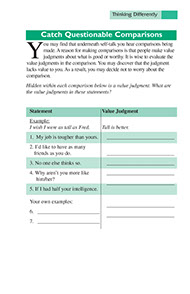
    Page from the Systematic Stress Management book by the American Institute for Preventive Medicine. www.HealthyLife.com. All rights reserved.

    © American Institute for Preventive Medicine

    Step 1: Understanding Stress

    Step 3: Type A & B Behavior Patterns

    Step 5: Thinking Differently

    Step 7: Communication & Stress

    Step 2: Stress Management at Work

    Step 4: Biofeedback Training & Relaxation

    Step 6: Time Management

    Steps to Systematic Stress Management™

    RELATED ARTICLES

    © American Institute for Preventive Medicine  –  All Rights Reserved.Disclaimer|www.HealthyLife.com

  • General Stress Management

    Systematic Stress Management Program

    Step 5: Thinking Differently Section

    Introduction

    Match the Self-Talk to the Theory

    Catch Questionable Comparisons

    Thought Habits Become Language Patterns

    How to Dispute a Belief

    Thought Control Techniques

    The Power of Creative Imagination

    Steps for Developing the Most Effective Creative Imagery

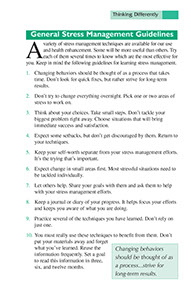
    General Stress Management Guidelines

    A variety of stress management techniques are available for our use and health enhancement. Some will be more useful than others. Try each of them several times to know which are the most effective for you. Keep in mind the following guidelines for learning stress management.

    1.  Changing behaviors should be thought of as a process that takes time. Don’t look for quick fixes, but rather strive for long-term results.

    2.  Don’t try to change everything overnight. Pick one or two areas of stress to work on.

    3.  Think about your choices. Take small steps. Don’t tackle your biggest problem right away. Choose situations that will bring immediate success and satisfaction.

    4.  Expect some setbacks, but don’t get discouraged by them. Return to your techniques.

    5.  Keep your self-worth separate from your stress management efforts. It’s the trying that’s important.

    6.  Expect change in small areas first. Most stressful situations need to be tackled individually.

    7.  Let others help. Share your goals with them and ask them to help with your stress management efforts.

    8.  Keep a journal or diary of your progress. It helps focus your efforts and keeps you aware of what you are doing.

    9.  Practice several of the techniques you have learned. Don’t rely on just one.

    10. You must really use these techniques to benefit from them. Don’t put your materials away and forget what you’ve learned. Reuse the information frequently. Set a goal to read this information in three, six, and twelve months.

    Page from the Systematic Stress Management book by the American Institute for Preventive Medicine. www.HealthyLife.com. All rights reserved.

    © American Institute for Preventive Medicine

    Step 1: Understanding Stress

    Step 3: Type A & B Behavior Patterns

    Step 5: Thinking Differently

    Step 7: Communication & Stress

    Step 2: Stress Management at Work

    Step 4: Biofeedback Training & Relaxation

    Step 6: Time Management

    Steps to Systematic Stress Management™

    RELATED ARTICLES

    © American Institute for Preventive Medicine  –  All Rights Reserved.Disclaimer|www.HealthyLife.com