Category: Dental & Mouth Concerns

  • Safety Tips For Your Teeth

    Dental & Mouth Concerns

    Your teeth are vulnerable to nicks, chips, stains, and strains. To protect your teeth from damage and injury, take these precautions.

    *  Don’t chew ice, pens, or pencils.

    *  Don’t use your teeth to open paper clips or otherwise function as tools.

    *  If you smoke a pipe, don’t bite down on the stem.

    *  If you grind your teeth at night, ask your dentist if you should be fitted for a bite plate to prevent tooth grinding.

    *  If you play contact sports like football or hockey, wear a protective mouth guard.

    *  Always wear a seat belt when riding in a car.

    *  Avoid sucking on lemons or chewing aspirin or vitamin C tablets. The acid wears away tooth enamel.

    Image of man brushing teeth.
    A Year of Health Hints book by the American Institute for Preventive Medicine. www.HealthyLife.com. All rights reserved.

    © American Institute for Preventive Medicine

  • Bonding For A Beautiful Smile

    Dental & Mouth Concerns

    Bonding can correct certain dental problems effectively and inexpensively. By bonding plastic or porcelain to the tooth, a dentist can:

    *  Cover discoloration.

    *  Close small gaps between teeth.

    *  Repair fractured and chipped teeth.

    *  Protect exposed roots caused by receding gums.

    *  Seal out decay-causing bacteria on back teeth.

    If you’ve had your teeth bonded, take these steps to prevent chips, stains, or other problems.

    *  Don’t chew ice or bite down on hard foods or candy.

    *  Avoid smoking, drinking coffee or tea, or eating blueberries or other foods that easily stain.

    *  Have the bonded teeth checked every three to five years. They may need to be touched up or done over.

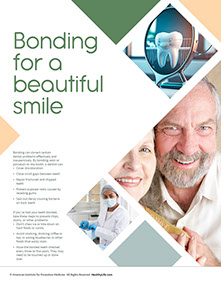
    Image of women smiling.
    A Year of Health Hints book by the American Institute for Preventive Medicine. www.HealthyLife.com. All rights reserved.

    © American Institute for Preventive Medicine

  • Sticky Snacks Spell Trouble

    Dental & Mouth Concerns

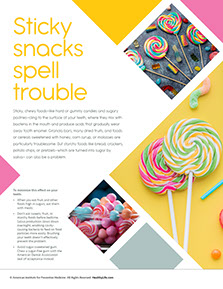
    Image of chewy candy.

    Sticky, chewy foods-like cough drops, hard candies, and sugary pastries-cling to the surface of your teeth, where they mix with bacteria in the mouth and produce acids that gradually wear away tooth enamel. Granola bars, many dried fruits, and foods or cereals sweetened with honey, corn syrup, or molasses are particularly troublesome. But starchy foods like bread, crackers, potato chips, or pretzels-which are turned into sugar by saliva-can also be a problem. To minimize this difficulty:

    *  If you eat fruit and other foods high in sugars, eat them with meals.  Finish a meal with foods that help buffer acid formation.

    *  Don’t eat sweets, fruit, or starchy foods before bedtime. Saliva production slows down overnight, enabling cavity-causing bacteria to feed on food particles more easily. Brushing your teeth doesn’t effectively prevent the problem.

    *  Avoid sugar-sweetened gum and beverages. Chew a sugar-free gum instead, especially one with the artificial sweetener xylitol.

    A Year of Health Hints book by the American Institute for Preventive Medicine. www.HealthyLife.com. All rights reserved.

    © American Institute for Preventive Medicine

  • Broken Or Knocked-Out Tooth

    Dental & Mouth Concerns

    Signs & Symptoms

    *  Loss of a tooth or part of a tooth.

    *  Nicked or chipped tooth or teeth.

    Causes

    An injury or a strain on a tooth, such as from biting on a hard object can cause a broken, knocked-out, or chipped tooth.

    Treatment

    When a tooth gets knocked out, go to the dentist as soon as possible. Keep the tooth moist until you get to the dentist. Follow up treatment is also needed.

    Questions to Ask

    Self-Care / Prevention

    For a Knocked-Out Tooth

    *  If you find the tooth, pick it up by the crown. Avoid contact with the root.

    *  Rinse off the rest of the tooth with clear water. Do not scrub the tooth or remove any tissue that is attached to the tooth.

    *  If possible (and if you’re alert), gently put the tooth back in its socket or hold it under your tongue. Otherwise, put the tooth in a glass of milk, cool salt water, or a wet cloth. Don’t let the tooth dry out.

    *  If the gum is bleeding, hold a gauze pad or a clean tissue tightly in place over the wound.

    *  Try to get to a dentist within 30 minutes of the accident. If the dentist is not available, go to a hospital emergency department. Take the tooth with you.

    For a Broken Tooth

    *  To reduce swelling, apply a cold compress to the area.

    *  Save any broken tooth fragments. Put them in a wet cloth or milk. Take them to the dentist.

    To Protect Teeth From Damage and Injury

    *  Don’t chew on ice, pens, pencils, etc.

    *  Don’t use your teeth to pry things open.

    *  If you smoke a pipe, don’t bite down on the stem.

    *  If you grind your teeth at night, ask your dentist if you should be fitted or a bite plate.

    *  If you play contact sports like football or hockey, wear a protective mouthguard. Mouthguards may also be useful for noncontact sports, such as gymnastics. Discuss the need of using a mouthguard with your dentist.

    *  Always wear a seat belt when riding in a car.

    *  Don’t suck on lemons or chew aspirin or vitamin C tablets. Acids in these wear away tooth enamel.

    Healthier at Home book by the American Institute for Preventive Medicine. www.HealthyLife.com. All rights reserved.

    © American Institute for Preventive Medicine

  • Take A Good Look At Your Gums

    Dental & Mouth Concerns

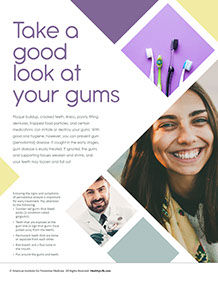
    Image of man at the dentist office looking at xrays.

    Plaque buildup, crooked teeth, illness, poorly fitting dentures, trapped food particles, and certain medications can irritate or destroy your gums. With good oral hygiene, however, you can prevent gum (periodontal) disease. If caught in the early stages, gum disease is easily treated. If ignored, the gums and supporting tissues wither, and your teeth may loosen and fall out.

    Knowing the signs and symptoms of periodontal disease is important for early treatment. Pay attention to the following:

    *  Swollen red gums that bleed easily (a condition called gingivitis).

    *  Teeth that are exposed at the gum line (a sign that gums have pulled away from the teeth).

    *  Permanent teeth that are loose or separate from each other.

    *  Bad breath and a foul taste in the mouth.

    *  Pus around the gums and teeth.

    A Year of Health Hints book by the American Institute for Preventive Medicine. www.HealthyLife.com. All rights reserved.

    © American Institute for Preventive Medicine

  • Cancer Of The Mouth Area Warning Signs

    Dental & Mouth Concerns

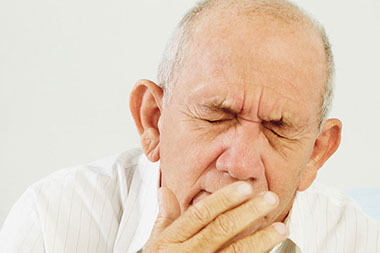
    Image of man experiencing mouth pain.

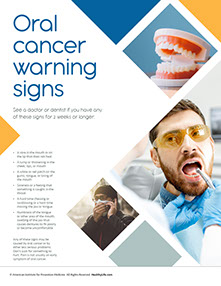
    See a doctor or dentist if you have any of these signs for 2 weeks or longer:

    *  A sore in the mouth that does not heal

    *  A lump or thickening in the cheek

    *  A white or red patch on the gums, tongue, or lining of the mouth

    *  Soreness or a feeling that something is caught in the throat

    *  A hard time chewing or swallowing or a hard time moving the jaw or tongue

    *  Numbness of the tongue or other area of the mouth; swelling of the jaw that causes dentures to fit poorly or become uncomfortable

    Any of these signs may be caused by oral cancer or by other, less serious problems. Don’t wait for something to hurt. Pain is not usually an early symptom of oral cancer.

    Health at Home Lifetime book by the American Institute for Preventive Medicine. www.HealthyLife.com. All rights reserved.

    © American Institute for Preventive Medicine

  • Teeth & Mouth Changes With Aging

    Dental & Mouth Concerns

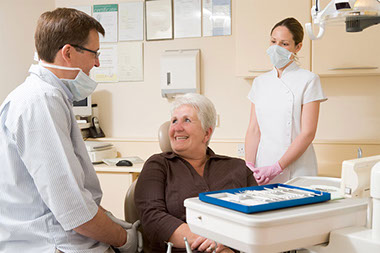
    Image of older women at the dentist office.

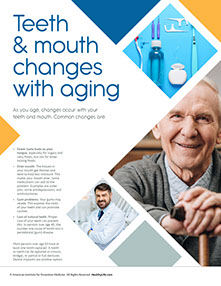
    As you age, changes occur with your teeth and mouth. Common changes are:

    *  Fewer taste buds on your tongue, especially for sugary and salty foods, but not for bitter tasting foods

    *  Drier mouth. The tissues in your mouth get thinner and tend to hold less moisture. This makes your mouth more dry. Some medications can add to the problem. Examples are water pills, some antidepressants, and antihistamines.

    *  Gum problems. Your gums may recede. This exposes the roots of your teeth and can promote cavities.

    *  Loss of natural teeth. Proper care of your teeth can prevent this. In persons over age 40, the number one cause of tooth loss is periodontal (gum) disease.

    More than half of persons over age 50 have at least one tooth replaced. A tooth or teeth can be replaced as crowns, bridges, partial or full dentures. Dental implants are another option.

    Health at Home Lifetime book by the American Institute for Preventive Medicine. www.HealthyLife.com. All rights reserved.

    © American Institute for Preventive Medicine

  • Canker Sores

    Dental & Mouth Concerns

    Canker sores are small, round mouth sores in the lining of the mouth or on the tongue, gums, or lips. You can have one canker sore or a group of them.

    Signs & Symptoms

    *  A burning or tingling feeling before the sore appears

    *  Red-rimmed, shallow sores in the mouth

    *  Discomfort when you eat and talk

    Causes, Risk Factors & Care

    Canker sores may be caused by any tear in the mouth’s lining, from an uneven tooth, rough tooth brushing, a burn from a hot drink, etc. Vitamin/mineral deficiencies, emotional stress, and family traits may also trigger canker sores.

    Canker sores heal within 1 to 2 weeks. Self-care can help with symptoms and speed up healing. If needed, a mouthwash with tetracycline and/or an oral paste (amelxanox) can be prescribed.

    Self-Care / Prevention

    To Relieve Pain:

    *  Mix 1/2 cup salt in 1 cup of warm water. Rinse the mouth with an ounce of this mixture 4 times a day. Don’t swallow the water.

    *  Put ice on the canker sore or suck on a frozen popsicle.

    *  Avoid spicy foods and acidic drinks, like citrus juices.

    *  Use over-the-counter products, like Anbesol, Blistex, and aloe vera gel.

    *  Swish Mylanta or milk of magnesia around the mouth to coat the sore. Then spit the medicine out.

    *  Put the gel from a vitamin E capsule on the sore several times a day.

    *  Take an over-the-counter pain medicine.

    Prevention

    *  Avoid things that irritate the mouth, such as hot drinks and sharp objects.

    *  Use a toothbrush with soft bristles and a toothpaste without sodium lauryl sulfate. Don’t brush too hard.

    *  Take a daily vitamin/mineral supplement as advised by your doctor.

    Medical Care

    Contact Doctor When:

    *  You have any of these problems with the canker sore:

    – Fever and/or swollen glands

    – Severe pain

    – A sore on the roof of the mouth or white spots in the mouth that do not heal in 1 to 2 weeks

    *  A canker sore disturbs your sleep or does not allow you to eat.

    *  A canker sore appears only after you start a new medicine.

    *  A canker sore has not healed after 3 weeks.

    Healthier at Home book by the American Institute for Preventive Medicine. www.HealthyLife.com. All rights reserved.

    © American Institute for Preventive Medicine

  • Temporomandibular Joint Syndrome

    Dental & Mouth Concerns

    Temporomandibular joint (TMJ) syndrome occurs when the muscles, joints, and ligaments of the jaw move out of alignment.

    Signs & Symptoms

    *  Pain is felt in or around an ear. Pain in the jaw spreads to the face or the neck and shoulders. Pain is felt when you open and close your mouth or you can’t fully open the mouth.

    *  Headaches. Toothaches.

    Causes

    *  Clenching or grinding the teeth (bruxism).

    *  Poor posture or sleeping in a way that misaligns the jaw or creates tension in the neck.

    *  Stress in life when it results in muscle tension in the neck and shoulder.

    *  Incorrect or uneven bite or injury to the jaw.

    Treatment

    *  Wearing a mouthguard or bite plate.

    *  Physical therapy.

    *  Medicine to reduce swelling. One type is given through a shot in the jaw joint. Muscle relaxants for a short period of time.

    *  Counseling if the TMJ is caused by stress.

    *  Surgery is a last resort.

    Questions to Ask

    Self-Care / Prevention

    Self-care measures may reduce the need for medical treatment.

    *  Massage the jaw area several times a day, first with your mouth open, then with it closed.

    *  Wear a mouth protector or mouth device, as prescribed by your doctor or dentist.

    *  Take medication, as prescribed.

    *  Don’t chew gum or eat foods that are hard to chew.

    *  Try not to open your jaw too wide when you yawn and when you bite into foods, such as an apple, triple-decker sandwich, etc.

    *  To help reduce muscle spasms that can cause pain, apply moist heat to the jaw area. Use a washcloth soaked in warm water.

    *  If stress is a factor, use relaxation exercises.

    *  Take steps to reduce the risk of jaw injuries.

    *  Maintain a good posture.

    Healthier at Home book by the American Institute for Preventive Medicine. www.HealthyLife.com. All rights reserved.

    © American Institute for Preventive Medicine

  • Cold Sores

    Dental & Mouth Concerns

    Cold sores appear on or near the lips. They are painful and unpleasant. Nearly 1 in 3 people will have them. Cold sores are also called fever blisters.

    Signs & Symptoms

    *  Tingling feeling on or near the lips for 36 to 48 hours before the sore appears

    *  Itching at the site (early sign)

    *  Small, red blisters with pus-filled centers

    *  Blisters form a yellow crust that lasts about 10 days

    *  One sore or a cluster of sores

    Causes, Risk Factors & Care

    Cold sores are caused by the herpes sim- plex virus (HSV), either HSV-1 (this is most often the cause) or HSV-2 (the usual cause of genital herpes). The virus lies dormant in the body and can return. A fever, cold, stress, cold or windy weather, and strong sun exposure are triggers for outbreaks.

    Cold sores are very contagious, especially when the blisters rupture and weep.

    Cold sores are treated with self-care and antiviral medications, such as acyclovir and penciclovir. Prompt treatment may reduce the discomfort.

    Self-Care / Prevention

    *  Keep the sore clean and dry.

    *  Apply antiviral medication, if prescribed, to the affected area at the first sign of a cold sore.

    *  Try an over-the-counter treatment, such as Abreva antiviral cream, Campho-Phenique, Blistex, or make a paste with cornstarch and water. Dab some on the sore with a cotton swab.

    *  Dab aloe vera or petroleum jelly on the sore. Use a cotton swab.

    *  Apply ice to the sore or suck on a frozen popsicle.

    *  Take an over-the-counter medicine for pain.

    *  Learn to relax. Meditate, practice yoga, etc. Learn to deal with stress, too.

    *  Avoid foods that are sour, spicy, or acidic. These may irritate the sores.

    *  Take vitamin C and/or zinc supplements, as directed by your doctor.

    *  Apply cool compresses when the sores have crusted over.

    *  Try not to worry or be too self-conscious. This only makes the situation worse.

    Prevention

    To avoid getting or spreading cold sores:

    *  Don’t share drinking glasses, towels, or cooking utensils.

    *  Don’t touch cold sores with your fingers. If you do touch the cold sores, do not touch your eyes. This could cause a serious eye infection.

    *  Wash your hands often.

    *  Avoid kissing or direct skin contact with the sores. This includes oral sex. The virus that causes cold sores can cause genital herpes, too.

    *  When in the sun, wear a hat and use a sunblock with a sun-protective factor (SPF) of 15 or more on the lips.

    *  Use a lip balm on cold or windy days.

    *  Ask your doctor about a prescribed antiviral medicine to take or apply when you feel a cold sore coming on.

    *  Try to figure out what triggers the sores. Once you identify a trigger, do what you can to avoid it.

    *  Get regular exercise.

    Medical Care

    Contact Doctor When:

    *  You have eye pain with the cold sore. Pain from the sore limits normal activity.

    *  The cold sore has lasted longer than 2 weeks.

    *  Cold sores appear 4 or more times a year.

    *  Cold sores appeared after you started a new medicine or are present while taking steroid medicines.

    *  Eczema
    Healthier at Home book by the American Institute for Preventive Medicine. www.HealthyLife.com. All rights reserved.

    © American Institute for Preventive Medicine