Category: Ear, Nose & Throat Conditions

  • Earaches

    Ear, Nose & Throat Conditions

    Signs & Symptoms

    *  Mild to severe ear pain.

    *  Feeling of fullness or discomfort in the ears.

    *  Tugging at the ear and restlessness in young children.

    *  Ear pain.

    *  Some hearing loss.

    *  Blood or other discharge from the ear (especially after sticking an object in the ear or exposure to extremely loud noise).
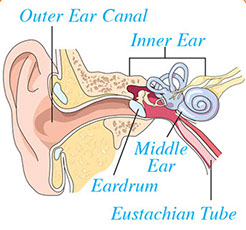
    Illustration of ear.

    Causes

    The most common cause of earaches is plugged Eustachian tubes. These go from the back of the throat to the middle ear. Fluid or pressure in a plugged Eustachian tube causes pain. This is caused by an infection of the middle ear, a cold or sinus infection, or allergies. Other things that can cause ear pain include changes in air pressure in a plane, something stuck in the ear, too much earwax, tooth problems, and ear injuries.

    Treatment

    Treatment includes pain relievers and methods to dry up or clear the blocked ear canal. Self-care can be used to treat many earaches. Severe and/or constant ear pain needs a medical diagnosis. Often, antibiotics are not needed for middle ear infections in children. About 8 in 10 children with ear infections get better without antibiotics. Let your child’s doctor decide if and when an antibiotic should be prescribed.

    Questions to Ask

    Self-Care / Prevention

    To Help Prevent Ear Pain

    *  Don’t put cotton-tipped swabs, bobby pins, etc., in your ears. This could damage the eardrum.

    *  Don’t blow your nose with too much force.

    *  If you can, avoid places that have very loud noises (construction sites, etc.). Wear earplugs when exposed to loud noises.

    *  Keep the volume on low when using stereos, compact discs (CDs), etc. If someone else can hear the music when you are listening to one of these devices with earphones, the volume is too loud.

    To Avoid Getting “Swimmer’s Ear”

    *  Wear wax or silicone earplugs.

    *  Wear a bathing cap.

    *  Don’t swim in dirty water. Swim on the surface not underneath the water.

    *  Use an over-the-counter product, such as Swim-Ear, as directed.

    To Reduce Ear Pain

    *  Place a warm washcloth next to the ear. Some health professionals recommend putting an ice bag or ice in a wet washcloth over the painful ear for 20 minutes.

    *  Take an over-the-counter medicine for pain as directed on the label.

    To Open Up the Eustachian Tubes and Help Them Drain

    *  Sit up. Prop your head up when you sleep.

    *  Yawn. This helps move the muscles that open the Eustachian tubes.

    *  Chew gum or suck on hard candy. (Do not give to children under age 5.) This tip is especially helpful during pressure changes that take place during air travel, but can also help if you wake up with ear pain.

    *  When traveling by air, stay awake when the plane takes off and lands. Wear ear plugs.

    *  Take a steamy shower.

    *  Use a cool-mist vaporizer, especially at night.

    *  Drink plenty of cool water.

    *  Gently, but firmly, blow through your nose while holding both nostrils closed until you hear a pop. This can be done several times a day.

    *  If okay with your doctor, take a decongestant to help relieve the swelling that causes the pain. (Don’t use a nasal spray decongestant for more than 3 days unless directed by your doctor.)

    *  When you give a baby a bottle, hold the baby in an upright position.

    To Treat a Mild Case of “Swimmer’s Ear”

    The goal is to clean and dry the outer ear canal without doing further damage to the top layer of skin.

    *  Shake the head to expel trapped water.

    *  Dry the ear canal. Get a clean facial tissue. Twist each corner into a tip and gently place each tip into the ear canal for 10 seconds. Repeat with the other ear using a new tissue.

    *  Use an over-the-counter product, such as Swim-Ear. Drop it into the ears to fight infection. Follow package directions.

    *  Do not remove earwax. This protects the ear canal.

    For an Insect in the Ear

    Shine a flashlight into the ear. Doing this may cause the insect to come out.

    Resources

    National Institute on Deafness and Other Communication Disorders (NIDCD)

    800.241.1044
    www.nidcd.nih.gov

    Healthier at Home book by the American Institute for Preventive Medicine. www.HealthyLife.com. All rights reserved.

    © American Institute for Preventive Medicine
  • Earwax

    Ear, Nose & Throat Conditions

    Earwax coats and protects the lining of the ear canal. It filters dust and helps keep the ears clean. Normally, earwax is soft and drains by itself. Sometimes it hardens and forms a plug.

    Signs & Symptoms

    Signs and symptoms of earwax buildup are:

    *  Blocked or plugged feeling in the ear

    *  Partial hearing loss (temporary)

    *  Ringing in the ear

    *  Ear discomfort or pain

    Causes

    *  Exposure to excessive dust or dirt

    *  A family history of earwax buildup

    Simple earwax build-up can be treated using self-care. If self-care doesn’t take care of the problem, a doctor can clear the earwax with a special vacuum, scoop, or water-pik-like device.

    Prevention

    *  Wear earplugs when exposed to excessive dust or dirt.

    *  Don’t use cotton swabs in the ear. They tend to pack the earwax down more tightly.

    *  Don’t push objects into the ear canal.

    Self-Care

    {Note: Use only if you know that your eardrum is not ruptured or infected. See signs of a ruptured eardrum and ear infection under “When to Seek Medical Care” on this page.}

    *  Don’t try to scrape out earwax. You could put a hole in your eardrum or damage the skin of your ear canal.

    *  Use an over-the-counter product, such as Murine Ear Drops, Debrox, etc. Follow package directions.

    *  Hold a warm, wet washcloth on the blocked ear or, take a warm shower. Let the water gently flow into the ear. Use the tip of a warm washcloth to remove the softened wax. Don’t use cold water. This may cause dizziness.

    *  Lie on your side or tilt your head sideways. Using a clean medicine dropper, carefully squeeze a few drops of lukewarm water into your ear. Leave the water there for about 10 minutes. Tilt your head to let the water drain out of the ear. After several minutes, do the same thing again. If the ear wax has not cleared in 3 hours, repeat this entire procedure. {Note: Instead of just warm water, you can use a mixture of 1 part warm water and 1 part hydrogen peroxide. Keep the drops in the ear for 3, not 10 minutes, though.}

    *  Rest a hot water bottle on the affected ear for a few minutes. Afterward, use a washcloth to remove the softened wax.

    When to Seek Medical Care

    Contact Doctor When:

    *  You have sudden or total hearing loss in one or both ears.

    *  Earwax has not cleared after using self-care for several days.

    *  You have signs of a ruptured eardrum:

    – Ear pain

    – Blood or other ear discharge

    – Partial hearing loss

    – Ringing or burning in the ear

    *  You have ear pain with any of these signs of an ear infection:

    – Feeling of fullness in the ear that leads to ear pain

    – Fever of 101°F or higher

    – Blood, pus, or fluid from the ear

    – Temporary hearing loss

    – Redness and swelling of the skin of the ear canal

    – Nausea, vomiting, and/or dizziness

    Health at Home Lifetime book by the American Institute for Preventive Medicine. www.HealthyLife.com. All rights reserved.

    © American Institute for Preventive Medicine
  • Hay Fever

    Ear, Nose & Throat Conditions

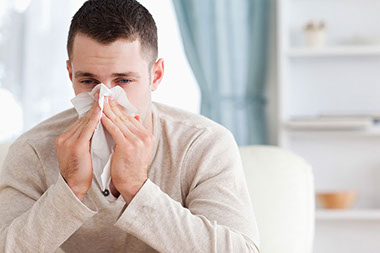
    Image of man blowing nose with tissue.

    Hay fever has nothing to do with hay or fever. The medical term for hay fever is allergic rhinitis. It is most common in spring and fall when a lot of ragweed is in the air. Some people have hay fever all year, though.

    Signs & Symptoms

    *  Itchy or watery eyes.

    *  Runny, itchy nose.

    *  Congestion.

    *  Sneezing.

    Causes

    Hay fever is a reaction of the upper respiratory tract to allergens.

    Treatment

    Talk to your doctor if self-care measures do not help. He or she may prescribe:

    *  Antihistamines. For best results, take the antihistamine 30 minutes before going outside. {Note: Some over-the-counter antihistamines can make you more drowsy than prescribed ones. Be careful when driving and operating machinery since some antihistamines can make you drowsy.}

    *  A decongestant. {Note: Do not give antihistamines, decongestants, and other over-the-counter medicines for colds, coughs, and/or the flu to children less than 2 years old. For children 2 years old and older, follow their doctor’s advice.

    *  A corticosteroid nasal spray and eye drops, cromolyn sodium, and oral corticosteroids.

    *  Skin tests to find out what things you are allergic to.

    *  Allergy shots.

    It is best to take what your doctor advises instead of testing over-the-counter products on your own.

    Questions to Ask

    Self-Care / Prevention

    *  If you are allergic to pollen and molds, let someone else do outside chores. Mowing the lawn or raking leaves can make you very sick.

    *  Keep windows and doors shut and stay inside when the pollen count or humidity is high. Early morning is sometimes the worst.

    *  Avoid tobacco smoke and other air pollutants.

    *  Don’t have pets. If you have a pet, keep it out of the bedroom. When you can, keep the pet outdoors.

    *  Use an air conditioner or air cleaner in your house, especially in the bedroom. Electronic air filters are better than mechanical ones. Clean the filter often. Or, try a doctor-approved air purifier, especially in the bedroom. Devices with HEPA filters can be very effective in cleaning indoor air.

    To limit dust, mold, and pollen:

    *  Put a plastic cover on your mattress or cover it completely with an allergen-free mattress cover.

    *  Sleep with no pillow or with the kind your doctor or health care provider recommends. If you use a pillow, cover it with an allergen-free cover.

    *  Don’t dry sheets and blankets outside.

    *  Try not to have stuffed animals kept in the bedroom. If you must, have only one that can be washed. Wash it in hot water once a week.

    *  Use curtains and rugs that can be washed often. Don’t use carpeting.

    *  Dust and vacuum often. Wear a dust filter mask when you do.

    *  Put an electronic air filter on your furnace or use portable air purifiers.

    *  Shower or bathe and wash your hair after heavy exposure to pollen, dust, etc.

    Resources

    Asthma and Allergy Foundation of America

    800.7.ASTHMA (727.8462)

    www.aafa.org

    Healthier at Home book by the American Institute for Preventive Medicine. www.HealthyLife.com. All rights reserved.

    © American Institute for Preventive Medicine
  • Hearing Loss

    Ear, Nose & Throat Conditions

    People over age 50 are likely to lose some hearing each year. The decline is usually gradual. About 30% of adults age 65 through 74 and about 50% of those age 85 and older have hearing problems.

    Hearing problems can get worse if they are ignored and not treated. People with hearing problems may withdraw from others because they may not be able to understand what others say. Hearing loss can cause an older person to be labeled “confused” or “senile.”

    Signs & Symptoms

    *  Words are hard to understand. This worsens when there is background noise.

    *  Certain sounds are overly loud or annoying.

    *  Hearing a hissing or ringing background noise. This can be constant or it can come and go.

    *  Concerts, TV shows, etc. are less enjoyable because much goes unheard.

    Causes

    Presbycusis (prez-bee-KU-sis). This is a gradual type of hearing loss. It is common with aging. With this, you can have a hard time understanding speech. You may not tolerate loud sounds. You may not hear high pitched sounds. Hearing loss from presbycusis does not cause deafness.

    *  Ear wax that blocks the ear canal.

    *  A chronic middle ear infection or an infection of the inner ear.

    *  Medicines (e.g., aspirin).

    *  Blood vessel disorders, such as high blood pressure.

    *  Acoustic trauma, such as from a blow to the ear or from excessive noise. Noise-Induced Hearing Loss (NIHL) can be from a one-time exposure to an extremely loud sound or to repeated exposure to loud level sounds.

    *  Ménière’s disease. This is a problem of the inner ear. The hearing loss comes and goes. Dizziness is also a symptom.

    *  Small tumors on the auditory nerve. Brain tumor (rarely).

    Treatment

    *  Earwax is removed by a health care provider.

    *  Hearing aid(s). These make sounds louder.

    *  Speech reading. This is learning to read lips and facial expressions.

    *  Auditory training. This helps with specific hearing problems.

    *  Surgery. This can be done if the problem requires it.

    Questions to Ask

    Self-Care / Prevention

    For Gradual, Age-Related Hearing Loss

    *  Ask people to speak clearly, distinctly, and in a normal tone.

    *  Look at people when they are talking to you. Watch their expressions.

    *  Try to limit background noise when speaking with someone.

    *  In a church or theater, sit in the 3rd or 4th row with people sitting around you.

    *  Install a flasher or amplifier on your phone, door chime, and alarm clock.

    To Hear Sounds Better

    *  Use a hearing aid. There are many kinds. Examples are ones worn:

    – In-the-Ear (ITE).

    – Behind-the-Ear (BTE).

    – In-the-Canal (ITC).

    *  To find the hearing aid that works best for you, see an audiologist. Ask him or her about a trial period with different hearing aids to find one you are comfortable with.

    *  Use devices and listening systems that help you hear better when you use your telephone, mobile phone, TV, stereo, etc.

    To Clear Earwax

    Use only if the eardrum is not ruptured. Check with your doctor if you are not sure.

    *  Lie on your side. Using a syringe or medicine dropper, carefully squeeze a few drops of lukewarm water into your ear (or have someone else do this). Let the water remain there for 10 to 15 minutes and then shake it out. Now, squeeze a few drops of hydrogen peroxide, mineral oil, or an over-the-counter cleaner, such as Debrox, into the ear. Let the excess fluid flow out of the ear.

    *  After several minutes, put warm water in the ear again. Let it stay there for 10 to 15 minutes. Tilt the head to allow it to drain out of the ear.

    Repeat this entire procedure again in 3 hours if the earwax has not cleared.

    Resources

    American Speech-Language Hearing Association

    800.638.8255

    www.asha.org

    Better Hearing Institute

    800.EAR.WELL (327.9355)

    www.betterhearing.org

    Healthier at Home book by the American Institute for Preventive Medicine. www.HealthyLife.com. All rights reserved.

    © American Institute for Preventive Medicine
  • Laryngitis

    Ear, Nose & Throat Conditions

    Laryngitis is when your larynx (voice box) is irritated or swollen.

    Signs & Symptoms

    *  Hoarse, husky, and weak voice or loss of voice.

    *  Cough.

    *  Sore throat, fever, and/or trouble swallowing.

    Causes

    Common causes are allergies and irritants like smoke; bacterial or viral infections; and strained vocal cords. Smoking, drinking alcohol, breathing cold air, and using already distressed vocal cords can make the problem worse. Growths on the vocal cords or nerve damage to the vocal cords can also cause hoarseness.

    Treatment

    Self-care treats most cases of laryngitis. If needed, your doctor may prescribe an antibiotic for a bacterial infection.

    Questions to Ask

    Self-Care / Prevention

    *  Don’t smoke. Avoid secondhand smoke.

    *  Don’t talk if you don’t need to. Write notes, instead.

    *  Use a cool-mist humidifier in your bedroom.

    *  Drink a lot of fluids. Drink warm drinks, such as weak tea, with honey and/or lemon juice.

    *  Gargle every few hours with warm salt water (1/4 teaspoon of salt in 1 cup of warm water).

    *  Run hot water in the shower to make steam. Sit in the bathroom and breathe the moist air.

    *  Suck on cough drops, throat lozenges, or hard candy. (Don’t give to children under age 5.) Take an over-the-counter medicine for pain as directed on the label.

    Resources

    American Academy of Otolaryngology –

    Head and Neck Surgery

    www.entnet.org

    Healthier at Home book by the American Institute for Preventive Medicine. www.HealthyLife.com. All rights reserved.

    © American Institute for Preventive Medicine
  • Nosebleeds

    Ear, Nose & Throat Conditions

    Signs & Symptoms

    *  Bleeding from a nostril.

    *  Bleeding from the nose and down the back of the throat.

    Causes

    Nosebleeds are often caused by broken blood vessels just inside the nose. Risk factors include:

    *  A cold or allergies.

    *  A dry environment.

    *  Frequent nose blowing and picking.

    *  Using too much nasal spray.

    *  A punch or other blow to the nose.

    A nosebleed is serious when heavy bleeding from deep within the nose is hard to stop. This type occurs most often in the elderly. It can be caused by: Hardening of nasal blood vessels; high blood pressure; and medicines that treat blood clots.

    Treatment

    Self-care treats most nosebleeds. A doctor can pack the nostril to stop the bleeding or do a treatment that seals the blood vessel that bleeds.

    Questions to Ask

    Self-Care / Prevention

    *  Sit with your head leaning forward. Pinch the nostrils shut. Use your thumb and forefinger to gently squeeze the nose’s midsection.

    *  Hold for up to 20 minutes without stopping. Use a clock to time this. Breathe through your mouth while you do this. Repeat a second time, if needed. If a second attempt fails, go to an urgent care center or hospital emergency department. Don’t take aspirin or other nonsteroidal anti-inflammatory drugs.

    *  For the next 24 hours, elevate your head above the level of your heart. Also, try not to blow your nose, lift heavy objects, or exercise hard.

    *  Use a humidifier or cool-mist vaporizer to add moisture to household air.

    Healthier at Home book by the American Institute for Preventive Medicine. www.HealthyLife.com. All rights reserved.

    © American Institute for Preventive Medicine
  • Sinus Problems

    Ear, Nose & Throat Conditions

    Your sinuses are behind your cheekbones and forehead and around your eyes. Healthy sinuses drain almost a quart of mucus every day. They keep the air you breathe wet. Your sinuses can’t drain right if they are blocked, infected, or swollen. Sinus problems include:

    *  A sinus infection. This can be acute or chronic.

    *  Sinus congestion without an infection.

    Signs & Symptoms

    For a Sinus Infection

    *  Fever.

    *  Green, yellow, or bloody-colored nasal discharge.

    *  Foul-smelling or tasting postnasal drip.

    *  Severe headache that doesn’t get better when you take an over-the-counter pain reliever. The headache is worse in the morning or when bending forward.

    *  Pain between the nose and lower eyelid. Cheek or upper jaw pain.

    *  A feeling of pressure inside the head. Stuffy nose.

    *  Swelling around the eyes, nose, cheeks, and forehead.

    *  Cough that worsens at night.

    *  Fatigue.

    For sinus congestion without an infection, drainage is clear and there is no fever.

    Causes

    *  Bacterial, viral, or fungal infection. Sneezing hard with your mouth closed or blowing your nose too much with a cold.

    *  Irritants like tobacco smoke, air pollutants, etc. Hay fever or other allergies.

    *  A nasal deformity. Sinuses that don’t drain well.

    Treatment

    Sinus congestion without an infection does not need an antibiotic and can be treated with self-care. A decongestant helps break up the congestion.

    An acute sinus infection usually clears up in 2 weeks with an antibiotic, a decongestant, and nose drops or a nasal spray. When this is not the case, the problem may be a chronic sinus infection which takes longer to treat and/or may need further investigation to diagnose the cause.

    An antifungal medicine helps treat a fungal infection in the sinuses. Surgery may be needed to drain the sinuses. Surgery can be done to enlarge a sinus passage that is too narrow to allow proper drainage.

    Questions to Ask

    Self-Care / Prevention

    *  Use a cool-mist humidifier especially in the bedroom. Put a humidifier on the furnace.

    *  Put a warm washcloth, warm or cold compress over the sinus area of your face. Use the one that helps most for the pain.

    *  Drink plenty of liquids.

    *  Take an over-the-counter (OTC) medicine for pain as directed on the label.

    *  Take an OTC decongestant or an OTC pain reliever with a decongestant (e.g., Tylenol Sinus). {Note: Some persons should not take decongestants.}

    *  Use nose drops only for the number of days prescribed. Repeated use of them creates a dependency. Don’t share nose drops with others. Throw the drops away after treatment.

    *  Nasal washes with salt water. Find out about this technique from the National Jewish Health.

    Healthier at Home book by the American Institute for Preventive Medicine. www.HealthyLife.com. All rights reserved.

    © American Institute for Preventive Medicine
  • Sore Throats

    Ear, Nose & Throat Conditions

    Signs & Symptoms

    *  Dry, irritated throat.

    *  Soreness or pain in the throat, especially when you talk or swallow. Swollen neck glands.

    *  The back of the throat and/or the tonsils look bright red or have pus deposits or white spots.

    *  Enlarged tonsils that feel tender (tonsillitis).

    Fatigue, fever, postnasal drip, bad breath, headache, and/or earache can also occur.

    Causes

    *  Smoking

    *  Dry air

    *  Postnasal drip

    *  Cough

    *  Allergies

    *  Viruses, such as with a cold or the flu.

    *  Infection from bacteria, such as strep throat.

    Treatment

    Self-care treats most sore throats. Your doctor may take a throat culture to see if strep or another type of bacteria is the cause. If so, an antibiotic may be prescribed. Strep throat needs medical care to prevent other health problems. Sore throats caused by viruses do not need an antibiotic.

    Questions to Ask

    Self-Care / Prevention

    *  Don’t smoke. Avoid secondhand smoke.

    *  Gargle every few hours with a solution of 1/4 teaspoon of salt dissolved in 1 cup of warm water. Don’t eat spicy foods.

    *  Drink plenty of fluids like warm tea. For strep throat, have cold foods and liquids.

    *  Sit in the bathroom while hot water runs in the shower. Use a cool-mist vaporizer in the room where you spend most of your time.

    *  Suck on a piece of hard candy or throat lozenge every so often. (Don’t give to children under age 5.) Rest your voice, if this helps.

    *  Take an over-the-counter (OTC) medicine for pain as directed on the label. Take an OTC decongestant for postnasal drip, if okay with your doctor.

    Healthier at Home book by the American Institute for Preventive Medicine. www.HealthyLife.com. All rights reserved.

    © American Institute for Preventive Medicine
  • Thyroid Awareness

    Ear, Nose & Throat Conditions

    Doctor examining women's neck.

    The thyroid is in front of the windpipe. It helps control your metabolism.

    An easy blood test can help diagnose thyroid problems. Be sure to tell your doctor if you have any symptoms.

    Low thyroid is called hypothyroidism. With this, body functions slow down because the thyroid gland does not make enough thyroid hormone. See your doctor if you have a lot of fatigue, are depressed, have dry, pale skin, feel cold often, and have constipation.

    High thyroid is called hyperthyroidism. The thyroid gland makes too much thyroid hormone. It gets larger. This is called goiter. Other symptoms include weight loss, irregular heartbeat, muscle weakness, sweating, trouble sleeping, and more.

    Do a “Neck Check:” In front of a mirror, tilt your chin up slightly and swallow a glass of water. Look at your neck as you swallow. Check for any bulges between your Adam’s apple and collarbone. If you see any, contact your doctor.

    Health at Home Lifetime book by the American Institute for Preventive Medicine. www.HealthyLife.com. All rights reserved.

    © American Institute for Preventive Medicine

  • Tinnitus

    Ear, Nose & Throat Conditions

    Tinnitus is hearing ringing or other noises in the ears when no outside source makes the sounds. Almost everyone gets “ringing in the ears” at one time or another. This may last a minute or so, but then goes away. When hearing these sounds persists, suspect tinnitus. The noises can range in volume from a ring to a roar.

    Signs & Symptoms

    *  Ringing, buzzing, hissing, humming, roaring, or whistling noises in the ears. These problems can persist or come and go.

    *  Problems sleeping.

    *  Emotional distress.

    *  Hearing loss.

    Tinnitus can be quite disturbing. It can interfere with normal activities.

    Causes

    Exposure to loud noise which damages nerves in the inner ear is the most common cause. This can be from prolonged exposure or from one extreme incident.

    Other Causes

    *  Ear disorders, such as labyrinthitis. This is swelling of canals in the ear that help maintain balance.

    *  Persistent allergies.

    *  High blood pressure.

    *  A reaction to some medications. These include: Aspirin; levodopa (for Parkinson’s disease); quinidine (for irregular heartbeats); propranolol (for high blood pressure, etc.); and quinine (for leg cramps).

    *  Ménières disease. With this, dizziness, ringing sounds, and hearing loss occur together. Symptoms come and go.

    In some cases, no cause is found.

    Treatment

    There is no cure for tinnitus. Treatment includes:

    *  A hearing aid that plays a soothing sound to drown out the tinnitus.

    *  A tinnitus masker. This is worn behind the ear. It makes a subtle noise to distract the person from tinnitus. The masker does not interfere with hearing and speech.

    *  Relaxation therapy.

    *  Educational counseling or support groups for tinnitus.

    *  Sleeping pills, if needed.

    Questions to Ask

    Self-Care / Prevention

    *  Wear earplugs or earmuffs when exposed to loud noises. This can prevent noise-induced tinnitus.

    *  Treat an ear infection right away.

    *  For mild cases of tinnitus, play the radio or a white noise tape. White noise is a low, constant sound.

    *  Use biofeedback or other relaxation techniques.

    *  Limit your intake of caffeine, alcohol, nicotine, and aspirin.

    *  Talk to your doctor if you use the drugs listed in Causes on this page.

    *  If the noises started during or after traveling in an airplane, pinch your nostrils and blow through your nose. When you fly, chew gum or suck on hard candy to prevent ear popping and ringing sounds in the ear. If possible, avoid flying when you have an upper respiratory or ear infection.

    Benign Positional Vertigo (BPV)

    Vertigo is a feeling that you or the room around you is spinning or moving. This is due to a problem with the inner ear, nervous system, heart, or with blood pressure.

    The most common cause of vertigo is benign positional vertigo (BPV). With this, the feeling of spinning occurs quickly when you change the position of your head. (You turn over in bed, bend over, etc.).

    Resources

    The American Tinnitus Association

    800.634.8978

    www.ata.org

    Healthier at Home book by the American Institute for Preventive Medicine. www.HealthyLife.com. All rights reserved.

    © American Institute for Preventive Medicine