Category: General Health Conditions

  • Pain

    General Health Conditions

    Pain is your awareness of hurt or discomfort and how you perceive it. This applies when you feel physical or emotional pain. The feeling of physical pain starts in nerve receptor cells that are below your skin and in organs inside your body. These nerve cells send a signal to nerves in your spinal cord and from there to your brain.

    Pain can be a sign that something is wrong, such as a skin injury, an infection, or an illness. It can range from a mild discomfort to pain that is extreme and severe. Emotional pain is often described as distress, mental anguish, or a “broken heart.”

    Physical pain and your emotions interact with each other. Your emotions have a direct impact on how you feel pain. You can use your emotions and your mind to help you manage pain.

    Types of Pain

    Acute Pain

    When the cause of the pain is treated with success, the pain goes away. This type of pain usually starts suddenly. It can range from mild to severe and is caused by another problem or event. Examples are:

    *  A temporary illness, such as an earache, the flu, or a sore throat

    *  An injury, such as a broken bone, or a burn, a sprain or strain

    *  Surgery or other medical procedure

    *  Labor and delivery

    Chronic Pain

    With this type, pain signals keep firing in the nervous system for weeks, months, or years. The pain can come and go or persist. It can range from mild to severe. The cause of chronic pain is not always known, but it may be due to or related to a number of reasons. These include:

    *  Arthritis

    *  Back problems

    *  Cancer or chemotherapy for cancer

    *  Headaches that persist

    *  Medical conditions that cause problems with nerve signals, such as diabetes and multiple sclerosis

    *  Other chronic health conditions, such as fibromyalgia and sickle cell anemia

    *  A past injury or illness

    Chronic pain can interfere with your daily activities and affect the way you eat, sleep, work, relate to others, and enjoy life in general. When you have chronic pain, it is common to be irritable, worried, angry, and depressed. Having chronic pain and depression increases the risk of suicide. The need to stop the pain can lead to:

    *  Unproven treatments that could be harmful

    *  Overuse and/or addiction to pain relieving medicines. Drug use.

    *  Repeated surgeries

    Identify & Explain Your Pain

    Answering the questions below will help you identify your pain and be able to explain it to your doctor or health care provider. Your answers also help you identify things that trigger your pain and how it affects your daily life. Make a copy of this chart. Take your answers with you to show your doctor or health care provider.

    Questions to Answer

    1.  Where does it hurt?

    2.  How much does it hurt?

    3.  When did the pain first start?

    4.  How long have you had it?

    5.  Does it last all the time or does it come and go?

    6.  Does it occur with any other problems or symptoms?

    7.  What makes the pain worse?

    8.  What medicines have you taken to relieve the pain?

    9.  What treatments other than medicines have you used?

    10. How has the pain affected your life?

    25 Methods to Manage Pain

    You have many options to manage pain. A brief summary of 25 methods is listed from A to Z.

    1.  Acupuncture. A trained therapist inserts hair-thin needles at specific areas just below the skin (acupoints) to stimulate the body’s self-healing abilities. Electroacupuncture adds wires to the needles to stimulate nerve endings. Some researchers believe this activates endorphins.

    2.  Biofeedback. This is a process of learning how to control and change internal functions to manage pain and other conditions. Biofeedback devices measure your breathing, heart rate, blood pressure, or other functions. Through training in relaxation or imagery, you learn to alter bodily functions to feel more relaxed and to help manage pain.

    3.  Cognitive-behavioral therapy (CBT). This helps a person identify and then modify thoughts and behaviors that focus on pain.

    4.  Cold treatment. Examples are placing an ice pack, a bag of frozen vegetables, or a cold washcloth on the area that aches. Apply cold treatment for 20 minutes at a time. For pain from an acute injury, use cold treatment for the first 48 hours.

    5.  Counseling. This can be individual, family, or group therapy that provides emotional support and teaches ways to identify and deal with stress and emotions that increase pain.

    6.  Dietary supplements. Examples are capsaicin for arthritis pain and ginger to reduce inflammation. Note: Follow your doctor’s advice for dietary supplements.

    7.  Distraction. This focuses your attention on something other than the pain, such as watching a movie, working on a hobby or project, and helping others.

    8.  Electrical stimulation called TENS. (This is transcutaneous electrical nerve stimulation). This uses a device that sends gentle electrical impulses through the skin at certain pain sites of the body to block pain signals before they reach the brain.

    9.  Endorphins. These are painkilling proteins that occur naturally in the body. The word endorphin is a Greek term that means “the morphine within.” Brisk walking, running, and other aerobic exercises may release endorphins. The endorphins lower pain.

    10. Exercise. Stretching and flexibility. These help with range of motion and reduce stiffness in joints that could lead to pain.

    11. Heat treatment. Examples are a heat pack, a hot water bottle, a heating pad (set on low), or warm shower water on the area that hurts. Apply heat treatment for 20 minutes at a time. For pain from an acute injury, use heat treatment after using cold treatment for 48 hours.

    12. Hypnosis. This uses refocusing techniques to block or transform pain.

    13. Massage. This gives a temporary relief of pain due to muscle stiffness and muscle spasms.

    14. Medications – Over-the-counter (OTC). Oral pain relievers. Examples are acetaminophen, aspirin, ibuprofen, and naproxen sodium. These also reduce fever and, except for acetaminophen, reduce swelling. Topical cremes, lotions, ointments, and gels. These offer temporary relief for localized areas of pain, such as fingers and knees due to arthritis. Substances in these include menthol, eucalyptus, capsaicin, and salicylates.

    15. Meditcations – Prescribed. Prescribed medicines come in many forms. These include pills, liquids, skin patches, suppositories, and ones that are injected or infused. Pain medicine can also be given using a machine that you control. You push a button when you feel pain. It is set up so you can’t get too much pain medicine. This is called Patient Controlled Analgesia (PCA). Most often, it is used in the hospital and health care facilities.

    16. Occupational therapy. This is learning how to do activities of daily living while managing pain.

    17. Physical therapy. This focuses on improving mobility, flexibility, strength and endurance through physical exercises and assistive devices.

    18. Placebos. These use the power of suggestion that a pill, etc., without actual medicine, will treat the pain because a person believes it will.

    19. Prayer. This is a spiritual way to meditate, which helps to lower heart rate and decreases muscle tension. Connecting to a higher power is a way to cope with pain and deal with things that cannot be changed.

    20. Relaxation. Examples are deep breathing and progressive muscle relaxation.

    21. Self-Soothing. This is giving compassion and reassurance to yourself like when a mother soothes a child who is in pain or is distressed. It is giving yourself permission to accept the pain and trying to stay calm and relaxed, even in the midst of your pain. It also includes seeking physical comfort, such as taking a warm bath.

    22. Support groups. These allow emotional support and a shared understanding for dealing with pain.

    23. Surgery. This may be needed to correct a physical problem that causes pain.

    24. Tai Chi. This form of exercise uses slow, gentle movements to improve balance and increase flexibility.

    25. Yoga. This uses breathing exercises, postures, and movements to unite the body, mind, and spirit. It also improves blood pressure and circulation.

    Pain Facts

    *  About 75 million persons living in the U.S. have chronic or recurrent pain.

    *  Pain affects more persons in the U.S. than diabetes, heart disease, and cancer combined.

    *  Pain is one of the most common reasons people seek medical care.

    *  Chronic pain costs over $100 billion dollars a year in medical costs, disability payments, lost productivity, and retraining workers.
    Manage Your Pain Self-Care book by the American Institute for Preventive Medicine. www.HealthyLife.com. All rights reserved.

    © American Institute for Preventive Medicine
  • Sleep Disorders & Snoring

    General Health Conditions

    Not getting enough sleep can cause you to be sleepy during the day. It can make you less able to function. Snoring and sleep disorders can cause these problems, too.

    Insomnia

    Signs & Symptoms

    *  Having trouble falling asleep. Waking up in the middle of the night. Waking up too early and not being able to get back to sleep.

    *  Feeling like you didn’t get enough sleep.

    Causes

    *  Too much caffeine. Drinking alcohol and/or smoking before bedtime.

    *  Too much noise when falling asleep.

    *  Emotional stress. Depression. Anxiety. The manic phase of bipolar disorder.

    *  Fibromyalgia.

    *  Over active thyroid gland.

    *  Any condition, illness, injury, or surgery that causes enough pain or discomfort to interrupt sleep. Heart or lung conditions that cause shortness of breath when lying down. Side effects of some medicines, such as over-the-counter diet pills or decongestants.

    *  Changes in sleep/wake schedules, such as with work shift changes and jet lag.

    *  In children, nightmares or bed-wetting.

    Treatment

    *  Self-care and prevention tips.

    *  Treating the problem.

    *  Prescribed short-acting sleeping pills.

    Self-Care / Prevention

    *  Avoid caffeine for 8 hours before bedtime.

    *  Avoid long naps during the day.

    *  Have no more than 1 alcoholic drink with or after dinner.

    *  Avoid using electronic devices, such as a laptop computer before falling asleep and in the middle of the night. The type of light that emits from these devices makes it hard to fall asleep.

    *  Avoid nicotine. Don’t smoke. Stay away from secondhand smoke.

    *  Get regular exercise, but not within a few hours of going to bed.

    *  Before bedtime, take a warm bath or read a book, etc. Avoid things that hold your attention, such as watching a suspense movie.

    *  Keep your bedroom quiet, dark, and comfortable.

    *  Follow a bedtime routine. Lock or check doors and windows, brush your teeth, etc.

    *  Count sheep! Picture a repeated image. Doing this may bore you to sleep.

    *  Listen to recordings that help promote sleep.

    *  Take over-the- counter sleep aids, (e.g., melatonin, Tylenol PM, etc.) as advised by your doctor. Don’t take anyone else’s sleeping pills.

    *  If you wake up and can’t get back to sleep or can’t fall asleep, after 30 minutes, get out of bed. Read a relaxing book or sit quietly in the dark. In about 20 minutes, go back to bed. Do this as many times as needed.

    Restless Leg Syndrome (RLS) and Periodic Limb Movements in Sleep (PLMS)

    Signs & Symptoms

    *  Creeping, crawling, pulling and/or painful feelings in one or both legs.

    *  Jerking or bending leg movements that you can’t control during sleep.

    Causes

    The cause is not known. These factors play a role:

    *  Family history of RLS.

    *  The last months of a pregnancy.

    *  Chronic diseases, such as kidney failure, diabetes, and rheumatoid arthritis.

    Treatment

    *  Self-care and prevention tips.

    *  Prescribed medicines to control symptoms.

    *  A type of electric nerve stimulation.

    Self-Care / Prevention

    *  Take medications as prescribed. Let your doctor know if the medicine no longer helps.

    *  For relief, move the legs. Walk, rub, or massage them or do knee bends.

    *  Limit or avoid caffeine.

    *  Take a warm bath before bedtime.

    Sleep Apnea

    Signs & Symptoms

    *  Loud snoring and snorting sounds while sleeping on the back.

    *  Repeated periods when breathing stops 10 or more seconds during sleep.

    *  Waking up many times during the night. Excessive daytime sleepiness.

    *  Exhaustion. Hard time concentrating. Acting very cranky. Depression or other mental changes.

    *  Early morning headaches.

    Causes

    *  Too much muscle tissue is in the airway or the tissue relaxes and sags. These things narrow or block the airway. Persons who snore loudly and are overweight are more prone to these problems.

    *  A physical problem in the nose or upper airway.

    Treatment

    The goal is to keep the airway open during sleep. This is done with self-care measures and one of these treatments:

    *  A mouth guard dental device custom made by a dentist. This is worn during sleep. It pushes the lower jaw forward to open the air passage behind the tongue.

    *  A nasal continuous positive airway pressure (CPAP) device. Pressure from an air blower forces air through the nasal passages using a mask worn over the nose during sleep.

    *  Surgery to correct the cause of the airway obstruction.

    Self-Care / Prevention

    *  Lose weight, if you are overweight.

    *  Don’t drink alcohol. Don’t use tobacco products.

    *  Don’t take sleeping pills or sedatives.

    *  Use methods, such as those listed under Self-Care / Prevention – For Snoring to keep from sleeping on your back.

    Snoring

    Signs & Symptoms

    *  Loud sounds. Harsh breathing. Snorting sounds. These occur during sleep.

    Causes

    *  Sleeping on the back. The tongue falls back toward the throat and partly closes the airway.

    *  Nasal congestion from allergies or colds. Smoking. Drinking alcohol. Taking sedatives. Overeating (especially before bedtime).

    *  Sleep apnea or chronic respiratory disease.

    *  An obstructed airway. This can be due to enlarged tonsils or being overweight.

    *  Changes in hormones, such as during menopause or the last month of pregnancy.

    Treatment

    Self-care treats most cases. Other options are:

    *  Wearing a dental device that holds the jaw in a forward position.

    *  Surgery, if needed, to correct the problem.

    *  Treatment for sleep apnea, if needed.

    Self-Care / Prevention

    *  Sleep on your side. Prop an extra pillow behind your back so you won’t roll over. Sleep on a narrow sofa for a few nights to get used to staying on your side.

    *  Sew a large marble or tennis ball into a pocket on the back of your pajamas. This can help you stay on your side when you sleep.

    *  If you must sleep on your back, raise the head of the bed 6 inches on bricks or blocks. Or buy a wedge that is made to be placed between the mattress and box spring to elevate the head section.

    *  Lose weight, if you are overweight. Excess fatty tissue in the throat can cause snoring. Losing 10% of your body weight will help.

    *  Don’t smoke. If you do, quit. Limit or don’t have alcohol, sedatives, or a heavy meal within 3 hours of bedtime.

    *  To relieve nasal congestion, try a decongestant before you go to bed.

    *  Get rid of allergens in the bedroom. These include dust, down-filled (feathered) pillows, and down-filled bed linen.

    *  Try over-the-counter “nasal strips.” These keep the nostrils open and lift them up. This helps lessen congestion in nasal passages.

    Questions to Ask

    How Much Sleep is Needed?

    *  Adults need between 7 and 9 hours of sleep each night.

    *  Teens need at least 8-1/2 to 9-1/4 hours of sleep each night.

    *  After 6 months of age, most children sleep between 9 and 12 hours at night. Up to age 5, children may also take daytime naps for a total of 1/2 to 2 hours a day.

    Resources

    National Center on Sleep Disorders Research (NCSDR)

    301.435.0199

    www.nhlbi.nih.gov/about/ncsdr

    National Sleep Foundation

    703.243.1697

    www.sleepfoundation.org

    Healthier at Home book by the American Institute for Preventive Medicine. www.HealthyLife.com. All rights reserved.

    © American Institute for Preventive Medicine

  • Take Care Of Your Health

    General Health Conditions

    Women riding bike in the fields.

    Taking care of your health is within your reach.

    *  Maintain good health habits for eating, physical activity, and sleeping.

    *  Manage stress.

    *  See your doctor or health care provider on a regular basis.

    *  Take medicines, as advised.

    *  Don’t use tobacco products. If you do, quit.

    *  Keep track of your health history.

    *  Get health information from reliable sources, such as your doctor and credible Web sites.

    Health at Home Lifetime book by the American Institute for Preventive Medicine. www.HealthyLife.com. All rights reserved.

    © American Institute for Preventive Medicine
  • Take Control Of Your Blood Pressure

    General Health Conditions

    Part of a blood pressure cuff and medications.

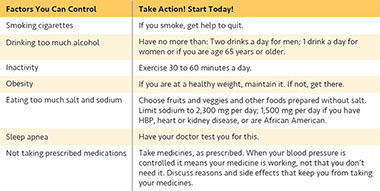
    Getting older, having a family history of high blood pressure (HBP), and being African American are risk factors you cannot control. Lower risk factors for HBP that you can control.

    Action Step:Get your blood pressure checked at every office visit or at least every two years.

    Health at Home Lifetime book by the American Institute for Preventive Medicine. www.HealthyLife.com. All rights reserved.

    © American Institute for Preventive Medicine

  • Take Control Of Your Health

    General Health Conditions

    Man jogging with his dog.

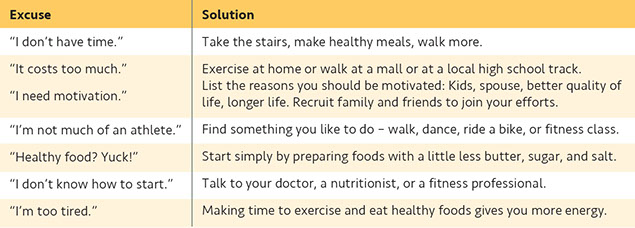
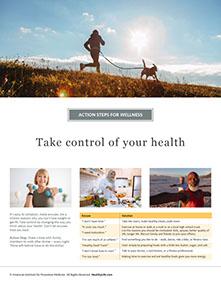
    It’s easy to complain, make excuses, list a million reasons why you can’t lose weight or get fit. Take control by changing the way you think about your health. Don’t let excuses hold you back.

    Action Step:Make a date with family members to walk after dinner – every night. Those left behind have to do the dishes.

    Health at Home Lifetime book by the American Institute for Preventive Medicine. www.HealthyLife.com. All rights reserved.

    © American Institute for Preventive Medicine
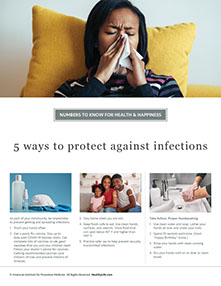
  • 5 Ways To Protect Against Infections

    General Health Conditions

    Parents with child all smiling showing upper arm with vaccine bandage.

    As part of your community, be responsible to prevent getting and spreading infections.

    1.  Wash your hands often.

    2.  Get a yearly flu vaccine. Stay up to date with COVID-19 booster shots. Get complete lists of vaccines atcdc.gov/vaccinesthat you and your children need. Follow your doctor’s advice for vaccines. Getting recommended vaccines save millions of lives and prevent millions of illnesses.

    3.  Stay home when you are sick.

    4.  Keep foods safe to eat. Use clean hands, surfaces, and utensils. Store food that can spoil below 40° F and higher than 140° F.

    5.  Practice safer sex to help prevent sexually transmitted infections.

    Take Action: Proper Handwashing

    1.  Use clean water and soap. Lather your hands all over and under your nails.

    2.  Spend 20 seconds each time. (Hum “Happy Birthday” twice.)

    3.  Rinse your hands with clean running water.

    4.  Dry your hands with an air drier or clean towel.

    Health at Home Lifetime book by the American Institute for Preventive Medicine. www.HealthyLife.com. All rights reserved.

    © American Institute for Preventive Medicine
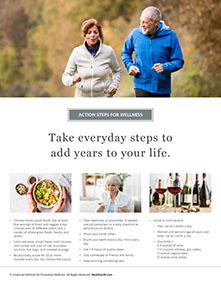
  • Take Everyday Steps To Add Years To Your Life

    General Health Conditions

    Couple jogging together.

    *  Choose mostly plant foods. Eat at least five servings of fruits and veggies a day. Choose ones of different colors. Eat a variety of whole grain foods, beans, and lentils.

    *  Limit red meat. Avoid meats with nitrates and nitrites and a lot of salt. Examples are ham, hot dogs, and smoked sausage.

    *  Be physically active for 30 or more minutes every day. You choose the way(s).

    *  Take medicines as prescribed. If needed, use pill containers or a daily checklist to remind you to do this.

    *  Wash your hands often.

    *  Brush your teeth twice a day. Floss every day.

    *  Get 7-9 hours of quality sleep.

    *  Stay connected to friends and family.

    *  Keep learning something new.

    *  Avoid or limit alcohol.

    – Men: Up to 2 drinks a day

    – Women and persons age 65 years and older: Up to 1 drink a day

    – One drink =

    4-5 ounces of wine

    1-1/2 ounces whiskey, gin, vodka

    12 ounces regular beer

    12 ounces wine cooler

    Health at Home Lifetime book by the American Institute for Preventive Medicine. www.HealthyLife.com. All rights reserved.

    © American Institute for Preventive Medicine

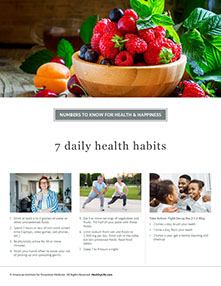
  • 7 Daily Health Habits

    General Health Conditions

    A wooden bowl filled with berries.

    1.  Drink at least 6 to 8 glasses of water or other unsweetened fluids.

    2.  Spend 2 hours or less of non-work screen time (laptops, video games, cell phones, etc.).

    3.  Be physically active for 30 or more minutes.

    4.  Wash your hands often to lower your risk of picking up and spreading germs.

    5.  Eat 5 or more servings of vegetables and fruits. Fill half of your plate with these foods.

    6.  Limit sodium from salt and foods to 2,300 mg per day. Omit salt at the table. Eat less processed foods. Read food labels.

    7.  Sleep 7 to 9 hours a night.

    Take Action: Fight Decay the 2-1-2 Way

    *  2 times a day, brush your teeth

    *  1 time a day, floss your teeth

    *  2 times a year, get a dental cleaning and checkup

    Health at Home Lifetime book by the American Institute for Preventive Medicine. www.HealthyLife.com. All rights reserved.

    © American Institute for Preventive Medicine
  • Thyroid Problems

    General Health Conditions

    The thyroid is a small, butterfly-shaped gland in the lower front of the neck, below the voice box (larynx), and above the collarbone. It makes hormones that help convert food to energy. It regulates growth and fertility. It also maintains body temperature.

    Signs & Symptoms

    Hypothyroidism occurs when the thyroid gland does not make enough thyroid hormone. Body functions slow down. Signs and symptoms are:

    *  Fatigue. Sleeping too much.

    *  Depression.

    *  Dry, pale skin. Dry hair that tends to fall out.

    *  The voice deepens.

    *  Weight gain for no reason.

    *  Feeling cold often.

    *  Heavy and/or irregular menstrual periods in females.

    *  Poor memory.

    *  Constipation.

    Hyperthyroidism occurs when the thyroid makes too much thyroid hormone. Body functions speed up. Two common forms are Graves’ disease and multinodular goiter. Signs and symptoms are:

    *  Swelling in the front of the neck. The thyroid gland gets larger. This is called goiter.

    *  One or both eyes bulge. Tremors. Feeling nervous.

    *  Mood swings.

    *  Weakness.

    *  Frequent bowel movements.

    *  Heat intolerance.

    *  Shortened menstrual periods in females.

    *  Weight loss for no reason.

    *  Fine hair or hair loss.

    *  Rapid pulse. Heart palpitations.

    {Note: In elderly persons, symptoms for this can be more like ones for hypothyroidism.}

    Causes

    For Hypothyroidism

    *  Immune system problems.

    *  Removal of the thyroid gland.

    *  Treating the thyroid gland with radioactive iodine for hyperthyroidism.

    *  Too much or too little iodine in the diet.

    Risk factors for hypothyroidism include: A family history of the disease; having diabetes; and taking certain medicines, such as lithium.

    For Hyperthyroidism

    *  Immune system problems.

    *  Family history of the illness.

    *  Taking too much thyroid hormones from pills.

    Treatment

    Medical care is needed for thyroid problems.

    Hypothyroidism is treated with iodine and/or thyroid medicine.

    Hyperthyroidism treatment varies. It includes radioactive iodine, medication, and surgery, if needed.

    Some treatments result in the need to continue to take thyroid medicine.

    Follow-up care is needed for both of these thyroid problems.

    Questions to Ask

    Self-Care / Prevention

    *  Take medication as directed.

    *  Tell your doctor if symptoms come back or still bother you.

    *  Follow your doctor’s advice for self-care measures.

    Neck Check

    To see if you have a lump on your thyroid gland or if it is enlarged, the American Association of Clinical Endocrinologists recommends this quick self-test:

    1.  Tilt your chin up slightly and swallow a glass of water in front of a mirror.

    2.  Look at your neck as you swallow.

    3.  Check for any bulges or protrusions between your Adam’s apple and collarbone. If you see any, contact your doctor.

    Resources

    American Thyroid Association

    www.thyroid.org

    Healthier at Home book by the American Institute for Preventive Medicine. www.HealthyLife.com. All rights reserved.

    © American Institute for Preventive Medicine
  • Allergies

    General Health Conditions

    An allergy is an immune system problem to a substance (allergen) that is normally harmless. An allergen can be inhaled, swallowed, or come in contact with the skin.

    Signs & Symptoms

    For Common Allergies

    *  Sneezing. Watery eyes. Cold symptoms that last longer than 10 days without a fever. Dark circles under the eyes.

    *  Frequent throat clearing. Hoarseness. Coughing or wheezing.

    *  Skin rash.

    *  Loss of smell or taste.

    *  Ear and sinus infections occur again and again.

    Signs of a Severe Allergic Reaction

    *  Shortness of breath. A hard time breathing or swallowing. Wheezing.

    *  Severe swelling all over, or of the face, lips, tongue, and/or throat.

    *  Feeling dizzy, weak, and/or numb.

    *  Pale or bluish lips, skin, and/or fingernails.

    *  Cool, moist skin or sudden onset of pale skin and sweating.

    *  Fainting. Decreasing level of awareness.

    Causes

    *  Allergic rhinitis. This is caused by breathing allergens from animal dander; dust; grass, weed and tree pollen; mold spores, etc.

    *  Asthma.

    *  Food allergies. Common ones are milk, fish, nuts, wheat, corn, and eggs.

    *  Skin allergies.

    Anaphylaxis is a sudden and severe allergic reaction. It occurs within minutes of exposure. It worsens very fast. It can lead to anaphylactic shock and death within 15 minutes if emergency medical care is not received.

    Insect stings, nuts, penicillin, and shellfish are common causes of a severe allergic reaction.

    Treatment

    How are allergies treated? Avoid the allergen(s). Skin tests can identify allergens. Allergy shots may be prescribed. Medications can prevent and relieve symptoms. Persons who have had a sudden, severe allergic reaction may be prescribed medicine, such as an EpiPen. This is used for a severe reaction before getting emergency medical care.

    Questions to Ask

    Self-Care / Prevention

    For a Severe Allergic Reaction

    *  Take prescribed medicine, such as an EpiPen, as advised. Then get emergency care!

    *  Wear a medical ID alert tag for things that cause a severe allergic reaction.

    *  Avoid things you are allergic to.

    For Other Allergic Reactions

    *  If mild symptoms occur after you take a medicine, call your doctor for advice.

    *  For hives and itching, take an OTC antihistamine, such as Benadryl. Take it as prescribed by your doctor or as directed on the label.

    *  Don’t use hot water for baths, showers, or to wash rash areas. Heat worsens most rashes and makes them itch more.

    *  For itching, use an oatmeal bath or calamine (not Caladryl) lotion. You can also use a paste made with 3 teaspoons of baking soda and 1 teaspoon of water.

    *  Avoid things you are allergic to.

    *  Read food labels. Don’t eat foods that have things you are allergic to. When you eat out, find out if menu items have things you are allergic to before you order them.

    Resources

    Asthma and Allergy Foundation of America 800.7.ASTHMA (727.8462)

    www.aafa.org

    Healthier at Home book by the American Institute for Preventive Medicine. www.HealthyLife.com. All rights reserved.

    © American Institute for Preventive Medicine