Category: Heart & Circulation Problems

  • Heart Palpitations

    Heart & Circulation Problems

    Signs & Symptoms

    Palpitations can be felt in the chest, throat, or neck. With them, it feels like the heart is pounding, racing, and/or fluttering. It can feel like the heart has skipped a beat.

    Causes

    Most of the time, palpitations are not a serious problem. Common causes include:

    *  Anxiety. Fear. Stress. Hyperventilation.

    *  Caffeine. Diet pills. Nicotine. Drugs.

    *  Exercise.

    *  Medicines. Examples are beta-blockers, some asthma and cold medicines, and thyroid pills.

    Other causes are:

    *  An arrhythmia (heart rate or rhythm disorder).

    *  Mitral valve prolapse (MVP). This is a heart valve problem. It may be treated with medicine. It is not usually a serious condition.

    *  Anemia.

    *  Hyperthyroidism.

    *  Low blood sugar.

    Treatment

    Treatment depends on the cause.

    Questions to Ask

    Self-Care / Prevention

    *  If palpitations occur with exercise, stop the activity. Rest. When you exercise again, gradually increase how long and how intense you do the activity.

    *  To relieve stress and anxiety, do relaxation exercises.

    *  Limit or avoid caffeine, nicotine, and alcohol.

    *  Don’t take cold/allergy medicines. Don’t take appetite suppressants.

    *  Call your doctor if rest doesn’t help or if palpitations occur again and again.

    Resources

    The American Heart Association

    800.AHA.USA1 (242.8721)

    www.heart.org/HEARTORG

    National Heart, Lung, and Blood Institute (NHLBI)

    www.nhlbi.nih.gov

    Healthier at Home book by the American Institute for Preventive Medicine. www.HealthyLife.com. All rights reserved.

    © American Institute for Preventive Medicine

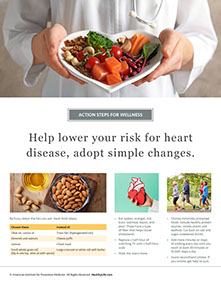
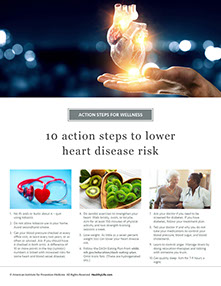
  • Help Lower Your Risk For Heart Disease, Adopt Simple Changes

    Heart & Circulation Problems

    Doctor holding heart shape plate filled with heart healthy foods.

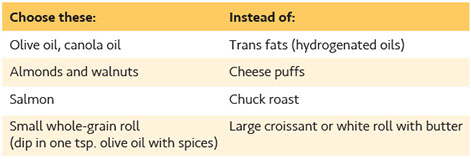
    Be fussy about the fats you eat. Read food labels.

    *  Eat apples, oranges, oat bran, oatmeal, beans, and peas. These have a type of fiber that helps lower cholesterol.

    *  Replace a half-hour of watching TV with a half-hour walk.

    *  Walk the stairs more.

    *  Choose minimally processed foods. Include healthy protein sources, mostly plants and seafood. Cut back on salt and sugar-sweetened drinks.

    *  Add more minutes or steps of walking every day until you reach at least 30 minutes or 10,000 steps a day.

    *  Avoid secondhand smoke. If you smoke, get help to quit.

    Health at Home Lifetime book by the American Institute for Preventive Medicine. www.HealthyLife.com. All rights reserved.

    © American Institute for Preventive Medicine

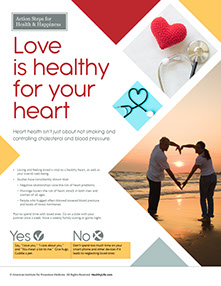
  • Love Is Healthy For Your Heart

    Heart & Circulation Problems

    Couple on beach making heart shape with their arms.

    Heart health isn’t just about not smoking and controlling cholesterol and blood pressure.

    *  Loving and feeling loved is vital to a healthy heart, as well as your overall well-being.

    *  Studies have consistently shown that:

    – Negative relationships raise the risk of heart problems.

    – Marriage lowers the risk of heart attack in both men and women of all ages.

    – People who hugged often showed lowered blood pressure and levels of stress hormones.

    Plan to spend time with loved ones. Go on a date with your partner once a week. Have a weekly family outing or game night.

    Say, “I love you,” “I care about you,” and “You mean a lot to me.” Give hugs. Cuddle a pet.

    Don’t spend too much time on your smart phone and other devices if it leads to neglecting loved ones.

    Health at Home Lifetime book by the American Institute for Preventive Medicine. www.HealthyLife.com. All rights reserved.

    © American Institute for Preventive Medicine

  • Love Your Heart

    Heart & Circulation Problems

    Heart shape plate with heart healthy foods.

    Show your heart some love with heart-healthy habits. Eating a healthy diet, maintaining a healthy weight, getting regular activity, avoiding smoke, and managing stress can all help keep your ticker on track.

    And, did you know that having a strong support system lowers your stress level, keeping your heart happy and healthy? So share a meal or enjoy a walk with a friend.

    You’ll love how you feel when you take care of your heart.

    Health at Home Lifetime book by the American Institute for Preventive Medicine. www.HealthyLife.com. All rights reserved.

    © American Institute for Preventive Medicine

  • Peripheral Artery Disease

    Heart & Circulation Problems

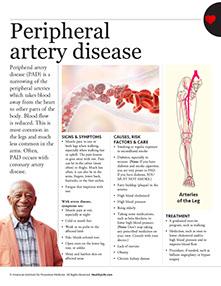
    Peripheral artery disease (PAD) occurs when blood vessels outside of the heart become too narrow to supply enough oxygen to the limbs. Blood flow is reduced. This is most common in the legs and much less common in the arms. Often, PAD occurs with coronary artery disease.

    Signs & Symptoms

    *  Muscle pain in one or both legs when walking, especially when walking fast or uphill. The pain lessens or goes away with rest. Pain can be in the calves (most often) or thighs. Much less often, it can also be in the arms, fingers, lower back, buttocks, or the foot arches.

    *  Fatigue that improves with rest

    With severe disease, symptoms are:

    *  Muscle pain at rest, especially at night

    *  Cold or numb feet

    *  Weak or no pulse in the affected limb

    *  Pale, bluish-colored toes

    *  Open sores on the lower leg, toes, or ankles

    *  Shiny and hairless skin on affected areas

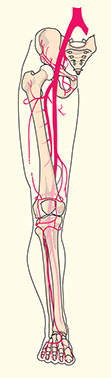
    Illustration of arteries of the leg.

    Arteries of the Leg

    Causes, Risk Factors & Care

    *  Smoking

    *  Diabetes, especially in women. {Note: If you have diabetes and smoke cigarettes, you are very prone to peripheral vascular disease. If you have diabetes, YOU MUST NOT SMOKE.}

    *  Fatty buildup (plaque) in the arteries High cholesterol

    *  High blood pressure

    *  Being elderly

    *  Taking some medications, such as beta- blockers, to lower high blood pressure. {Note: Don’t stop taking any prescribed medicines on your own. Consult with your doctor.}

    *  Agent Orange exposure

    Treatment for peripheral artery disease includes:

    *  A graduated exercise program, such as walking.

    *  Medicines, such as ones to lower cholesterol and/or high blood pressure and to improve blood flow

    *  Surgery, if needed, such as balloon angioplasty or bypass surgery

    Prevention

    *  Don’t smoke. If you smoke, quit.

    *  Do regular exercise.

    *  Get to and/or stay at a healthy weight.

    *  Follow a diet low in saturated fat and cholesterol.

    Self-Care

    *  Follow measures under “Prevention” in this topic.

    *  Follow a graduated walking program as advised by your doctor.

    *  Take medicines as prescribed.

    *  Take good care of your feet:

    – Check the feet daily.

    – Don’t walk barefoot.

    – Wear comfortable, roomy shoes. Avoid sandals and high heels.

    – Cut toenails straight across. Do not cut nails close to the skin.

    – Use an antifungal foot powder to avoid athlete’s foot.

    When to Seek Medical Care

    Contact Doctor When:

    *  You have any pain, redness, or a leg or foot wound and you have a history of diabetes or peripheral vascular disease.

    *  The pain, redness, and swelling extend up the ankle to the leg.

    *  The skin of your foot has turned grayish to black in color.

    *  Repeated muscle pain occurs in a leg when you walk and it goes away with rest.

    *  Leg pain occurs when you are at rest.

    Get Immediate Care When:

    You have all of these problems:

    *  Sudden onset of pain

    *  Rapid skin color changes: white, red, blue, grayish, or black

    *  You cannot feel sensation in your foot for the first time.

    Health at Home Lifetime book by the American Institute for Preventive Medicine. www.HealthyLife.com. All rights reserved.

    © American Institute for Preventive Medicine

  • 6 Healthy Heart Numbers

    Heart & Circulation Problems

    Women smiling while making hands into a heart shape.

    To lower your risk of heart disease, aim for these target numbers*:

    1.  Blood pressure – less than 120/80

    2.  Body mass index (BMI) – 18.6 to 24.9. Find your BMI atcdc.gov/healthyweight/assessing/bmi/index.html.

    3.  Fasting blood glucose – less than 100

    4.  Fasting blood triglycerides – less than 150

    5.  Total blood cholesterol – less than 200

    6.  Waist measurement of:

    – 40 inches or less if you are a man

    – 35 inches or less if you are a woman

    * Discuss your target heart numbers with your doctor. Together, develop a plan to reach your goals.

    Take Action: Lower Your Heart Disease Risk

    1.  If you smoke, quit. Don’t give up trying!

    2.  Eat healthy foods, including fruits and vegetables and limit others, such as saturated fats and added sugars.

    3.  Do regular exercise. Aim for at least 150 minutes of moderate activity and two sessions of strength training each week.

    4.  Take your medications as prescribed to reach and maintain your target numbers.

    Health at Home Lifetime book by the American Institute for Preventive Medicine. www.HealthyLife.com. All rights reserved.

    © American Institute for Preventive Medicine

  • Phlebitis & Thrombosis

    Heart & Circulation Problems

    Phlebitis is inflammation in a vein. Thrombosis is when a blood clot forms. When both of these occur together, it is called thrombophlebitis.

    Signs & Symptoms

    *  Superficial phlebitis (SP) occurs just under the skin’s surface. The affected area is swollen and feels warm and tender. At times, a hard ropy vein is felt. This type seldom showers clots into the bloodstream.

    *  Deep-vein thrombosis (DVT) occurs within a muscle mass (commonly the leg). It is apt to release showers of clots (emboli) that often go to the lung (pulmonary emboli). The symptoms may resemble those of SP; the limb may swell and/or the muscle involved may ache. Often, DVT symptoms are silent and can’t be seen. In silent DVT, the first symptoms may be from a blood clot to the lung. These include sudden shortness of breath and severe problems breathing; sudden chest pain; and/or collapse.

    Causes, Risk Factors & Care

    Phlebitis is usually caused by infection, injury, or poor blood flow in a vein. It is common in women over age 50. Conditions that can lead to SP and/or DVT include:

    *  Inactivity. This could result from prolonged bed rest, a sedentary job, or a long trip, especially in a cramped space, such as sitting in the economy class section of a plane.

    *  Varicose veins

    *  Being overweight, in poor physical condition, or older in age

    *  Estrogen therapy

    *  Trauma to an arm or leg. Examples are a fall or injury to the vein, such as from injections or IV needles.

    *  Heart failure or a heart attack

    *  Some cancers

    A doctor needs to diagnose SP with or without DVT or DVT alone. Treatment for SP alone includes resting the affected limb, warm compresses, and pain relievers.

    Treatment for DVT includes blood thinning medicine, possible hospitalization, and surgery if a blood clot to the lung has occurred.

    Prevention

    *  Avoid sitting or standing for long periods without moving around.

    *  Inform your doctor if you have a history of varicose veins, superficial phlebitis (SP), or deep-vein thrombosis (DVT) and take estrogen.

    *  Don’t sit with your legs crossed. Don’t wear tight garments below the waist, such as knee-high hosiery.

    *  On trips, drink a lot of fluids (no alcohol) and move about at least every hour. While sitting, exercise the legs.

    *  If you’re confined to a bed or a chair, stretch often. Push with the feet, pretending you’re pressing on a gas pedal and then release it. Do this with one foot, then the other.

    *  Avoid tobacco.

    Self-Care

    It is best to let your doctor diagnose if you have phlebitis or thrombosis. If SP is diagnosed, you may be told to follow these self-care measures:

    *  Wear elastic support stockings as prescribed by your doctor.

    *  Rest the affected limb as advised. Elevate it when you rest.

    *  Apply moist, warm compresses to the area of pain.

    *  Take an over-the-counter medicine for pain and inflammation. Take the one your doctor advises.

    *  Don’t massage or rub the limb.

    *  Don’t sit or stand for long periods of time. When you sit, elevate the limb. Continue with your regular activities, though, as much as you can.

    *  Follow “Prevention” measures in this topic.

    When to Seek Medical Care

    Contact Doctor When:

    You have 1 or more of these problems:

    *  Redness, pain, and a burning feeling in the leg

    *  Swelling and the feeling of a cordlike vein beneath the skin along the length of the vein

    Get Immediate Care When:

    *  You have symptoms of a blood clot to the lung:

    –  Sudden onset of chest pain with calf pain

    –  Sudden shortness of breath and severe problems breathing

    –  Rapid heartbeat

    –  Cough with bloody sputum (sometimes)

    –  Chest pain in a person who has had a recent operation or illness that has kept them in bed

    *  You have symptoms of deep-vein thrombosis (DVT):

    –  Swelling and warmth in the leg

    –  Pain in the ankle, calf, or thigh that does not go away with rest

    –  The affected skin area is red and tender.

    Health at Home Lifetime book by the American Institute for Preventive Medicine. www.HealthyLife.com. All rights reserved.

    © American Institute for Preventive Medicine

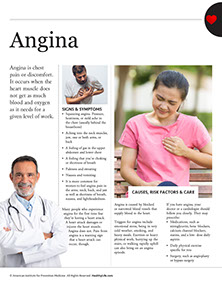
  • Angina

    Heart & Circulation Problems

    Angina is chest pain or discomfort. It occurs when the heart muscle does not get as much blood and oxygen as it needs for a given level of work.

    Signs & Symptoms

    *  Squeezing pressure, heaviness, or mild ache in the chest (usually behind the breastbone)

    *  Aching in a tooth with or without squeezing pressure in the chest

    *  Aching into the neck muscles, jaw, one or both arms, or back

    *  A feeling of gas in the upper abdomen and lower chest

    *  A feeling that you’re choking or shortness of breath

    *  Paleness and sweating

    *  Nausea and vomiting

    Many people who experience angina for the first time fear they’re having a heart attack. A heart attack damages or injures the heart muscle. Angina does not. Pain from angina is a warning sign that heart attack can occur, though.

    Causes

    Angina is caused by blocked or narrowed blood vessels that supply blood to the heart.

    Episodes of angina are often brought on by anger, excitement, or emotional shock. Exertion or heavy physical work, hurrying up the stairs, or walking rapidly uphill can also bring on an angina episode.

    If you have angina, your doctor or a cardiologist should follow you closely. He or she may prescribe:

    *  Medications, such as nitroglycerin, beta- blockers, and a low- dose daily aspirin

    *  Daily physical exercise specific for you

    *  Surgery, such as angioplasty or bypass surgery

    Self-Care

    Medical care is needed to treat angina. If you have angina, these self-care measures can be part of your treatment plan.

    *  Don’t smoke. If you smoke, quit.

    *  Follow a low-saturated fat, low cholesterol diet.

    *  Eat 5 to 6 small meals instead of 3 large meals a day.

    *  Maintain a healthy weight. If you are overweight, lose weight.

    *  After you eat, rest or do a quiet activity.

    *  Minimize exposure to cold, windy weather.

    *  Take medication(s), as prescribed.

    *  Avoid sudden physical exertion, such as running to catch a bus.

    *  Avoid anger whenever you can.

    *  Manage stress.

    When to Seek Medical Care

    Contact Doctor When:

    *  You have been diagnosed with angina and there is a change in your angina symptoms. You may, for example, start to feel symptoms at rest.

    *  You have minor chest pain that is not due to an injury or strain, does not let up, and/or is not relieved by rest.

    Get Immediate Care When:

    *  You have symptoms of a heart attack.

    *  You have been diagnosed with angina and your chest pain does not respond to your prescribed medicine or the pain does not go away in 10 to 15 minutes.

    Health at Home Lifetime book by the American Institute for Preventive Medicine. www.HealthyLife.com. All rights reserved.

    © American Institute for Preventive Medicine

  • Protect Your Heart

    Heart & Circulation Problems

    Man smiling make hands into heart shape.

    Wondering about your heart health? Look at your waist. Excess belly fat is linked to higher blood pressure and unhealthy blood lipid levels. For starters, adopt a heart-healthy diet of lean proteins, beans, lentils, veggies, fruits, and whole grains, and exercise regularly to reduce your heart disease risks. In fact, many heart-shaped fruits and vegetables are great sources of antioxidants, which help reduce your risk for heart disease and some cancers. Examples include strawberries, apples, raspberries, and bell peppers.

    Be More Earth-Friendly

    Reducing red meat in your diet is good for you and the earth. Beef production, far more than chicken or pork, has had a significant impact on the environment. A good first step is to adopt “Meatless Mondays.”

    Health at Home Lifetime book by the American Institute for Preventive Medicine. www.HealthyLife.com. All rights reserved.

    © American Institute for Preventive Medicine

  • Cardiac Rehab

    Heart & Circulation Problems

    Smiling women with laptop.

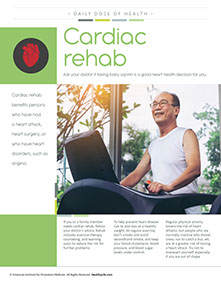
    Ask your doctor if taking baby aspirin is a good heart health decision for you.

    Cardiac rehab benefits persons who have had a heart attack, heart surgery, or who have heart disorders, such as angina.

    If you or a family member needs cardiac rehab, follow your doctor’s advice. Rehab includes exercise therapy, counseling, and learning ways to reduce the risk for further problems.

    To help prevent heart disease: Get to and stay at a healthy weight; do regular exercise; don’t smoke and avoid secondhand smoke; and keep your blood cholesterol, blood pressure, and blood sugar levels under control.

    Regular physical activity lowers the risk of heart attacks, but people who are normally inactive who shovel snow, run to catch a bus, etc. are at a greater risk of having a heart attack. Try not to overexert yourself, especially if you are out of shape.

    Health at Home Lifetime book by the American Institute for Preventive Medicine. www.HealthyLife.com. All rights reserved.

    © American Institute for Preventive Medicine