Category: Be Fit

  • Make Your Next  Workout Fun

    BE FIT

    Image of couple walking on a nice day.

    Think of your next exercise workout as a “fun run” or as a well-deserved break, and you’ll eat less afterward. By thinking of it as exercise or as a workout, you’ll later eat more dessert and snacks to reward yourself.

    These new findings from the Cornell Food and Brand Lab involved two studies where adults were led on a 2 km walk around a small lake and were either told it was going to be an exercise walk or a scenic walk. In the first study, 56 adults completed their walk and were then given lunch. Those who believed they had been on an exercise walk served and ate 35% more chocolate pudding for dessert than those who believed they had been on a scenic walk.

    In the second study, 46 adults were given mid-afternoon snacks after their walk. Those thinking they had taken an exercise walk ate 206 more calories of M&Ms, which was over twice as much than those who had been told they were on a scenic walk.

    Together, these studies point to one reason why people in exercise programs often find themselves gaining weight. Some exercisers have a tendency to reward themselves by overeating after their workout.

    For beginning or veteran exercisers, the bottom line is this: “Do whatever you can to make your workout fun. Play music, watch a video, or simply be grateful that you’re working out instead of working in the office,” said Brian Wansink, author and Director of the Cornell Food and Brand Lab. “Anything that brings a smile, is likely to get you to eat less,” he added.

    © American Institute for Preventive Medicine

  • Soothe Sore Muscles After Exercise

    BE FIT

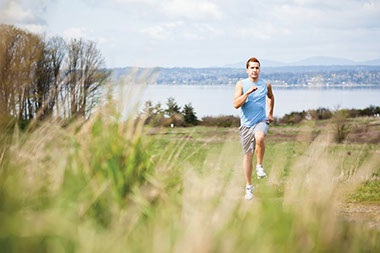
    Image of male jogging outside.

    Exercise can make you feel great. But after a hard workout, sore muscles can be uncomfortable. A little soreness is normal and healthy, especially after trying a new activity or pushing yourself a little harder.

    Don’t let post-exercise pain get you down! You can get through it and reach a new level of fitness with a few tips:

    *Warm up.Don’t jump right into exercise with cold muscles. Doing a lighter or slower version of your workout first will get muscles warm and increase blood flow. This can help avoid injury too.

    *Cool down and stretch.Don’t stop exercise abruptly. Instead, slow down your activity until your heart rate feels normal and you can talk easily. After you’ve exercised, stretch! This is the perfect time to increase flexibility and help lower the chance of soreness.

    *Drink water.It helps keep your joints and muscles hydrated and prevents cramps. Drink before, during and after your workout.

    *Give muscles a break.Give muscles about two days to rest and heal before you exercise them again. For instance, work leg muscles one day and arms the next. Don’t do the same exercise day after day. Muscles need about 48 hours to repair and heal.

    *Be sure you’re doing it right.If you’re new to certain exercises, don’t be afraid to ask someone who can help! Ask a fitness expert or personal trainer or watch videos. Exercise machines and routines can cause injuries if they’re not done properly.

    *Don’t push too hard.It’s easy to get caught up in a new exercise routine. You may want to get into shape as quickly as possible. But doing too much too quickly can mean lots of soreness and even an injury. If you think your exercise routine is too easy, increase the time or intensity slowly. Always ask your doctor about safe exercises you can do if you have any health conditions.

    Listen to your body!

    A lot of soreness or pain isn’t necessary or normal. If you think you have a strained or sprained muscle, tryRICE:

    Rest:Don’t use the sore muscles, if possible.

    Ice:Apply ice packs to the problem area for a few minutes at a time.

    Compression:Use sports bandages or wraps.

    Elevation:Raise the affected body part, such as a foot, up above your heart for two to three hours each day.

    See a doctor if the pain is extreme, gets worse or doesn’t go away after a week.

    Source: American Academy of Family Physicians

    © American Institute for Preventive Medicine

  • Avoid A Walking Injury

    BE FIT

    Older couple hiking using walking sticks.

    Walking is great exercise – but an injury will leave you sidelined. Keep your walks safe and healthy with these tips.

    Get the right shoes.

    Comfortable, supportive shoes are a must. Experts recommend getting new walking shoes after walking for 300 – 500 miles in them. If your shoes are uncomfortable or show signs of wear, toss them. A new pair is an investment in your health.

    Don’t do too much.

    If you haven’t exercised in a while, start off slow. Walking for just a few minutes may be enough at first. Increase your distance by  10% each week. Doing too much, too soon can cause painful shin splints or other injuries.

    Prevent blisters.

    Synthetic fiber socks may help you prevent blisters. Cotton socks can trap moisture and cause rubbing. If you have diabetes or nerve problems, see a doctor if you get blisters or sores on your feet.

    Know your knees.

    If your knees hurt when you walk, talk to your doctor. Knee pain can be caused by arthritis, damaged ligaments and other health problems.

    If you don’t have any health issues, you may need a new pair of shoes. In some cases, doing stretches or leg strengthening exercises can help. Some people find that soft ground like grass is easier on their joints. Walking on concrete may cause more pain.

    Be aware.

    Newer hybrid and electric cars are very quiet. Don’t rely on hearing alone when crossing the street. Stop and look both ways. If you’re using headphones, keep them turned down low. This helps protect your hearing and helps you hear people, animals or cars nearby.

    Source: American Heart Association

    © American Institute for Preventive Medicine

  • Abs: The Core Of A Healthy Body

    BE FIT

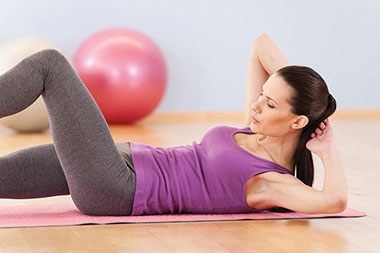
    Image of women doing abdominal exercises.

    Strong abdominal muscles can do more than just make you look slimmer. Healthy ab muscles can help you improve posture and alleviate back pain. For those who thought ab exercises were only for achieving a “six pack,” it’s time to discover all the benefits of a strong midsection.

    Your abdominal muscles are part of the body’s core muscles, which support your entire body when you sit, stand and move. For those who don’t like sit-ups or can’t get on the floor, there are other options to strengthen and tone these important muscles. In fact, “vertical” core exercises may be even more effective than sit-ups.

    Try this standing core exercise that’s suitable for beginners:

    *  Stand facing a wall. Place your feet shoulder-width apart and push your hands against the wall.

    *  Bend your knee and bring your leg toward the wall. Keep the other foot flat on the floor at all times.

    *  Step your leg across the other one in front. Then, step the same leg out to the side.

    *  Bend the knee again and open your leg to the outside, using your hip. Then, swing the leg to the inside.

    Repeat these exercises with the other leg. Concentrate on keeping your abs tight each time you lift and move your leg. Try to repeat them several times, and increase the number of reps as you get stronger.

    Source: American College of Sports Medicine

    © American Institute for Preventive Medicine
  • Don’T Let Shin Splints Stop You

    BE FIT

    Close up images of hands holding shins in pain.

    If you’ve ever felt aching or shooting pain up the front of your lower legs after running, it could be shin splints. Though it’s usually not serious, it can be painful enough to stop even the most dedicated exerciser.

    If you get shin splints, try these tips:

    *Switch to lower impact exercise.Until the pain goes away, try swimming, biking, or using an elliptical machine, so you put less pressure on your legs.

    *Wear proper shoes.If you’ve had the same running shoes for years, it may be time for a new pair. Support wears down over time, causing pain in the feet and legs. Make sure you have enough support under the arch and heel areas.

    *Ice the area.Apply ice packs for up to 20 minutes at a time, a few times a day, to help with pain.

    If the pain doesn’t go away, see your doctor. Sometimes shin splints may be a sign of a small bone break or inflammation of tendons in the legs.

    Source: American Academy of Orthopedic Surgeons

    © American Institute for Preventive Medicine

  • Get Back Into The Exercise Habit

    BE FIT

    Image of 2 females jogging.

    Stressful and busy times in our lives often get in the way of exercise. Whether you’ve been busy with your job, family, or other commitments, it is possible to get back into a fitness habit. If you haven’t exercised for months or even years, here are some safe ways to start fresh and enjoy all the healthy benefits of exercise again.

    1.Go easy at first.Understand that your body will need to work back up to its prior fitness level. Go for a shorter and lighter workout and see how you feel the next day. Gradually make it longer and more difficult each time. This will help you avoid injury and soreness.

    2.Don’t be frustrated.Perhaps you can’t run as fast or lift as many pounds as you did before. That’s to be expected. You can, however, keep working at your fitness goals to be your healthiest self. Each day you exercise, you get closer to that goal.

    3.Recovery is important.You may notice more soreness at first, as your body adjusts to exercise again. Be sure you cool down at the end of your workout and stretch your muscles.

    4.Set realistic goals.Fitness goals can help move you forward. But goals that are too difficult to reach may cause you to throw in the towel. Be proud of any progress you make and each day you choose to be active.

    5.Ask a friend to join you.Having a workout buddy can help you stay motivated and make it fun. Perhaps your friend can join you at the gym or for walks around the neighborhood a few times a week.

    6.Consider a coach or trainer.Professional fitness experts can help you avoid injury and get you on a good fitness plan. Some gyms offer free or low-cost training sessions to new members.

    Source: Office of Disease Prevention and Health Promotion

    © American Institute for Preventive Medicine
  • More Than A Bump On The Old Noggin

    BE FIT

    Image of a football player.

    You’re hearing more about sports-related concussions. Why? Because there are simply more of them. Like 3 million each year, says the CDC.

    Does anyone suspected of having a concussion need a CT or MRI scan right away? Dr. Howard Derman, director of the Methodist Concussion Center in Houston, explains. While there is damage to the brain cells in a concussion, the damage is at a microscopic level and cannot be seen on MRI or CT scans. The injured brain looks normal on these tests, even though it has been seriously injured. Even if a CT scan or MRI shows you’re “okay,” your doctor should also perform a physical exam.

    The signs and symptoms of concussion can appear immediately after the injury or may not appear until days after. Some of the many apparent signs to note are these:

    * Appears dazed or stunned

    * Answers questions slowly

    * Has nausea or vomiting

    * Feels sensitivity to light or noise

    * Cannot recall events prior to the hit or fall

    With a concussion, athletes need to be medically cleared to return to activity. The brain is bruised. It needs time to heal.

    © American Institute for Preventive Medicine

  • Sprains, Strains, And Injuries: The Rice Fix

    BE FIT

    Image of sprained foot.

    Whether you’re headed off the trail or staying on track, kicking a ball or throwing one, you’ll likely need to know about the RICE fix when you sprain, strain, or injure something.

    Dr. William Levine, chief of sports medicine at NewYork-Presbyterian Hospital/Columbia University Medical Center, recommends RICE, a first-aid technique that can be applied to most sprains, strains and joint injuries.

    *Rest:If you are injured during any activity, stop the activity immediately and rest the injured area. Do not try to work through the pain.

    *Ice:For the first 24 to 48 hours, apply ice packs to the injured area every 2 hours for 15 minutes. Make sure that the ice (a handy bag of frozen peas works well) is not in direct contact with the skin; a cotton handkerchief covering is helpful.

    *Compress:Bandage the area firmly, extending the wrapping above and below the injury. This pressure will stop any bleeding and reduce any swelling of the injured area.

    *Elevate:Whenever possible, elevate the injured area above the level of your heart. Elevation and compression are typically used for acute injuries such as a twisted ankle.

    © American Institute for Preventive Medicine
  • Be A Safe Swimmer

    BE FIT

    Bird eye view of female swimming.

    Protect yourself, your family and others around you by following these safe swimming tips. Together, we can keep each other safe while also having fun.

    Before You Dive In

    *  Test the water’s free chlorine levels and pH. Most superstores, hardware and pool supply stores sell test strips.

    *  Check for cloudy water. This can mean there are more germs in the water than normal and you should stay away.

    *  If the lake you are swimming in has any pipes draining into or around the water, stay out.

    Check Yourself

    *  Use waterproof bandages to cover any wounds.

    *  Sick with diarrhea? Get a check-up from your doctor before you enter a public swimming pool or lake.

    *  Shower before you swim. This will remove any dirt or bacteria you might bring with you into the water.

    Survey Your Surroundings

    *  Check for closures.

    *  Kids can drown in seconds and in silence, so keep an eye on all little ones in and around the water.

    *  Lifeguard(s) should be focused on swimmers and not distracted. If no lifeguard is on duty, identify the safety equipment, such as a rescue ring or pole.

    © American Institute for Preventive Medicine

  • Are Fitness Trackers Worth The Hype?

    BE FIT

    Image of women with a fitness tracker.

    Fitness bands, also called wearable health trackers, have become a popular trend in the last few years. Millions of these devices have been sold, but can they help you get healthy?

    What they do

    Most fitness trackers have features that act like a pedometer, counting your steps and other physical activity. Their features vary widely, however. Some trackers simply tell you how many steps you take in a day. Others are designed to be worn during exercise, such as running, and may track your distance and show your route. Other trackers are waterproof and designed to be worn when swimming.

    Many trackers also record quality and length of sleep. Because they have a movement sensor, they can determine how many times you woke and when you were in deep sleep.

    Most of them are designed to be used with an app on your smartphone, where you can see how you’re doing and make improvements where needed.

    Improving health with a tracker

    It can be helpful to know how many steps you take and how well you’ve slept. But keep in mind that these devices aren’t perfect. For instance, if you walk while pushing a stroller, a tracker worn on your wrist may not count your steps because your arms aren’t swinging.

    Sleep tracking can also be helpful, but won’t be a magic fix. Some trackers assume you’re in a deep sleep because you don’t move around. But, some people just naturally move less during the night, even if their sleep quality isn’t great. This may lead to incorrect information that makes you think you’re sleeping better than you actually are.

    Your body may be the best gauge when it comes to your health. When you don’t sleep well, you’ll feel sluggish. And you can easily keep track of any exercise you do with a fitness diary or a simple notebook. As for step counting, these devices are helpful, but an old-fashioned pedometer can work just as well.

    Alternatives to fitness trackers

    If you don’t have – or want – one of these devices, there are still ways you can get healthy with technology. Many apps that work with a smartphone can help you track movements and sleep, and others help you manually record things like mood, stress levels, and menstrual cycles. These require you to carry your smartphone with you, but don’t use any wearable devices.

    © American Institute for Preventive Medicine