Category: Nutrition

  • Spicy Baked Fish

    Nutrition

    4 Servings, about 1 piece (3 oz.) each

    Ingredients:

    1 pound cod (or other fish) fillet

    1 Tbsp. olive oil

    1 tsp. spicy seasoning, salt-free

    Directions:

    1.  Preheat oven to 350ºF. Spray a casserole dish with cooking oil spray.

    2.  Wash and dry fish. Place in dish. Mix oil and seasoning. Drizzle over fish.

    3.  Bake uncovered for 15 minutes or until fish flakes with fork. Cut into 4 pieces. Serve with rice. If you do, count 1/3 cup rice as 1 grains & starches.

    Per Serving:

    Calories – 133

    Total fat – 1 gram

    Saturated fat – 0 gram

    Sodium – 119 mg

    Page from HealthyLife Weigh Recipe book by the American Institute for Preventive Medicine. www.HealthyLife.com. All rights reserved.

    © American Institute for Preventive Medicine

  • You’re Built For Eating

    Nutrition

    Colorful salad.

    Plan out all your meals for the week ahead of time. That includes any snacks. Then, you’ll be less likely to make unhealthy food choices.

    When you’re hungry, you eat. Problem solved, right? Even if you can quiet your grumbling stomach, that doesn’t mean your body got the nutrition it needs to function well. Here’s what you should do when hunger strikes:

    *  Stay away from junk food with lots of saturated fat, sugar, salt and calories, but few nutrients.

    *  Focus on whole-grain and fiber-rich foods. Fill half your plate with vegetables.

    *  Eat dark leafy greens – they are a good source of vitamins A, C, potassium, folate and calcium.

    *  Eat lean protein foods, such as beans, lentils, chicken and fish.

    *  Keep dried fruit, nuts and seeds on hand for a quick snack.

    Page from HealthyLife Weigh book by the American Institute for Preventive Medicine. www.HealthyLife.com. All rights reserved.

    © American Institute for Preventive Medicine

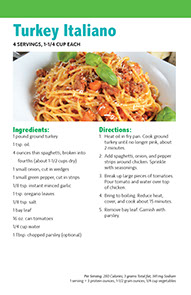
  • Chicken (Or Turkey) Italiano

    Nutrition

    4 Servings, 1 chicken breast half and 3/4 cup spaghetti mixture each

    Ingredients:

    4 chicken breast halves, skinned, boned (Or 1 pound ground turkey)

    1 tsp. oil

    4 ounces thin spaghetti, broken into fourths (about 1-1/2 cups dry)

    1 small onion, cut in wedges

    1 small green pepper, cut in strips

    1/8 tsp. instant minced garlic

    1 tsp. oregano leaves

    1/8 tsp. salt

    1 bay leaf

    16 oz. can tomatoes

    1/4 cup water

    1 Tbsp. chopped parsley, if desired

    Directions:

    1.  Pound chicken breasts with a metal meat mallet between sheets of plastic wrap until about 1/2 inch thick.

    2.  Heat oil in fry pan. Brown chicken breasts on each side.

    3.  Add spaghetti, onion, and pepper strips around chicken. Sprinkle with seasonings.

    4.  Break up large pieces of tomatoes. Pour tomato and water over top of chicken.

    5.  Bring to boiling. Reduce heat, cover, and cook until chicken and spaghetti are done, about 15 minutes.

    6.  Remove bay leaf. Garnish with parsley.

    Per Serving:

    Calories – 280

    Total fat – 3 grams

    Cholesterol – 68 milligrams

    Sodium – 341 mg

    Page from HealthyLife Weigh Recipe book by the American Institute for Preventive Medicine. www.HealthyLife.com. All rights reserved.

    © American Institute for Preventive Medicine

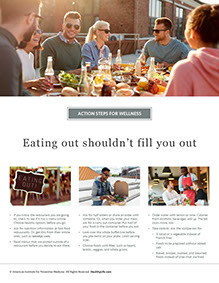
  • Eating Out Shouldn’T Fill You Out

    Nutrition

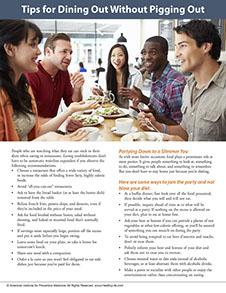
    Group of friends sitting outside eating at a restaurant.

    *  If you know the restaurant you are going to, check to see if it has a menu online. Choose healthy options before you go.

    *  Ask for nutrition information at fast food restaurants. Or, get this from their online sites, such aswendys.com.

    *  Read menus that are posted outside of a restaurant before you decide to eat there.

    *  Ask for half orders or share an order with someone. Or, when you order your meal, ask for a carry out container. Put half of your food in the container before you eat.

    *  Look over the whole buffet line before you pile items on your plate. Limit serving sizes.

    *  Choose foods with fiber, such as beans, lentils, veggies, and whole grains.

    *  Order water with lemon or lime. Calories from alcoholic beverages add up. The bill costs more, too.

    *  Take control. Ask the waitperson for:

    –  A salad or a vegetable instead of French fries

    –  Foods to be prepared without added salt

    –  Baked, broiled, roasted, and steamed foods instead of ones that are fried

    Page from HealthyLife Weigh book by the American Institute for Preventive Medicine. www.HealthyLife.com. All rights reserved.

    © American Institute for Preventive Medicine

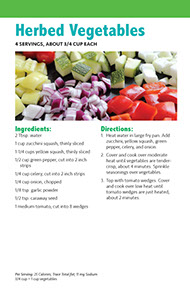
  • Herbed Vegetable Combo

    Nutrition

    4 Servings, about 3/4 cup each

    Ingredients:

    2 Tbsp. water

    1 cup zucchini squash, thinly sliced

    1-1/4 cups yellow squash, thinly sliced

    1/2 cup green pepper, cut into 2 inch strips

    1/4 cup celery, cut into 2 inch strips

    1/4 cup onion, chopped

    1/2 tsp. caraway seed

    1/8 tsp. garlic powder

    1 medium tomato, cut into 8 wedges

    Directions:

    1.  Heat water in large fry pan. Add squash, green pepper, celery, and onion.

    2.  Cover and cook over moderate heat until vegetables are tender-crisp, about 4 minutes. Sprinkle seasonings over vegetables.

    3.  Top with tomato wedges. Cover and cook over low heat until tomato wedges are just heated, about 2 minutes.

    Per Serving:

    Calories – 25

    Total fat – Trace

    Sodium – 11 mg

    Page from HealthyLife Weigh Recipe book by the American Institute for Preventive Medicine. www.HealthyLife.com. All rights reserved.

    © American Institute for Preventive Medicine

  • One More Veggie A Day

    Nutrition

    Women carrying a basket filled with vegetables.

    Focus on ways to add just one more serving of vegetables each day.

    *Microwave for faster cooking:Steam fresh or frozen green beans, broccoli or bok choy for a quick and easy side dish.

    *Cut up and package for later:Use veggies like cauliflower and bell peppers in a stir-fry, casserole or as a snack.

    *Frozen – just as nutritious as fresh:Good buys include frozen peas, corn and green beans.

    *Enjoy vegetable soups:Look on the package for reduced-sodium or low-sodium. If you have time, make and freeze a large batch of soup with lots of added vegetables.

    Page from HealthyLife Weigh book by the American Institute for Preventive Medicine. www.HealthyLife.com. All rights reserved.

    © American Institute for Preventive Medicine

  • Strategies For Reducing Fats And Cholesterol

    Nutrition

    Image of couple cooking in kitchen.

    Coronary heart disease is the leading cause of premature death among Americans. And it’s largely self-inflicted. When vital arteries leading to the heart become clogged by fatty deposits of cholesterol, the blockage can lead to a heart attack. Luckily, a few simple changes in eating habits can reduce your risk of heart disease.

    *  Substitute skim or 1/2% milk for 2% or whole milk.

    *  Eat less meat and fewer eggs. A good rule of thumb is no more than 3 to 5 ounces of meat per serving and no more than five to seven servings a week, and no more than three egg yolks per week (unless your physician advises otherwise).

    *  Use one egg yolk and two whites for every two eggs required in a recipe.

    *  Trim all visible fat from meat before cooking. Remove skin from poultry.

    *  Bake, roast, or broil meat, poultry, or fish. Don’t fry.

    *  Chill soup made from meat or poultry, then skim off the fat before reheating and serving.

    *  Poach foods like fish or eggs instead of sautéing them in butter.

    *  To cut down on the need for oil in cooking, use a vegetable cooking spray and/or pans with a nonstick surface.

    *  Substitute liquid vegetable oil for solid shortening and replace butter with oil, soft margarine, and spreads made with plant sterols and stanols, such as the brands Benecol and Take Control. Use less total fat.

    *  Limit how much oil-based or creamy salad dressing you use. Substitute oil-free salad dressing, lemon juice, or flavored vinegar.

    *  When you use small amount of fats, use olive oil or canola oil. Some research shows they may protect against heart disease.

    *  Bake, steam, or stir-fry vegetables. Don’t deep-fry vegetables or sauté them in lots of butter.

    Page from A Year of Health Hints book by the American Institute for Preventive Medicine. www.HealthyLife.com. All rights reserved.

    © American Institute for Preventive Medicine

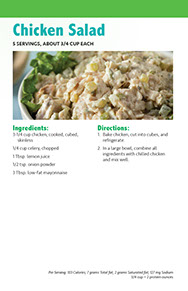
  • Chicken Salad

    Nutrition

    5 Servings, about 3/4 cup each

    Ingredients:

    3-1/4 cup chicken, cooked, cubed, skinless

    1/4 cup celery, chopped

    1 Tbsp. lemon juice

    1/2 tsp. onion powder

    3 Tbsp. mayonnaise, low-fat

    Directions:

    1.  Bake chicken, cut into cubes, and refrigerate.

    2.  In a large bowl, combine all ingredients with chilled chicken and mix well.

    Per Serving:

    Calories – 183

    Total fat – 7 grams

    Saturated fat – 2 grams

    Sodium – 127 mg

    Page from HealthyLife Weigh Recipe book by the American Institute for Preventive Medicine. www.HealthyLife.com. All rights reserved.

    © American Institute for Preventive Medicine

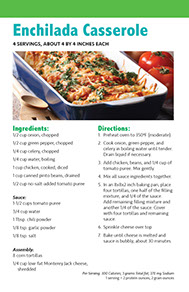
  • Enchilada Casserole

    Nutrition

    4 Servings, about 4 by 4 inches each

    Ingredients:

    1/2 cup onion, chopped

    1/2 cup green pepper, chopped

    1/4 cup celery, chopped

    1/4 cup water, boiling

    1 cup chicken, cooked, diced

    1 cup canned pinto beans, drained

    1/2 cup non-salt-added tomato puree

    8 corn tortillas

    Sauce:

    1-1/2 cups non-salt-added tomato puree 3/4 cup water

    1 Tbsp. chili powder

    1/8 tsp. garlic powder

    1/8 tsp. salt (see note below)

    Topping:

    1/4 cup Monterey Jack cheese, shredded

    Directions:

    1.  Preheat oven to 350ºF (moderate).

    2.  Cook onion, green pepper, and celery in boiling water until tender. Drain liquid if necessary.

    3.  Add chicken, beans, and 1/4 cup of tomato puree. Mix gently.

    4.  Mix all sauce ingredients together thoroughly.

    5.  In an 8x8x2 inch baking pan, place four tortillas, one half of the filling mixture, and 1/4 of the sauce. Add remaining filling mixture and another one-fourth of the sauce. Cover with four tortillas and remaining sauce.

    6.  Sprinkle cheese over top.

    7.  Bake until cheese is melted and sauce is bubbly, about 30 minutes.

    Note: Cheese, corn tortillas, and canned beans contain salt, so no salt is added to the filling and only a little to the sauce.

    Per Serving:

    Calories – 300

    Total fat – 3 grams

    Sodium 378 mg

    Page from HealthyLife Weigh Recipe book by the American Institute for Preventive Medicine. www.HealthyLife.com. All rights reserved.

    © American Institute for Preventive Medicine

  • Keep Produce At Its Peak

    Nutrition

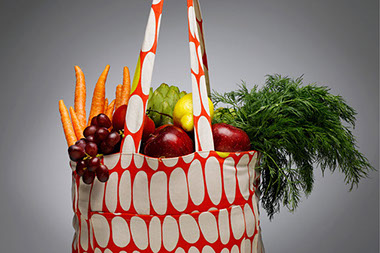
    Image of reusable bag filled with produce.

    Produce-fresh fruits and vegetables-is a gold mine of nutrients, usually with a price to match. To get the most nutrition for the “lettuce” you fork over for fresh produce, follow these suggestions.

    *  Select fruits and vegetables that look crisp or feel firm.

    *  When buying citrus fruits and pineapple, choose fruits that feel heavy for their size.

    *  Don’t buy produce that’s soft or bruised.

    *  Don’t buy more than you can use within a few days. If not used within a few days, store it under refrigeration. Most kinds of produce kept at room temperature ripens-or spoils-more rapidly. That’s fine if you’re eager to eat an avocado or banana, but not so great if you want to be able to use every last orange or lemon in the bag.

    *  Don’t soak produce in water-nutrients will leach out.

    *  Pat produce dry after washing, to prolong freshness.

    *  Don’t cut vitamin C rich fruits or vegetables, like strawberries and peppers, until just prior to eating. Exposure to the air destroys vitamin C.

    Page from A Year of Health Hints book by the American Institute for Preventive Medicine. www.HealthyLife.com. All rights reserved.

    © American Institute for Preventive Medicine