Category: Nutrition

  • Pick And Pack A Healthy Lunch

    Nutrition

    “Chews” foods that keep you satisfied until dinner.

    Supersized fast food lunches and large sit-down or buffet lunches feed your hunger. They supersize your waistline, too. A better option is to prepare your own lunch with fresh and healthier foods. This lets you eat what you like and control calories, salt, fat, and sugar.

    Peanut butter again?

    Peanut butter is actually a good choice. Two tablespoons on whole-wheat bread provides both protein and dietary fiber and keeps you feeling full until dinner. Add a medium apple and you’re good to go.  Other healthy sandwich options are tuna fish, sliced eggs, reduced-fat cheese and lean, fresh meats spruced up with avocado, greens, sliced cucumbers, onions and tomatoes. For a change, use pita bread or whole-grain tortillas instead of bread.

    Last night’s leftovers

    Fido may lick his chops at that last slice of turkey, but you are better off giving the dog a bone and saving the food for tomorrow’s lunch. If salad and/or veggies are left, take them, too. Plan ahead. Make enough food for dinner and for lunch the next day. Or cook chili, rice and beans, and spaghetti sauce, etc. in bulk.  Store these in single-serving containers. Refrigerate or freeze them for ready-to-go future lunches.

    Items to stock for easy and healthy lunches

    *  Whole wheat breads, pasta, and cereals

    *  Fruits galore – Apples, apricots, bananas,  berries, grapes, oranges, peaches, pears, plums, and pineapples

    *  Vegetables – Broccoli, carrots, salad greens, green beans, spinach, squash, sweet potatoes, and tomatoes

    *  Freshly cooked lean beef and pork; game meats; chicken and turkey; and fish and shellfish. Canned tuna and salmon.

    *  Unsalted almonds, peanuts, walnuts, sunflower seeds, and peanut butter

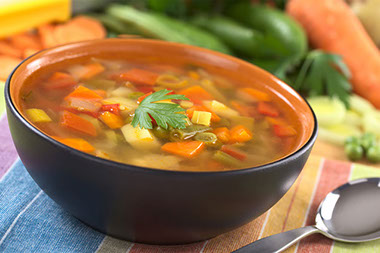
    *  Chick peas, kidney beans, lentils, split peas and homemade or low-sodium soups made with these. Other low-sodium soups.

    *  Fat-free (skim) or low-fat (1%) milk or buttermilk; fat-free, low-fat, or reduced-fat cheese, fat-free or  low-fat yogurt or yogurt smoothies

    *  Frozen fruit for smoothies

    *  Canned and dried fruit, such as raisins and prunes

    *  Single-serving frozen meals with less than 800 milligrams of sodium

    *  100 percent juice boxes (to keep lunch cool)

    Action Step

    Set aside time in the evening to pack lunches and snacks. You’ll be happier in the morning and during your lunch break.

    Page from Ways to Well-Being book by the American Institute for Preventive Medicine. www.HealthyLife.com. All rights reserved.

    © American Institute for Preventive Medicine

  • Strawberry Blueberry Yogurt Parfait

    Nutrition

    8 Servings

    Ingredients:

    4 cups fat-free (no sugar added) vanilla yogurt

    2 cups fresh (or thawed frozen) strawberries, sliced

    2 cups fresh (or thawed frozen) blueberries

    2 cups graham crackers, crumbled

    1/2 cup fat-free whipped cream (optional)

    Directions:

    1.  Spoon 1 tablespoon of yogurt into the bottom of 8 different parfait or wine glasses that each hold 8-ounces. Add 1 tablespoon strawberries, 1 tablespoon blueberries and 1/4 cup graham crackers.

    2.  Repeat yogurt, strawberry, blueberry and graham cracker layers.

    3.  Top with a tablespoon of fat-free whipped topping, if desired.

    4.  Serve right away. Or cover each glass with plastic wrap and chill for up to 2 hours before serving.

    Per Serving:

    Calories – 179

    Total fat – 2 grams

    Saturated fat – 1 gram

    Sodium – 34 mg

    Carbonhydrate – 34 grams

    Fiber – 2 grams

    Protein – 6 grams

    Page from HealthyLife Weigh Recipe book by the American Institute for Preventive Medicine. www.HealthyLife.com. All rights reserved.

    © American Institute for Preventive Medicine

  • Choose Fruits & Vegetables From A Rainbow Of Colors

    Nutrition

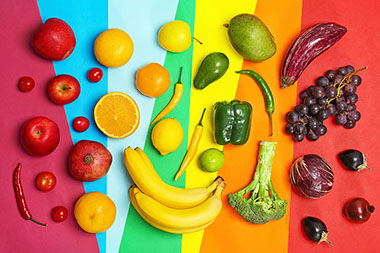
    Colorful fruits and vegetables.

    Antioxidants in fruits and vegetables:

    *Lutein (green):May help lower the risk for cataracts and age-related macular degeneration. Indoles may help lower the risk for some cancers.

    *Carotenoids (orange & yellow):May help reduce risk of cancer, heart disease, and age-related macular degeneration.

    *Lycopene (red):May help lower the risk for heart disease and some cancers, such as prostate cancer.

    *Anthocyanins (purple & blue):May help reduce risk of cancer, stroke, and heart disease.

    Dos

    * Fill half your plate with fruits and vegetables. Eat them for snacks.

    * Make fruit your everyday dessert.

    * Keep a bowl of fresh fruit on the table. Add cut-up vegetables and fruits to salads.

    Don’ts

    * Don’t resist trying new vegetables.

    * Don’t have cake, pie, or cookies after most meals.

    Page from HealthyLife Weigh book by the American Institute for Preventive Medicine. www.HealthyLife.com. All rights reserved.

    © American Institute for Preventive Medicine

  • Fiber Up

    Nutrition

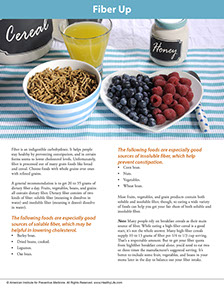
    Fiber is an indigestible carbohydrate. It helps people stay healthy by preventing constipation, and in certain forms seems to lower cholesterol levels. Unfortunately, fiber is processed out of many grain foods like bread and cereal. Choose foods with whole grains over ones with refined grains.

    A general recommendation is to get 20 to 35 grams of dietary fiber a day. Fruits, vegetables, beans, and grains all contain dietary fiber. Dietary fiber consists of two kinds of fiber: soluble fiber (meaning it dissolves in water) and insoluble fiber (meaning it doesn’t dissolve in water).

    The following foods are especially good sources of soluble fiber, which may be helpful in lowering cholesterol.

    *  Barley bran.

    *  Dried beans, cooked.

    *  Legumes.

    *  Oat bran.

    The following foods are especially good sources of insoluble fiber, which help prevent constipation.

    *  Corn bran.

    *  Nuts.

    *  Vegetables.

    *  Wheat bran.

    Most fruits, vegetables, and grain products contain both soluble and insoluble fiber, though, so eating a wide variety of foods can help you get your fair share of both soluble and insoluble fiber.

    Note: Many people rely on breakfast cereals as their main source of fiber. While eating a high-fiber cereal is a good start, it’s not the whole answer. Many high-fiber cereals supply 10 to 13 grams of fiber per 1/4 to 1/3 cup serving. That’s a respectable amount. But to get your fiber quota from high-fiber breakfast cereal alone, you’d need to eat two or three times the manufacturer’s suggested serving. It’s better to include some fruit, vegetables, and beans in your menu later in the day to balance out your fiber intake.

    Page from A Year of Health Hints book by the American Institute for Preventive Medicine. www.HealthyLife.com. All rights reserved.

    © American Institute for Preventive Medicine

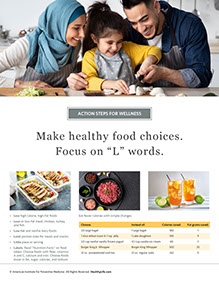
  • Make Healthy Food Choices.Focus On “L” Words.

    Nutrition

    Family preparing food together.

    *  Less high calorie, high-fat foods

    *  Lean or low-fat meat, chicken, turkey, and fish

    *  Low-fat and nonfat dairy foods

    *  Limit portion sizes for meals and snacks.

    *  Little piece or serving

    *  Labels. Read “Nutrition Facts” on food labels. Choose foods with fiber, vitamins A and C, calcium and iron. Choose foods lower in fat, sugar, calories, and sodium.

    Page from HealthyLife Weigh book by the American Institute for Preventive Medicine. www.HealthyLife.com. All rights reserved.

    © American Institute for Preventive Medicine

  • Pick & Pack A Healthy Lunch

    Nutrition

    Sandwich and water bottle sitting next to lunch bag.

    Supersized fast-foods and large sit-down or buffet lunches feed your hunger, but supersize your waistline, too. Make your own lunch with healthier foods.

    *  Choose fruits and veggies of different colors.

    *  Eat salads with dark, leafy greens; veggies and fruits; chick peas, kidney, and other beans. Choose low-calorie salad dressing.

    *  When cooking dinner, make extra for lunches the next day or two.

    *  Cook chili, spaghetti, and rice and beans in bulk. Refrigerate or freeze in single storage containers.

    In the evening, make family lunches and snacks for the next day. Save time in the morning!

    Yes:

    *  Low-sodium, lean meat and  whole-grain bread sandwiches or whole-grain bowls or salads.

    *  Nonfat and 1% low-fat milks. Low-fat cheeses and yogurts.

    No:

    *  High-fat luncheon meats on white bread.

    *  Regular soda and high-calorie coffee drinks and milkshakes.

    Page from HealthyLife Weigh book by the American Institute for Preventive Medicine. www.HealthyLife.com. All rights reserved.

    © American Institute for Preventive Medicine

  • Take Vitamin, Mineral, Herbal Supplements Wisely

    Nutrition

    The term “dietary supplement” can be used for anything taken orally to enhance your usual food intake. Dietary supplements include vitamins, minerals, amino acids, and herbal products. People take supplements because they are not sure they get enough nutrients in the foods they eat and/or they want to treat or prevent an illness.

    Different vitamins, minerals and herbal supplements.

    General Guidelines

    1.  Healthy children and adults can get the nutrients they need by choosing a variety of foods in moderation rather than taking supplements. This reduces the risk of deficiencies, as well as excesses.

    2.  Some supplement ingredients can be seriously harmful. Examples include high potency doses of some vitamins, such as niacin, amino acids (e.g., L-tryptophan) and herbs (e.g., chaparral, comfrey, and germander).

    3.  A standard multi-vitamin-and-mineral supplement can’t hurt and might help, if a person doesn’t eat healthy foods or is on a low calorie diet.

    4.  Do not take supplements, though, that contain more than 10 times the Recommended Daily Intake (RDI) for a nutrient, especially for fat soluble vitamins (A, D, E, K). The mineral selenium can also be harmful if taken in large amounts.

    5.  The value of vitamins is in food rather than pills. It’s much better to get your vitamins and minerals from food than from pills. Unlike supplements, fruits, vegetables, and whole grains have dietary fiber that is beneficial, promotes regularity, and aids in the prevention of disease.

    6.  Some people need a vitamin – mineral supplement to meet specific nutrient needs. Here are examples:

    * Females with excessive menstrual bleeding may need to take an iron supplement.

    * Females who are pregnant or breast-feeding need more iron, folic acid, and calcium.

    * Some vegetarians may not get enough calcium, iron, zinc, and vitamin B12.

    * Older adults and people with little exposure to sunlight may need a vitamin D supplement.

    * People with certain disorders or diseases and people who take some medications. For example, persons with high blood pressure who take a water pill may need to take a potassium supplement. Ask your doctor if you need any vitamin and/or mineral supplement due to a medical condition or any medicine(s) you take.

    * People who seldom eat dairy products or other rich sources of calcium may need a calcium supplement.

    7. The Bottom Line: You should eat healthy foods to get needed nutrients. Consult your doctor or registered dietitian about taking vitamin/mineral supplements.

    Resources

    Food and Drug Administration (FDA)

    www.fda.gov

    Search for Dietary Supplements

    Food and Nutrition Information Center

    https://fnic.nal.usda.gov

    National Center for Complementary and Alternative Medicine (NCCAM)www.nccam.nih.gov

    National Institutes of Health Office of Dietary Supplements

    ods.od.nih.gov

    Page from the HealthyLife Weigh book by the American Institute for Preventive Medicine. www.HealthyLife.com. All rights reserved.

    © American Institute for Preventive Medicine

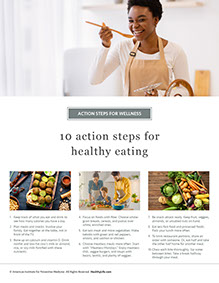
  • 10 Action Steps For Healthy Eating

    Nutrition

    Women trying food from pot.

    1.  Keep track of what you eat and drink to see how many calories you have a day.

    2.  Plan meals and snacks. Involve your family. Eat together at the table, not in front of the TV.

    3.  Bone up on calcium and vitamin D. Drink nonfat and low-fat cow’s milk or almond, rice, or soy milk fortified with these nutrients.

    4.  Focus on foods with fiber. Choose whole-grain breads, cereals, and pastas over white, enriched ones.

    5.  Eat less meat and more vegetables. Make kebobs with green and red peppers, onions, and salmon or chicken.

    6.  Choose meatless meals more often. Start with “Meatless Mondays.” Enjoy meatless chili, veggie burgers, and soups with beans, lentils, and plenty of veggies.

    7.  Be snack-attack ready. Keep fruit, veggies, almonds, or unsalted nuts on hand.

    8.  Eat less fast food and processed foods. Pack your lunch more often.

    9.  To limit restaurant portions, share an order with someone. Or, eat half and take the other half home for another meal.

    10. Chew each bite thoroughly. Sip water between bites. Take a break halfway through your meal.

    Page from HealthyLife Weigh book by the American Institute for Preventive Medicine. www.HealthyLife.com. All rights reserved.

    © American Institute for Preventive Medicine

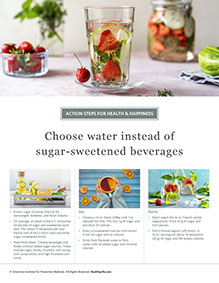
  • Choose Water Instead Of Sugar-Sweetened Beverages

    Nutrition

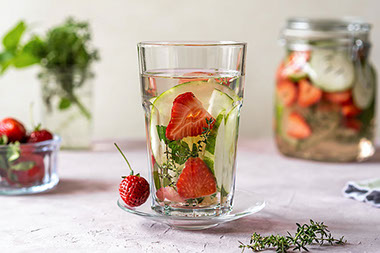
    Glass of water flavored with strawberries and cucumbers.

    *  Excess sugar increases the risk for overweight, diabetes, and heart disease.

    *  On average, an adult in the U.S. consumes 60 pounds of sugar and sweeteners each year. This about 17 teaspoons per day! Nearly half of this is from soda and other sugar-sweetened drinks.

    *  Read food labels. Choose beverages and foods without added sugar sources. These include sugar, honey, fructose, corn syrup, corn syrup solids, and high-fructose-corn syrup.

    Dos

    *  Choose a 16 oz. black coffee with 1 oz. reduced fat milk. This has 2 g of sugar and less than 25 calories.

    *  Enjoy unsweetened iced tea with lemon. It has no sugar and no calories.

    *  Drink fruit-flavored water or fizzy water with no added sugar and minimal calories.

    Don’ts

    *  Don’t select the 16 oz. French vanilla cappuccino. It has 42 g of sugar and 320 calories.

    *  Don’t choose regular soft drinks. A 12-oz. serving has about 10 teaspoons (38 g) of sugar and 150 empty calories.

    Page from HealthyLife Weigh book by the American Institute for Preventive Medicine. www.HealthyLife.com. All rights reserved.

    © American Institute for Preventive Medicine

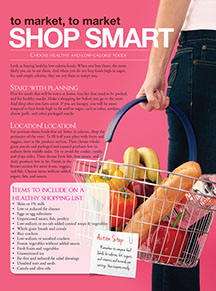
  • Food Items To Focus On

    Nutrition

    Produce & Salad Bar

    Image of a women in grocery store weighing salad from a salad bar.

    *  All fresh fruits

    *  All fresh vegetables (go easy on avocados, they are high in fat)

    *  Nuts and seeds, such as sunflower and pumpkin

    *  All salad bar items that are fresh vegetables (lettuce, celery, carrots, green peppers, spinach, etc.).

    *  Tofu (soy bean curd). This may be in dairy or meat sections of the store.

    Strictly limit: coconut, croutons, salads made with mayonnaise, regular salad dressing. Use small amounts of low-calorie salad dressings. (Better yet, use fat-free and reduced-fat salad dressings.)

    Meat, Poultry, Fish

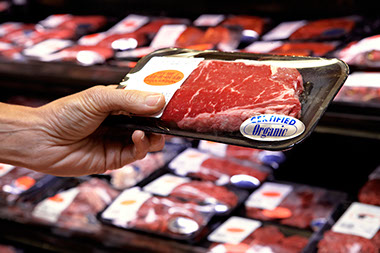
    Image of a hand picking up a package of meat.

    Look for lean cuts of meat with fat trimmed, such as:

    *  Beef: round, sirloin, tenderloin, ground round, ground sirloin, or extra lean ground beef

    *  Pork: tenderloin, leg (fresh) shoulder (arm or picnic)

    *  Lamb: leg, arm, loin, rib

    *  Veal: all trimmed cuts, except commercially ground

    *  Poultry: chicken, turkey, cornish hens, etc.

    *  All fish, shellfish

    Strictly limit: goose, domestic duck, salt pork, chitterlings

    Delicatessen

    *  Sliced lean meats, such as turkey, ham, chicken, lean beef

    *  Ready-to-eat broiled or rotisserie chicken and turkey breast

    *  Fresh fruit salads

    Strictly limit: mayonnaise-dressed salads, sausage, frankfurters, high-fat luncheon meats, such as bologna, salami, and bacon

    Freezer Section

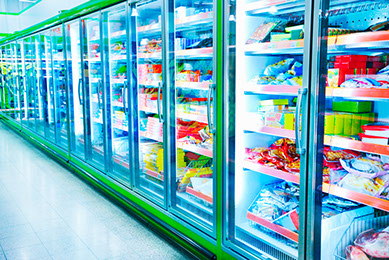
    Image of the freezer section of a grocery store.

    *  Frozen fruits and vegetables. Buy these frozen loosely in bags so it is easy to make 1 portion.

    *  Juice concentrates

    *  Frozen dinners-preferably ones with less than 300 calories and 1000 mg. of sodium or less/serving

    *  Frozen fish fillets – look for fresh-frozen ones that can be reapportioned when you take them home instead of solid packed ones that you would have to thaw out.

    *  Sugar-free or low calorie frozen treats, such as sugar-free and regular popsicles and fudgesicles, frozen yogurt, lite tofutti, fruit ices, etc.

    Dairy Section

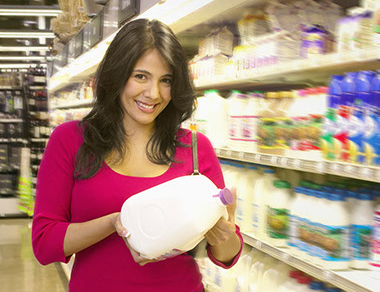
    Image of a women picking up a gallon of milk from the dairy section.

    *  Skim milk, 1/2% low fat milk, buttermilk

    *  Soy milk (with added calcium)

    *  Plain, nonfat yogurt

    *  Low-fat, soft cheeses, like cottage and farmers

    *  Reduced fat and other cheeses labeled no more than 2 to 6 grams fat per ounce

    *  Margarine: soft tub (regular and diet), Benecol® and Take Control® margarines

    *  Orange and other fresh juices (not fruit drinks)

    *  English muffins

    *  Whole wheat, corn, and flour tortillas

    *  Eggs, egg substitute

    Strictly limit: Biscuits, croissants, cream, sour cream, half and half, cheeses other than above, whole milk, 2% low-fat milk, butter

    Breads, Cereals

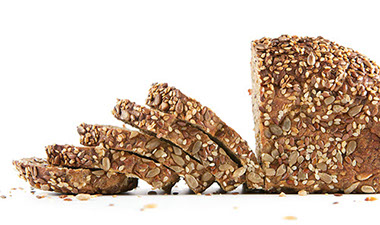
    Image of wheat bread.

    *  Whole wheat bread, regular or lite (40 calories/slice)

    *  Whole wheat and plain dinner rolls

    *  Whole wheat and regular pita breads

    *  English muffins

    *  Bagels (also stocked in freezer section)

    *  Breadsticks

    *  Sandwich buns (“lite” are also available)

    *  Rice cakes

    *  Cereal mixes for cooked cereals: oatmeal, Cream of Wheat, etc.

    *  Ready-to-eat cereals. Look for ones with at least 2 grams of fiber and less than 2 grams of fat per one ounce serving. Limit sugar-sweetened ones.

    Staples

    *  Canned entrees/main dishes (8 grams of fat or less, per 1 cup serving)

    *  Canned fish, such as tuna in water, salmon

    *  Rice, brown or white, barley, bulgar

    *  Pastas, like plain noodles, macaroni, spaghetti

    *  Dried or canned beans and peas like split peas, black-eyed peas, chick peas, kidney beans, lentils, soybeans

    *  Canned fruits packed in water or their own juices

    *  “Old-fashioned” style peanut butter (oil can be seen at the top of the jar)

    *  Low-fat crackers, such as matzos, bread sticks, rye krisp, saltines (with unsalted tops), graham crackers, zwieback

    *  Popcorn (regular or microwave-packaged, if less than 2 grams of fat per serving)

    *  Spices, seasonings, herbs, butter flavor sprinkles, vanilla, other flavor extracts

    *  Salad dressings – “Lite,” “reduced-calorie,” “no oil” or “fat free” varieties

    *  Vinegar

    *  Condiments, such as ketchup, mustard, worcestershire sauce, horseradish, etc. Use small amounts. These are high in sodium.

    *  Reduced-sodium bouillon, unsweetened pickles, canned soups

    *  Flour; whole wheat, all purpose, whole wheat and all purpose combination

    *  Cornstarch

    *  Vegetable cooking sprays

    *  Liquid vegetable oils, such as olive and canola

    *  Coffee, tea, cocoa mixes with nonfat dry milk

    *  Sugar-free gelatin and drink mixes

    *  Wine, dry for cooking

    *  Nonfat dried milk

    *  Canned evaporated skim milk

    *  Bottled water

    Strictly limit: Potato chips and other high fat, high salt snacks, regular canned vegetables (because they are high in salt), and seasonings and foods with monosodium glutamate (MSG).
    Page from HealthyLife Weigh book by the American Institute for Preventive Medicine. www.HealthyLife.com. All rights reserved.

    © American Institute for Preventive Medicine