Category: Nutrition

  • What Is A Serving Size?

    Nutrition

    Image of small plate with food in palm of hand.

    Grains (1 oz. serving)

    *  1 slice of bread; ½ English muffin

    *  1 cup dry cereal

    *  ½ cup cooked cereal, pasta, or rice

    Veggies (1 cup serving)

    *  1 cup raw or cooked veggies

    *  2 cups raw, leafy veggies

    *  1 medium baked potato

    Fruits (1 cup serving)

    *  1 large banana, orange, or peach

    *  1 small or ½ large apple

    *  1 cup berries or 100% fruit juice

    *  ½ cup dried fruit

    Milk

    *  1 cup fat-free or low-fat milk or yogurt

    *  1½ oz. hard cheese

    *  2 oz. processed cheese

    Meats & Beans (1 oz. serving)

    *  1 oz. cooked lean meats or poultry

    *  1 egg

    *  ½ oz. nuts or seeds; 2 Tbsp. hummus

    *  ¼ cup chickpeas, lentils, or tofu

    *  1 Tbsp. peanut butter

    Oils

    *  1 tsp. oil or trans fat-free margarine

    *  1 Tbsp. salad dressing

    Serving Size Matters

    People tend to think they eat less than what they actually do. One way to find out how much you eat is to use measuring cups and spoons and a food scale. Do this for everything you eat and drink for at least one day. You can also use common objects to estimate serving sizes.

    1 cup = 2 hands cupped or clenched fist

    ½ cup = Computer mouse

    1 oz. = Domino

    3 oz. =  Deck of cards

    1 Tbsp. = One die

    2 Tbsp. = 1 ping-pong ball

    1½ oz. low-fat cheese =  4 dice

    Page from Eating and Exercise Tracker book by the American Institute for Preventive Medicine. www.HealthyLife.com. All rights reserved.

    © American Institute for Preventive Medicine

  • Broccoli Soup

    Nutrition

    4 Servings, about 1 cup each

    Ingredients:

    1-1/2 cups broccoli, chopped (see note)

    1/4 cup celery, diced

    1/4 cup onion, chopped

    1 cup chicken broth, unsalted

    2 cups skim milk

    2 Tbsp. cornstarch

    1/4 tsp. salt

    Dash pepper

    Dash ground thyme

    1/4 cup Swiss cheese, shredded

    Directions:

    1.  Place vegetables and broth in saucepan. Bring to boiling, reduce heat, cover, and cook until vegetables are tender, about 8 minutes.

    2.  Mix milk, cornstarch, salt, pepper, and thyme; add to cooked vegetables. Cook, stirring constantly, until soup is slightly thickened and mixture just begins to boil.

    3.  Remove from heat. Add cheese and stir until melted.

    Note: A 10-ounce package of frozen chopped broccoli can be used in place of fresh broccoli. The soup will have about 120 calories and 260 milligrams of sodium.

    Per Serving:

    Calories – 110

    Total fat – 3 grams

    Sodium – 252 mg

    Page from HealthyLife Weigh Recipe book by the American Institute for Preventive Medicine. www.HealthyLife.com. All rights reserved.

    © American Institute for Preventive Medicine

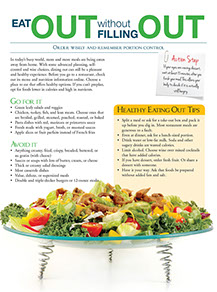
  • Eat Out Without Filling Out

    Nutrition

    Order wisely and remember portion control.

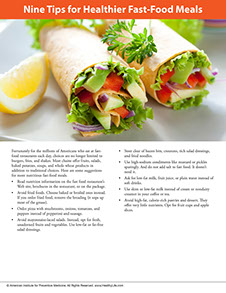
    In today’s busy world, more and more meals are being eaten away from home. With some advanced planning, self-control and wise choices, dining out can still be a pleasant and healthy experience. Before you go to a restaurant, check out its menu and nutrition information online. Choose a place to eat that offers healthy options. If you can’t preplan, opt for foods lower in calories and high in nutrients.

    Go for it.

    *  Green leafy salads and veggies

    *  Chicken, turkey, fish, and lean meats. Choose ones that are broiled, grilled, steamed, poached, roasted, or baked

    *  Pasta dishes with red, marinara or primavera sauce

    *  Foods made with yogurt, broth, or mustard sauces

    *  Apple slices or fruit parfaits instead of French fries

    Avoid it.

    *  Anything creamy, fried, crispy, breaded, battered, or au gratin (with cheese)

    *  Sauces or soups with lots of butter, cream, or cheese

    *  Thick or creamy salad dressings

    *  Most casserole dishes

    *  Value, deluxe, or supersized meals

    *  Double and triple-decker burgers or 12-ounce steaks

    Healthy Eating Out Tips

    *  Split a meal or ask for a take-out box and pack it up before you dig in. Most restaurant meals are generous to a fault.

    *  Even at dinner, ask for a lunch-sized portion.

    *  Drink water or low-fat milk. Soda and other sugary drinks are wasted calories.

    *  Limit alcohol. Choose wine over mixed cocktails that have added calories.

    *  If you have dessert, order fresh fruit. Or share a dessert with someone.

    *  Have it your way. Ask that foods be prepared without added fats and salt.

    Action Step

    If your eyes are craving dessert, wait at least 15 minutes after you finish your meal. This allows your body to decide if it is actually still hungry.

    Page from Ways to Well-Being book by the American Institute for Preventive Medicine. www.HealthyLife.com. All rights reserved.

    © American Institute for Preventive Medicine

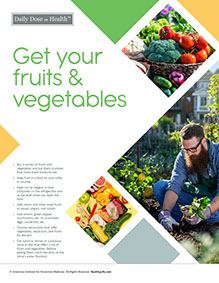
  • Get Your Fruits & Vegetables

    Nutrition

    Man gardening vegetables.

    *  Buy a variety of fruits and vegetables and put them in places that make them handy to eat.

    *  Keep fruit in a bowl on your table or counter.

    *  Keep cut up veggies in clear containers in the refrigerator and at eye level when you open the door.

    *  Add raisins and other dried fruits to cereal, yogurt, and salads.

    *  Add onions, green pepper, mushrooms, etc. to scrambled eggs, casseroles, etc.

    *  Choose restaurants that offer vegetables, salad bars, and fruits for dessert.

    *  Get lunch or dinner at a produce store or deli that offers a lot of fruits and vegetables. Before eating them, wash the skins at the store’s water fountain.

    Page from HealthyLife Weigh book by the American Institute for Preventive Medicine. www.HealthyLife.com. All rights reserved.

    © American Institute for Preventive Medicine

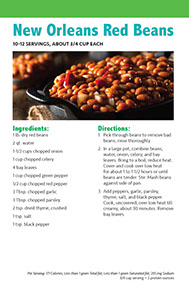
  • New Orleans Red Beans

    Nutrition

    8 Servings, 1-1/4 cup each

    Ingredients:

    1 lb. dry red beans

    2 qt. water

    1-1/2 cups chopped onion

    1 cup chopped celery

    4 bay leaves

    1 cup chopped green pepper

    3 Tbsp. chopped garlic

    3 Tbsp. chopped parsley

    2 tsp. dried thyme, crushed

    1 tsp. salt

    1 tsp. black pepper

    Directions:

    1.  Pick through beans to remove bad beans; rinse thoroughly.

    2.  In a large pot, combine beans, water, onion, celery, and bay leaves. Bring to a boil; reduce heat. Cover and cook over low heat for about 1-1/2 hours or until beans are tender. Stir. Mash beans against side of pan.

    3.  Add green pepper, garlic, parsley, thyme, salt, and black pepper. Cook, uncovered, over low heat till creamy, about 30 minutes. Remove bay leaves.

    4.  Serve with hot, cooked brown rice, if desired.

    Per Serving:

    Calories – 171

    Total fat – Less than 1 gram

    Saturated fat – Less than 1 gram

    Sodium – 285 mg

    Page from HealthyLife Weigh Recipe book by the American Institute for Preventive Medicine. www.HealthyLife.com. All rights reserved.

    © American Institute for Preventive Medicine

  • Get Your Recommended Daily Calcium

    Nutrition

    Recommended amounts for some nutrients, such as calcium, are called adequate intakes (AIs). These are the amounts that appear to provide what is needed for good health.

    Note: Ask your doctor how much calcium you should get each day. If you are at risk for osteoporosis, ask, too, if you might benefit from medications to prevent further bone loss. Examples are estrogen from hormone therapy (HT), if you are female; alendronate; raloxifene; and risedronate.

    What Does Calcium Do in the Body?

    Calcium is needed for strong bones and teeth. It is also needed for your:

    *  Heart to beat

    *  Nerves to react

    *  Blood to clot

    *  Muscles to flex

    *  Body cells to stick together

    Milk, yogurt, cheese, soy milk, tofu, collard greens, and broccoli are good sources of calcium. (See “Calcium Content in Foods” chart.) If you don’t drink milk because you can’t digest the sugar in milk (lactose intolerance), do the following:

    *  Have milk products that already have lactase added to them.

    *  Drink milk fermented by certain bacteria (acidophilus milk), if tolerated.

    *  Take commercial preparations of lactase (which can be added as drops or taken as pills) when you have lactose-containing foods.

    *  Have soy milk and other food products with added calcium.

    Some persons who can’t digest milk sugar (lactose) can tolerate aged cheeses, yogurt with active cultures, and possibly small amounts of dairy foods if eaten with meals and snacks.

    If you can’t tolerate milk products at all, eat nondairy food sources of calcium (soymilk, beans, tofu, broccoli, kale, collard greens, spinach, fish with small bones). Have food items that are fortified with calcium, such as some orange and apple juices and calcium fortified cereal products. (See “Calcium Content in Foods” chart and check food labels.)

    Labels do not list calcium in milligrams (mg), but as a percentage of the daily value (DV). The DV for calcium is based on 1,000 mg of calcium per day. It’s easy to figure out calcium in mg. Just add zero to the % DV. Examples are given in the chart below.

    Calcium Content in Foods

    Calcium Supplements

    (Check with your doctor or dietitian about taking calcium supplements.)

    Calcium supplements should not be used in persons with a history of calcium-containing kidney stones. Supplemental calcium may also worsen chronic constipation and interfere with iron absorption.

    If you do take calcium supplements:

    *  Drink at least 6 to 8 glasses of water per day.

    *  Avoid taking more than 500 to 600 mg at one time. Take calcium with meals.

    *  Avoid bone meal or dolomite. These could contain lead or other toxic metals.

    *  Avoid taking calcium supplements with iron supplements and laxatives. These can reduce calcium absorption.

    There are many forms of calcium supplements. Look for the amount in milligrams of elemental calcium that a source provides. Choose calcium supplements that have calcium carbonate, calcium citrate, and/or calcium gluconate.

    {Note: Beware of marketing claims for “coral calcium” products which promote them to prevent or treat cancer, heart disease, lupus, and multiple sclerosis. The Federal Trade Commission (FTC) has charged some marketers of this with making false and unsubstantiated claims about the product’s health benefits.}

    Should I Take a Vitamin D Supplement If I Take a Calcium Supplement?

    Vitamin D helps the body absorb and use calcium. You can get vitamin D, daily, from vitamin D fortified dairy products. Other food sources are salt-water fish, egg yolks, and liver. You can also get vitamin D from direct exposure to sunlight on your skin. In general, about 15 minutes of direct sunlight per day gives you the amount of vitamin D needed for a day. Persons who are elderly or homebound often do not get adequate sun exposure to get enough vitamin D. Also, during winter, sunlight in the Northern U.S. is not intense enough to let the body build up enough vitamin D. Check with your doctor or health care provider about the need for a vitamin D supplement. Some calcium supplements also contain vitamin D.

    On the average, American women are getting about half the amount of calcium that’s recommended. Also, surveys show 65% of adult men, 90% of teenage girls, and 50% of children fall short on calcium intake.

    How Do I Get My Adequate Intake for Calcium?

    You can get your Adequate Intake (AI) for calcium by having good food sources of calcium and by taking calcium supplements, if necessary.

    Can I Get Too Much Calcium?

    Whether or not you tolerate milk products, if you use calcium supplements, do so wisely. You can easily consume too much calcium with the use of calcium-fortified foods, calcium supplements, and antacids. Long term excessive intakes of calcium might decrease the absorption of other minerals and promote kidney stone formation. Your goal should be to get adequate, rather than, excessive amounts of calcium. Aim to get your Adequate Intake (AI) amount or the amount recommended by your doctor.

    Page from HealthyLife Weigh book by the American Institute for Preventive Medicine. www.HealthyLife.com. All rights reserved.

    © American Institute for Preventive Medicine

  • Cholesterol Basics

    Nutrition

    Cholesterol is a waxy, fat-like substance. It occurs naturally in the body. It helps carry fat through your blood vessels.

    What is Cholesterol?

    Image of an artery with normal blood flow and another with plaque buildup.

    Your body also needs cholesterol to:

    *  Make cell walls

    *  Make vitamin D and some hormones

    *  Give structure to the covering (myelin) that protects nerve fibers

    *  Make bile. This helps your body digest fat.

    Your body only needs a small amount of cholesterol in your blood to meet these needs.

    Too much cholesterol in your blood can collect with other fats and calcium to make plaque. This can clog the walls of the arteries and slow down or block blood flow to the heart or brain. The higher your blood cholesterol, the greater your chance of this buildup.

    Where Does Cholesterol Come From?

    *  Cholesterol the body makes (mostly in the liver)

    *  Cholesterol in animal foods (dietary cholesterol)

    Plants do not have cholesterol. Some plant foods have saturated and trans fat (hydrogenated oils) which raise blood cholesterol.

    Cholesterol Test

    A “lipoprotein profile” blood test checks your blood cholesterol (lipid) numbers. For accurate results, do not eat or drink anything, except water, for 9-12 hours before the test. A non-fasting test can screen for total and HDL-cholesterol levels.

    Who should get a blood cholesterol test?

    *  All men age 35 and older

    *  Men ages 20-35 and women age 45 and older who are at an increased risk for coronary artery disease

    *  Persons with diabetes and/or heart disease

    Get tested as often as advised by your doctor.

    What Should Your Cholesterol Numbers Be?

    For cholesterol to travel through blood, it is coated with a protein. This makes a “lipoprotein.” Total blood cholesterol is made up of these lipoproteins:

    *  LDL (low density lipoprotein) cholesterol

    *  HDL (high density lipoprotein) cholesterol

    *  VLDL (very low density lipoprotein) cholesterol.

    *Note: Your doctor will discuss and prescribe treatment and medication based on your target blood cholesterol numbers, plus other risk factors:

    *  Your age and health conditions, such as diabetes and cardiovascular disease (CVD)

    *  Your LDL-cholesterol and 10-year risk for CVD

    *  A family history of premature CVD

    *  Other CVD risk factors

    Heart Disease Risk Factors

    Remember, blood cholesterol is only one risk factor for cardiovascular disease. Others are include:

    *  You have had a heart attack or stroke.

    *  Cigarette smoking. Secondhand smoke.

    *  High blood pressure

    *  High LDL-cholesterol level

    *  Diabetes or insulin resistance

    *  Being overweight or obese.

    *  Lack of exercise.

    *  Sleep apnea.

    *  Being male 45 years+ or female 55 years+

    *  Heart disease in a father or brother before age 55; in a mother or sister before age 65

    *  Kidney disease

    *  Excess alcohol

    *  Stress, often with anger, can trigger a heart attack.

    *  Metabolic syndrome.

    – Waist size ≥ 40 inches for men; ≥ 35 inches for women

    – Blood pressure ≥ 130 mm Hg systolic and/or ≥ 85 mm Hg diastotic or you take medicine to lower blood pressure

    – A fasting blood sugar ≥ 100 mg/dL or you have diabetes

    – Triglycerides ≥ 150 mg/dL

    – HDL-cholesterol < 40 mg/dL for men; < 50 mg/dL for women.

    Eat Healthy

    *  Choose foods low in saturated fat and with zero trans fat. These raise LDL (bad) cholesterol in the blood more than anything else in the diet. Read food labels. Trans fats are in foods that have hydrogenated oils.

    *  Eat foods with plant sterols and stanols, such as margarines and salad dressings made with these.

    *  Choose monounsaturated and polyunsaturated fats.

    *  Limit meat serving sizes. Choose lean cuts of beef, pork and lamb. Trim fat from meat. Choose chicken and turkey. Take the skin off poultry before you eat it.

    *  Eat fish 2 to 3 times a week (e.g., salmon). Fish has omega-3 fatty acids, a healthy unsaturated fat. So does cod liver oil. Ask your doctor about fish oil supplements. Find out about mercury and other pollutants in fish fromwww.epa.gov.

    *  Get 20 to 35 grams of dietary fiber a day, especially the water-soluble type from oat bran, oatmeal, kidney and other beans, lentils, apples, oranges, and carrots.

    *  Eat a variety of whole-grain breads, cereals, and pastas; fruits and vegetables; lentils; beans, etc. These plant foods are low in saturated fat and have no cholesterol (if you do not add fatty toppings and spreads). Have soy milk, soy yogurt, and tofu.

    *  Limit alcohol to 2 drinks a day for men and 1 drink a day for women and persons age 65 and older. One drink = 4 to 5 oz. of wine, 12 oz. of beer, or 1-1/2 oz. of 80 proof liquor (whiskey, vodka, etc.).

    *  Your doctor may tell you to limit dietary cholesterol to 300 milligrams (mg) a day (200 mg a day if your cholesterol is high).

    Prescribed Medicines

    Your doctor may prescribe cholesterol-lowering medication. This is used with, not instead of, life style changes.

    Types of Cholesterol-Lowering Medicines

    *  Statins. These help your body make less cholesterol and help the liver remove LDL (bad) cholesterol already in the blood. Examples are lovastatin and pravastatin. Statins lower LDL (bad)cholesterol more than any other type of drugs. They also lower triglycerides and raise HDL (good) cholesterol.

    *  Resins. These bind with cholesterol-containing bile acids in the intestines and are then passed in the stool. Examples are cholestyramine and colestipol. These lower LDL (bad) cholesterol.

    *  Nicotinic Acid or Niacin. This is a B vitamin. You can buy this over-the-counter, but a doctor should prescribe the amount you take and monitor its use. Niacin lowers LDL (bad) cholesterol and triglycerides and raises HDL (good) cholesterol.

    *  Fibrates. These medicines lower triglycerides and raise HDL (good) cholesterol. Examples are gemfibrozil and fenofibrate.

    Tips On Taking Your Medication

    *  Take your medication as prescribed. If you have questions, talk to your doctor or pharmacist.

    *  Tell your doctor about side effects. Common side effects with many cholesterol-lowering medicines are bloating, gas, abdominal pain, constipation, and nausea. Hot flashes or flushing is common with niacin. Ask your doctor how to minimize these side effects. Often they wane with time. Make sure to tell your doctor if you have muscle soreness or weakness, and/or brown urine.

    Resources

    American Heart Association

    800.AHA.USA1 (242.8721)

    www.heart.org/HEARTORG

    National Heart, Lung, and Blood Institute

    www.nhlbi.nih.gov

    Cover image to the Cholesterol brochure by the American Institute for Preventive Medicine. www.HealthyLife.com. All rights reserved.

    © American Institute for Preventive Medicine

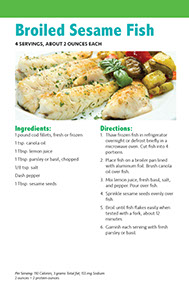
  • Broiled Sesame Fish

    Nutrition

    4 Servings, about 2-1/2 ounces each

    Ingredients:

    1 pound cod fillets, fresh or frozen

    1 tsp. margarine, melted

    1 Tbsp. lemon juice

    1 tsp. dried tarragon leaves

    1/8 tsp. salt

    Dash pepper

    1 Tbsp. sesame seeds

    1 Tbsp. parsley, chopped or 12 sprigs of dill

    Directions:

    1.  Thaw frozen fish in refrigerator overnight or defrost briefly in a microwave oven. Cut fish into 4 portions.

    2.  Place fish on a broiler pan lined with aluminum foil. Brush margarine over fish.

    3.  Mix lemon juice, tarragon leaves, salt, and pepper. Pour over fish.

    4.  Sprinkle sesame seeds evenly over fish.

    5.  Broil until fish flakes easily when tested with a fork, about 12 minutes.

    6.  Garnish each serving with parsley or dill.

    Per Serving:

    Calories – 110

    Total fat – 3 grams

    Sodium – 155 mg

    Page from HealthyLife Weigh Recipe book by the American Institute for Preventive Medicine. www.HealthyLife.com. All rights reserved.

    © American Institute for Preventive Medicine

  • Eat Plenty Of Veggies & Fruit

    Nutrition

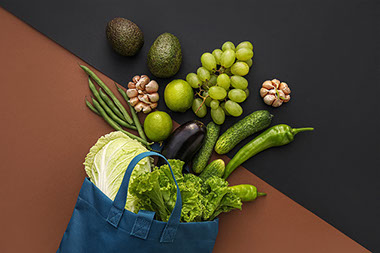
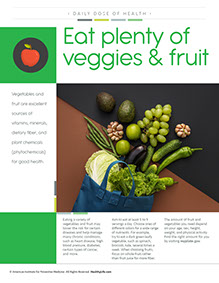
    Bag with variety of veggies and fruit.

    Vegetables and fruit are excellent sources of vitamins, minerals, dietary fiber, and plant chemicals (phytochemicals) for good health.

    Eating a variety of vegetables and fruit may lower the risk for certain diseases and help manage many chronic conditions, such as heart disease, high blood pressure, diabetes, certain types of cancer, and more.

    Aim to eat at least 5 to 9 servings a day. Choose ones of different colors for a wide range of nutrients. For example, try to eat a dark green leafy vegetable, such as spinach, broccoli, kale, several times a week. When choosing fruits, focus on whole fruit rather than fruit juice for more fiber.

    The amount of fruit and vegetables you need depend on your age, sex, height, weight, and physical activity. Find the right amount for you by visitingmyplate.gov.

    Page from HealthyLife Weigh book by the American Institute for Preventive Medicine. www.HealthyLife.com. All rights reserved.

    © American Institute for Preventive Medicine

  • Go For The Good Oils

    Nutrition

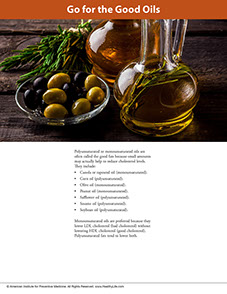
    Image of olive oil and olives.

    Polyunsaturated or monounsaturated oils are often called the good fats because small amounts may actually help to reduce cholesterol levels. They include:

    *  Canola or rapeseed oil (monounsaturated).

    *  Corn oil (polyunsaturated).

    *  Olive oil (monounsaturated).

    *  Peanut oil (monounsaturated).

    *  Safflower oil (polyunsaturated).

    *  Sesame oil (polyunsaturated).

    *  Soybean oil (polyunsaturated).

    Monounsaturated oils are preferred because they lower LDL cholesterol (bad cholesterol) without lowering HDL cholesterol (good cholesterol). Polyunsaturated fats tend to lower both.

    Page from A Year of Health Hints book by the American Institute for Preventive Medicine. www.HealthyLife.com. All rights reserved.

    © American Institute for Preventive Medicine