Category: First Aid

  • Frostbite & Hypothermia

    First Aid

    Frostbite freezes the skin. It can damage tissue below the skin, too. Most often, frostbite affects the toes, fingers, earlobes, chin, and tip of the nose.

    Hypothermia is when body temperature drops below 96ºF. The body loses more heat than it can make. This usually occurs from staying in a cold place for a long time.

    Frostbite & Frostnip

    Signs & Symptoms

    *  Cold, numb skin swells and feels hard and solid.

    *  Loss of function. Absence of pain.

    *  Skin color changes from white to red to purple. Blisters occur.

    *  Slurred speech.

    *  Confusion.

    Frostnip is a less serious problem. The skin turns white or pale and feels cold, but the skin does not feel hard and solid.

    Causes

    When temperatures drop below freezing, frostbite and frostnip can occur. Both can set in very slowly or very quickly. This will depend on how long the skin is exposed to the cold and how cold and windy it is.

    Hypothermia

    Signs & Symptoms

    With mild hypothermia, symptoms include: Shivering; slurred speech; memory lapses; and the abdomen and back feel cold.

    With moderate hypothermia, shivering stops, but the skin feels ice cold and looks blue. The person may act confused, drowsy, very cranky, and/or stuporous. Muscles may be rigid and stiff. Pulse rate and breathing slow down.

    With severe hypothermia, the person has dilated pupils, no response to pain, and loses consciousness. The person appears to be dead. Death occurs in half or more of persons with severe hypothermia.

    Causes

    *  Exposure to cold temperatures (wet or dry). Many factors increase the risk. Examples are: Wet clothing or lying on a cold surface; circulation problems; diabetes; and old age. The elderly are more prone to hypothermia if they live in a poorly heated home and do not dress warm enough.

    *  Immersion. This can be from 6 hours or less of exposure to cold water immersion. It can also be from water immersion or exposure on land to cold, wet weather near freezing for up to 24 hours.

    *  Shock.

    Treatment

    Self-care measures can treat frostnip. Prompt emergency medical care is needed for frostbite to keep the area affected from getting infected and to prevent the loss of a limb. Hypothermia needs emergency medical care.

    Wind Chill Temperature

    As the wind increases, the body is cooled at a faster rate. This causes the skin temperature to drop. Wind chill temperature combines outdoor air temperature and wind speed to give a temperature of what it “feels like” on the skin. The National Weather Service has a “Wind Chill Chart” that shows temperatures, wind speeds, and exposure times that cause frostbite. To get this, accesswww.nws.noaa.gov/om/windchill.

    Questions to Ask

    {Note: The damage from exposure to the cold may not be noted for 72 hours.}

    Self-Care / First Aid

    First Aid for Frostbite and Hypothermia Before Emergency Care

    *  Gently move the person to a warm place and Call 9-1-1!

    *  Check for a response. Give Rescue Breaths or CPR, as needed.

    *  Loosen or remove wet and/or tight clothing. Remove jewelry.

    *  Don’t rub the area with snow or soak it in cold water.

    *  Warm the affected area by soaking it in a tub of warm water (101ºF to 104ºF) and an antiseptic solution, such as Betadine.

    *  Stop when the affected area becomes red, not when sensation returns. This should take about 45 minutes. If done too fast, thawing can be painful and blisters may develop.

    *  If warm water is not available, cover the person with blankets, coats, etc., or place the frostbitten body part in a warm body area, such as an armpit or on the abdomen (human heat) or use a blow dryer, if available.

    *  Keep exposed areas elevated, but protected.

    *  Don’t rub or massage a frostbitten area.

    *  Protect the exposed area from the cold. It is more sensitive to re-injury.

    *  Don’t break blisters.

    First Aid for Frostnip

    *  Warm the affected area. This can be done a number of ways:

    – Place cold fingers in armpits.

    – Place cold feet onto another person’s warm stomach.

    – Put the affected area in warm water (101ºF to 102ºF).

    After warming the area, the skin may be red and tingling. If it is not treated, frostnip can lead to frostbite.

    *  Protect the exposed area from the cold. It is more sensitive to re-injury.

    To Prevent Frostbite and Outdoor Hypothermia

    *  Stay indoors, as much as possible, when it is very cold and windy.

    *  Wear clothing made of wool or polypropylene. These fabrics stay warm even when wet. Layer clothing. Wear 2 or 3 pairs of socks instead of 1 heavy pair. Wear roomy shoes. Do not wear items that constrict the hands, wrists, or feet.

    *  Wear a hat that keeps your head and ears warm. A major source of heat loss is through the head.

    Healthier at Home book by the American Institute for Preventive Medicine. www.HealthyLife.com. All rights reserved.

    © American Institute for Preventive Medicine

  • Sprains, Strains & Sports Injuries

    First Aid

    Signs & Symptoms

    For Sprains

    A sprain happens when you overstretch or tear a ligament. (This is fibrous tissue that connects bones.) A joint is affected, but there is no dislocation or fracture. Symptoms are rapid pain, swelling, bruising, and a warm feeling at the injured site.

    For Strains

    A strain is an injury to the muscles or tendons. (These are tissues that connect muscles to bones.) Symptoms are pain, tenderness, swelling, and bruising.

    For Sports Injuries

    Sports injury symptoms depend on the injury. They include pain, tenderness, swelling, and bruising. Bones may be broken or dislocated.

    Causes

    Sprains occur from an accident, injury, fall, etc. A strain occurs when you overstretch or overexert a muscle or tendon (not a ligament). This is usually due to overuse and injuries, such as sports injuries.

    Treatment

    Treatment for sprains, strains, and sports injuries depends on the injury and on the extent of damage. Self-care may be all that is needed for mild injuries. Sports injuries and sprains may need medical treatment. Some sprains need a cast. Others may need surgery if the tissue affected is torn.

    Broken bones (other than broken toes) need medical care right away.

    Questions to Ask

    Self-Care / First Aid

    *  If the injury is not serious, stop what you are doing and use R.I.C.E.

    *  If you sprained a finger or hand, remove rings. (If you don’t and your fingers swell up, the rings may have to be cut off.)

    *  Take an over-the-counter medicine for pain, if needed. {Note: Many sports medicine providers do not recommend aspirin-like medicine at first, because it can make bleeding and bruising worse.}

    *  Try liniments and balms. These give a cooling or warming sensation by masking the pain. They do not promote healing.

    *  Once the injury begins to heal, use M.S.A.:

    – Movement. Work toward a full range of motion as soon as possible. This will help maintain flexibility during healing and prevent any scar tissue from limiting future performance.

    – Strength. Gradually strengthen the injured area once the swelling is controlled and a range of motion is back.

    – Alternative Activities. Do regular exercises that do not strain the injured part. Start this a few days after the injury, even though the injured part is still healing.

    To Prevent Serious Injuries (especially during contact sports)

    *  Wear the right protective gear and clothing for the sport (e.g., a helmet; shoulder, knee, and wrist pads; a mouth guard, etc.).

    *  Train in the sport so you learn how to avoid injury. “Weekend athletes” are prone to injury. Follow the rules that apply to the sport.

    General Prevention

    *  Ease into any exercise program. Build up gradually.

    *  Avoid running on hard surfaces like asphalt and concrete. Run on flat surfaces. Running uphill puts added stress on the achilles tendon.

    *  Don’t lock your knees. When you jump, land with your knees bent.

    *  Wear shoes and socks that fit well. The widest area of your foot should match the widest area of the shoe. You should be able to wiggle your toes with the shoe on when you sit and when you stand. Wear shoes that provide shock absorption and stability.

    *  Stop if you feel pain. Don’t do the activity until you can do it without pain.

    *  Cool down after exercise. Do the activity at a slower pace for 5 minutes.

    Healthier at Home book by the American Institute for Preventive Medicine. www.HealthyLife.com. All rights reserved.

    © American Institute for Preventive Medicine

  • Broken Bones / Dislocations

    First Aid

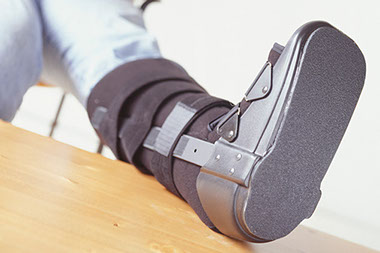
    Image of person wearing a foot brace boot.

    For Broken Bones

    Signs & Symptoms

    Symptoms of broken bones are pain, swelling, bruising, and loss of function or feeling. The injured area looks crooked, misshaped, or deformed.

    Below the injured site, numbness and tingling can occur. The skin can be pale, blue, purple, or gray. It feels colder than the skin on the uninjured limb.

    Causes

    *  Injuries from falls and accidents.

    *  Osteoporosis.

    *  Too much or repeated stress on a bone.

    Treatment

    The bone may need to be reset. A splint or cast may need to be worn. {Note: Broken fingers, toes, and ribs don’t need a cast.} Muscles and joints near the fracture site need to be exercised.

    For Dislocations

    Signs & Symptoms

    A dislocation is a separation of the end of a bone and the joint it meets. The bone is displaced from its proper position. A dislocated joint is swollen, misshaped, very painful, and discolored.

    Dislocations can cause damage to the membrane lining the joint, tears to nearby muscles and ligaments, and nerve damage.

    The shoulders are especially prone to dislocation injuries. The elbow is a common site in toddlers. Fingers, hips, ankles, elbows, jaws, and even the spine can be dislocated. A dislocated vertebrae in the spine often damages the spinal cord and can paralyze body parts lower than the injury site.

    Causes

    *  Injuries from contact sports or falls. Over stretching bones that touch in joints.

    *  Joints weakened by previous injury.

    *  Suddenly jerking a toddler’s hand or arm. Force applied in the wrong direction can snap the ball of the upper arm bone out of the shoulder socket.

    Treatment

    Medical care is needed to put a dislocated bone back into its socket. With this, the dislocated joint should function within 24 to 48 hours. Limited activity for 4 to 6 weeks allows enough time for the injury to heal.

    Questions to Ask

    Self-Care / First Aid

    For an Open Fracture

    *  Monitor for signs of shock.

    *  Control bleeding with direct pressure. Do not press on or move a bone that sticks out. Do not reset the bone.

    *  Immobilize the wound with a splint. Use a firm material, such as a folded newspaper or broom handle. Secure the splint above and below the injury or tie the injured part to an uninjured part. Use shoe laces, belts, etc. to hold the splint in place. Do not tie too tightly. Check the area below the splint to make sure that the skin is warm and pink in color. If not, loosen the ties.

    For Fractures to Limbs

    *  To make an arm splint, put padding between the arm and the body. If an elbow is not involved, place the arm across the chest and wrap a cloth around the entire body. If the elbow is involved, place the arm straight or slightly bent against the body. Wrap the cloth around the body and arm.

    *  Make a sling with a triangular piece of cloth. Place the largest part under the arm and tie the ends at the neck.

    *  Make a splint for a leg or tie the injured leg to the other leg. Place padding in between the legs. Do not tie the splint too tightly. This could interfere with blood flow.

    *  Use cold packs on the injured site. Do not use ice next to the skin. This can cause frostbite.

    *  For pain, take an over-the-counter pain reliever as directed. Don’t use aspirin if you have bleeding.

    For Dislocations

    Dislocations need medical care. The longer they are out, the harder it is to get them back in.

    *  Immobilize the injured area above and below the injured joint.

    *  Don’t try to straighten a bone or joint that is misshaped. Don’t try to put a joint back in its socket.

    *  Apply cold packs to relieve pain and swelling.

    *  Follow your doctor’s instructions.

    *  Take an over-the-counter medicine for pain as directed.

    Resources

    National Institute of Arthritis and Musculoskeletal and Skin Diseases (NIAMS)

    www.niams.nih.gov

    Healthier at Home book by the American Institute for Preventive Medicine. www.HealthyLife.com. All rights reserved.

    © American Institute for Preventive Medicine

  • Head/Neck/Spine Injuries

    First Aid

    Signs & Symptoms

    For a Severe Injury

    *  The scalp, neck, or back bleeds.

    *  It looks like the head, neck, or back is in an odd position.

    *  Pain is felt in the back, neck, and/or head. The pain can be severe.

    *  Stiff neck.

    *  Abdominal pain. Vomiting.

    *  Blood or fluid comes from the mouth, nose, or an ear.

    *  Loss of vision. Blurred or double vision. Pupils of uneven size.

    *  Inability to move any part of the body. Weakness in an arm or leg. Walking is difficult.

    *  New feelings of numbness occur in the legs, arms, shoulders, or any other part of the body.

    *  New loss of bladder or bowel control occurs.

    *  Confusion. Drowsiness. Personality changes.

    *  Convulsions.

    *  Loss of consciousness.

    Watch for signs and symptoms for the first 24 hours after the injury. Symptoms may not occur for as long as several weeks, though. Problems can occur even if no injury is seen on the outside.

    For a Whiplash Injury

    *  Neck pain and stiffness.

    *  Having a hard time raising the head off of a pillow.

    Causes

    Anything that puts too much pressure or force on the head, neck, or back can result in injury. Common causes are falls, accidents, and hard blows. A concussion occurs when the brain is shaken. A contusion occurs when the brain is bruised.

    Treatment

    If you suspect a head, neck, or back injury, you must keep the head, neck, and back perfectly still until EMS arrives. Any movement of the head, neck, or back could result in paralysis or death.

    Questions to Ask

    Self-Care / Prevention

    First Aid for a Severe Injury

    *  Do not move the person unless his or her life is in danger. If so, log roll the person, place tape across the forehead, and secure the person to a board to keep the head, neck, and back areas from moving at all.

    *  Call 9-1-1!

    *  CHECK for a response. If giving rescue breaths, do not tilt the head backward. Pull the lower jaw open instead.

    To Immobilize the Head, Neck, and/or Back

    *  Tell the person to lie still and not move his or her head, neck, back, etc.

    *  Log roll as listed above or place rolled towels, etc. on both sides of the neck and/or body. Tie in place, but don’t interfere with the person’s breathing. If necessary, use both of your hands, one on each side of the person’s head to keep the head from moving.

    *  Monitor for Bleeding and Shock. Keep the person warm with blankets, coats, etc.

    Move Someone You Suspect Has Injured His or Her Neck in a Diving or Other Water Accident

    Before emergency care arrives:

    *  Protect the neck and/or spine from bending or twisting. Place your hands on both sides of the neck. Keep it in place until help arrives.

    *  If the person is still in the water, help the person float until a rigid board can be slipped under the head and body, at least as far down as the buttocks.

    *  If no board is available, get several people to take the person out of the water. Support the head and body as one unit. Make sure the head does not rotate or bend in any way.

    First Aid For Traffic Accidents

    *  If the person was in a motorcycle accident, do not remove the helmet. Call 9-1-1 to do this.

    *  Don’t move the person. He or she may have a spinal injury. Call 9-1-1 to do this.

    First Aid for Minor Head Injuries

    *  Put an ice pack or bag of frozen vegetables in a cloth. Apply this to the injured area. Doing this helps reduce swelling and bruising. Change it every 15 to 20 minutes for 1 to 2 hours. Do not put ice directly on the skin. Cover an open, small cut with gauze and first- aid tape or an adhesive bandage.

    *  Once you know there is no serious head injury, do normal activities again. Avoid strenuous ones.

    *  Take an over-the-counter medicine for pain as directed.

    *  Don’t drink alcohol or take any other sedatives or sleeping pills.

    *  During the next 24 hours, monitor the person. While asleep, wake the person every 2 hours to check alertness. Ask something the person should know, such as a pet’s name, an address, etc. If the person can’t be roused or respond normally, get immediate medical care.

    First Aid for Bleeding from the Scalp

    *  To control bleeding, put pressure around the edges of the wound. Make a ring pad (shaped like a doughnut) out of long strips of cloth to apply pressure around the edges of the wound. If this doesn’t control bleeding, put direct pressure on the wound. Don’t poke your hand into the person’s brain, though.

    *  Don’t wash the wound or apply an antiseptic or any other fluid to it.

    *  If blood or pink-colored fluid is coming from the ear, nose, or mouth, let it drain. Do not try to stop its flow.

    If You Suspect a Whiplash Injury

    *  See your doctor, as soon as you can, to find out the extent of injury. If your arm or hand is numb, tell your doctor.

    *  For the first 24 hours, apply ice packs to the injured area for up to 20 minutes every hour.

    *  After 24 hours, use ice packs or heat, whichever works best, to relieve the pain. There are many ways to apply heat. Take a hot shower for 20 minutes a few times a day. Use a hot-water bottle, heating pad (set on low), or heat lamp directed to the neck for 10 minutes, several times a day. (Use caution not to burn the skin.)

    *  Wrap a folded towel around the neck to help hold the head in one position during the night.

    Concussion

    This is a mild traumatic brain injury (TBI) from a blow or jolt to the head. Signs and symptoms are:

    *  Altered level of alertness. May have brief fainting spell. Feeling confused, dazed, and/or dizzy.

    *  Can’t remember events right before or right after the injury.

    *  Nausea and vomiting.

    *  Headache.

    A concussion needs a medical assessment.
    Healthier at Home book by the American Institute for Preventive Medicine. www.HealthyLife.com. All rights reserved.

    © American Institute for Preventive Medicine
  • Stroke (Brain Attack)

    First Aid

    A stroke is also called a “brain attack.” With a stroke, brain cells die due to a blood clot or rupture of a blood vessel in the brain. The end result is brain damage (and possible death).

    In the U.S., strokes are the 3rd leading cause of death. They are the leading cause of adult disability.

    Signs & Symptoms

    *  Sudden numbness or weakness of the face, arm, or leg, especially on one side of the body.

    *  Sudden confusion, trouble speaking or understanding.

    *  Sudden trouble seeing in one or both eyes.

    *  Sudden trouble walking, dizziness, loss of balance or coordination.

    *  Sudden severe headache with no known cause.

    Causes

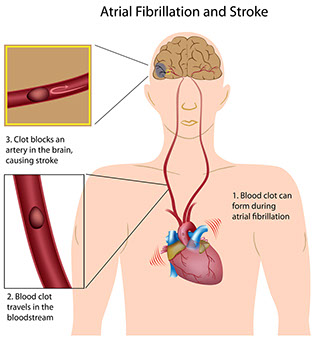
    Most strokes are caused by a blood clot in an artery in the neck or brain. Some are caused by bleeding into or around the brain.

    Risk Factors for a Stroke

    *  Previous stroke or transient ischemic attack (TIA)-a temporary lack of blood supply to the brain.

    *  Atrial fibrillation. This is an irregular beating of the heart.

    *  High blood pressure. Cigarette smoking. Diabetes. Coronary artery disease.

    *  Being a male over age 70.

    Illustration of how a stroke is caused.

    Prevention

    *  Take medicine(s), as prescribed, to control blood pressure, blood cholesterol, diabetes, and atrial fibrillation. Aspirin may help reduce the risk of stroke in women ages 55-79 years. Discuss this with your doctor.

    *  Get to and stay at a healthy weight. Get regular exercise.

    *  Don’t smoke. If you smoke, quit. Use alcohol in moderation. Manage stress.

    Questions to Ask

    Self-Care / Prevention

    First Aid before Emergency Care

    *  Note the time when the first sign(s) of stroke occurred. Report this time to emergency personnel. For the most common type of strokes, a clot-busting drug should to be given within 3 hours of the start of symptoms.

    *  Do not give the person anything to eat or drink. Do not give aspirin.

    Healthier at Home book by the American Institute for Preventive Medicine. www.HealthyLife.com. All rights reserved.

    © American Institute for Preventive Medicine
  • Burns

    First Aid

    Signs & Symptoms

    First-degree burns affect only the outer skin layer. The skin area appears dry, red, and mildly swollen. First-degree burns are painful and sensitive to touch. They should feel better in 1 to 2 days. They heal in about a week.

    Second-degree burns affect the skin’s outer and lower layers. The skin is painful, swollen, red, and has blisters. The skin also has a weepy, watery surface.

    Third-degree burns affect the outer and deeper skin layers and organs below the skin. The skin appears black-and-white and charred. It swells. Tissue under the skin is often exposed. Third-degree burns may have less pain than first-degree or second-degree burns. Why? No pain is felt where nerve endings are destroyed. Pain may be felt around the margin of the burn, though.

    Causes

    Burns can result from dry heat (fire), moist heat (steam, hot liquids), electricity, chemicals, or from radiation, including sunlight. The longer the skin is exposed to the burn source, the worse the burn can be.

    Treatment

    Third-degree burns always need emergency care. A second-degree burn needs immediate care if it is on the face, hands, feet, genitals, a joint, or if the burn affects a large area.Self-Care/First Aidtreats most first-degree burns and second-degree burns.

    Questions to Ask

    Self-Care / Prevention

    For Severe Burns Before Emergency Care

    *  Remove the person from the source of heat. Call 9-1-1! Keep the person’s airway open. Treat for Shock.

    *  Remove hot or burned clothes that come off easily, not if they are stuck to the skin.

    *  Cover the burns loosely with clean cloths. Use direct pressure to control bleeding. Don’t rub.

    *  Stay with the person until medical care arrives.

    *  If lye or a dry chemical gets on the skin, brush off the powder. Then flush with clean water for at least 20 minutes or until EMS arrives. Remove glasses, but not contacts, before treating the eyes.

    For First-Degree and Second-Degree Burns (that are less than 3” in diameter)

    *  Use cold water or cloths soaked in cold water on burned areas for 15 minutes or until the pain subsides. Do not use ice at all. Doing this could result in frostbite.

    *  Cover the area loosely with a dry cloth, such as sterile gauze. Hold it in place by taping only the edges of the gauze. Change the dressing the next day and every 2 days after that.

    *  Don’t use ointments. Aloe vera can be applied over closed skin 3 to 4 times a day. For a more severe burn less than 3” x 2”, use Second Skin Moisture Pads, etc.

    *  Don’t break blisters. If they break on their own, apply an antibacterial spray or ointment or treatment prescribed by your doctor. Keep the area loosely covered with a sterile dressing.

    *  Prop the burned area higher than the rest of the body, if you can.

    Resources

    National Safety Council

    www.nsc.org

    Healthier at Home book by the American Institute for Preventive Medicine. www.HealthyLife.com. All rights reserved.

    © American Institute for Preventive Medicine
  • Heart Attack

    First Aid

    A heart attack happens when the heart does not get enough blood supply for a period of time. Part or all of the heart muscle dies.

    Signs, Symptoms & Causes

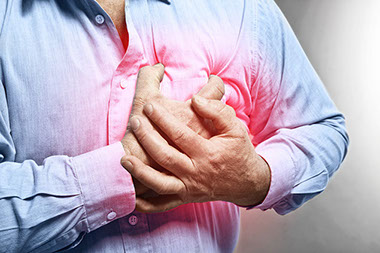
    Close up image of man holding chest in pain.

    A heart attack may have warning signs. It can occur without signs, too. This is called a “silent” heart attack.

    Causes

    *  The most common cause is one or more blood clots that block an artery in the heart. Often, a blood clot forms in an artery already narrowed by plaque.

    *  Having a heart attack in the past increases the risk for another one.

    *  Spasms occur in the large coronary artery. This can be triggered by: Heavy physical exertion, such as shoveling snow; exposure to cold; severe emotional stress; and having a heavy meal. These triggers are more likely to affect persons who are not active.

    *  Cocaine or amphetamine abuse can cause a sudden heart attack. This can happen in persons with no signs of heart disease.

    Warning Signs

    Note: If any of these signs occur, call 9-1-1.

    Common Warning Signs

    *  Feeling of pain (may spread to or be felt in the arm, neck, tooth, jaw, or back), tightness, burning, squeezing, or heaviness in the chest. This lasts more than a few minutes or goes away and comes back.

    *  Chest discomfort with:

    – Fainting

    – Feeling lightheaded.

    – Nausea.

    – Shortness of breath.

    – Sweating.

    Other Warning Signs

    *  Unusual chest, abdominal, or stomach pain.

    *  Dizziness; nausea; trouble breathing; jaw or arm pain without chest pain.

    *  Fast or uneven heartbeat or pulse.

    *  Sweating for no reason, pale, gray, or clammy skin.

    Signs More Likely in Women Than Men

    An uneasy feeling in the chest with: Unexplained or extreme anxiety; unusual fatigue or weakness; fluttering heartbeats; or severe indigestion that doesn’t go away with an antacid.

    Treatment

    A heart attack is a medical emergency! Treatment works best when it is given within 1 to 2 hours after symptoms start. Treatment includes:

    *  Medicine(s) to keep blood from clotting.

    *  “Clot busters” to dissolve blood clots in heart arteries.

    *  Tests to diagnose the status of the heart and arteries.

    *  Angioplasty, stents, or bypass surgery, if needed.

    Prevention

    *  Follow prevention measures in Heart Disease.

    *  Take medications, as prescribed.

    *  Don’t shovel snow or carry heavy objects, especially if you are not physically fit.

    *  Don’t use amphetamines and/or cocaine.

    Questions to Ask

    Self-Care / Prevention

    Call 9-1-1 or your local rescue squad right away! Call when warning signs start. Don’t wait to see if the pain goes away.

    First Aid for a Heart Attack Before Emergency Care

    *  CHECK for a response. Do CPR, as needed.

    *  If the person uses and has nitroglycerin, place one tablet under the tongue. Give as many as 3 tablets in 10 minutes.

    *  Give the person a regular (325 mg.) aspirin or 4 children’s chewable aspirins (81 mg. each) to chew on. Give the aspirin after calling 9-1-1. Ask the 9-1-1 dispatcher if aspirin should be taken.

    {Note: Don’t use aspirin if the person is allergic to it or has a condition that makes using it risky.}

    *  If you can’t call 9-1-1, drive the person to the hospital right away. If you are having heart attack signs, don’t drive yourself unless you have no other choice.

    *  Loosen clothing around the neck, chest, and waist. Don’t let the person lie down, especially if he or she has breathing problems. A half-sitting position is better. Put the legs up. Bend them at the knees. Put a pillow or rolled towel under the knees. Support the back.

    *  Reassure the person that you have called for medical help and will stay with him or her until it arrives.

    *  After a heart attack, follow the doctor’s treatment plan.

    Healthier at Home book by the American Institute for Preventive Medicine. www.HealthyLife.com. All rights reserved.

    © American Institute for Preventive Medicine
  • Choking

    First Aid

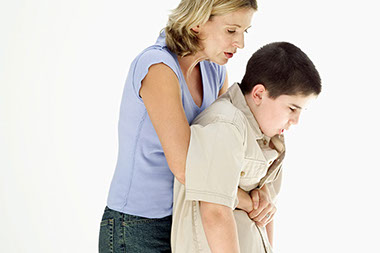
    Image of an adult women giving the heimlich maneuver to a child who's choking.

    With choking, the airway is partly or completely blocked. When it is completely blocked, the brain doesn’t get oxygen. Without oxygen, the brain can begin to die in 4 to 6 minutes.

    Signs & Symptoms

    When a person’s airway is completely blocked, he or she:

    *  Can’t talk.

    *  Can’t breathe.

    *  Can’t cough.

    *  May turn blue.

    When a person’s airway is partly blocked, he or she:

    *  Wheezes.

    *  Coughs.

    *  Has fast and/or labored breathing.

    *  Has chest pain when breathing in.

    Causes

    *  Food goes down the windpipe. Small objects get stuck in the throat and airway.

    *  Fluids, such as mucus or liquids, are swallowed the wrong way and block the airway.

    *  Snoring. Choking can occur when the tongue blocks the airway.

    Treatment

    Emergency action is needed for a person who cannot breathe, speak, or cough forcefully. The Heimlich maneuver can expel an object that blocks the airway. It is used for a person who is conscious. Emergency medical care is needed for a person who loses consciousness. Rescue breaths and chest compressions are needed before medical help arrives. Even if the object is expelled, the person should see a doctor or go to a hospital emergency department.

    Questions to Ask

    Self-Care / First Aid

    First Aid for Choking When Able to Breathe and Speak (or an infant or child can cry)

    *  Cough to clear the airway.

    *  Take a slow, deep breath to get a lot of air into the lungs.

    *  Give a deep, forceful cough. Breathe in deeply enough to be able to cough out 2 or 3 times in a row before taking a second breath.

    *  Don’t slap a person on the back. Doing this can drive the object down deeper.

    *  Have the person sit or stand. Bending forward may cause the object to fall against the vocal cords. Get emergency care right away!

    Prevention

    *  Chew all foods well before swallowing. Eat at a slow pace.

    *  Limit alcoholic drinks before you eat. This lessens the chance of swallowing large pieces of food.

    *  If you wear dentures, make sure they fit well. Since your mouth sensation is lessened, you are at a higher risk of choking. Eat slower. Chew food more thoroughly.

    *  Try not to laugh and eat at the same time. Laughing can draw food into the windpipe.

    *  Don’t run or play sports with objects in the mouth.

    *  For children under 5 years old, cut hot dogs, sausages, seedless grapes, and caramels into small pieces before you give these to them. And don’t give them nuts; popcorn; foods with pits, (e.g., cherries); gum (especially bubble gum); hard candy, throat lozenges, and cough drops.

    *  Don’t let your child chew or suck on rubber balloons or pieces of them.

    *  Keep small, solid objects, such as paper clips, away from children 3 years old and younger. Make sure, too, that they don’t get toys that have small parts, such as eyes on stuffed animals, game pieces, dice, etc. A young child should not play with any object smaller than his or her closed fist.

    *  Put childproof latches on cupboards that have harmful items.

    *  Store all medicines and vitamins out of children’s reach and in containers with childproof lids. Keep these items in locked cabinets, if needed.

    *  Remove plastic labels and decals from baby walkers and other kiddy furniture before children can peel them off.

    Healthier at Home book by the American Institute for Preventive Medicine. www.HealthyLife.com. All rights reserved.

    © American Institute for Preventive Medicine
  • Heat Exhaustion & Heat Stroke

    First Aid

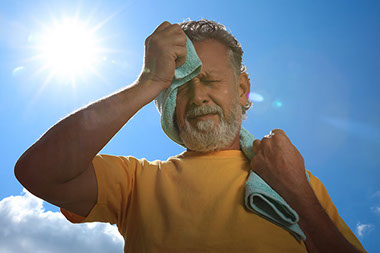
    Sweat evaporates from the skin to cool the body. If this personal cooling system does not work right or fails to work, heat exhaustion or a heat stroke can occur.

    Heat exhaustion is a warning that the body is getting too hot. With a heat stroke, body organs start to overheat. They will stop working if they get hot enough. If it is not treated, a heat stroke can result in death.

    Signs & Symptoms

    For a Heat Stroke

    These signs and symptoms can occur suddenly with little warning:

    *  Very high temperature (104ºF or higher).

    *  Hot, dry, red skin. No sweating.

    *  Deep breathing and fast pulse. Then shallow breathing and weak pulse.

    *  Confusion. Hallucinations.

    *  Convulsions.

    *  Loss of consciousness.

    For Heat Exhaustion

    *  Normal, low, or only slightly elevated body temperature.

    *  Cool, clammy, pale skin. Sweating.

    *  Dry mouth. Thirst.

    *  Fatigue. Weakness. Feeling dizzy.

    *  Headache.

    *  Nausea. Vomiting can occur.

    *  Muscle cramps.

    *  Weak or rapid pulse.

    Causes

    Anything that keeps the body’s natural cooling system from working right can lead to heat exhaustion and heat stroke. This includes:

    *  Extreme heat and humidity.

    *  Being in places without fans or air conditioners during hot, humid weather.

    *  Not being able to get to public air-conditioned places. Waiting for a bus or other type of public transportation in hot, humid weather.

    *  Overdressing.

    *  Changes in the skin due to aging.

    *  Poor circulation. Heart, lung, and/or kidney disease.

    *  Not being able to sweat due to medicines, such as water pills and some used for mental illnesses.

    *  Alcohol or drug use.

    *  Any illness that causes weakness, fever, vomiting, or diarrhea.

    Treatment

    A heat stroke is a medical emergency.

    Heat exhaustion may respond to self-care measures. If not, medical care is needed.

    Prevention

    *  Drink lots of liquids, especially if your urine is dark yellow. Drink water, sport drinks, such as Gatorade, etc.

    *  Do not stay in or leave anyone in a closed, parked car during hot weather.

    *  Don’t have drinks with alcohol or caffeine.

    *  Use caution when you are in the sun. At the first sign of heat exhaustion, get out of the sun. If you can, avoid midday heat. Do not do vigorous activity during the hottest part of the day (11:00 a.m. to 4:00 p.m.).

    *  Wear light, loose-fitting clothing, such as cotton, so sweat can evaporate. Wear a wide-brimmed hat with vents. Use an umbrella for shade.

    *  If you feel very hot, try to cool off. Open a window. Use a fan. Go to an air-conditioned place.

    *  Check with your doctor about sun exposure if you take:

    – Water pills.

    – Mood-altering medicines.

    – Some antibiotics, such as tetracycline.

    Questions to Ask

    Self-Care / First Aid

    First Aid for a Heat Stroke

    Call 9-1-1!

    Before Emergency Care Arrives

    *  Move the person to a cool place indoors or under a shady tree. Place the feet higher than the head to avoid shock.

    *  Remove clothing. Either wrap the person in a cold, wet sheet; sponge the person with towels or sheets that are soaked in cold water; or spray the person with cool water. Fan the person.

    *  Put ice packs or cold compresses on the neck, under the armpits, and on the groin area.

    *  Once the person’s temperature gets to 101ºF, place him or her in the Recovery Position. Do not lower the temperature further.

    *  Don’t give fever reducing medicine.

    *  Don’t use rubbing alcohol.

    First Aid for Heat Exhaustion

    *  Move to a cool place indoors or in the shade. Lie down.

    *  Loosen clothing.

    *  Drink fluids, such as cool or cold water. Add 1/2 teaspoon of salt to 1 quart of water. Sip this. Or, drink sport drinks, such as Gatorade, etc.

    *  Have salty foods, such as saltine crackers, if you tolerate them.

    *  Massage and stretch cramped muscles.

    Healthier at Home book by the American Institute for Preventive Medicine. www.HealthyLife.com. All rights reserved.

    © American Institute for Preventive Medicine
  • Cpr

    First Aid

    Conventional CPR ─ Chest Compressions and Rescue Breaths {Note: Doing Hands-Only CPR is advised for persons not trained in CPR. Take a training course in CPR to learn how to do it the right way. Find out about training course in CPR to learn how to do it the right way. Find out about training atwww.cpr.heart.org.} Do CPR when the person is not responsive, is not breathing, and does not have a pulse.

    Hands Only CPR

    This is giving chest compressions with no rescue breaths. It can be used for adults and teens who suddenly collapse.

    Hands-Only CPR is not for:

    *  All infants and children.

    *  Adults and teens who have collapsed due to near-drowning, a drug overdose, or breathing problems.

    *  Adults and teens who are already unconscious and not breathing normally when found.

    Hands-Only CPR – 2 Steps:

    1.  Call 9-1-1 or get someone else to call!

    2.  Push hard and push fast in the center of the chest. Give 100 compressions per minute, such as to the tune of “Staying Alive” by the Bee Gees. Keep this up until an automated external defibrillator (AED) is used or EMS arrives.

    See the Hands-Only™ CPR video atwww.cpr.heart.org.

    CPR for Adults & Teens

    Shout for help! Call or have someone else call 9-1-1 and get an automated external defibrillator (AED) if one is nearby. If another person is around, one of you stay with the person. The other one call 9-1-1 and get the AED. Follow the 9-1-1 dispatcher’s advice. Do CPR until the AED is used or EMS takes over.

    1. Begin Chest Compressions:

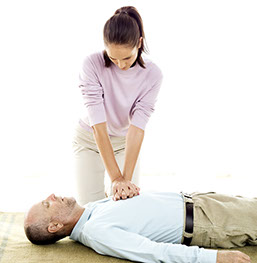
    *  Kneel at the person’s side. Place the heel of one hand ½ inch above where the ribs join the breastbone. Place your other hand on top of this one. Using the heels of your hands, depress the middle of the chest between the nipples at least  2 inches, but not more than 2.4 inches deep. Keep your arms straight. See image A.

    *  Push hard and push fast! Give at least 100 chest compressions in one minute. Relax pressure completely after each compression.

    Image of chest compressions.

    Image A

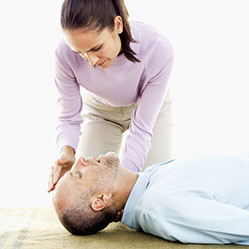
    2. Open the person’s airway.

    With one hand, tilt the person’s head back. With 2 fingers of your other hand, lift the chin up. See image B. If the airway is blocked,  tilt the person’s head gently and slowly until the airway is open.

    Image of opening a person's airway.

    Image B

    3. If the person is breathing, keep the airway open.

    Look for other problems.

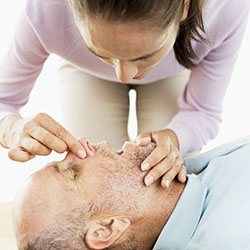
    4. If the person is not breathing, take a normal, (not deep) breath, and give him or her “Rescue Breaths.”

    *  Pinch the nose shut. Forming a tight seal, place your mouth over the person’s open mouth. See image C.

    *  Give 1 full breath for 1 second. If the chest doesn’t rise, repeat head tilt chin lift. See image B. Give the 2nd full breath for 1 second. Look to see if the person’s chest rises.

    Image of Rescue Breaths.

    Image C

    5. Give cycles of 30 chest compressions and 2 rescue breaths, without a break, until the person starts to move, an AED is used, or EMS provides care.

    Children Ages 1 to Puberty

    Shout for help! If you are alone, do CPR for 2 minutes before you call 9-1-1. If the child does not appear to have a serious injury, carry the child to nearest phone and call 9-1-1! Put the phone on speaker mode. Follow the dispatcher’s advice. If you are not alone, someone start CPR; someone else call 9-1-1 and get an AED, if one is nearby.

    1. Place the child on his or her back.

    2. Start Chest Compressions:

    *  Put one hand on the child’s breastbone right between his or her nipples.

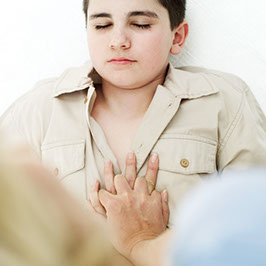
    *  Using the heel of your hand (or both hands like in image A under Adults & Children Who Reached Puberty) push straight down about 2 inches (at least one-third of the depth of the child’s chest). See image D. Let the chest rise back up after each push.

    *  Push hard and push fast! Give at least 100 chest compressions in one minute. Relax pressure completely after each compression.

    Image of child chest compressions.

    Image D

    3. Follow steps 2, 3, 4, and 5 under CPR For Adults and Children who Have Reached Puberty on this page.

    {Note: Chest compressions alone are better than doing nothing, but it is best to give chest compressions plus rescue breaths. Why? Airway problems are the main cause of cardiac arrest in infants and children.}

    Babies Up to 1 Year Old

    1. If you are alone, do CPR for 2 minutes before you call 9-1-1.

    If the child does not appear to have a serious injury, carry the child to nearest cell or other phone and call 9-1-1!  Put the phone on speaker mode. Follow the dispatcher’s advice. If you are not alone, someone start CPR; someone else call 9-1-1!

    2. Start Chest Compressions:

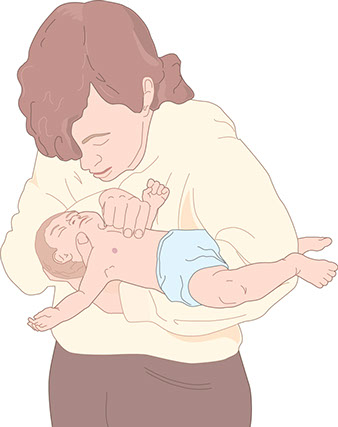
    *  Put the tips of your middle and ring fingers on the baby’s breastbone right between his or her nipples. See image E.

    *  Slip your other hand underneath the baby’s back for support.

    *  Push straight down about 1½ inches (at least one-third of the depth of the baby’s chest). Push at a rate of at least 100 compressions per minute. Let the chest rise back up after each push.

    Illustration of baby chest compressions.

    Image E

    3. If the baby is not breathing, or you are not sure he or she is breathing, give Rescue Breaths:

    *  Cover the infant’s mouth and nose with your mouth, forming a tight seal.

    *  Give 1 full breath for 1 second. Look to see if the chest rises. Give the 2nd full breath for 1 second and look to see if the chest rises.

    *  If the chest does not rise, go back to giving chest compressions. See step 2 listed above. After 30 more compressions, try rescue breaths again. {Note: If you can’t give rescue breaths, just keep giving chest compressions.}

    4. Give cycles of 30 chest compressions and 2 rescue breaths, without a break.

    Do this until the baby starts to move or until EMS provides care.

    Healthier at Home book by the American Institute for Preventive Medicine. www.HealthyLife.com. All rights reserved.

    © American Institute for Preventive Medicine