Category: Pregnancy & Prenatal Care

  • Signs Of Pregnancy

    Pregnancy & Prenatal Care

    What to Look For

    Do you think you might be pregnant? Here are some signs to look for:

    *  You have missed a menstrual period. You are at least 2 weeks late. {Note: Stress or illness can cause your period to be late, too. And, some women do not have regular periods. It may be hard for them to know if their period is  2 weeks late. Other women can have a light menstrual period or spotting and still be pregnant. So watch for other signs also listed here.}

    *  You feel tired. This is the most common sign.

    *  You feel sick to your stomach. You may even throw up. This is called “morning sickness.” But it can occur any time of day or night.

    *  You need to pass urine more often.

    *  You have food cravings.

    *  Your taste for certain foods changes.

    *  You have a metallic taste in your mouth.

    *  There are changes in your breasts.

    – They feel tender.

    – They feel tingly.

    – They are swollen.

    – The dark areas around your nipples are darker than before.

    – The tiny glands around your nipples stick up.

    Prenatal Self-Care book by the American Institute for Preventive Medicine. www.HealthyLife.com. All rights reserved.

    © American Institute for Preventive Medicine

  • Eating Right During Pregnancy

    Pregnancy & Prenatal Care

    What It’s All About

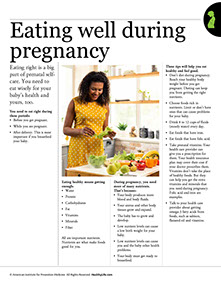
    Eating right is a big part of prenatal self-care. You need to eat wisely for your baby’s health and yours, too. You need to eat right during these periods:

    *  Before you get pregnant

    *  While you are pregnant

    *  After delivery. This is most important if you breast-feed your baby.

    Eating right means getting enough:

    *  Water

    *  Protein

    *  Carbohydrates

    *  Fat

    *  Vitamins

    *  Minerals

    *  Fiber

    These tips will help you eat right and feel good.

    *  Don’t diet during pregnancy. Reach your healthy body weight before you get pregnant. Dieting can keep you from getting the right nutrients.

    *  Choose foods rich in nutrients. Limit or don’t have ones that can cause problems for your baby.

    *  Drink 8 to 12 cups of fluid every day. Follow your provider’s advice for liquids with caffeine. Examples: coffee, tea, and some soft drinks.

    *  Eat foods that have iron.

    *  Eat foods that have folic acid.

    *  Take prenatal vitamins (vitamin pills). Your health care provider can give you a prescription for them. Your health insurance plan may cover the cost of them if your doctor prescribes them. Vitamins don’t take the place of healthy foods. But they can help you get the extra vitamins and minerals that you need during pregnancy. Folic acid and iron are examples.

    *  Talk to your health care provider about getting omega-3 fatty acids from foods, such as salmon and from flaxseed oil and vitamins.

    During pregnancy, you need more of many nutrients. That’s because:

    *  Your body produces more blood and body fluids.

    *  Your uterus and other body tissues grow and expand.

    *  The baby has to grow and develop.

    *  Low nutrient levels can cause a low birth weight for your baby.

    *  Low nutrient levels can cause you and the baby other health problems.

    *  Your body must get ready to breast-feed.

    Food Rich in Nutrients

    Grains – Eat 9 oz. or more every day.

    1 oz. is about 1 slice of bread, about 1 cup of breakfast cereal, or 1/2 cup of cooked rice, cereal, or pasta.

    *  Choose whole-grain cereals, breads, crackers, rice, or pasta as much as you can. When you don’t, choose grains that have folic acid added.

    Vegetables – Eat at least 4 servings every day.

    One serving = 1 cup raw leafy vegetables, 1/2 cup other vegetables (raw or cooked) or 3/4 cup vegetable juice. Vary your veggies.

    *  Eat dark-green veggies like broccoli, spinach, and other dark leafy greens.

    *  Eat orange vegetables like carrots and sweet potatoes.

    *  Eat dry beans and peas like pinto beans, kidney beans, and lentils.

    Fruits – Eat at least 3 servings every day.

    1 serving = 1 medium piece of fruit, 1/2 cup chopped fruit, or 3/4 cup fruit juice. Focus on fruits.

    *  Eat a variety of fruit.

    *  Choose fresh, frozen, canned, or dried fruit. Go easy on fruit juices.

    Milk – Get 3 to 4 servings every day.

    1 serving = 1 cup of milk or yogurt, 1-1/2 oz. natural cheese, or 2 oz. processed cheese. Get calcium-rich foods.

    *  Go low-fat or fat-free when you choose milk, yogurt, and other milk products.

    *  If you don’t drink milk, choose lactose-free products or other calcium sources, such as fortified foods and beverages.

    Meats & Beans – Eat at least 6 oz. every day.

    1 oz. meat = 1/2 cup cooked dried beans, 1 egg, 1/2 cup tofu, 1/3 cup nuts, or 2 tablespoons peanut butter. Go lean with protein.

    *  Choose low-fat or lean meats and poultry.

    *  Bake it, broil it, or grill it.

    *  Vary your protein choices. Choose more fish, beans, peas, nuts, and seeds.

    Items to Limit or Avoid

    *  Do not drink alcoholic beverages. It is not known if any or how much alcohol is safe during pregnancy. It is better to not drink any at all.

    *  Use little or no caffeine. Ask your doctor how much caffeine you can have in a day. Name-brand teas without caffeine are safe. You can find these in the supermarket. But beware of certain herbal or “natural” teas. Sometimes they contain things that can be harmful. Examples of these things: sassafras, mistletoe, bittersweet, and spotted hemlock. These teas are usually found in health food stores. Always read the label to find out what you are buying!

    *  Don’t use saccharin. This is sugar substitute. Follow your health care provider’s advice for other ones, too. Examples: Nutrasweet and Splenda.

    *  Wash fresh fruits and vegetables before you eat them. Don’t eat raw alfalfa sprouts. Don’t eat raw or rare meat. Wash your hands after you handle raw meat.

    *  Some foods have bacteria that can cause an infection called listeriosis. This can cause harm to the baby. How can you avoid this? Don’t have foods that are unpateurized. Examples are soft cheeses like feta and Brie. If you eat hot dogs, luncheon meats, or deli meats, heat them first.

    *  Don’t eat fish that has a lot of mercury. Examples: shark, swordfish, tile fish, and king mackerel. Limit “white” tuna fish, too. Ask your health care provider what kind of fish to eat and how much.

    *  Tell your health care provider if you crave laundry starch, clay, or dirt. Eating these things can harm you and the baby.

    Weight Gain and Your Pregnancy

    *  Talk to your health care provider about weight gain. The amount you should gain depends on:

    – Your height and what you weighed before you got pregnant

    – Your special pregnancy needs

    – Your ethnic and family background

    *  Is your body weight about right for your build? If so, your best weight gain is about 25 to 35 pounds.

    – Petite, small-boned women should gain about 25 pounds.

    – Medium-built women should gain about 30 pounds.

    – Larger, bigger-boned women should gain about 35 pounds.

    – Obese women should gain the number of pounds their health care provider suggests.

    *  How fast should you gain weight? If you start your pregnancy with a healthy body weight:

    – Gain 3 to 4 pounds in the first trimester.

    – Gain 12 to 14 pounds in the second trimester. That’s about a pound a week.

    – Gain 8 to 10 pounds in the third trimester. Third trimester breakdown: During months 7 and 8, gain about a pound a week. During month 9, gain only a pound or two-or nothing at all.

    {Note: It is rare to match this formula for weight gain exactly. It’s okay to vary a little. But try to keep your weight gain steady.}

    *  If you were underweight before you got pregnant, you should gain between 28 and 40 pounds.

    *  If you are 10 to 20 percent overweight, you should gain about 15 to 25 pounds.

    *  If you are more than 20 percent overweight, you should gain about 11 to 20 pounds.

    *  Pregnancy is never a time to lose weight, though. It’s not a time to stay the same weight, either. That’s because your baby can’t live on stored fat alone.

    *  How much weight you should gain is up to your health care provider.

    *  If you are carrying more than one baby:

    – Your health care provider will tell you your ideal weight gain.

    – Your weight will increase to about 35 to 45 pounds for twins. It will be more if you are having more than two babies!

    Resources
    ChooseMyPlate.gov

    www.choosemyplate.gov

    Page from Prenatal Self-Care book by the American Institute for Preventive Medicine. www.HealthyLife.com. All rights reserved.

    © American Institute for Preventive Medicine

  • How Smoking, Drinking, & Drugs Affect You & Your Baby

    Pregnancy & Prenatal Care

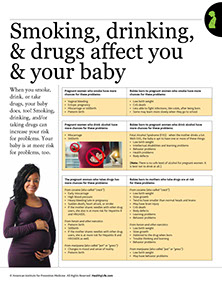
    When you smoke, drink, or take drugs, your baby does, too! Smoking, drinking, and/or taking drugs can increase your risk for problems. Your baby is at more risk for problems, too.

    Smoking

    Pregnant women who smoke have more chances for these problems:

    *  Vaginal bleeding

    *  Ectopic pregnancy

    *  Miscarriage or stillbirth

    *  Preterm birth

    Babies born to pregnant women who smoke have more chances for these problems:

    *  Low birth weight

    *  Crib death

    *  Less able to fight infections, like colds, after being born

    *  Some may learn more slowly when they go to school

    Drinking Alcohol

    Pregnant women who drink alcohol have more chances for these problems:

    *  Miscarriage

    *  Stillbirth

    Babies born to pregnant women who drink alcohol have more chances for these problems:

    Fetal Alcohol Syndrome (FAS) – when the mother drinks a lot. With FAS, the baby is apt to have one or more of these things:

    *  Low birth weight

    *  Mental problems (the baby could be retarded)

    *  Behavior problems

    *  Learning problems

    *  Health problems

    *  Body defects

    {Note: No one knows a safe level of alcohol for pregnant women. It is best not to drink at all.}

    Taking Drugs

    From cocaine (also called “crack”):

    *  Early miscarriage

    *  High blood pressure

    *  Heavy bleeding late in pregnancy

    *  Sudden death, heart attack, or stroke

    *  If the mother shares needles with other drug users, she also is at more risk for Hepatitis B and HIV/AIDS.

    From heroin and other narcotics:

    *  Preterm birth

    *  Stillbirth

    *  If the mother shares needles with other drug users, she is at more risk for Hepatitis B and HIV/AIDS as well.

    From Marijuana – (also called “pot” or “grass”):

    *  Changes in mood and sense of reality

    *  Preterm birth

    From cocaine (also called “crack”):

    *  Low birth weight

    *  Slow growth

    *  Tend to have smaller than normal heads and brains

    *  May have brain injury

    *  Crib death

    *  Body defects

    *  Learning problems

    *  Behavior problems

    From heroin and other narcotics:

    *  Low birth weight

    *  Slow growth

    *  Addicted to the drug when born

    *  Trouble thinking and learning

    *  Behavior problems

    From Marijuana – (also called “pot” or “grass”):

    *  Low birth weight

    *  May have behavior problems

    Prenatal Self-Care book by the American Institute for Preventive Medicine. www.HealthyLife.com. All rights reserved.

    © American Institute for Preventive Medicine

  • Smart Ways To Exercise During Pregnancy

    Pregnancy & Prenatal Care

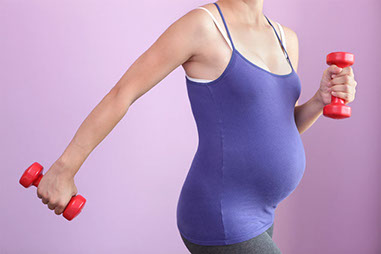
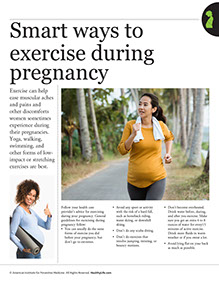
    Image of pregnant women exercising with dumb bells.

    Exercise can help ease muscular aches and pains and other discomforts women sometimes experience during their pregnancies. Yoga, walking, swimming, and other forms of low-impact or stretching exercises are best.

    Follow your health care provider’s advice for exercising during your pregnancy. General guidelines for exercising during pregnancy follow:

    *  You can usually do the same forms of exercise you did before your pregnancy, but don’t go to extremes.

    *  Check your pulse when you exercise. In general, your heart rate should stay below 140 beats a minute.

    *  Avoid any sport or activity with the risk of a hard fall, such as horseback riding and water skiing.

    *  Don’t do exercises that involve jumping, twisting, or bouncy motions.

    *  Don’t become overheated. Drink water before, during, and after you exercise. Make sure you get an extra 4 to 8 ounces of water for every 15 minutes of active exercise. Drink more fluids in warm weather or if you sweat a lot.

    *  After the 20th week of pregnancy, avoid exercises in which you lie flat on your back.

    A Year of Health Hints book by the American Institute for Preventive Medicine. www.HealthyLife.com. All rights reserved.

    © American Institute for Preventive Medicine

  • Tips For A Healthier, Easier Pregnancy

    Pregnancy & Prenatal Care

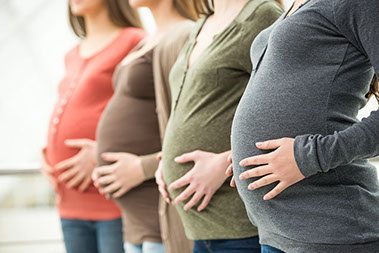
    Close up image of 4 pregnant bellies.

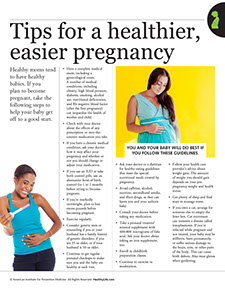
    Healthy moms tend to have healthy babies. If you plan to become pregnant, take the following steps to help your baby get off to a good start.

    *  Have a complete medical exam, including a gynecological exam. A number of medical conditions, including obesity, high blood pressure, diabetes, smoking, alcohol use, nutritional deficiencies, and Rh negative blood factor (after the first pregnancy) can jeopardize the health of mother and child.

    *  Check with your doctor about the effects of any prescription or over-the-counter medication you take.

    *  If you have a chronic medical condition, ask your doctor how it may affect your pregnancy and whether or not you should change or adjust your medication.

    *  If you use an IUD or take birth control pills, use an alternative form of birth control for 1 to 2 months before trying to become pregnant.

    *  If you’re markedly overweight, plan to lose excess pounds before becoming pregnant.

    *  Exercise regularly.

    *  Consider genetic tests or counseling if you or your husband has a family history of genetic disorders, if you are 35 or older, or if your husband is 50 or older.

    You and your baby will do best if you follow these guidelines.

    *  Ask your doctor or a dietitian to outline a meal plan that meets the special nutritional needs created by pregnancy.

    *  Avoid caffeine, alcohol, nicotine, and illicit drugs, as they can harm you and your unborn baby.

    *  Consult your doctor before taking any medication.

    *  Ask your doctor what prenatal vitamin/mineral supplement you should take.

    *  Follow your health care provider’s advice about weight gain. The amount of weight you gain should depend on your pre-pregnancy weight and health status, as well as your ethnic background. If you are very overweight, plan to lose excess pounds before you get pregnant.

    *  Continue to exercise in moderation.

    *  Practice relaxation and other stress management techniques. (Doctors think emotional stress may constrict the blood supply to the uterus and placenta, the baby’s only source of oxygen and nutrients.)

    *  Enroll in childbirth preparation classes.

    *  If you own a cat, arrange for someone else to empty the litter box. Cat excrement can transmit a disease called toxoplasmosis. If you’re infected while pregnant, your baby may be stillborn, born prematurely, or suffer serious damage to the brain, eyes, or other parts of the body.

    A Year of Health Hints book by the American Institute for Preventive Medicine. www.HealthyLife.com. All rights reserved.

    © American Institute for Preventive Medicine

  • Ectopic Pregnancies

    Pregnancy & Prenatal Care

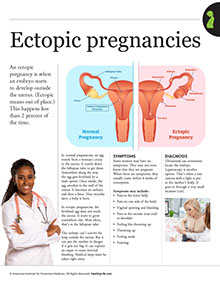
    An ectopic pregnancy is when an embryo starts to develop outside the uterus. (Ectopic means out of place.) This happens less than 2 percent of the time.

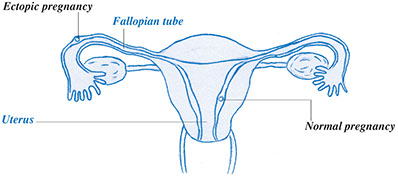
    In normal pregnancies, an egg travels from a woman’s ovary to the uterus. It travels down the fallopian tube to get there. Somewhere along the way, the egg gets fertilized by a male sperm. Once inside, the egg attaches to the wall of the uterus. It becomes an embryo and then a fetus. Nine months later, a baby is born.

    In ectopic pregnancies, the fertilized egg does not reach the uterus. It starts to grow somewhere else. Most often, that’s in the fallopian tube.

    The embryo can’t survive for long outside the uterus. But it can put the mother in danger if it gets too big. It can rupture an organ or cause internal bleeding. Medical steps must be taken right away.

    Symptoms

    Some women may have no symptoms. They may not even know that they are pregnant. When there are symptoms, they usually come within 8 weeks of conception. Symptoms may include:

    *  Pain in the lower belly

    *  Pain on one side of the body

    *  Vaginal spotting and bleeding

    *  Pain in the rectum (rear end) or shoulder

    *  Feeling like throwing up

    *  Throwing up

    *  Feeling weak

    *  Fainting

    Diagnosis

    Ultrasound can sometimes locate the embryo. Laparoscopy is another option. That’s when a tiny camera with a light is put in the mother’s body. It goes in through a very small incision (cut).

    Illustration of normal vs ectopic pregnancy.

    Causes

    There are many causes for ectopic pregnancies:

    *  Damage to the ovary or fallopian tube

    *  Scarring of the ovary or fallopian tube. Scarring can result from endometriosis, pelvic inflammatory disease or an STD.

    Also, the risk for an ectopic pregnancy is higher for women who:

    *  Have had an ectopic pregnancy in the past

    *  Have had fallopian tube surgery

    *  Have had problems getting pregnant

    *  Have used an IUD for birth control

    These women should call their health care provider when they miss a menstrual period.

    Treatment

    Medicines may be used. But if some time has passed, surgery may be needed. The embryo is removed. Any damage to the mother’s body is repaired. In some rare cases, a fallopian tube or ovary must be removed. But women have another set of these. So the mother may become pregnant again.

    Questions to Ask

    Self-Care / Prevention

    Tips to Lower the Risk of an Ectopic Pregnancy

    *  Talk to your health care provider about your risks for damage to your fallopian tubes from:

    – STDs

    – Pelvic Inflammatory Disease

    – Endometriosis

    *  Ask if you need to get tested for these and how often. Find out, too, if your health plan pays for these tests.

    *  Schedule any tests needed with your health care provider.

    Prenatal Self-Care book by the American Institute for Preventive Medicine. www.HealthyLife.com. All rights reserved.

    © American Institute for Preventive Medicine

  • Want To Have A Baby? Try This

    Pregnancy & Prenatal Care

    Image of happy couple looking at positive pregnancy test, while male is making a phone call.

    Many couples don’t conceive as quickly as they’d like to. You can improve your chances of getting pregnant if you follow these measures.

    *  Avoid alcohol, tobacco, and marijuana.

    *  Avoid foods and beverages that contain caffeine.

    *  Avoid extreme overweight or underweight.

    *  Lie on your back with your hips elevated by a pillow for approximately 30 minutes after intercourse.

    *  Know when your ovaries release eggs. Time intercourse for your fertile period. Ovulation normally occurs 14 to 16 days after the start of your period. Signs of ovulation include a dull ache in either the lower right or left side of the abdomen; clear, elastic vaginal mucus; and a slightly elevated temperature.

    You can buy an ovulation predictor kit at most drugstores. The kit contains sticks which, when dipped in urine, turn blue if you’re ovulating.

    Or you can keep track of your fertile days with a special basal thermometer, also available at drugstores. Having intercourse when your temperature drops approximately 0.4ºF increases your chances of conception.

    If you fail to conceive after one year of trying, consult your gynecologist or a fertility specialist. A number of factors can prevent conception.

    A Year of Health Hints book by the American Institute for Preventive Medicine. www.HealthyLife.com. All rights reserved.

    © American Institute for Preventive Medicine