Category: Student Health

  • Alcohol & Alcohol Safety

    Student Health

    Before drinking, think about its possible consequences (e.g., academic and health problems, unsafe sex, assault, injury, and even death). These consequences affect the person who drinks as well as other students (whether they choose to drink or not) and the community as a whole.
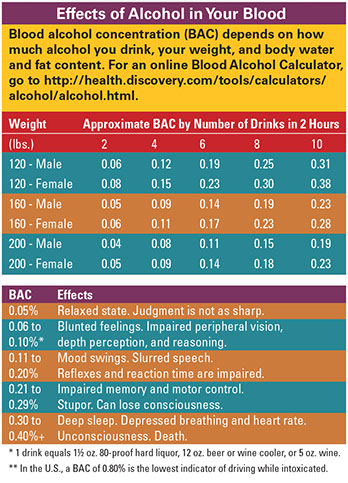
    Chart of effects of alcohol in your blood.

    Alcohol Poisoning

    Call 9-1-1 for one or more of the following signs of alcohol poisoning or combining alcohol and other drugs, such as sedatives or tranquilizers. Act quickly. Alcohol poisoning can be fatal.

    *  Unconsciousness. This means the person is hard to rouse and can’t be made aware of his or her surroundings. This can be brief, such as with fainting or blacking out. It can put a person into a coma.

    *  No breathing or slow and shallow breathing. This means 10 or fewer breaths per minute or time lapses of more than 8 seconds between breaths.

    *  Slow pulse rate (40 or fewer beats per minute).

    *  Skin that is cold, clammy, and/or pale or blue in color.

    {Note: Before emergency care arrives, place the person on his or her side with the knees bent, to prevent choking if he or she vomits. Loosen the person’s clothing around the neck and check the mouth and back of the throat to see that nothing obstructs the person’s breathing. Stay with the person.}

    Alcohol Poisoning

    *  Choose substance-free housing, if available and desired.

    *  Be aware and think about the risks and consequences of drinking, including getting arrested, getting sick, contracting an STI, etc. One incident of alcohol use could cause you to do something you will regret for the rest of your life. Alcohol plays a part in most sexual assaults.

    *  Mixing drinking with driving, drugs, or operating machines can be fatal. Designate a sober driver.

    *  Not everyone drinks. Be with people who drink non-alcoholic beverages or ones that look like “drinks,” such as non-alcoholic beer in a glass.

    *  It is better to get medical help for a person who needs it instead of worrying about getting a friend in trouble.

    *  Drink alcohol only if you want to, and if you do:

    – Know your limit and stick to it or don’t drink any alcohol.

    – Drink slowly. You are apt to drink less. Have one drink during a party. Take fake sips, if necessary. In reality, anything over two drinks does not increase the feeling of pleasure. Drinking too much leads to being unable to enjoy yourself.

    – Eat when you drink. Food helps to slow alcohol absorption.

    – Alternate an alcoholic beverage with a non-alcoholic one. Use non-alcohol or reduced alcohol beverages. Dilute distilled beverages. Use more and more mixer and less and less alcohol. After two drinks, your taste buds are dulled and you won’t be able to notice much difference.

    – Avoid drinking contests and games.

    Resources

    Emergency Medical Service (Call 9-1-1) if you suspect alcohol poisoning or a drug overdose

    Your school’s Student Health Service, Student Counseling Service, or Alcohol and other Drug Program

    Al-Anon/Alateen World Service Office

    888.4AL.ANON (425.2666)

    www.al-anon.org

    Alcoholics Anonymous (AA) World Services

    www.aa.org

    Center for Substance Abuse Treatment (CSAT) National Drug Treatment Referral Routing Service

    800.662.HELP (4357)

    www.findtreatment.samhsa.gov

    Narcotics Anonymous (NA)

    818.773.9999

    www.na.org

    National Institute on Alcohol Abuse & Alcoholism (NIAAA)
    www.niaaa.nih.gov

    www.thecoolspot.gov

    Student Self-Care book by the American Institute for Preventive Medicine. www.HealthyLife.com. All rights reserved.

    © American Institute for Preventive Medicine
  • Choose Healthy Foods & Control Your Weight

    Student Health

    Here you are at college. Maybe this is the first time you have lived on your own. Are you wondering what to eat? Worried about gaining weight? Concerned about looking good and staying fit? The food and exercise choices you make will play a major role in helping you not only stay healthy, but also increase your ability to do well in classes.

    A Few Words About the Basics

    Much like a car, your body runs best when supplied with the most efficient source of fuel, in this case – carbohydrates. Carbohydrates are classified as either simple or complex. Simple carbohydrates, often called sugars, occur naturally in some foods, especially fruits. Complex carbohydrates, commonly known as starches, are found in grains (rice, bread, pasta), beans, and vegetables, particularly starchy vegetables, such as potatoes and corn.

    Frequently accused as fattening, carbohydrates are actually very filling and help you maintain a healthy weight. Carbohydrates contain four calories per gram; fats have 9. It would take a man who needs 3,000 calories 30 potatoes to maintain his body weight if no other foods were eaten!

    Carbohydrates are not as easily turned into body fat as are dietary fats because they “burn” more efficiently. Of course, any time you consistently eat more calories (regardless of the source) than you burn, your body will store the excess energy as fat. The guideline is to eat about 55 to 60% of your calories from carbohydrates, primarily complex ones. A good way to visualize this is to have carbohydrate foods occupy two-thirds of the food on your plate.

    Fats add flavor to foods and also help you feel full from a meal. Although fat is one of the most criticized nutrients, some fat in the diet is necessary because it supplies essential fatty acids. The guideline is to eat 30% or less of your calories from fats. This is about 60 to 65 grams of fat per day for the average person.

    How about protein? Protein is found in both animal and plant sources and is an essential nutrient for it is the main structural component of all tissues in the body. The guideline is to eat 10 to 15% of your calories from protein. This amount is easily supplied from foods you eat. Excessive intake of protein (whether from foods or supplements) may actually create health problems and does not lead to greater muscle mass!

    Weight Worries

    Has the fear of “The Freshman Fifteen” set in yet? Weight gain is not an inevitable part of college life. Sometimes, weight gain is even acceptable. Cafeteria meals, fast food, and regular restaurants all offer a variety of healthy food choices. Strive for a balance. If you choose a higher calorie food, such as french fries with a meal, balance it with lower calorie items – vegetables, salad with low-fat dressing, and fresh fruit.

    Don’t forget the other side of the equation which is exercise. Eating right and exercising regularly will keep you in top form. Do exercises that you enjoy. Exercise at least 3 times a week. Choose some form of aerobic exercise, such as walking, swimming, Tai (Tae) Bo, etc. Do stretching and strengthening exercises, too. For more information on exercise, access the Web site:www.fitness.gov.

    Breakfast for Better Grades

    Starting the day with breakfast is the key to learning. People who eat breakfast perform better on cognitive tests, have better verbal fluency, and increased memory. This may not translate into passing college chemistry, but it does give you a fighting chance.

    Eating breakfast also helps you maintain weight. People who eat breakfast generally burn 4 to 6% more calories than people who do not eat breakfast.

    Many students skip breakfast. It is best if you don’t. For breakfast, have whole grain cereal and milk; a breakfast sandwich on whole grain bread; yogurt with granola; cottage cheese with fresh fruit; leftover pizza, or a muffin or bagel with milk and an apple. Take a bagel or pop tart and a juice box to class with you, if you don’t set aside time to eat breakfast.

    Going Vegetarian?

    If you are thinking about trying a vegetarian eating style, you may not know where to begin. Vegetarianism means eating mostly plant foods. If you include dairy and egg products in your eating plan, it is easier to meet your nutrient needs. If you’re a vegan – which means you only eat plant foods – you may need to supplement your diet with calcium, iron, zinc, and vitamins B12 and D.

    Start slowly. Begin by changing some of your favorite recipes – decrease meat and add more pasta, beans, rice, or vegetables. Look for vegetarian meat alternatives, like soy or veggie burgers. Experiment with different types of beans, pasta, and rice. Try red, black, navy, or pinto beans, or split peas and lentils. Look for different types of rice – from plain white to mixed brown and long grain. Top salads with chickpeas or red beans instead of cheese. You will also need to increase fluids, such as water or juices, to help with the increased fiber.

    If you are looking for more information on being a vegetarian, trywww.vrg.org(The Vegetarian Resource Group).

    Resources

    Page from Student Self-Care book by the American Institute for Preventive Medicine. www.HealthyLife.com. All rights reserved.

    © American Institute for Preventive Medicine
  • Eating Disorders

    Student Health

    Five to 10 million adolescent girls and women have an eating disorder. About 1 million males do. The 3 most common eating disorders are anorexia nervosa, bulimia nervosa, and binge eating disorder. These eating disorders are a coping mechanism. They result in an obsession with food and/or weight; anxiety around eating; guilt; and severe and adverse effects on psychological and physical health. Eating disorders are very serious health problems.

    Signs & Symptoms

    For Anorexia Nervosa

    *  Loss of a lot of weight in a short period of time.

    *  Intense, irrational fear of weight gain and/or of looking fat. Obsession with fat, calories, and weight.

    *  A need to be perfect or in control in one area of life.

    *  Distorted body image. The person feels and sees herself or himself as fat despite being a normal weight for height and age.

    *  Marked physical signs. These include loss of hair, slowed heart rate, and low blood pressure. The person feels cold due to decreased body temperature. In females, menstrual periods can stop.

    For Bulimia Nervosa

    *  Repeated acts of binge eating and purging. Purging can be through vomiting; taking laxatives, water pills, and/or diet pills; fasting; and exercising a lot to “undo” the binge.

    *  Excessive concern about body weight.

    *  Being underweight, normal weight, or overweight.

    *  Dieting often.

    *  Dental problems. Mouth sores. Chronic sore throat.

    *  Spending a lot of time in bathrooms.

    *  Because of binge-purge cycles, severe health problems can occur. These include an irregular heartbeat and damage to the stomach, kidneys,  and bones.

    For Binge Eating Disorder

    *  Periods of nonstop eating that are not related to hunger.

    *  Impulsive binging on food without purging.

    *  Dieting and/or fasting over and over.

    *  Weight can range from normal weight to mild, moderate, or severe obesity.

    Causes

    An exact cause has not been found. Persons from all backgrounds, ages, and genders are affected. Risk factors include:

    *  A family history of eating disorders.

    *  Pressure from society to be thin.

    *  Personal and family pressures.

    *  Sexual, physical, or alcohol abuse in the past.

    *  Fear of starting puberty.

    *  Fear of having sex.

    *  Pressure for athletes to lose weight or to be thin for competitive sports.

    *  Chronic dieting.

    Treatment

    *  Counseling. This can be individual, family, group, and/or behavioral therapy.

    *  Support groups.

    *  Medication.

    *  Nutrition therapy.

    *  Outpatient treatment.

    *  Hospitalization, if needed.

    Treatment varies with the disorder and how severe it is. The earlier the condition is diagnosed and treated, the better the outcome.

    Questions to Ask

    Self-Care

    Eating disorders need professional treatment.

    To Help Prevent an Eating Disorder

    *  Learn to accept yourself and your body. You don’t need to look like anyone else. Spend time with people who accept you as you are, not people who focus on “thinness.”

    *  Know that self-esteem does not have to depend on body weight.

    *  Eat nutritious foods. Focus on whole grains, beans, fresh fruits and vegetables, low-fat dairy foods, and low-fat meats.

    *  Commit to a goal of normal eating. Realize that this will take time. It will also take courage to fight fears of gaining weight.

    *  Don’t skip meals. If you do, you are more likely to binge when you eat.

    *  Avoid white flour, sugar and foods high in sugar and fat, such as cakes, cookies, and pastries. Bulimics tend to binge on junk food. The more they eat, the more they want.

    *  Get regular, moderate exercise 3 to 4 times a week. If you exercise more than your doctor advises, do non-exercise activities with family and friends.

    *  Find success in things you do. Hobbies, work, school, etc. can promote self-esteem.

    *  Learn as much as you can about eating disorders from books and organizations that deal with them.

    *  To help their children avoid eating disorders, parents should promote a balance between their child’s competing needs for independence and family involvement.

    To Treat an Eating Disorder

    *  Follow your treatment plan.

    *  Attend counseling sessions and/or support group meetings as scheduled.

    *  Identify feelings before, during, and after you overeat, binge, purge, or restrict food intake. What is it that you are hoping the food will do?

    *  Set small goals that you can easily reach. Congratulate yourself for every success. This is a process. Accept set backs. Learn from them.

    *  Talk to someone instead of turning to food.

    *  Work toward the point where weight is no longer a way you rate your success. Think about your accomplishments, positive personal qualities, and valued relationships.

    *  Learn to express your rights. You have the right to say no and the right to express your feelings and your opinions. You have the right to ask that your needs are met.

    *  Keep a journal of your progress, feelings, thoughts, etc., but not about what you eat. The journal is just for you, not for others to read or judge. This is a safe place to be honest with yourself. The journal can also help you identify your “triggers” so that you can deal with them in the future.

    *  Don’t let the scale run your life. Better yet, throw out the scale!

    Resources

    Your school’s Student Health Service, Student Counseling or Mental Health Service

    National Eating Disorders Association (NEDA)Information and Referral Helpline

    800.931.2237

    www.nationaleatingdisorders.org

    Student Self-Care book by the American Institute for Preventive Medicine. www.HealthyLife.com. All rights reserved.

    © American Institute for Preventive Medicine
  • General Safety Guidelines

    Student Health

    *  Learn your school’s safety guidelines and follow them. Read your school’s safety handbook. Memorize the telephone number(s) for emergency help, such as 9-1-1. Carry a cell phone with you at all times. Pre-program emergency telephone numbers in the phone to be able to call them quickly.

    *  If you choose to drink, do so responsibly. Don’t use drugs. Be careful around other persons who drink heavily and/or use drugs, too. Designate a sober driver.

    *  Always wear a seatbelt in a motor vehicle. Wear a helmet when riding on a motorcycle, bike, or when rollerblading.

    *  To avoid being robbed, assaulted, etc.

    – When you go out, go with a friend or a group of people, especially at night and to unfamiliar places.

    – Use ATM machines in well-lit areas, preferably while a friend is with you.

    – Keep your doors and windows locked, especially when you are alone.

    – Lock your bike with a U-shaped lock that is hard for someone to remove.

    – Hold your backpack, purse, etc., securely so someone can’t grab it from you. Don’t leave these and other personal items, such as your laptop computer, unattended.

    – Have your car, house, or room keys in your hand, ready to unlock your doors.

    – If you use social networking Web sites, such as facebook, be aware of potential dangers. Find out safety tips fromwww.wiredsafety.org.

    – Report suspicious behaviors and activities to your school’s security or the police.

    – Take a class, etc., to learn how to avoid sexual assault.

    *  To Avoid Fires:

    – Don’t smoke in bed or when you are very tired. Better yet, don’t smoke at all!

    – Follow fire safety precautions when cooking in your dorm room or kitchen.

    – Follow your school’s policy on candle use.

    – Keep a working fire extinguisher in your dorm room or house.

    *  To Manage Conflict Without Violence:

    – Be assertive, not aggressive, when you communicate.

    – Learn to deal with frustration, disappointment, rejection, ridicule, jealousy, and anger.

    – Accept differences in others, including sexual preferences, ethnic and religious backgrounds, etc. You do not need to change your convictions, but don’t expect other persons to change their convictions either.

    – Be an active listener. Pay attention to what the other person is saying and try to understand his or her point of view or simply accept it as an opinion.

    – Take a class or seminar in conflict resolution to gain skills in managing conflict.

    – When you can’t resolve a conflict on your own, get help.

    Resources

    Your school’s Student Health Service, Student Counseling or Mental Health Service, Office of Student Conflict Resolution, Office of the Ombudsman, or Student Affairs

    The National Crime Prevention Council’s Online Resource Center

    www.ncpc.org

    For Sexual Assault/Hate Crimes/Other Crimes: The National Center for Victims of Crime

    www.ncvc.org

    National Domestic Violence Hotline

    800.799.SAFE (799.7233)

    www.ndvh.org

    Student Self-Care book by the American Institute for Preventive Medicine. www.HealthyLife.com. All rights reserved.

    © American Institute for Preventive Medicine
  • Mononucleosis (“Mono”)

    Student Health

    A common cause of fatigue in students is infectious mononucleosis, an acute viral disease.

    Signs & Symptoms

    *  Fatigue.

    *  Fever.

    *  Sore throat.

    *  Swollen lymph gland in the neck area.

    *  Pain in the upper left abdominal area.

    Symptoms usually last several weeks.

    Causes

    Epstein-Barr virus (EBV). This is spread from person to person through contact with saliva from a person recently infected with the disease. The saliva can be picked up from hand-to-hand contact, sharing eating utensils, and kissing, which is why “Mono” is called the “kissing disease.” Symptoms usually appear about 4 to 6 weeks after exposure.

    Treatment

    Rest is the mainstay of treatment. Avoiding heavy lifting and contact sports is necessary, because there is a risk of rupturing the spleen with “Mono.”

    Student Self-Care book by the American Institute for Preventive Medicine. www.HealthyLife.com. All rights reserved.

    © American Institute for Preventive Medicine
  • Set Up Good Sleep Habits

    Student Health

    *  Plan ahead. Don’t start writing a paper the night before it is due or cram for a test the night before you have it. Doing these things starts a cycle of staying up all night and never catching up on sleep.

    *  Get at least 30 minutes of sunlight exposure daily.

    *  Get regular exercise, but not within a few hours of going to bed.

    *  If you have a roommate, discuss and decide when your room will be used for studying, socializing, and sleep.

    *  If your dorm is too noisy to sleep, talk to your resident advisor and/or learn to tune out the noise in order to get to sleep. If it helps, listen to soft music with earphones when you fall asleep. Wear earplugs, if necessary.

    *  Make your dorm room or bedroom as comfortable as possible. Create a quiet, dark atmosphere. Keep the room temperature comfortable (neither too warm nor too cold). Don’t wait longer than a week to change the sheets on your bed.

    *  Have food items rich in the amino acid  L-tryptophan, such as milk, turkey, or tuna fish, before you go to bed. Eating foods with carbohydrates, such as cereal, breads, and fruits may help as well. (Do not, however, take L-tryptophan supplements.)

    *  Develop a regular bedtime routine. Brush your teeth, lock or check doors and windows, get your backpack ready for the next day, etc. Try to go to bed and get up at the same time every day.

    *  Take a long, warm bath or shower before bedtime.

    *  Read a book or do some repetitive, calm activity. Avoid distractions that may hold your attention and keep you awake, such as watching a suspenseful movie.

    *  Avoid caffeine in all forms after lunchtime. Caffeine is in coffee, tea, chocolate, colas, other soft drinks, such as Mountain Dew, and some bottled water, such as Cup of Joe.

    *  Don’t take No-Doz. Avoid alcoholic beverages at dinnertime and during the rest of the evening, too. Even though alcohol is a sedative, it can disrupt sleep.

    *  Don’t take over-the-counter sleeping pills or friends’ or relatives’ sleeping pills. Only take sleep medicine with your health care provider’s permission.

    *  Count sheep! Picturing a repeated image may bore you to sleep.

    Student Self-Care book by the American Institute for Preventive Medicine. www.HealthyLife.com. All rights reserved.

    © American Institute for Preventive Medicine
  • Stress & Emotional Eating

    Student Health

    College life may leave you feeling stressed. Do you need extra vitamins and nutrients? Though a busy schedule may sometimes cause people to neglect eating well, we do not use any more (or fewer) nutrients while under mental stress. When you are feeling stressed and strung-out, try these tips:

    *  Take time to take care of yourself. This includes taking time to eat well. Don’t just snack all day. Sit down and enjoy your meal.

    *  Try quick foods, such as fresh, canned, or frozen veggies added to canned soups or pastas. Order in if you like, but try not to skip meals.

    *  Start your day with breakfast! It will help you get going for the rest of the day.

    Food cravings may be a sign of hunger created from skipping meals, from a lack of nutrients in your diet, or an attempt to satisfy emotional needs. Food won’t solve your emotional dilemmas. The next time you find yourself heading for the fridge for a quick emotional fix, use the following tips.

    *  You are studying for that big exam and find yourself nervous and anxious. Instead of splurging on ice cream, seek out different relaxation techniques. Sit quietly with your eyes closed and breathe deeply for a few minutes. Or, go for a quick walk. Get enough sleep. Sleep deprivation makes most people anxious and irritable.

    *  You’ve had a big fight with your roommate and are furious. Anger can cause overeating quicker than most other emotions. Instead of eating as a response to this, try, instead, to confront the target of your anger. Have that difficult conversation after you have had a chance to calm down or write out your feelings in a letter.

    *  You find yourself with nothing to do, but sit around and eat. Many people eat out of boredom. Solution? Diversion! Find something else to capture your attention. Find which diversions work best for you and use them.

    *  Most importantly, don’t spend time feeling guilty when you eat to get an emotional fix. Doing this occasionally is not a problem.

    Snacks and Your Backpack

    Snacking is a big part of hectic college life. When you are out shopping for snacks, stock up on pretzels, fruit, graham crackers, mini-size cereal boxes, popcorn, meal replacement bars, etc.

    If snacking and studying go together, try setting a schedule. Study for one hour and then grab a snack. This helps keep calories in control. Measure out a portion size of the snack rather than eating out of a large box or bag.

    When it comes to eating on the run, have a 6 inch submarine sandwich on a whole grain roll or a vegetarian pita. Don’t go long periods of time without eating. This leaves you famished and fatigued.

    Resources

    Page from Student Self-Care book by the American Institute for Preventive Medicine. www.HealthyLife.com. All rights reserved.

    © American Institute for Preventive Medicine
  • Depression

    Student Health

    Depression is the most common reason college students go to their school’s counseling service. Depression makes a person less able to manage life. It affects a person’s mood, mind, body, and behaviors.

    Signs & Symptoms

    The number and severity of the symptoms vary from person to person. A person who is depressed has one or more of the signs and symptoms listed below.

    *  Feeling sad, hopeless, and helpless.

    *  Feeling guilty and/or worthless.

    *  Thinking negative thoughts.

    *  Having a loss of interest in things, such as social activities, hobbies, and sex.

    *  Sleeping too little or too much.

    *  Fatigue or loss of energy.

    *  Problems concentrating or making decisions.

    *  Ongoing physical symptoms, such as headaches, chronic pain, or digestive problems that don’t respond to treatment.

    *  Uncontrollable crying.

    *  Poor appetite with weight loss, or overeating and weight gain.

    *  Thoughts of suicide or death.

    Causes & Risk Factors

    *  Major changes and stress that accompany college, including choosing career goals, leaving home, and the strain from trying to study and socialize at the same time.

    *  Obsessing about expenses.

    *  Abuse of alcohol, drugs, and some medications.

    *  Relationship changes, such as break ups, a family divorce, or the death of someone close.

    *  Brain chemical imbalances. Also, some types of depression run in families.

    *  Hormonal changes. This could be from taking birth control pills or using anabolic steroids which can cause changes in mood.

    *  Lack of natural, unfiltered sunlight between late fall and spring. This is called Seasonal Affective Disorder (SAD). It may only affect some people that are prone to this disorder.

    *  Holiday “blues.”

    Most likely, depression is caused by a mix of: A family history of the illness; brain chemical imbalances; emotional issues; and other factors, such as a medical illness or alcohol abuse.

    In some people, events like extreme stress and grief may cause depression. In others, depression occurs even when life is going well.

    Treatment

    Treatment includes medicines, psychotherapy, and other therapies that are specific to the cause of the depression. Exposure to bright lights (similar to sunlight) for depression that results from SAD can be helpful. {Note: Some antidepressant medicines can increase the risk for suicidal thoughts and behaviors, especially in children and adolescents. This risk may be higher within the first days to a month after starting the medicine. Persons who take antidepressants should be closely monitored.}

    Questions to Ask

    Self-Care / Prevention

    *  Take medications as prescribed. Get your doctor’s advice before you take over-the-counter herbs, such as St. John’s Wort, especially if you take other medications.

    *  Don’t use illegal drugs. Limit alcohol. These can cause or worsen depression. Drugs and alcohol can also make medicines for depression less effective. Harmful side effects can occur when drugs and/or alcohol are mixed with medicine.

    *  Eat healthy foods. Eat at regular times.

    *  Get regular exercise.

    *  Talk to someone who will listen to the tensions and frustrations you are feeling.

    *  Try not to isolate yourself. Be with people you trust and feel safe with, even though you feel down.

    *  Do things you enjoy. Do something that lets you express yourself. Draw. Paint. Write your thoughts in a diary or journal.

    *  Relax. Listen to soft music, take a warm bath or shower. Do relaxation exercises.

    *  Avoid stressful situations or taking on added commitments when you feel depressed.

    *  Keep an emergency number handy (e.g., crisis hotline, trusted friend’s number, etc.) in case you feel desperate.

    Feeling better takes time. Don’t expect to just “snap out” of your depression.

    To Help A Friend Who Is Depressed

    *  Help your friend get an appropriate diagnosis. Make an initial appointment with a professional and offer to take your friend.

    *  Do not ignore remarks about suicide. Report them, immediately, to a student advisor, teacher, or health care provider.

    *  Be aware of the type of medication your friend needs to take and when it should be taken. If necessary, alert your friend’s health care provider about any side effects that you notice.

    *  Be supportive. Depression is no different from any other physical illness. It requires patience, understanding, love, and encouragement. Encourage your friend to continue with treatment and to see his or her health care provider if there is no improvement.

    *  Listen with care. Point out your friend’s successes and attributes when he or she feels worthless, helpless, or down about the future. Helping your friend see previous successes can help give the confidence needed to continue with treatment. Your friend doesn’t need you to tell him or her what to do. Listening is very helpful.

    *  Encourage your friend to go out and do things with you or with others, such as to see a movie or to do things your friend enjoyed in the past. Don’t push, though, or make too many demands.

    *  Seek support from organizations that deal with depression.

    Resources

    Your school’s Student Counseling Service or Student Mental Health Service. (Normally, these services are no cost to you.)

    International Foundation for Research and Education on Depression (IFRED)

    www.ifred.org

    Mental Health America (MHA)

    800.969.6642

    www.mentalhealthamerica.net

    National Mental Health Consumers’ Self-Help Clearinghouse

    800.553.4539

    www.mhselfhelp.org

    Student Self-Care book by the American Institute for Preventive Medicine. www.HealthyLife.com. All rights reserved.

    © American Institute for Preventive Medicine
  • Suicidal Thoughts

    Student Health

    For persons 15 to 24 years old, suicide is the third leading cause of death, behind unintentional injury and homicide. More teenagers and young adults die from suicide than from cancer, heart disease, AIDS, birth defects, stroke, pneumonia, influenza, and chronic lung disease combined. Young women attempt suicide 4 to 8 times more often than young men, but males are 4 times more likely than females to die from suicide.

    Signs & Symptoms

    A lot of people think about suicide or say things like, “I wish I was dead,” at times of great stress. For most people, these thoughts are a way to express anger and other emotions. They may not, in and of themselves, be a sign of a problem. The signs and symptoms that follow need medical care.

    *  Writing a suicide note.

    *  Suicidal threats, gestures, or attempts.

    *  Thoughts of suicide that don’t go away or that occur often.

    (Note: In some suicides, no warning signs are shown or noticed.)

    Causes

    *  Depression.

    *  Bipolar disorder.

    *  Schizophrenia.

    *  Grief. Loss of a loved one.

    *  A side effect of some medicines. One is isotretinoin. This is prescribed for severe acne. Some antidepressant medicines can increase the risk for suicidal thoughts and behaviors, too. This is especially noted in children and adolescents. This risk may be higher within the first days to a month after starting the medicine. Persons who take antidepressants should be closely monitored.

    *  A family history of suicide or depression.

    *  Money and relationship problems.

    Treatment

    Suicidal threats and attempts are a person’s way of letting others know that he or she needs help. They should never be taken lightly or taken only as a “bluff.” Most people who threaten and/or attempt suicide more than once usually succeed if they are not stopped. Emergency care and hospitalization are necessary after an attempted suicide. Persons with suicidal thoughts should seek medical treatment.

    Questions to Ask

    Self-Care / Prevention

    If You Are Having Thoughts of Suicide

    *  Let someone know. Talk to a trusted family member, friend, or teacher. If it is hard for you to talk directly to someone, write your thoughts down and let someone else read them.

    *  Call your school’s Mental Health Service, your local Crisis Intervention Center or the National Suicide Prevention Lifeline at 800.273.8255. Follow up with a visit to your health care provider or your school’s Mental Health Service.

    How to Help a Friend Who May Be Suicidal

    *  Take him or her seriously. If your friend informs you of suicidal intentions, believe the threats.

    *  Keep firearms, drugs, etc. away from persons at risk.

    *  Take courses that teach problem solving, coping skills, and suicide awareness.

    *  If you think the person is serious about suicide, get help. Watch and protect him or her until you get help. Keep the person talking. Ask questions, such as, “Are you thinking about hurting or killing yourself?”

    *  Urge the person to call for help. If he or she is already under the care of a health care provider, have the person contact that provider first. If not, other places to contact are listed in the box below. Make the call yourself if the person can’t or won’t.

    *  Express concern. The person needs to know that someone cares. Most suicidal persons feel alone. Tell the person how much he or she means to you and others. Talk about reasons to stay alive. Don’t judge. The person needs someone to listen, not to preach moral values.

    *  Tell the person that depression and suicidal tendencies can be treated. Urge him or her to get professional care. Offer help in seeking care.

    Resources

    Your school’s Student Counseling or Mental Health Service or Student Health Service

    American Foundation for Suicide Prevention

    888.333.AFSP (2377)

    www.afsp.org

    (This is not a crisis hotline.)

    Metanoia Communications

    www.metanoia.org/suicide

    National Suicide Prevention Lifeline

    800.273.TALK (273.8255)

    www.suicidepreventionlifeline.org

    Student Self-Care book by the American Institute for Preventive Medicine. www.HealthyLife.com. All rights reserved.

    © American Institute for Preventive Medicine