Category: Women’s Health

  • Getting Help For Violence And Abuse

    Women’s Health

    Violence uses force, power, or threats to cause physical or emotional harm on purpose.

    Abuse is one form of violence. It can be emotional, physical, financial, and/or sexual.

    It may not be easy to admit that you are the victim of abuse. You may be confused about what to do or how to find a way out.

    Time to Get Help When

    It is time to get help if the person you love, live with, or work with does any of these things:

    *  Puts you down in public.

    *  Criticizes you for little things.

    *  Keeps you from seeing or talking to family, friends, or co-workers.

    *  Monitors what you are doing all of the time.

    *  Keeps accusing you of being unfaithful.

    *  Destroys things you own or care about.

    *  Gets angry when he or she drinks alcohol or uses drugs.

    *  Blames you for his or her angry outbursts.

    *  Threatens to hurt you, children, or animals. Beats, chokes, hits, kicks, pushes, shoves, or slaps you or them, or hurts you in any way.

    *  Says it is your fault if he or she hurts you, then promises that it will not happen again.

    *  Threatens to or uses weapons against you.

    *  Forces you to have sex against your will. {The Department of Veterans Affairs uses the term military sexual trauma (MST) for sexual assault or repeated, threatening sexual harassment that occurred while a Veteran was in the service.}

    Causes

    Violence and abuse are ways to gain and keep control over others. Persons who commit violence or abuse come from all ethnic groups and backgrounds. Often, they have these problems:

    *  Poor skills to communicate.

    *  Past family violence. They may have been abused in the past. They may have seen one parent beat the other.

    *  Alcohol or drug problems.

    Regardless of the cause, no one deserves to be abused! Most often, persons who abuse others or commit violence, find it hard to change their behavior without expert help. If you are a victim of violence or abuse, get help and support.

    Getting Help

    *  If you are assaulted or threatened or need emergency help, call 911!

    *  If you are not in immediate danger, have a plan for times you feel unsafe or in danger or when you decide to leave the abusive setting.

    – Decide who you will call (e.g., police, neighbors, relatives, and a shelter). Make a list of these telephone numbers. Memorize the numbers, too.

    – Decide where you will go. If you have children, plan how you will take them with you. Have a plan for where they should go if you can’t get away. Practice these safety plans with your children. Plan how you will take your pets, too, if you can.

    *  To help recover from sexual assault or trauma, contact your doctor or health care provider for proper counseling and treatment. {Note: Veterans can receive free treatment for military sexual trauma (MST) at all VA health care facilities.}

    Be prepared to leave an abusive setting. Keep important items in a safe place (unknown to the person who is abusing you) until you are ready to leave or if you have to leave quickly. Get these items together ahead of time.

    *  Extra keys to your car, house, and safety deposit box.

    *  Cash. Credit cards and ATM card. Checkbook, bankbooks, and investment records or their account numbers.

    *  Jewelry or other small objects that you can sell in case you need money.

    *  Cell phone, a phone calling card, and phone numbers that you need.

    *  Personal papers for you and your children. These can be the original forms, copies of them, or information, such as numbers and dates written on paper. Items include:

    – Birth certificates and social security numbers.

    – Driver’s license, state ID, and passports.

    – Car registration, title, and insurance information.

    – Medical ID cards and medical records for you and your children.

    – Marriage license, divorce papers, legal papers for custody, restraining orders, etc.

    – House deed or lease agreement.

    Resources

    National Domestic Violence Hotline

    800.799.SAFE (799.7233)

    Rape, Abuse, and Incest National Network (RAINN)

    www.rainn.org

    National Sexual Assault Hotline

    800.656.HOPE (656.4673)

    National Sexual Assault Online Hotline

    https://ohl.rainn.org/online

    Women's Self-Care book by the American Institute for Preventive Medicine. www.HealthyLife.com. All rights reserved.

    © American Institute for Preventive Medicine

  • Toxic Shock Syndrome

    Women’s Health

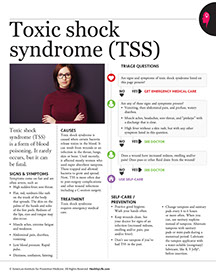
    Toxic shock syndrome (TSS) is a form of blood poisoning. It rarely occurs, but it can be fatal.

    Signs & Symptoms

    Symptoms come on fast and are often severe.

    *  High sudden fever. Sore throat.

    *  Flat, red, sunburn-like rash on the trunk of the body that spreads. The skin on the palms of the hands and soles of the feet peels. Redness of the lips, eyes, and tongue may also occur.

    *  Muscle aches. Extreme fatigue and weakness.

    *  Abdominal pain. Diarrhea. Vomiting.

    *  Rapid pulse.

    *  Dizziness. Confusion. Fainting.

    Causes

    Toxic shock syndrome is caused when certain bacteria release toxins in the blood. It can result from wounds or an infection in the throat, lungs, skin, or bone. Most often, though, it affects women who use super absorbent tampons. These trap and allow bacteria to grow and spread. Though not common, TSS can also occur after surgery, including a C-section.

    Treatment

    Toxic shock syndrome requires emergency medical care.

    Questions to Ask

    Self-Care / Prevention

    *  Practice good hygiene.

    *  Keep wounds clean. See your doctor for signs of an infection (increased redness, swelling, and/or pain, pus, and/or fever).

    *  Don’t use tampons if you’ve had TSS in the past.

    *  Change tampons and sanitary pads every 4 to 6 hours or more often. When you can, use sanitary napkins instead of tampons. Alternate tampons with sanitary pads or mini-pads during a menstrual period. Lubricate the tampon applicator with a water-soluble (nongreasy) lubricant, like K-Y Jelly®, before insertion.

    Resources

    National Women’s Health Information Center

    www.womenshealth.gov

    Women's Self-Care book by the American Institute for Preventive Medicine. www.HealthyLife.com. All rights reserved.

    © American Institute for Preventive Medicine

  • When To See A Gynecologist

    Women’s Health

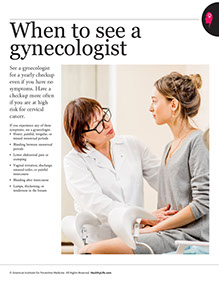
    Image of female doctor with female patient.

    If you experience any of these symptoms, see a gynecologist.

    *  Heavy, painful, irregular, or missed menstrual periods. Bleeding between menstrual periods.

    *  Lower abdominal pain or cramping.

    *  Vaginal irritation, discharge, or painful intercourse. Bleeding after intercourse.

    *  Lumps, thickening, or tenderness in the breasts.

    Also see a gynecologist for a yearly checkup even if you have no symptoms. Have a checkup more often if you are at high risk for cervical cancer.

    A Year of Health Hints book by the American Institute for Preventive Medicine. www.HealthyLife.com. All rights reserved.

    © American Institute for Preventive Medicine

  • Uterine Cancer

    Women’s Health

    The uterus (womb) is a hollow, pear- shaped organ in a female’s lower abdomen between the bladder and the rectum. Cancer of the uterus most often affects the endometrium, the lining of the uterus, so is also called endometrial cancer. It is the most common reproductive cancer in women. Most women diagnosed with uterine cancer are between the ages of 50 and 70. When found and treated early, though, more than 90% of cases can be cured.

    Signs & Symptoms

    *  Abnormal bleeding, spotting, or discharge from the vagina is the most common symptom.

    *  Any vaginal bleeding or spotting after menopause. The bleeding can begin as a watery, blood-streaked discharge. Later it can contain more blood.

    {Note: Some cases of uterine cancer can be detected by a Pap test, but this is used to detect cervical cancer. Even if you have had a recent normal Pap test, see your doctor if you have post menopausal vaginal bleeding.}

    Cancer of the uterus does not often occur before menopause. It can occur around the time menopause begins, though.

    When bleeding stops and starts up again, let your doctor know. If you are on hormone therapy, you may have regular cyclic bleeding.

    Causes, Risk Factors & Care

    The risk for uterine cancer is greater if you have had increased exposure to estrogen from one or more of the following:

    *  Late menopause or early menstruation

    *  Irregular periods or ovulation

    *  Polycystic ovarian disease. The ovaries become enlarged and contain many cysts due to hormone imbalances.

    *  Obesity. Women who are obese make more estrogen.

    *  Estrogen therapy. {Note: Estrogen therapy increases the risk for uterine cancer. Giving progestin with estrogen can dramatically reduce the risk.}

    Other risk factors include:

    *  A history of infertility

    *  A history of endometrial hyperplasia. This is abnormal thickening of the endometrium.

    *  A history of breast, colon, or ovarian cancer

    *  Diabetes

    Treatment includes one or more of the following:

    *  Surgery. Most women have a total hysterectomy. This removes the uterus, cervix, fallopian tubes, and ovaries.

    *  Radiation therapy

    *  Chemotherapy

    *  Hormonal therapy

    *  Clinical trials

    Self-Care

    Medical care, not self-care, is needed for uterine cancer.

    When to Seek Medical Care

    Contact Doctor When

    *  You have any “Signs & Symptoms” of uterine cancer.

    *  You need to schedule your yearly pelvic exam.

    Resources

    National Cancer Institute

    1-800-4-CANCER (422-6237)

    www.cancer.gov

    Health at Home Lifetime book by the American Institute for Preventive Medicine. www.HealthyLife.com. All rights reserved.

    © American Institute for Preventive Medicine

  • Plan For A Healthier, Happier Menopause

    Women’s Health

    Image of two mature women laughing.

    Some women dread menopause, associating the change of life with hot flashes, painful intercourse, mood swings, and the specter of old age. As with menstruation and childbearing, menopause is a rite of passage that has some discomforts. But you can help to prevent or alleviate many of them.

    *  To maintain a positive outlook, share your feelings with friends, stay active, and take an interest in others in your community.

    *  To lessen mood swings, cut down on caffeine, alcohol, and sweets.

    *  To help maintain hormonal balance, do regular exercise. Lose weight if you are overweight.

    Kegel exercises (named for the individual who invented them) can help to keep your pelvic and vaginal muscles toned, preventing a prolapsed uterus or poor bladder control, both of which sometimes accompany menopause. To feel these muscles at work, stop and start your urine flow in midstream the next time you use the toilet. Then practice the two exercises that follow.

    *  Squeeze the pelvic/vaginal muscles for 3 seconds, then relax them for 3 seconds. Do this ten times, three times a day.

    *  Squeeze and relax the same muscles as quickly as possible. Repeat ten times, three times a day.

    A Year of Health Hints book by the American Institute for Preventive Medicine. www.HealthyLife.com. All rights reserved.

    © American Institute for Preventive Medicine

  • Urinary Problems

    Women’s Health

    Common urinary problems in women are urinary incontinence, overactive bladder (OAB), and urinary tract infections (UTIs).

    Signs & Symptoms

    Urinary incontinence means you lose bladder control or can’t store urine like you should. Although there are many types, the most common ones in women are stress incontinence and urge incontinence.

    For Stress Incontinence

    Urine leaks out with a sudden rise in pressure in the abdomen. This can occur when you cough, sneeze, lift, jump, run, or strain to pass stool.

    For Urge Incontinence

    Urine is released before you can get to the toilet due to a sudden and intense urge to urinate.

    For Overactive Bladder

    You urinate often (8 or more times during the day and at least 2 times during the night) and you have a sudden and urgent need to urinate.

    For Urinary Tract Infections

    Bladder Infection Symptoms

    *  You urinate more often than usual. It burns or stings when you urinate.

    *  Your urine is bloody or cloudy.

    *  You have pain in the abdomen or over your bladder.

    *  Confusion or other change in mental status, especially if you are over age 70.

    Kidney Infection Symptoms

    *  Fever and shaking chills. Nausea and vomiting

    *  Pain in one or both sides of your mid back.

    Sometimes, there are no symptoms with a UTI.

    Causes & Risk Factors

    For Urinary Incontinence

    Problems occur with bladder muscles and nerves that help you hold or release urine and structures that support the bladder. This can be due to many factors:

    *  Physical changes due to aging or injury.

    *  Pregnancy and childbirth.

    *  Menopause.

    *  Multiple sclerosis.

    *  Spinal cord injury.

    For Overactive Bladder

    Abnormal nerves send signals to the bladder at the wrong time. This causes spasms in the bladder muscles to squeeze without warning.

    For Urinary Tract Infections

    Bacteria infect any part of the urinary tract – the kidneys, bladder, and ureters (tubes that connect the kidneys to the bladder).

    Treatment

    For Incontinence:

    *  Bladder training, pelvic floor muscle training, or Kegel exercises.

    *  Medications.

    *  Medical treatment, such as an electric or magnetic stimulation device.

    *  Surgical procedures.

    For Overactive Bladder

    Medications that help relax muscles of the bladder and prevent bladder spasms.

    For Urinary Tract Infections

    An antibiotic is prescribed to treat the specific infection. Pain relievers are taken as needed.

    Questions to Ask

    Self-Care / Prevention

    For Urinary Tract Infections (UTIs)

    *  Drink at least 8 glasses of water a day. Drink juice made from unsweetened cranberry juice concentrate. Take cranberry tablets.

    *  For pain, take acetaminophen, ibuprofen, naproxen sodium, or Uristat®, an over-the-counter medicine for bladder infection pain.

    *  Wear cotton underwear and loose-fitting slacks.

    *  Avoid alcohol, caffeine, and spicy foods.

    For Urinary Incontinence

    *  Avoid caffeine. Limit or avoid fluids 2 to 3 hours before bedtime.

    *  Limit carbonated drinks, alcohol, citrus juices, greasy and spicy foods, and artificial sweeteners.

    *  Empty your bladder before you leave the house, take a nap, or go to bed.

    *  Try to urinate often, even if you don’t feel the urge. When you urinate, empty your bladder as much as you can. Relax for a minute and try to go again.

    *  Keep a diary of when you leak urine. If you do this every 3 hours, empty your bladder every 2 hours. Use an alarm clock or wristwatch with an alarm to remind you.

    *  Wear absorbent pads or briefs, as needed.

    *  Ask your doctor if your type of incontinence could be managed by using self-catheters. These help to empty your bladder all the way. A doctor needs to prescribe self-catheters.

    Kegel Exercises

    Kegel exercises are pelvic floor exercises. These help treat or cure stress incontinence. Follow these steps:

    1.  Start to urinate, then hold back and try to stop. If you can slow the stream of urine, even a little, you are using the right muscles. You should feel muscles squeezing around the anus and the urethra (the tube through which urine is passed).

    2.  Relax your body. Close your eyes. Imagine that you are going to pass urine and then hold back from doing so. You should feel the muscles squeeze like you did in step 1.

    3.  Squeeze the muscles for 3 seconds. Then relax them for 3 seconds. When you squeeze and relax, count slowly. Start out doing this 3 times a day. Gradually work up to 3 sets of 10 contractions. Hold each one for 10 seconds at a time. You can do Kegel exercises when you lie down, sit, and/or stand.

    4.  When you do these exercises do not: Tense the muscles in your belly or buttocks; hold your breath; clench your fists or teeth; or make a face.

    5.  Squeeze your pelvic floor muscles right before and during whatever it is (jumping, etc.) that causes you to leak urine. Relax the muscles once the activity is over.

    6.  You can also use pelvic weights prescribed by your doctor. You insert a weighted cone into the vagina and squeeze the correct muscles to keep it from falling out.

    Do pelvic floor muscles daily. It may take several months to benefit from them. Get help to do them from:www.medicinenet.com/kegel_exercises_for_women/article.htm.

    FYI: Interstitial Cystitis (IC)

    Note: Symptoms of a condition called Interstitial Cystitis (IC) mimic those of an acute UTI. Intense pain and pressure in the lower abdomen come with the need to urinate. (This can be more than 50 times a day.) Nine out of 10 persons who have IC are women. Antibiotics do not give relief, because bacteria is not present with IC. This condition needs medical diagnosis and treatment.

    Resources

    National Institute of Diabetes and Digestive and Kidney Diseases (NIDDK)

    www2.niddk.nih.gov

    National Association for Continence (NAFC)

    800.BLADDER (252.3337)

    www.nafc.org

    Women's Self-Care book by the American Institute for Preventive Medicine. www.HealthyLife.com. All rights reserved.

    © American Institute for Preventive Medicine

  • Headaches 3

    Women’s Health

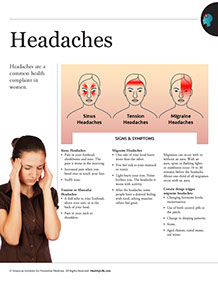
    Headaches are a common health complaint in women.

    Signs, Symptoms & Causes

    For Tension or Muscular Headaches

    *  A dull ache in your forehead, above your ears, or at the back of your head.

    *  Pain in your neck or shoulders.

    Common causes are tense or tight muscles in the face, neck, or scalp, concentrating hard for long periods of time, stress, and lack of sleep.

    For Sinus Headaches

    *  Pain in your forehead, cheekbones, and nose. The pain is worse in the morning.

    *  Increased pain when you bend over or touch your face.

    *  Stuffy nose.

    A sinus headache occurs when fluids in the nose aren’t able to drain well and a buildup of pressure occurs in the sinuses. A cold, allergies, dirty or polluted water, and airplane travel can cause a sinus headache.

    For Migraine Headaches

    *  One side of your head hurts more than the other.

    *  You feel sick to your stomach or vomit.

    *  Light hurts your eyes. Noise bothers you. The headache is worse with activity.

    *   After the headache, some people have a drained feeling with tired, aching muscles; others feel great.

    Migraines can occur with or without an aura. With an aura, spots or flashing lights or numbness occur 10 to 30 minutes before the headache. Ten percent of all migraines are this type; 90% occur without an aura.

    Migraine headaches happen when blood vessels in your head open too wide or close too tight. They tend to run in families and affect nearly 30% of women at some time during their lives. They occur more often in women than in men.

    Migraines occur less often during pregnancy (especially the second half) and often disappear during menopause. Some women, though, may get migraines for the first time during menopause.

    Certain things trigger migraine headaches:

    *  Changing hormone levels. Menstruation.

    *  Use of birth control pills or the patch.

    *  Change in sleeping patterns.

    *  Stress.

    *  Aged cheeses. Cured meats. Red wines.

    Other Causes of Headaches

    *  Analgesic rebound from regular or repeated use of over-the-counter or prescribed pain relievers.

    *  Eating or drinking something very cold, such as ice cream. {Note: To prevent ice cream headaches, warm the ice cream for a few seconds in the front of your mouth.}

    *  Caffeine withdrawal.

    *  Low blood sugar, hunger, or sensitivity to certain foods and drinks.

    *  A symptom of a health problem. Examples are allergies, depression, high blood pressure, dental problems, and a pinched nerve in the neck.

    *  Cigarette smoke, pollution, etc.

    *  Uncorrected vision problems.

    Treatment

    Self-care can treat headaches caused by tension, fatigue, and/or stress. Certain over-the-counter medicines and prescribed medicines can treat sinus headaches and migraine headaches.

    Biofeedback has helped many people who have suffered from headaches.

    Headaches that are symptoms of health problems are relieved when the condition is treated with success.

    Questions to Ask

    Self-Care / Prevention

    *  Don’t smoke. If you smoke, quit!

    *  Try to stop the headache when it starts.

    *  Take an over-the-counter (OTC) medicine for pain as directed on the label.

    *  Rest in a quiet, dark room with your eyes closed.

    *  Massage the back of your neck with your thumbs. Work from the ears toward the center of the back of your head. Also, rub gently along the sides of your eyes. Gently rub your shoulders, neck, and jaw. Get a massage.

    *  Place a cold or warm washcloth or hot or cold pack, whichever feels better, over the area that aches.

    *  Take a warm bath or shower.

    *  Relax. Picture a calm scene in your head. Meditate or breathe deeply.

    *  Keep a diary of when, where, and why headaches occur.

    *  Get enough rest.

    *  Eat 5 to 6 small meals instead of 3 large meals. To ward off low blood sugar, don’t skip meals. Avoid sweets.

    *  Keep regular sleeping times as much as you can.

    *  When lying down, use a pillow that supports the neck. Sleep on your back.

    *  Avoid scents, foods, and beverages that trigger headaches.

    *  To help prevent headaches and nausea caused by a hangover, try an OTC product, such as Chaser-Freedom From Hangovers.

    *  For a hangover: After drinking alcohol, take an OTC pain reliever. Eat solid foods. Rest or sleep. Have 2 or more glasses of water before you go to sleep. Drink 2 or more glasses of water when you wake up.

    Foods and Drinks that May Cause Headaches

    *  Alcoholic beverage, especially red wine

    *  Aspartame (the artificial sweetener in NutraSweet®)

    *  Bananas (if more than 1/2 banana a day)

    *  Caffeine from coffee, tea, cola soft drinks, chocolate, or some medications

    *  Lack of caffeine if abruptly stopped, such as stopping coffee intake

    *  Citrus fruits (if more than 1/2 cup a day)

    *  Cured meats, such as frankfurters

    *  Food additives, such as monosodium glutamate (MSG)

    *  Hard cheeses, such as aged cheddar or provolone

    *  Nuts and peanut butter

    *  Onions

    *  Sour cream

    *  Soy sauce

    *  Vinegar

    Resources

    National Headache Foundation

    888.NHF.5552 (643.5552)

    www.headaches.org

    Women's Self-Care book by the American Institute for Preventive Medicine. www.HealthyLife.com. All rights reserved.

    © American Institute for Preventive Medicine

  • Vaginal Infections

    Women’s Health

    Vaginal infections are the most common reason American females see their doctors. Vaginal infections result in vaginitis (swelling of the vagina).

    Signs, Symptoms & Causes

    For Bacterial Vaginosis (BV)

    Nearly half of females with clinical signs of BV report no symptoms. When present, symptoms include:

    *  A thin, gray, or milky white vaginal discharge. This has a fishy odor, which is more noted after intercourse.

    *  Mild vaginal irritation or burning.

    Bacterial vaginosis results when certain bacteria outnumber normal and protective bacteria in the vagina. The exact cause is not known.

    Risk factors for BV include douching, using an IUD, and a change or an increase in sexual partners.

    For Vaginal Yeast Infections

    Vaginal yeast infections are also called Monilia, Candida, and fungal infections. Signs and symptoms range from mild to severe. They include:

    *  Thick, white vaginal discharge that looks like cottage cheese and may smell like yeast.

    *  Itching, irritation, and redness around the vagina.

    *  Burning and/or pain when urinating or with sex.

    Vaginal yeast infections result from the overgrowth of the fungus Candida. This is normally present in harmless amounts in the vagina, digestive tract, and mouth.

    Risk Factors for Vaginal Yeast Infections

    *  Hormonal changes that come with pregnancy or monthly periods. Taking hormones or birth control pills.

    *  Antibiotic use, especially “broad spectrum” ones. Corticosteroid medicine use.

    *  High blood sugar. This can occur when diabetes is not controlled.

    *  Sex that irritates the vagina a lot.

    *  Using douches. Using feminine hygiene sprays.

    *  Using hot tubs and jacuzzis a lot.

    Chronic vaginal yeast infections can be one of the first signs of diabetes, STIs, and HIV.

    Diagnosis

    Different vaginal infections have the same symptoms. This makes it hard to tell one from another. A doctor may need to diagnose the cause. A sample of vaginal fluid is taken and tested. Often, this takes less than 3 minutes.

    Treatment

    For Bacterial Vaginosis

    Prescribed antibiotic creams, gels, or pills are needed. Male sex partner(s) may also need treatment. Feminine hygiene sprays that mask vaginal odor should not be used. Nor should OTC medications, such as ones for vaginal yeast infections. These do not treat BV.

    For Vaginal Yeast Infections

    Prescribed and OTC vaginal creams or suppositories get rid of the Candida overgrowth. Oral medicines, such as Diflucan®, may be prescribed.

    Questions to Ask

    Self-Care / Prevention

    *  Take medications, as prescribed.

    *  For a repeat vaginal yeast infection, use an over-the-counter (OTC) antifungal vaginal medication, such as Monistat. Use it as directed. {Note: Stop using any OTC product for a vaginal yeast infection at least 24 hours before a vaginal exam.}

    *  Ask your pharmacist about an OTC cream for itching and burning to help with symptoms during treatment.

    *  Bathe or shower often. Clean the inside folds of the vulva. Dry the vaginal area well.

    *  Wipe from front to back after using the toilet.

    *  If your vagina is dry, use a water soluble lubricant, such as K-Y Liquid®, when you have sex.

    *  Wear all-cotton underwear. Don’t wear garments that are tight in the crotch. Change underwear and workout clothes as soon as possible after you sweat.

    *  Don’t use bath oils, bubble baths, feminine hygiene sprays, or perfumed or deodorant soaps.

    *  Don’t sit around in a wet bathing suit. Shower after you swim in a pool to remove the chlorine from your skin. Dry the vaginal area well.

    *  Eat well. Limit sugar and foods with sugar. Eat foods, such as yogurt, that contain live cultures of “lactobacillus acidophilus.” If you can’t tolerate yogurt, take an OTC product that has this.

    *  Let your doctor know if you are prone to getting yeast infections whenever you take an antibiotic. You may be told to also use a vaginal antifungal product.

    *  If you still menstruate, use unscented tampons or sanitary pads and change them often.

    Women's Self-Care book by the American Institute for Preventive Medicine. www.HealthyLife.com. All rights reserved.

    © American Institute for Preventive Medicine

  • Health Tests For Women

    Women’s Health

    Bone Mineral Density Test (BMD)

    Why you need this:

    Osteoporosis occurs four times more often in women than in men. Get tested as often as advised by your doctor.

    What to do before the test:

    Dress in clothing that makes it comfortable to lie on a table.

    What to expect:

    A common and reliable method used is the Dexa-Scan (DXA). With your clothes on, you lie on a table. A low energy X-ray is taken of your hip and/or spine. Portable BMD screening devices are used to scan a heel or fingers. They are not as accurate as a DXA scan, but may be used at workplaces, health fairs, etc. Other ways to measure bone mineral density are CT scans, X-rays, and ultrasounds.

    What the results mean:

    Normal is a BMD value less than 1 standard deviation below the young adult mean. Osteopenia (low bone mass) is a BMD value between -1 and -2.5 standard deviation below the young adult mean. Osteoporosis is a BMD value at least -2.5 standard deviations below the young adult mean.

    Breast Exam by Doctor or Nurse

    Why you need this:

    Screens for signs of breast problems, including cancer.

    What to do before the test:

    If you still menstruate, it is best to schedule the exam 3 or more days after your menstrual period. Your breasts are usually more swollen and tender the week before your period.

    What to expect:

    The doctor or nurse carefully feels your breasts and under your arms for lumps or anything else that seems unusual.

    What the results mean:

    If a lump or other problem is felt, the doctor may prescribe a mammogram or other follow up tests.

    Cervical Cancer Screening – Pap Test and Human Papilliomavirus (HPV) Test

    Why you need this:

    HPV test checks for DNA of high-risk types of human papillomavirus that can cause abnormal cells and cervical cancer. HPV test results are of value only with your Pap test results. Having a Pap test and an HPV test is an option for women ages 30 and older. If both tests are negative, the risk for cervical cancer is very low and women can opt to wait five years before another screening. Note: More than 40 types of HPV infect the vulva, cervix, anus, and penis. HPV testing for cervical cancer does not screen for other forms of cancers linked to HPV. It does not screen for genital warts and  other sexually transmitted infections, either.

    What to do before the test:

    You do not need any special preparation before an HPV test, but follow the same procedures as for Pap test, listed on this page, if both tests are done at the same time. HPV testing can also be done to provide more information when a Pap test’s results are not clear.

    What to expect:

    An HPV test is done the same way as a Pap test. The test can be done at the same time as the Pap test, using the same swab or a second swab.

    What the results mean:

    A negative HPV test means you do not have an HPV type that is linked to cervical cancer.

    A positive HPV test means you do have an HPV type that may be linked to cervical cancer. This does not mean you have cervical cancer now. But it could be a warning.

    Treatment depends on results your HPV and Pap test results. This includes:

    *  Having repeat tests to monitor changes

    *  Taking a closer look at your cervix (a colposcopy)

    *  Removing abnormal cells

    *  Treating for cancer, if present

    Cervical Cancer Screening – Pap Test (or Pap Smear)

    Why you need this:

    Checks for cell changes on the cervix that might become cervical cancer if they are not properly treated. Regular screening and follow-up can help prevent cervical cancer or find it early. Cervical cancer is the most preventable type of female cancer. Note: The Pap test does not screen for ovarian, uterine, vaginal, or vulvar cancers.

    What to do before the test:

    If you still menstruate, schedule the test for a time you will not be having a menstrual period. Don’t douche, tub-bathe, or use vaginal creams for 48 to 72 hours before the test. Avoid sex within 24 hours of the test.

    What to expect:

    You need to undress below the waist. You lie down on the exam table and put your feet in the stirrups attached to the bottom of the table. A device called a speculum is inserted into the vagina. A long cotton swab is used to take a sample of cells from the cervical area. This does not usually hurt. You may feel a brief pinch. The sample is analyzed for abnormal cells.

    What the results mean:

    Results come back as:

    *  Negative (normal). Negative (normal) – No cell changes were found on your cervix. Continue to get regular Pap tests in the future.

    *  Unclear – This means the cells on the cervix could be abnormal. Or, the cells could not be clearly identified. Cell changes could be due to an infection, menopause, or other life changes. The changes could also be related to human papillomavirus (HPV) types that have a high risk for cervical cancer. Your doctor can order a test to check for HPV.

    *  Abnormal – Cell changes were found on your cervix. A likely cause is HPV, but this does not mean you have cervical cancer. Abnormal cells can be: Low-grade changes are minor and could go back to normal on their own. Your doctor can order a test to check for HPV types that have a high risk for cervical cancer. High-grade changes are serious. They could turn into cancer if they are not removed. Cancer may be found, but other tests need to confirm this.

    Chlamydia Screening

    Why you need this:

    Three fourths of females with this STI have no symptoms, so they can pass it on to others without knowing it. When it is not treated, pelvic inflammatory disease can result. This can make a woman unable to get pregnant.

    What to expect:

    The doctor takes a urine test or uses a swab or brush to take a sample of cells from the infected area, such as the cervix or uterus. The sample is checked for the bacteria that causes chlamydia. It is also checked for gonorrhea at the same time because this STI has symptoms like that of chlamydia.

    What the results mean:

    If the test is positive, you have an active infection. The doctor will prescribe a course of antibiotics to treat chlamydia (or gonorrhea). Your sex partner(s) should be treated, too.

    Mammogram

    Why you need this:

    Screens for signs of breast problems, including cancer.

    What to do before the test:

    Schedule the test at an approved testing facility. Find out from the National Cancer Institute at 800.4.CANCER (422.6237) orwww.cancer.gov. If you still menstruate, try not to schedule the test during the week before a period. On the day of the test, don’t wear lotions, powders, perfumes or deodorant. They can cause shadows on the X-ray pictures. Wear slacks or a skirt with a blouse or top, so you only need to undress from the waist up.

    What to expect:

    You will need to undress above the waist. You put on a gown that covers your front and back. The test is quick and easy: You stand up in front of the X-ray machine. The person who takes the X-rays places one breast between two plastic plates. The plates press your breast and make it flat. This can feel uncomfortable, but it lasts only seconds. The machine has an automatic release. The same test is done on the other breast. Then side images are taken for both breasts for a total of 4 X-rays.

    What the results mean:

    A radiologist reads the X-rays and sends the results to your doctor. A report is sent to you within 30 days. A normal result means the radiologist did not find anything that needs follow up. Continue to get screening mammograms. If the result is abnormal, it means the radiologist saw:

    *  A change from a past mammogram.

    *  A change that needs follow up.

    *  Your doctor will order follow up tests, as needed, such as an ultrasound or an MRI. If one of these shows a solid mass, your doctor may prescribe a biopsy of the mass.

    The good news is that about 80% of lumps are NOT cancerous.

    Pelvic Exam

    Why you need this:

    Checks for problems on the outside of the vaginal area and inside the vagina and cervix.

    What to do before the test:

    Follow guidelines for Pap smear.

    What to expect:

    The doctor does a physical exam of the vaginal area. A Pap smear is usually done with a pelvic exam. The doctor may also insert a gloved and lubricated finger into the rectum. This can feel uncomfortable, but does not usually cause pain.

    What the results mean:

    If no problems are found, continue to have pelvic exams yearly or as advised by your doctor. If a problem is found, your doctor will prescribe follow-up tests or exams.
    Men's and Women's Self-Care Book. Published by the American Institute for Preventive Medicine. www.HealthyLife.com. All rights reserved.

    © American Institute for Preventive Medicine

  • Vaginal Problems

    Women’s Health

    A number of vaginal problems occur in women over age 50. Often, the problems are due to changes in the vagina that come with menopause. These include:

    *  Vaginal dryness

    *  Thinning of the walls of the vagina

    *  Loss of elasticity in the muscles in the vagina

    *  Shrinkage of the labia (external genitals that cover and protect the opening of the vagina)

    These changes can lead to common vaginal problems, such as:

    *  Pain during and after intercourse

    *  Vaginitis – vaginal swelling, irritation, and/or infections.

    Less common vaginal problems in women over 50 are:

    *  Sexually transmitted infections (STIs).

    *  Cancer of the vagina, which is rare.

    *  Abnormal vaginal bleeding (unless still menstruating or on hormone therapy (HT)

    It is common for menstrual periods to be irregular for several years before menopause. This is normal vaginal bleeding. For premenopausal women, the most common causes of abnormal vaginal bleeding, in this order, are: Not ovulating; malignancy; pregnancy; endometriosis; and benign tumors. The most common cause after menopause is malignancy.

    The chart below lists signs and symptoms of vaginal problems and what to do about them. {Note: All vaginal bleeding that occurs after menstruation has stopped should be evaluated by your doctor.}

    Hemorrhage

    Signs & Symptoms

    Vaginal bleeding with:

    *  A known bleeding disorder and you also have blood in your urine or stool

    *  Heavy vaginal bleeding after taking a clot dissolving drug for a heart attack or stroke

    What to Do

    Get immediate care.

    Internal Injury

    Signs & Symptoms

    Vaginal bleeding after trauma to the abdomen, pelvis, or vagina or vaginal bleeding with any of these problems:

    *  Dizziness and very heavy bleeding (you saturate more than 1 full sized pad in an hour’s time)

    *  Pale and moist skin and a decreased level of consciousness

    *  Extreme shortness of breath or a very hard time breathing

    *  Severe abdominal pain

    What to Do

    Get immediate care.

    Pelvic Inflammatory Disease (PID)

    This is an infection of the uterus, fallopian tubes, and/or ovaries.

    Signs & Symptoms

    Vaginal bleeding with 2 or more of these problems:

    *  Abdominal tenderness and/or bloating

    *  Pain in the pelvis or back

    *  Pain during intercourse

    *  Skin on your abdomen feels sensitive

    *  Vaginal discharge with abnormal color or odor

    *  Change in menstrual flow, if still menstruating

    *  Fever, chills

    What to Do

    Contact doctor.

    Infection of the cervix, uterus, or vagina

    Cervical, uterine, or vaginal cancer.

    Signs & Symptoms

    Vaginal bleeding after menopause, unless on estrogen therapy (ET).

    What to Do

    Contact doctor.

    Gonorrhea or similar sexually transmitted infection (STI)

    Signs & Symptoms

    Abnormal vaginal bleeding with:

    *  Mild itching and burning around the vagina

    *  Burning or pain when urinating or urinating more often

    *  A vaginal discharge with abnormal color

    *  Abdominal discomfort

    What to Do

    Contact doctor.

    Genital Herpes

    Signs & Symptoms

    Sores and/or painful blisters in the genital area and sometimes on the thighs or buttocks

    What to Do

    Contact doctor.

    Trichomoniasis

    Signs & Symptoms

    *  Vaginal itching, burning, and redness

    *  Greenish-yellow vaginal discharge

    *  Burning or pain when urinating

    What to Do

    Contact doctor.

    Bacterial Vaginosis

    This is an infection from one or more types of bacteria that may or may not be sexually transmitted.

    Signs & Symptoms

    *  Mild vaginal irritation or burning

    *  A thin, gray, or milky white vaginal discharge. This has a fishy odor, which is noticed more after sex. (About half of females have no symptoms.)

    What to Do

    Contact doctor.

    Atrophic Vaginitis

    This is caused by a decrease in estrogen.

    Signs & Symptoms

    Vaginal dryness, irritation, itching, and burning

    What to Do

    Contact doctor.

    Vaginal Yeast Infection

    Signs & Symptoms

    *  Itching, irritation, and redness around the vagina

    *  Thick, white vaginal discharge that looks like cottage cheese and may smell like yeast

    *  Burning and/or pain when urinating or with sex

    What to Do

    Use self-care.

    Vaginitis from Contact Dermatitis

    Signs & Symptoms

    Itching and redness in the outer genital area without other symptoms

    What to Do

    Use self-care.

    Care

    Medical treatment depends on the cause.

    For Atrophic Vaginitis:

    Use a prescribed estrogen cream or prescribed estrogen pills.

    For Bacterial Vaginosis:

    Use a prescribed antibiotic cream or gel or prescribed antibiotic pills.

    For a Vaginal Yeast Infection:

    It is important, though, to make sure that you have the right problem diagnosed. A burning sensation could be a symptom of a urinary tract infection caused by bacteria, which requires an antibiotic. Antibiotics will not help yeast infections. They make them worse. Trichomoniasis mimics yeast infections, too.

    Chronic vaginal infections can be one of the first signs of diabetes, sexually transmitted diseases, or HIV in women.

    Self-care measures treat most vaginal yeast infections. Your doctor can prescribe a vaginal cream or suppositories or an oral antifungal medicine, such as Diflucan.

    For a Severe Case of Contact Dermatitis in the Vaginal Area:

    Use an ointment prescribed by your doctor.

    Other medical treatments are treating the specific cause, such as STIs, cervical cancer, and uterine cancer.

    Self-Care / Prevention

    For a Vaginal Yeast Infection or Bacterial Vaginosis:

    *  Bathe or shower often. Clean the inside folds of the vulva. Dry the vaginal area well.

    *  Wipe from front to back after using the toilet.

    *  Wear all-cotton underwear.

    *  Don’t wear garments that are tight in the crotch.

    *  Change underwear and workout clothes right away after sweating.

    *  If you still menstruate, use unscented tampons or sanitary pads and change them often.

    *  Don’t use bath oils, bubble baths, feminine hygiene sprays, or perfumed or deodorant soaps.

    *  Don’t sit around in a wet bathing suit.

    *  Shower after you swim in a pool to remove the chlorine from your skin. Dry the vaginal area well.

    *  Eat well. Include foods that contain live cultures of “lactobacillus acidophilus,” such as yogurt. If you can’t tolerate yogurt, take an over- the-counter product that contains lactobacillus acidophilus.

    *  Let your doctor know if you tend to get yeast infections whenever you take an antibiotic. He or she may have you also take a vaginal antifungal agent.

    When You Have a Vaginal Yeast Infection:

    *  Use an over-the-counter product for vaginal yeast infections, such as Monistat, Gyne-Lotrimin, etc.

    *  Douche with a mild solution of 1 to 3 tablespoons of vinegar mixed in 1 quart of warm water. Repeat only once a day (up to 7 days) until the symptoms subside. Don’t do this if you are pregnant or if you have a sexually transmitted disease.

    *  Limit sugar and foods with sugar.

    For Vaginal Dryness and Painful Intercourse:

    *  Don’t use deodorant soaps or scented products in the vaginal area.

    *  Use a water soluble lubricant, such as K-Y Jelly, Replens, etc. Avoid oils or petroleum-based products.

    *  Use an estrogen cream for the vagina. Your doctor needs to prescribe this.

    *  Keep sexually active.

    *  Don’t use antihistamines unless truly needed.

    For Contact Dermatitis in the Vaginal Area:

    *  Avoid products that cause the problem (scented items, douches, etc.).

    *  Apply an over-the-counter hydrocortisone cream to the affected area. Use this infrequently, though. Hydrocortisone can, itself, lead to thinning of the vaginal tissue. Follow package directions.

    *  Put a cool compress on the affected area.

    *  Wash your underwear in a gentle detergent. Rinse it twice. Use only plain water for the second rinse. Don’t use a fabric softener.

    Health at Home Lifetime book by the American Institute for Preventive Medicine. www.HealthyLife.com. All rights reserved.

    © American Institute for Preventive Medicine