Category: Women’s Health

  • Insomnia

    Women’s Health

    Insomnia is having trouble falling asleep. It can last from a single night to a few weeks. It can occur from time to time or be a chronic problem.

    Signs & Symptoms

    *  Waking up during the night and not being able to get back to sleep.

    *  Waking up too early.

    *  Not getting enough sleep or getting poor quality sleep.

    *  Fatigue or feeling drowsy during the day because of lack of sleep.

    Causes

    *  Too much caffeine or having it before bedtime.

    *  Changes in sleep/wake schedules, such as work shift changes and jet lag.

    *  Going to bed with a full bladder or any problem that causes you to urinate or have a bowel movement during the night.

    *  Too much noise when you fall asleep. This includes a snoring partner.

    *  Menopausal symptoms, such as hot flashes.

    *  A lack of physical exercise.

    *  Lack of a sex partner.

    *  Side effects of some medicines, such as decongestants, corticosteroids, and stay-awake pills.

    *  Emotional stress. Depression. Anxiety.

    *  Posttraumatic Stress Disorder (PTSD).

    *  Fibromyalgia.

    *  Any condition, illness, injury, or surgery that causes pain and/or discomfort which interrupts sleep.

    *  Asthma, allergies, and early-morning wheezing.

    *  An overactive thyroid gland.

    *  Heart or lung conditions that cause shortness of breath when lying down.

    Treatment

    *  Self-care and prevention measures.

    *  Treating the problem.

    *  Prescribed short-acting sleeping pills.

    Questions to Ask

    Self-Care / Prevention

    *  Avoid caffeine for 8 hours before bedtime. Caffeine is in coffee, tea, chocolate, colas, and some other soft drinks. Check labels for caffeine content in over-the-counter medicines.

    *  Avoid long naps during the day.

    *  Have no more than 1 alcoholic drink with or after dinner. Even though alcohol is a sedative, it can disrupt sleep. Check with your doctor about using any alcohol if you are taking medicines.

    *  An hour or two before going to bed, dim the lights in the house.

    *  Before you go to bed, have food items rich in the amino acid L-tryptophan, such as milk, turkey, or tuna fish. Do not take L-tryptophan supplements, though. Eating foods with carbohydrates, such as cereal, breads, and fruits, may help as well.

    *  Do regular exercise, but not within a few hours of going to bed.

    *  Before bedtime, take a warm bath or read a book or do some type of repetitive, calm activity. Avoid things that hold your attention, such as watching a suspense movie.

    *  Keep your bedroom quiet, dark, and comfortable. Use clean, fresh sheets and pillows. Keep the room temperature neither too warm nor too cool.

    *  Ban worry from the bedroom. Don’t rehash the mistakes of the day as you toss and turn.

    *  Follow a regular bedtime routine. Lock or check doors and windows, brush your teeth, etc.

    *  Count sheep! Picturing a repeated image may bore you to sleep.

    *  Listen to recordings that help promote sleep. Look for them at a library or bookstore.

    *  If you’ve tried to fall asleep, but are still awake after 30 minutes, get out of bed. Read a relaxing book or sit quietly in the dark. Do this for about 20 minutes. Then go back to bed. Repeat this as many times as you need to until you are able to fall asleep.

    *  Take over-the-counter sleep aids (e.g., melatonin, Tylenol PM, etc.) as advised by your doctor. Don’t take anyone else’s sleeping pills.

    Resources

    National Center on Sleep Disorders Research

    www.nhlbi.nih.gov/about/ncsdr

    National Sleep Foundation

    www.sleepfoundation.org

    Women's Self-Care book by the American Institute for Preventive Medicine. www.HealthyLife.com. All rights reserved.

    © American Institute for Preventive Medicine

  • Women’S Health

    Women’s Health

    Women at home, exercising with a fitness ball.

    Ask your doctor about the benefits and risks of current recommended screening tests for certain cancers and other health problems.

    Most often, ovarian cancer has no symptoms or only vague ones until the cancer is in an advanced stage. Tell your doctor if pain in your lower abdomen or pelvis lasts or if you feel full, even after a light meal.

    Menopause occurs when menstrual periods have stopped for one whole year. Hot flashes and other symptoms usually occur several years before menopause.

    Many over-the-counter products, such as black cohosh, soy items, vitamin and other supplements, etc. claim to relieve symptoms of menopause. Ask your doctor what products are okay for you to take on your own.

    Health at Home Lifetime book by the American Institute for Preventive Medicine. www.HealthyLife.com. All rights reserved.

    © American Institute for Preventive Medicine
  • Cervical Health

    Women’s Health

    Smiling women with laptop.

    Pap tests, pelvic exams, and a test for human papillomavirus (HPV) check for early signs of cervical cancer.

    If you are a female, start getting Pap tests at age 21 or within 3 years of the onset of sexual activity, whichever comes first. After that, get a Pap test at least every 3 years or as often as your doctor advises.

    If you are a female 30 to 65 years old, you may have an HPV test along with the Pap test. Talk to your doctor about which testing option, including how often, is right for you.

    Learn about cervical cancer from the Cancer Information Service at 800.4.CANCER (422.6237) andcancer.gov/types/cervical.

    Health at Home Lifetime book by the American Institute for Preventive Medicine. www.HealthyLife.com. All rights reserved.

    © American Institute for Preventive Medicine
  • Menopause

    Women’s Health

    Menopause occurs when menstrual periods have stopped for one whole year. It is also called “the change of life.” In general, this occurs between the ages of 45 and 55. It can, though, occur as early as age 35 or as late as age 65. It can also result when both ovaries are removed by surgery.

    Signs & Symptoms

    Signs and symptoms usually span 1 to 2 or more years. This is called peri-menopause. Symptoms vary from woman to woman. They result from hormone changes, the aging process itself, fatigue, and stress.

    Physical Signs and Symptoms

    *  Hot flashes. These are sudden waves of heat that can start in the waist or chest and work their way to the neck and face and sometimes the rest of the body. They can occur as often as every 90 minutes. Each one can last from 15 seconds to 30 minutes; 5 minutes is average. Seventy-five to 80% of women going through menopause have hot flashes. Some women are more bothered by them than others. Sometimes heart palpitations come with hot flashes.

    *  Vaginal dryness. The vaginal wall also becomes thinner. These problems can make sex painful or uncomfortable. Irritation can increase the risk for infection.

    *  Loss of bladder tone. This can result in stress incontinence (leaking urine when you cough, sneeze, laugh, or exercise).

    *  Headaches.

    *  Dizziness.

    *  The skin is more likely to wrinkle.

    *  Hair grows on the face, but thins at the temples.

    *  Muscles lose some strength and tone.

    *  Bones become more brittle. This increases the risk for osteoporosis.

    *  Irregular periods:

    – Bleeding can occur between periods. This is the most common bleeding pattern in peri-menopause.

    – Periods get shorter and lighter for 2 or more years.

    – Periods can stop for a few months and then start up again and are more widely spaced.

    – Periods occur with heavy bleeding and/or the passage of many small or large blood clots.

    Emotional Signs and Symptoms

    *  Irritability.

    *  Mood changes.

    *  Lack of concentration. Memory problems.

    *  Tension, anxiety, depression.

    *  Insomnia. Hot flashes can interrupt sleep.

    Causes

    Hormone changes that come with aging cause menopause. The body makes less estrogen and progesterone.

    Treatment

    Self-care may be all that is needed. Just estrogen can be prescribed. This is estrogen therapy (ET). Estrogen plus progestogen can be prescribed. This is called EPT. The term hormone therapy (HT) is used for both ET and EPT. Hormone therapy helps protect against osteoporosis, but has health risks. Each women should discuss the benefits and risks of HT and non-estrogen treatments with her doctor.

    Questions to Ask

    Self-Care / Prevention

    For Hot Flashes

    *  Wear lightweight clothes made of natural fibers, such as cotton.

    *  Limit or avoid alcohol. Limit caffeine.

    *  Have cool drinks, especially water, when you feel a hot flash coming on and before and after you exercise. Avoid hot drinks.

    *  Keep cool. Open a window. Lower the thermostat when the heat is on. Use air conditioning and/or fans. Carry a small fan with you.

    *  Try to relax when you get a hot flash. Getting stressed out over one only makes it worse.

    *  Use relaxation techniques, such as meditation, biofeedback or yoga.

    *  Follow your doctor’s advice for taking herbal products, such as black cohosh; vitamin supplements; over-the-counter menopause aids; and soy products.

    *  If you suffer from night sweats (hot flashes that occur as you sleep):

    – Wear loose fitting cotton nightwear. Have changes of nightwear ready.

    – Sleep with only a top sheet, not blankets.

    – Keep the room cool.

    For Vaginal Dryness and Painful Sex

    *  Don’t use deodorant soaps or scented products in the vaginal area.

    *  Use a water soluble lubricant, such as K-Y Liquid®, Replens®, etc. These make penetration easier during sex. Avoid oils or petroleum-based products. These promote infection.

    *  Ask your doctor about the benefits and risks of using estrogen (pills, patches, vaginal cream, or rings).

    *  Stay sexually active. Having sex often may lessen the chance of having the vagina constrict. It also helps to maintain natural lubrication and pelvic muscle tone. Reaching orgasm with a partner or alone gives these benefits.

    *  If you can, avoid using antihistamines. They dry mucus membranes in the body.

    For Emotional Symptoms

    *  Exercise regularly. This helps maintain hormonal balance.

    *  Talk to other women who have gone through or are going through menopause.

    *  Avoid stress as much as you can.

    *  To deal with stress, use relaxation techniques. Examples are meditation, yoga, listening to soft music, and massages.

    *  Eat healthy. Take vitamins and minerals, as advised.

    Resources

    National Women’s Health Information Center

    www.womenshealth.gov

    North American Menopause Society (NAMS)

    www.menopause.org

    Women's Self-Care book by the American Institute for Preventive Medicine. www.HealthyLife.com. All rights reserved.

    © American Institute for Preventive Medicine
  • Chest Pain & Heart Disease

    Women’s Health

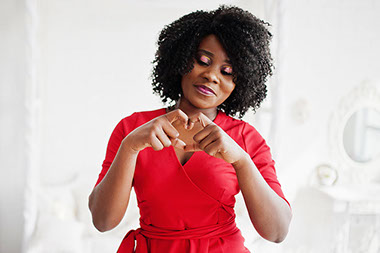
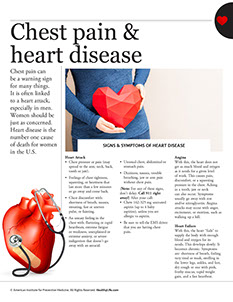
    Women making heart shape with hands and wearing a wear dress.

    Chest pain can be a warning sign for many things. It is often linked to a heart attack, especially in men. Women should be just as concerned. Heart disease is the number one cause of death for women in the U.S.

    Signs & Symptoms

    Angina

    With this, the heart does not get as much blood and oxygen as it needs for a given level of work. This causes pain, discomfort, or a squeezing pressure in the chest. Aching in a tooth, jaw or neck can also occur. Symptoms usually go away with rest and/or nitroglycerin. Angina attacks may occur with anger, excitement, or exertion, such as walking up a hill.

    Heart Attack

    *  Chest pressure or pain (may spread to the arm, neck, back, tooth or jaw).

    *  Feelings of chest tightness, squeezing, or heaviness that last more than a few minutes or go away and come back.

    *  Chest discomfort with: shortness of breath, nausea, sweating, fast or uneven pulse, or fainting.

    *  An uneasy feeling in the chest with: fluttering or rapid heartbeats, extreme fatigue or weakness, unexplained or extreme anxiety, or severe indigestion that doesn’t go away with an antacid.

    *  Unusual chest, abdominal or stomach pain.

    *  Dizziness, nausea, trouble breathing, jaw or arm pain without chest pain.

    {Note: For any of these signs, don’t delay. Call 911 right away!} After your call:

    *  Chew 162-325 mg uncoated aspirin (up to 4 baby aspirins), unless you are allergic to aspirin.

    *  Be sure to tell the EMS driver that you are having chest pain.

    Heart Failure

    With this, the heart “fails” to supply the body with enough blood and oxygen for its needs. This develops slowly. It becomes chronic. Symptoms are: shortness of breath, feeling very tired or weak, swelling in the lower legs, ankles, and feet, dry cough or one with pink, frothy mucus, rapid weight gain, and a fast heartbeat.

    Causes

    Heart disease is caused by atherosclerosis. This is the buildup of plaque in the inner walls of the arteries. The plaque is made up of blood, platelets, cholesterol, fibrous tissue, and sometimes, calcium. Blood flow to the heart is slowed or blocked. Besides heart disease, chest pain can also be a symptom of:

    *  Mitral valve prolapse (MVP), a heart-valve problem.

    *  Bronchitis, pneumonia, lung injuries, etc.

    *  Heartburn or a hiatal hernia.

    *  Shingles.

    *  A pulled muscle or even swallowing too much air.

    Treatment

    Heart disease needs medical treatment. It is not always easy to know whether or not to seek medical care for chest pain. When in doubt, check it out. Prompt medical treatment for a heart attack or severe lung injury could be life-saving.

    Questions to Ask

    Self-Care / Prevention

    Reduce the Risk of Heart Disease

    *  Have regular medical checkups. Get your blood pressure and blood cholesterol checked as often as advised by your doctor.

    *  Don’t smoke or use tobacco. If you do, quit.

    *  Be at a healthy weight.

    *  Take all medications, as prescribed.

    *  If you have diabetes, high blood pressure or high cholesterol, follow your treatment plan.

    *  Follow a diet low in saturated fats, trans fats, and cholesterol. Limit sodium to 1500 mg to 2,400 mg per day. Eat plenty of vegetables and fruit, fiber-rich whole grains, fatty fish, nuts, seeds, beans, lentils, and olive or canola oil. Limit processed meats and sugary foods and beverages.

    *  Do regular exercise.

    *  Avoid or limit alcohol to one drink per day.

    *  Manage stress. Practice relaxation techniques.

    Pulled Muscle or Minor Injury to the Rib Cage

    *  Do not strain the muscle or ribs while pain is felt.

    *  Rest.

    *  Take an over-the-counter medicine for pain.

    Heartburn or a Diagnosed Hiatal Hernia

    *  Lose weight, if you are overweight.

    *  Eat 5 to 6 small meals a day and chew thoroughly.

    *  Avoid tobacco and alcohol. Avoid “trigger” foods, such as caffeine, spicy foods, citrus juices, chocolate, and  carbonated drinks.

    *  Don’t bend over or lie down after eating.

    *  For heartburn, take antacids after meals and before going to sleep.

    *  Don’t have food 2 hours before bedtime.

    *  Do not wear tight clothes, tight belts or girdles.

    *  Sleep on a bed with the head raised about 6 inches.

    Anxiety and Hyperventilating

    *  Talk about your anxiety with someone you trust.

    *  When you hyperventilate: Open up a small paper bag. Loosely cover your nose and mouth with it. Breathe slowly into the bag. Rebreathe the air in the bag. Do this about 10 times. Set the bag aside. Breathe normally for a couple of minutes.

    *  Try to breathe slowly. Focus on taking one breath every 5 seconds.

    Inflammation of the Cartilage Where the Ribs Attach to the Breastbone (Costochondritis)

    *  Take aspirin, ibuprofen, or naproxen sodium for pain.

    Mitral Valve Prolapse (MVP)

    *  Follow your doctor’s guidelines for self-care.

    *  Eat healthy foods. Limit caffeine and alcohol.  Don’t smoke.

    *  After checking with your doctor, exercise regularly to improve cardiovascular fitness.

    *  Deal with and control stress and anxiety.

    Resources

    American Heart Association & Go Red For Women

    888.MY.HEART (694.3278)

    www.heart.org

    www.GoRedForWomen.org

    National Heart, Lung, and Blood Institute (NHLBI)

    www.nhlbi.nih.gov

    Women's Self-Care book by the American Institute for Preventive Medicine. www.HealthyLife.com. All rights reserved.

    © American Institute for Preventive Medicine
  • Menstrual Cramps

    Women’s Health

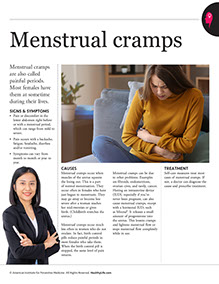
    Menstrual cramps are also called painful periods. Most females have them at sometime during their lives.

    Signs & Symptoms

    *  Pain or discomfort in the lower abdomen right before or with a menstrual period. The pain can range from mild to severe.

    *  The pain can occur with: A backache; fatigue; headache; diarrhea and/or vomiting.

    *  Symptoms can vary from month to month or year to year.

    Causes

    Menstrual cramps occur when muscles of the uterus squeeze the lining out. This is a part of normal menstruation. They occur often in females who have just begun to menstruate. They may go away or become less severe after a woman reaches her mid-twenties or gives birth. (Childbirth stretches the uterus.)

    Menstrual cramps occur much less often in women who do not ovulate. In fact, birth control pills reduce painful periods in 70 percent to 80 percent of females who take them. When the birth control pill is stopped, the same level of pain returns.

    Menstrual cramps can be due to other problems. Examples are fibroids, endometriosis, ovarian cysts, and rarely, cancer. Having an intrauterine device (IUD), especially if you’ve never been pregnant, can also cause menstrual cramps, except with the Progestasert® IUD. It releases a small amount of progesterone into the uterus. This lessens cramps and lightens menstrual flow.

    Treatment

    Self-care measures treat most cases of menstrual cramps. If not, a doctor can diagnose the cause and prescribe treatment.

    Questions to Ask

    Self-Care / Prevention

    *  Take an over- the-counter pain reliever, such as ibuprofen, naproxen sodium, or aspirin. These nonsteroidal anti-inflammatory drugs (NSAIDS) relieve pain and inhibit the release of prostaglandins. Acetaminophen will help with pain, too. Most over-the-counter menstrual discomfort products contain acetaminophen. Read labels. {Note: Do not give aspirin or any medication with salicylates to anyone 19 years of age or younger due to its link with Reye’s Syndrome.}

    *  Hold a heating pad or hot-water bottle on your abdomen or lower back.

    *  Take a warm bath.

    *  Gently massage your abdomen.

    *  Do mild exercises. Stretch. Do yoga. Walk. Bicycle.

    *  When you can, lie on your back. Support your knees with a pillow.

    *  Get plenty of rest. Limit stress as your period nears.

    *  Consider using birth control pills or the Progestasert® IUD. These lessen menstrual cramps.

    If you still feel pain after using self-care measures, call your doctor.

    Resources

    National Women’s Health Information Center

    www.womenshealth.gov

    Women's Self-Care book by the American Institute for Preventive Medicine. www.HealthyLife.com. All rights reserved.

    © American Institute for Preventive Medicine
  • Eating Disorders 2

    Women’s Health

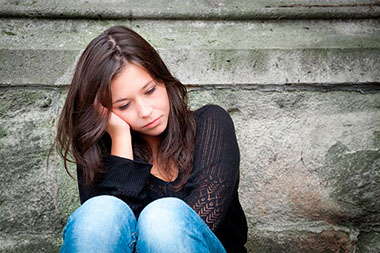
    Image of women sitting alone.

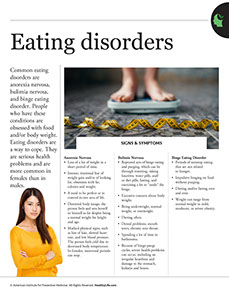
    Common eating disorders are anorexia nervosa, bulimia nervosa, and binge eating disorder. People who have these conditions are obsessed with food and/or body weight. Eating disorders are a way to cope. They are serious health problems and are more common in females than in males.

    Signs & Symptoms

    Anorexia Nervosa

    *  Loss of a lot of weight in a short period of time.

    *  Intense, irrational fear of weight gain and/or of looking fat, obsession with fat, calories and weight.

    *  A need to be perfect or in control in one area of life.

    *  Distorted body image; the person feels and sees herself or himself as fat despite being a normal weight for height and age.

    *  Marked physical signs, such as loss of hair, slowed heart rate, and low blood pressure. The person feels cold due to decreased body temperature. In females, menstrual periods can stop.

    Bulimia Nervosa

    *  Repeated acts of binge eating and purging, which can be through vomiting, taking laxatives, water pills, and/or diet pills, fasting, and exercising a lot to “undo” the binge.

    *  Excessive concern about body weight.

    *  Being underweight, normal weight, or overweight.

    *  Dieting often.

    *  Dental problems, mouth sores, chronic sore throat.

    *  Spending a lot of time in bathrooms.

    *  Because of binge-purge cycles, severe health problems can occur, including an irregular heartbeat and damage to the stomach, kidneys and bones.

    Binge Eating Disorder

    *  Periods of nonstop eating that are not related to hunger.

    *  Impulsive binging on food without purging.

    *  Dieting and/or fasting over and over.

    *  Weight can range from normal weight to mild, moderate, or severe obesity.

    Causes & Risk Factors

    An exact cause has not been found. Persons from all backgrounds, ages and genders are affected. Risk factors include:

    *  A family history of eating disorders.

    *  Pressure from society to be thin.

    *  Personal and family pressures.

    *  Sexual, physical, or alcohol abuse in the past.

    *  Fear of starting puberty.

    *  Fear of having sex.

    *  Pressure for athletes to lose weight or to be thin for competitive sports.

    *  Chronic dieting.

    Treatment

    *  Counseling. This can be individual, family, group, and/or behavioral therapy.

    *  Support groups.

    *  Medication.

    *  Nutrition therapy.

    *  Outpatient treatment.

    *  Hospitalization, if needed.

    Treatment varies with the disorder and how severe it is. The earlier the condition is diagnosed and treated, the better the outcome.

    Questions to Ask

    Self-Care

    Eating disorders need professional treatment.

    Prevent an Eating Disorder

    *  Learn to accept yourself and your body. You don’t need to look like anyone else. Spend time with people who accept you as you are, not people who focus on “thinness.”

    *  Know that self-esteem does not have to depend on body weight.

    *  Eat nutritious foods. Focus on whole grains, beans, fresh fruits and vegetables, low-fat dairy foods, and lean meats.

    *  Commit to a goal of normal eating. Realize that this will take time. It will also take courage to fight fears of gaining weight.

    *  Don’t skip meals. If you do, you are more likely to binge when you eat.

    *  Limit white flour, sugar and foods high in sugar and fat, such as cakes, cookies and pastries. People who have bulimia tend to binge on junk food. The more they eat, the more they want.

    *  Get regular, moderate exercise at least 3 to 4 times a week. If you exercise more than your doctor advises, do more non-exercise activities with family and friends.

    *  Find success in things you do. Hobbies, work, school, etc. can promote self-esteem.

    *  Discuss with family and friends how TV, movies and social media can send the message that only a certain body type is acceptable.

    *  Learn as much as you can about eating disorders from reputable websites, books and organizations that deal with them.

    *  To help children avoid eating disorders, parents should promote a balance between their child’s competing needs for independence and family involvement.

    Treat an Eating Disorder

    *  Follow your treatment plan from your health care provider. To be successful, you need to be actively involved in your treatment.

    *  Attend counseling sessions and/or support group meetings as scheduled.

    *  Set small goals that you can easily reach. Congratulate yourself for every success. This is a process. Accept set backs. Learn from them.

    *  Talk to someone instead of turning to food.

    *  Work toward the point where weight is no longer a way you rate your success. Think about your accomplishments, positive personal qualities, and valued relationships.

    *  Learn to express your rights. You have the right to say no and the right to express your feelings and your opinions. You have the right to ask that your needs are met.

    *  Keep a journal of your progress, feelings, thoughts, etc., but not about what you eat. The journal is just for you, not for others to read or judge. This is a safe place to be honest with yourself. The journal can also help you identify your “triggers” so that you can deal with them in the future.

    *  Don’t let the scale run your life. Better yet, throw out the scale!

    Resources

    National Eating Disorders Association (NEDA)Information and Referral Helpline

    800.931.2237

    www.nationaleatingdisorders.org

    Women's Self-Care book by the American Institute for Preventive Medicine. www.HealthyLife.com. All rights reserved.

    © American Institute for Preventive Medicine
  • Osteoporosis 2

    Women’s Health

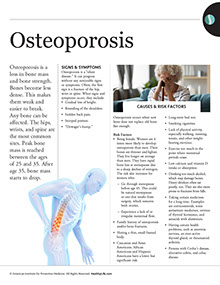
    Osteoporosis is a loss in bone mass and bone strength. Bones become less dense. This makes them weak and easier to break. Any bone can be affected. The hips, wrists, and spine are the most common sites. Peak bone mass is reached between the ages of 25 and 35. After age 35, bone mass starts to drop.

    Signs & Symptoms

    Osteoporosis is a “silent disease.” It can progress without any noticeable signs or symptoms. Often, the first sign is a fracture of the hip, wrist, or spine. When signs and symptoms occur, they include:

    *  Gradual loss of height.

    *  Rounding of the shoulders.

    *  Sudden back pain.

    *  Stooped posture.

    *  “Dowager’s hump.”

    Causes

    Osteoporosis occurs when new bone does not replace old bone fast enough.

    Risk Factors Include:

    *  Being female. Women are 4 times more likely to develop osteoporosis than men. Why?

    – Their bones are thinner and lighter.

    – They live longer on average than men.

    – They have rapid bone loss at menopause due to a sharp decline of estrogen. The risk also increases for women who: Go through menopause before age 45. This could be natural menopause or one that results from surgery which removes both ovaries. Experience a lack of or irregular menstrual flow.

    *  Having a thin, small framed body.

    *  Being Caucasian or Asian. African Americans and Hispanic Americans are at a risk, too.

    *  Lack of physical activity, especially walking, running, tennis, and other weight-bearing exercises.

    *  Long-term bed rest.

    *  Exercising too much to the point where menstrual periods cease.

    *  Low calcium and vitamin D intake or absorption.

    *  Family history of osteoporosis and/or bone fractures.

    *  Smoking cigarettes.

    *  Drinking too much alcohol, which may damage bones. Heavy drinkers often eat poorly, too. They are also more prone to fractures from falls.

    *  Taking certain medicines for a long time. Examples are: Corticosteroids; some antiseizure medicines; overuse of thyroid hormones; and antacids with aluminum.

    *  Having certain health problems, such as anorexia nervosa, an over-active thyroid gland, or rheumatoid arthritis.

    *  Persons with Crohn’s disease, ulcerative colitis, and celiac disease are at risk, too.

    Treatment

    There is no cure for osteoporosis. The focus of treatment is to prevent the disease, to prevent further bone loss, and build new bone. Special X-rays, such as one known as DEXA, can measure bone density in various sites of the body. These tests can help doctors decide if and what kind of treatment is needed. Treatment includes:

    *  Medications. There are different kinds. Your doctor will prescribe one(s) best suited for your needs.

    *  A balanced diet rich in calcium and vitamin D and taking supplements of these, as needed.

    *  Exercises, as advised by your doctor.

    *  Proper posture.

    *  Fall prevention measures:

    – Wear flat, sturdy, non-skid shoes.

    – Get regular vision exams. Wear corrective glasses, etc., as needed.

    – Ask your doctor if any medications you take could increase the risk of falls. Ask how to deal with this. Let your doctor know if your medicine(s) affect your vision, balance, etc.

    – Use grab bars and safety mats or nonskid tape in your tub and shower.

    – Use handrails on stairways.

    – Pick things up by bending your knees and keeping your back straight. Don’t stoop.

    – Use a cane or walker if necessary.

    – If you use throw rugs, use ones with nonskid backs.

    – See that halls, stairways, and entrances are well lit. Use night lights in hallways, bathrooms, etc.

    – Stay home if it is icy or slippery outside.

    Questions to Ask

    Self-Care / Prevention

    To Treat Osteoporosis

    *  Take medications, as prescribed.

    *  Do the daily exercises approved by your doctor.

    *  Practice good posture.

    To Treat, Slow, and Prevent Osteoporosis

    *  Eat a balanced diet.

    *  Get your daily calcium need.

    Choose High Calcium Foods Daily

    *  Skim and low-fat milks, yogurts, and cheeses. {Note: If you are lactose intolerant, you may need to use dairy products that are treated with the enzyme lactose or you can add this enzyme using over-the-counter drops or tablets.}

    *  Soy milks and yogurts with added calcium.

    *  Soft-boned fish and shellfish, such as cod, salmon, sardines, and shrimp.

    *  Vegetables, especially broccoli, kale, and collards.

    *  Beans and bean sprouts, as well as tofu (soy bean curd), if processed with calcium.

    *  Calcium-fortified foods, such as some orange juices, apple juices, and ready-to-eat cereals.

    *  Take calcium supplements, as advised by your doctor.

    Get Your Recommended Daily Need for Vitamin D.

    *  Choose nonfat and low-fat dairy products that are fortified with vitamin D, saltwater fish, liver, and egg yolks. You also get vitamin D from direct exposure of sunlight on your skin. Fifteen minutes of midday sun exposure (without sunscreen) may meet the daily need.

    *  Take vitamin D supplements, as advised by your doctor. The best source of vitamin D for bone health is vitamin D3.

    *  Do regular, weight-bearing exercises at least 3 or 4 times a week. Examples are walking and low-impact or non-impact aerobics. (If you have osteoporosis, follow the exercise program outlined by your doctor.)

    *  Do not smoke.

    *  Limit alcohol.

    *  Use fall prevention measures.

    Resources

    National Osteoporosis Foundation

    www.nof.org

    Women's Self-Care book by the American Institute for Preventive Medicine. www.HealthyLife.com. All rights reserved.

    © American Institute for Preventive Medicine
  • Endometriosis

    Women’s Health

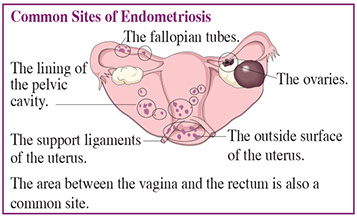
    The lining inside of the uterus is called the endometrium. Sometimes cells from it grow outside of the uterus in the abdomen or in some other areas of the body. This is called endometriosis. It can cause scar tissue to build up around your organs.

    Women in their 20s, 30s, and 40s are most likely to notice problems. Teens and women past menopause can have them, too.

    Signs & Symptoms

    *  Pain before and during menstrual periods. The pain is usually worse than normal menstrual cramps.

    *  Pain during or after sex.

    *  Pain when passing urine.

    *  Lower back pain. Painful bowel movements. Loose stools with menstrual periods.

    *  The pelvis feels sore or tender.

    *  Spotting of blood before a monthly period starts.

    *  Menstrual periods are longer or heavier than normal.

    *  Infertility.

    Some females have no pain.

    Causes

    The exact cause is not known. It could be that some of the lining of the uterus moves backwards through the fallopian tubes into the abdominal cavity. It then attaches and grows in these places. It could also be due to problems with the immune system and/or hormones. The condition may also run in families.

    Common sites of endometriosis.

    A gynecologist diagnoses endometriosis. He or she can examine the organs in the abdomen and pelvis to find out the extent of the problem. To do this, the doctor inserts a slim telescope through a very small opening made in the navel. This is done in an outpatient setting.

    Treatment

    Surgery Options

    *  One type uses a very small, lighted tube to remove or destroy areas of endometriosis. This reduces pain. It allows pregnancy to occur in some women.

    *  Another type removes the ovaries. The fallopian tubes and uterus can also be removed. This gets rid of the pain. A woman can’t get pregnant after this is done.

    Medication Therapy Options

    *  Pain medicines. These include over-the-counter medicines, such as ibuprofen and naproxen sodium.

    *  Birth control pills. These are given in a certain way to stop ovulation and menstruation for a set amount of time. They are used for very mild cases.

    *  Anti-estrogens. These cause a woman’s body to make less estrogen.

    *  Progestin. This destroys endometrial cells.

    *  Drugs called GnRH agonists. These stop the body from making estrogen. This causes a temporary “menopause.”

    Questions to Ask

    Self-Care / Prevention

    Endometriosis needs medical treatment. What can you do?

    *  Do regular exercise.

    *  Eat a diet high in nutrients and low in fat, especially saturated fat. This is mostly found in hydrogenated vegetable oils (trans fats), animal sources of fat, and coconut and palm oils.

    *  Take an over-the-counter medicine for pain. Ask your doctor which one(s) he or she prefers you take.

    Resources

    Endometriosis Association (EA)

    800.992.3636

    414.355.2200

    www.endometriosisassn.org

    Women's Self-Care book by the American Institute for Preventive Medicine. www.HealthyLife.com. All rights reserved.

    © American Institute for Preventive Medicine
  • Ovarian Cysts & Cancer

    Women’s Health

    The ovaries are two almond-sized organs. One is found on each side of the uterus. Growths called cysts or tumors can form in, on, or near the ovaries.

    Cysts are sacs filled with fluid or semisolid matter. Ovarian cysts are common in women before menopause. Rarely are these cysts cancer.

    Tumors are solid masses. Most often, tumors in the ovary are benign. Malignant tumors are ovarian cancer. This type of cancer occurs most often between the ages of 50 and 75. It can occur at other ages, too.

    Signs & Symptoms

    For Ovarian Cysts

    When symptoms occur, they include:

    *  A feeling of fullness or swelling of the abdomen.

    *  Weight gain.

    *  A dull, constant ache on either or both sides of the pelvis.

    *  Pain during sex.

    *  Delayed, irregular, or painful periods.

    *  Growth of facial hair.

    *  A cyst that bleeds, breaks, or twists can cause sharp, severe abdominal pain, fever, and vomiting.

    For Ovarian Cancer

    In many cases, the cancer has spread by the time it is found. When symptoms appear, they are vague problems and are often ignored. These symptoms, even in early-stage ovarian cancer, last almost daily for more than a few weeks:

    *  Bloating.

    *  Pain in the abdomen or pelvis.

    *  Difficulty eating or feeling full quickly.

    *  Urgent need to pass urine or passing urine often.

    Other symptoms can include:

    *  Back pain. Pain with intercourse.

    *  Constipation. Indigestion.

    *  Fatigue.

    *  Menstrual irregularities.

    Causes & Risk Factors

    For Ovarian Cysts

    *  Some cysts are due to normal changes in the ovaries.

    *  Some cysts result from cell growth. Most of these are benign, but need medical treatment. Examples are:

    – Dermoid cysts. These are growths filled with many types of tissue. Examples are fatty material, hair, teeth, bits of bone, and cartilage.

    – Polycystic ovaries. These are caused by a buildup of multiple small cysts from hormone problems. Irregular periods, body hair growth, and infertility can result.

    {Note: Taking hormones does not cause ovarian cysts.}

    Risk Factors for Ovarian Cysts

    *  Being between the ages of 20 and 35.

    *  Endometriosis. Pelvic inflammatory disease (PID). The eating disorder bulimia.

    *  Obesity.

    Risk Factors for Ovarian Cancer

    *  Not having children. Having children at an older age.

    *  Not ever taking birth control pills.

    *  Menopause after age 55.

    *  Family history of ovarian, colon, breast, prostate, or lung cancer.

    *  Personal history of breast, uterine, colon, or rectal cancer.

    *  Being Caucasian.

    *  Increasing age.

    Treatment

    Growths on ovaries are diagnosed with a pelvic exam and medical tests. Ways to detect growths include yearly pelvic and rectal exams and an ultrasound. No completely reliable test exists for ovarian cancer. A CA-125 blood test can detect the progression of ovarian cancer. It is not a reliable screening test.

    For Ovarian Cysts

    Treatment depends on the size and type of cyst(s); how severe symptoms are; the woman’s health status; and her desire to have children.

    Some cysts resolve without any treatment in 1 to 2 months. For others, hormones in birth control pills may suppress the cyst. Sometimes, surgery may be needed to remove it. The ovary and fallopian tube may need to be removed, too.

    For Ovarian Cancer

    The sooner the cancer is found and treated, the better the chance for recovery. Treatment includes:

    *  Surgery. The ovaries, uterus, and fallopian tubes are removed. If the cancer has spread, the surgeon removes as much of the cancer as possible.

    *  Chemotherapy.

    *  Radiation therapy.

    *  Clinical trials.

    Questions to Ask

    Self-Care / Prevention

    For Ovarian Cysts

    *  Limit caffeine.

    *  Have regular pelvic exams, as advised by your doctor.

    *  Take an over-the-counter medicine for pain as directed.

    For Ovarian Cancer

    *  Medical care, not self-care, is needed. Follow your doctor’s advice.

    *  Ask your doctor for advice if you have a family history of ovarian cancer.

    Resources

    National Women’s Health Information Center

    www.womenshealth.gov

    Women's Self-Care book by the American Institute for Preventive Medicine. www.HealthyLife.com. All rights reserved.

    © American Institute for Preventive Medicine