Category: Medical Care

  • Gather Facts

    Medical Care

    Image of 4 people sitting and talking.

    Decisions you make about your health can affect the length and quality of your life. Choose wisely. To do this, you need to gather facts. Use these sources:

    *  You. You know more about you than anyone else. Be in touch with how you feel, physically and emotionally. Keep track of past and present health concerns.

    *  Your doctor. Ask for his or her advice. Your doctor may also have written materials on your condition.

    *  Medical resources. These include:

    – The Internet’s world wide web. Look for credible sites, such aswww.medlineplus.gov,www.healthfinder.gov, and other Web sites which end in .gov. Other credible sites are ones from hospitals, medical centers, and medical associations. Most often, these sites end in .edu and .org. Beware of Web sites that promote health fraud and quackery. Accesshttp://quackwatch.orgfor information. Also, check with your doctor before you follow advice from a Web site. The advice may not be right for your needs.

    – Not-for-profit groups. These include the American Cancer Society, the American Heart Association, and the American Diabetes Association. To get information, call their toll-free numbers or access their Web sites.

    – Government agencies. One is the National Heart, Lung, and Blood Institute (NHLBI). Accesswww.nhlbi.nih.gov.

    – Support groups for conditions, such as breast cancer. Check local hospitals for lists of support groups near you. Also, contact the American Self-Help Group Clearinghouse Self-Help Group Sourcebook Online atwww.mentalhelp.net/selfhelp.

    Your job is to gather facts. Once you have the facts, you and your doctor can make the medical decision(s) best suited to your needs.

    Page from the Healthier at Home book by the American Institute for Preventive Medicine. www.HealthyLife.com. All rights reserved.

    © American Institute for Preventive Medicine

  • Planning For Health Care Coverage

    Medical Care

    Image of couple talking to a health care agent.

    Medical costs are expensive. Whether you are in your 50s, 60s, 70s, or older, now is the time to review how you cover them. Now is the time, too, to plan for how they will be paid for in the future. Without health insurance, some persons could lose all their assets if they had to pay for medical expenses.

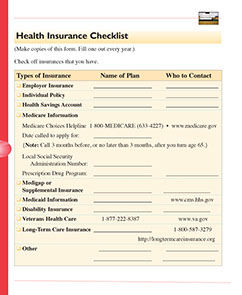
    Like life insurance, health insurance can be hard to understand. Don’t let it baffle you, though. Find out what you need to know to protect yourself and your assets. Don’t find out you have too little coverage when it’s too late. Use the “Health Insurance Checklist” to keep track of your health care coverage.

    If you are a Veteran, find out about Veterans health care from

    Page from the Health at Home Lifetime book by the American Institute for Preventive Medicine. www.HealthyLife.com. All rights reserved.

    © American Institute for Preventive Medicine

  • Save On Hospital Services

    Medical Care

    Image of nurse helping a women walk.

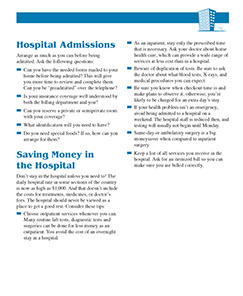
    Hunt for hospital quality.

    Choose a hospital that has a good success record with the kind of surgery you need. You are less likely to die or have serious problems if the hospital does the surgery a lot. What is “a lot”? Some experts say the hospital should do a surgery at least 200 times a year. If the surgery you need is rare, that may not be possible. Ask about the hospital’s experience with surgeries like yours. Talk to your doctor, the hospital administrator, or the hospital’s chief of staff.

    Avoid hospital germs.

    Five to 10% of all hospital patients will get an infection they did not have before they were in the hospital. To protect yourself:

    *  Be well-rested and well fed before you go to the hospital.

    *  Check that persons who give you care wash or sanitize their hands.

    *  If a roommate gets pneumonia, ask to have your room changed.

    Control consults.

    You could get a hospital bill for a doctor visit that you didn’t even know about. To avoid this, try to make sure your doctor knows that you or someone acting for you must approve a consult with another doctor. If you can, ask your insurance company if the cost of the consult is covered in part or in full.

    Keep track of hospital services.

    Keep a list of services you get. Compare the list to your hospital bill. Have a friend or relative make the list if you can’t. Also, ask for an itemized bill and check it. Some common things to note are:

    *  Doctor visits. X-rays. Tests.

    *  Medicines (pills, shots, IVs).

    *  Giving blood samples.

    *  Consults and services with specialists.

    *  Anesthesia. Surgery. Receiving blood.

    *  Room charges. Telephone and TV charges.

    You stay, you pay.

    Find out when hospital check out time is and make plans to follow it. If not, you may be charged for an extra day.

    Cover image to the Healthy Savings book by the American Institute for Preventive Medicine. www.HealthyLife.com. All rights reserved.

    © American Institute for Preventive Medicine

  • Stopping Health Care Fraud

    Medical Care

    Health care fraud is stealing:

    *  It steals money from health insurance companies.

    *  It steals money from taxpayer programs, such as Medicare and Medicaid.

    *  It steals money from you.

    The stealing is done on purpose when someone submits false information to get paid for health care benefits. Health care fraud is a big problem. It occurs every day across the U.S. Persons from all ages, races, and incomes are victims of it.

    Types of Fraud

    Ways Medical Providers Commit Health Care Fraud

    *  They bill for services and/or supplies that were not given. A provider may use real patient information to fabricate an entire claim. Or, a claim can be padded with charges for services, etc. that did not take place.

    *  They bill for services that cost more than the ones that were given. This is called “upcoding.” For example, a provider may submit a claim for an extended office visit when the patient was seen only briefly. On the claim, the provider uses the code number for the extended visit, not for a brief visit, which costs less. Often, the provider “inflates” the patient’s diagnosis to justify billing for the more costly service.

    *  They charge more than once for the same service. This is double billing.

    *  They give services and/or order tests that are not medically needed. This is done just to get the insurance payment. The provider may even give a false diagnosis to justify doing this.

    *  They claim a non-covered treatment as one that is a covered expense. For example, a cosmetic surgery, such as a “tummy tuck,” is billed as a hernia repair.

    *  They bill separate claims for services that should be billed together as one. For example, surgery on four fingers done at the same time is billed as four claims, not one.

    *  They waive co-pays. This means they don’t collect money that patients should pay for out of their pockets. When patients don’t have to pay anything, they are more likely to agree to have services that aren’t medically needed. Also, health care providers use this practice as a way to misrepresent their “usual” fees to insurance companies and bill them for more than they should.

    *  They take money in exchange for patient referrals.

    *  They let an unlicensed person provide services and bill for them.

    Ways Patients Commit Health Care Fraud

    *  They submit claims for services, medicines, etc. that they didn’t get.

    *  They let another person use their health insurance card. They use someone else’s card.

    *  They change or forge bills, prescriptions, or receipts.

    *  They give wrong information on purpose to receive benefits.

    *  They fail to give information to the insurance company.

    *  They try to add someone who is not legally a dependent to their insurance plan. To do this, they lie about their marital status, paternity, etc.

    *  They don’t let the insurance plan know about a divorce. They do this on purpose to keep coverage for the ex-spouse and/or step children who are no longer eligible for coverage under the plan.

    *  They fail to disclose other insurance coverage. This could be worker’s compensation for an on-the-job- injury. It could be auto accident insurance payment for health care costs.

    *  They take money or other perks from a provider for receiving services.

    Ways Others Commit Health Care Fraud

    *  Identity theft. Health insurance card(s) or number(s) are taken and used to bill insurance programs for treatment not given.

    *  Mobile labs. Diagnostic labs in trailers, etc. give fake or needless procedures to consumers. Then, they bill insurance programs for costly procedures.

    Affects of Fraud

    Health Care Fraud Costs You Money

    *  It makes you pay more for health insurance. Your premiums go up. You pay more for out- of-pocket costs. Your co- pays and deductibles cost more.

    *  It increases the cost for Medicare and Medicaid. As a result, you may need to pay more taxes. Also, tax dollars spent on health care fraud leaves less money for other taxpayer programs, such as education.

    *  It increases costs in general. To cover increased costs for employee health benefits, companies need to charge more for products. Things you buy, such as cars, clothes, computers, etc. end up costing more money.

    Health Care Fraud Can Affect Your Health

    *  It can cause harm. Scam providers may order treatments that you don’t need. This includes heart surgery, which can threaten your life. They do this just to make money from your insurance company.

    *  It can use up lifetime caps or other limits of your benefits. Money used for false claims and needless treatments count toward your lifetime or other limits.

    *  It could cause injury and even death. This can occur in auto accidents that are staged to collect insurance money.

    Detect Fraud

    Ways To Detect It

    Fighting health care fraud is a priority for companies, insurers, and the government. They are using many measures to do this. These include:

    *  Computer software programs that help detect fraud. One kind analyzes data for trends or ratios that are unusual or not expected. Another kind quickly sorts data to get certain information, such as:

    – False billings.

    – Billing too much.

    – Billing too little.

    – Unusual patterns for paying vendors, etc.

    Software can also “rebundle” claims. This allows the insurance company to see if services performed at the same time were billed for as ones done at different times. These software programs don’t detect all types of fraud. Nothing about the coding or payment would signal fraud. For example, the software would not detect billing for an extended office visit when a brief visit was done.

    *  Special Investigation Units (SIUs). These include trained professionals in accounting, health care, law enforcement, nursing, etc.

    *  Fraud bureaus. These were created by state insurance regulators. They are found in most states.

    *  Employee training.

    *  Fraud hotlines.

    What You Can Do

    Ways To Help Prevent Health Care Fraud

    *  Learn about your health insurance. Read about your benefits. This can be in a booklet. It can be on the insurance company’s Web site.

    *  Find out what the plan does and does not pay for. Find out what you pay. Learn what the plan’s limits are. If you have more than one health plan, find out which expenses are covered by each plan. This prevents more than one plan from paying for the same service. Would you want an item you charge on a credit card to be billed on two credit cards?

    *  Ask questions about proposed treatment, tests, etc. Are these needed and why? What do they cost? Get a second opinion if surgery is proposed.

    *  Fill out, sign, and date one claim form at a time. I Keep a record of your medical care. Note the following:

    – Dates and places of care.

    – Services received.

    – Names of persons who treated you.

    – Medicines, supplies, and equipment you received.

    – Tests and other services that were ordered and if they were done.

    *  Don’t sign blank claim forms.

    *  If your health insurance company was not yet billed for services, give the provider your insurance information.

    *  Read the Explanation of Benefits (EOB) statements you get. An EOB is a report from your insurance company. It shows what it paid for and what it did not pay for. It is not a bill.

    – Compare the dates of services, procedures, tests, etc. with your medical bills. Do they match?

    – If you don’t understand the EOB form, contact your insurance company.

    *  Compare your medical bills and the EOB statements. Contact your provider and your insurance company to report errors.

    *  Protect your health insurance ID card. It represents your benefits. In general, be careful about giving out your insurance information.

    *  Don’t buy health insurance online

    *  Don’t buy health insurance from persons who sell it door-to-door or on the phone.

    *  Be wary of persons who offer cash or free items or services to get you to buy insurance.

    *  Read all medical bills you get from your doctor, hospital, etc.

    – Check the date(s) of service. Are these correct?

    – Look for errors.

    – Check to make sure that you received the services you are being billed for.

    – If the bill just lists a total charge, ask for an itemized bill. {Note: Ask for an itemized bill when you leave a hospital.} Ask for one that lists services in words you can understand, not just code numbers. Why? When providers bill for services, they use code numbers for diagnoses and procedures, such as ones called ICD-9-CM Codes. If necessary, ask what the code numbers stand for.

    – Check to see if you were billed more than once for the same service. Double-billing is a common error.

    – If a bill lists “miscellaneous” charges, find out all the items this includes.

    – If you don’t understand a bill, call the number on the statement. Call your insurance company, too. Get problems resolved before you pay for a bill or have the insurance company send payment.

    *  Know about the “qui tam” part of The False Claims Act. This allows a person to bring a civil case against persons who submitted false claims to the government, such as to Medicaid. If the lawsuit results in a court judgment, the “whistle blower” can get part of the money made.

    Is health care fraud a crime?

    Yes, it is a very serious crime. For the Department of Justice, health care fraud and abuse is the number two priority after violent crime. Persons convicted of health care fraud can go to prison. They can pay hefty fines. If the fraud they commit causes someone to die, they could be sentenced to life in prison.

    The cost of health care fraud is huge.

    *  Some estimates by government and law enforcement groups say it costs as much as $180 billion dollars a year!

    *  Medicare and Medicaid are big targets. One out of every seven dollars spent on Medicare is due to fraud and abuse.

    Resources

    BNA Health Care Fraud Report

    www.bna.com/products/health/hfra.htm

    Coalition Against Insurance Fraudwww.insurancefraud.org

    National Fraud Information Center/Internet Fraud Watch

    www.fraud.org

    National Health Care Anti-Fraud Association (NHCAA)

    www.nhcaa.org

    Cover image to the Health Care Fraud brochure by the American Institute for Preventive Medicine. www.HealthyLife.com. All rights reserved.

    © American Institute for Preventive Medicine

  • Protect Yourself – Preventing Medical Errors

    Medical Care

    Medical errors are a leading cause of death and injury. It has been reported that about 195,000 patients a year die in U.S. hospitals due to medical errors that could have been prevented. This brochure lists important tips on what you can do to help protect yourself from medical errors.

    Medical Errors

    Medical errors occur when a planned part of medical care doesn’t work out or when the wrong plan was used in the first place. Medical errors can occur anywhere in the health care system, including:

    *  Hospitals and clinics.

    *  Outpatient surgery centers.

    *  Doctors’ and other healthcare providers’ offices.

    *  Nursing homes.

    *  Pharmacies.

    *  Patients’ homes.

    Examples of medical errors are:

    *  A wrong medicine is prescribed or taken. Too much or not enough medicine is taken. Harmful medication interactions occur.

    *  A patient is given blood that doesn’t match his or her own type.

    *  Diagnostic tests are not ordered. Test results are misinterpreted or action is not taken on abnormal test results.

    *  The wrong diagnosis is made. This can lead to an incorrect choice of therapy.

    *  Equipment failure occurs.

    *  Mistakes are made before, during, and after surgery.

    *  Guidelines are not followed to prevent infections.

    Most errors result from problems created by today’s complex health care system. But errors also happen when doctors and their patients have problems communicating.

    What Can You Do?

    The single most important way you can help to prevent errors is to be an active member of your health care team. Do this A.S.A.P.

    *  Ask questions.

    *  Speak up for your needs.

    *  Acquire information.

    *  Protect yourself.

    Take an active role in every decision about your health care. Research shows that patients who are more involved with their care tend to get better results. If necessary, have a family member or friend oversee your care. Specific tips, based on scientific evidence about what works best, follow.

    Tips

    Hospital Tips

    *  Ask all health care workers who have direct contact with you if they have washed or sanitized their hands. Hand washing and hand sanitizing are important ways to prevent the spread of infections in hospitals.

    *  When you are being discharged from the hospital, ask for an explanation and written instructions for the treatment plan you will use at home. This includes learning about your medicines and finding out when you can get back to your regular activities. Research shows that at discharge time, doctors think their patients understand more than they really do about what they should or should not do when they return home.

    Surgery Tips

    *  If you are having surgery, make sure that you, your doctor, and your surgeon all agree and are clear on exactly what will be done. Doing surgery at the wrong-site (for example, operating on the left knee instead of the right) is rare. But even once is too often. The good news is that wrong-site surgery is 100 percent preventable. Surgeons at VA hospitals outline or trace the area on the surgery site. The surgeon then initials the area. At a non-VA hospital, sign your initials directly on the site to be operated on.

    Medicine Tips

    *  Make sure that all of your doctors know about everything you are taking. This includes prescription and over-the-counter medicines, and dietary supplements, such as vitamins and herbs. Keep a complete and up-to-date list of all the medicines you take or print one from yourwww.myhealth.va.govWeb site. If you are not already registered for this, see how to do so on the last panel of this brochure. At least once a year, show all of your medicines and supplements, in their original containers, to your doctor. Doing this can help you and your doctor talk about them and find out if there are any problems. It can also help your doctor keep your records up-to-date, which can help you get better quality care.

    *  Make sure each doctor who prescribes medicine for you knows about any allergies and adverse reactions you have had to medicines and to foods, such as shrimp. This can help you avoid getting a medicine that can harm you. See that things that you are allergic to are written clearly in your medical records and on your hospital chart. Wear a medical ID tag that lists your health conditions and allergies.

    *  When your doctor writes a prescription for you, make sure you can read it. If you can’t read your doctor’s handwriting, your pharmacist might not be able to either. Ask your doctor for one you can read.

    *  Ask for information about your medicines in terms you can understand-both when your medicines are prescribed and when you receive them.

    – What is the medicine for?

    – How am I supposed to take it, and for how long? Speak up if it is hard for you to swallow pills. Some medicines are not effective if they are crushed before swallowed. Ask your doctor to write a prescription for medicine in a form you are better able to take.

    – What side effects are likely? What do  I do if they occur?

    – Is this medicine safe to take with other medicines or dietary supplements I am taking?

    – What food, drink, or activities should  I avoid while taking this medicine?

    *  When you pick up your medicine from the pharmacy, ask, “Is this the medicine that my doctor prescribed?” If you get medicines refilled through your VA Rx Refill service, call your Pharmacy Service or your healthcare provider for questions and concerns. A study by the Massachusetts College of Pharmacy and Allied Health Sciences found that 88 percent of medicine errors involved  the wrong drug or the wrong dose.

    *  If you have any questions about the directions on your medicine labels, ask. Medicine labels can be hard to understand. For example, ask if “four doses daily” means taking a dose every 6 hours around the clock or just during regular waking hours.

    *  Ask your pharmacist for the best device to measure your liquid medicine. Also, ask questions if you’re not sure how to use it. Research shows that many people do not understand the right way to measure liquid medicines. For example, many use household teaspoons, which often do not hold a true teaspoon of liquid. Special devices, like marked syringes, help people to measure the right dose. Being told how to use the devices helps even more.

    *  Ask for written information about the side effects your medicine could cause. It’s hard to remember everything your doctor tells you. Written information about medicines can help you recognize problem side effects and then give that information to their doctor or pharmacist.

    Steps You Can Take

    *  Speak up if you have questions or concerns. You have a right to question anyone who is involved with your care.

    *  Make sure that someone, such as your personal doctor, is in charge of your care. This is especially important if you have many health problems or are in a hospital.

    *  Make sure that all health professionals involved in your care have important health information about you. Do not assume that everyone knows everything they need to.

    *  Ask a family member or friend to be there with you and to be your advocate (someone who can help get things done and speak up for you if you can’t). Even if you think you don’t need help now, you might need it later.

    *  If you have a test or procedure, don’t assume that no news is good news. Ask about the results and find out what the results mean for you.

    *  Learn about your condition and treatments by asking your doctor and nurse and by using other reliable sources. You can get treatment recommendations based on the latest scientific evidence from the National Guidelines Clearinghouse™ atwww.guideline.gov.

    *  Get reliable, secure Veterans health information, from:www.myhealth.va.gov. Complete the “In Person Authentication (IPA)” process. It’s easy, quick and of course, free. All you need to do is go to your VA Medical Center or VA clinic and tell a VA staff/volunteer or contact person that you want to complete the In-Person Authentication process.

    *  The In Person Authentication (IPA) is used to verify your user identity for information and tools you need to improve and help protect your health. You’ll be able to see and reorder your prescriptions from your home or clinic kiosk. Coming soon, you will be able to schedule appointments, laboratory tests, and X-rays. Next year, you will be able to send secure messages to your health care team.

    Cover image to the Protect Yourself brochure by the American Institute for Preventive Medicine. www.HealthyLife.com. All rights reserved.

    © American Institute for Preventive Medicine

  • Save On Medications

    Medical Care

    Image of mother and daughter at the pharmacy.

    Ask for freebies.

    If you are prescribed a new medicine, ask your doctor if you can have free samples or a prescription for fewer tablets. This allows you to try the medicine before you pay for a full month’s supply.

    No frills pills.

    Instead of brand name drugs, ask for generic ones. These usually cost less. Co-pays for generics cost less, too. Even if your doctor gives you free samples to try, ask if a generic form of the medicine can be prescribed. If the sample medicine does not have a generic form, ask if you can get another generic medicine that has the same effects. Find out more about generic drugs from 888.INFO.FDA (463.6332) orwww.fda.gov/cder/ogd.

    Split the pill, split the cost?

    When your doctor prescribes medicines, ask if it would save money to prescribe pills that could be split in half. This means you would get two months of medicine for the cost of one. Use a pill splitter from a drug store to help keep the halves an equal size. Split one pill at a time so you take the halves in back-to-back doses.

    Mail order your medicine.

    Use a mail order pharmacy for prescribed medicines you take on a regular basis. You usually get a 3-month supply for the same cost you would pay for one month at a drug store. Your doctor needs to write a prescription for 3 months.

    Shop around.

    Medicine prices can vary a lot. Call large chains first. They can pass along the savings of buying in bulk. Even so, your local pharmacy may have a lower price on some drugs. Make sure the pharmacy takes your insurance. Some pharmacies offer 24-hour emergency and delivery services. Some keep track of all the drugs you buy. They can check for harmful mixtures of drugs. Think about helpful service and convenience, as well as cost.

    Deal or no deal.

    Costs for medicines from foreign Internet sites may or may not be cheaper. A study by the FDA showed that generic drugs sold in the U.S. are often cheaper than both Canadian brand-name and generic drugs. Factor in shipping and handling costs, too. {Note: Get safety information on imported drugs fromwww.fda.gov/importeddrugs. Before you buy prescriptions on the Internet, make sure the pharmacy has the VIPPS seal. This stands for Verified Internet Pharmacy Practice Sites. Also, check with the National Association of Boards of Pharmacy atwww.nabp.netor call 847.391.4406 to find out if a Web site is a licensed pharmacy in good standing.}

    Medicare Part D may be free.

    If you are eligible for Medicare, you may benefit from Medicare Part D Prescription Drug Savings Program. To find out, contact: Medicare Choices Helpline at 800.MEDICARE (633.4227) orwww.medicare.gov. Before you call, have a list of all the medicines you take, their dosages, and your zip code.

    Take all of it.

    If your doctor or pharmacist says to take a drug until it is gone, do it. Don’t stop taking the medicine even if you start to feel better. This also applies to medicines you take for high blood pressure, diabetes, and heart disease. You can also avoid the cost of getting sick again. If you stop taking medicines because you can’t pay for them, talk to your doctor.

    Store OTC medicines in a good place.

    The bathroom medicine chest is not a good place. Bathroom heat and humidity can make drugs lose their power faster. This means they would have to be replaced sooner. A kitchen cupboard or linen closet is better, especially if it has a lock.

    The best medicine may be no medicine.

    Don’t pressure your doctor to prescribe medicine if he or she doesn’t think you need it. For example, antibiotics treat bacterial infections, not viral ones, such as colds and flu.

    Find out about prescription savings programs.

    *  The Partnership for Prescription Assistance at 888.4PPANOW (477.2669) orwww.pparx.org. This program offers a single point of access to more than 475 public and private patient assistance programs. This includes over 150 drug company programs.

    *  NeedyMeds at 215.625.9609 orwww.needymeds.com. This Web site gives information to help you find programs to help you with the cost of medicines and other health care expenses.

    *  PAP Advocates for Patient Assistance Programs at 870.873.4629 orwww.prescriptionmedicationhelp.com. This helps you enroll in programs to be able to get prescribed medicines for free.

    *  RxAssist at 401.729.3284 orwww.rxassist.org. With this, pharmaceutical companies provide free medicines to people who cannot afford to buy their medicine.

    *  Together Rx Access atwww.togetherrxaccess.com. This is a prescription savings program for people with no prescription coverage. Persons enrolled get a Together Rx Access Card to present at drug stores to save money on certain prescriptions.

    *  FRxEE Medicine™ Foundation.com atwww.freemedicinefoundation.com.

    *  NORDs Medication Assistance Program atwww.rarediseases.org/programs/medication.

    Save money on store brands.

    When you do buy OTC medicines, buy store brands instead of name brands. Like prescribed generic medicines, these have the same active ingredients, but cost less.

    Keep it simple.

    When you buy over-the-counter medicines, don’t buy combination ones, such as cold pills that have a decongestant and an antihistamine. There will be times when you need only one of these ingredients.

    Read OTC labels.

    Don’t waste your money on over-the-counter (OTC) medicines that you don’t need. Read the label to make sure it’s the right product to treat your symptoms. If you have questions about how useful a product is, ask the pharmacist and/or your doctor.

    Simplify your home Rxs.

    Keep some OTC medicines handy for common problems like fever or heartburn. Only buy OTC medicines you use often because they lose their effects over time. Most are good for three years or less. (Check the labels for the expiration dates.)

    Cover image to the Healthy Savings book by the American Institute for Preventive Medicine. www.HealthyLife.com. All rights reserved.

    © American Institute for Preventive Medicine

  • Health Insurance Checklist

    Medical Care

    (Make copies of this form. Fill one out every year.) Check off insurances that you have.

    Page from the Health at Home Lifetime book by the American Institute for Preventive Medicine. www.HealthyLife.com. All rights reserved.

    © American Institute for Preventive Medicine

  • Rate Your Doctor

    Medical Care

    In order to feel good about your medical care, you should feel good about your doctor, too. Use this checklist when evaluating your physician.

    *  Is your doctor ‘board certified” or ‘board eligible?” To check, contact the American Board of Medical Specialists (ABMS) at 1.866.ASK.ABMS (275.2267) or accesswww.abms.org. Board certified means that he or she has two or more years of training in a specialty after medical school graduation and has passed a national examination certifying competence in the specialty. Board eligible means that the training has been completed, but not the exam. Please note, however, that credentials do not guarantee competency.

    *  Does your doctor listen to you and answer all your questions about the causes and treatment of your medical problems, or is he or she vague, impatient, or unwilling to answer?

    *  Are you comfortable with your doctor? Can you openly discuss your feelings and talk about personal concerns, including sexual and emotional problems?

    *  Does your doctor take a thorough history, asking about past physical and emotional problems, family medical history, drugs you are taking, and other matters affecting your health?

    *  Does your doctor address the root causes of your medical problems or simply prescribe drugs to treat the symptoms?

    *  Does your doctor have an associate to whom you can turn should he or she be unavailable?

    *  Do you feel at ease asking your doctor questions that may sound

    Page from A Year of Health Hints book by the American Institute for Preventive Medicine. www.HealthyLife.com. All rights reserved.

    © American Institute for Preventive Medicine

  • Save With Medical Self-Care. It Makes You More Aware.

    Medical Care

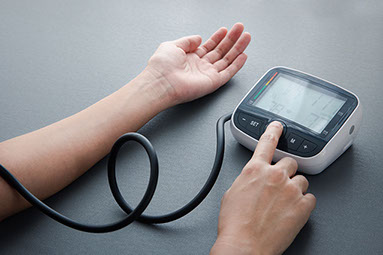
    Close up of arm and hand using an at home blood pressure machine.

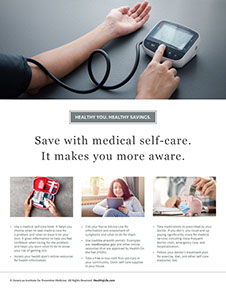
    *  Use a medical self-care book. It helps you choose when to seek medical care for a problem and when to treat it on your own. It gives information to help you feel confident when caring for the problem and helps you learn what to do to lower your risk of getting sick.

    *  Access your health plan’s online resources for health information.

    *  Call your Nurse Advice Line for information and assessment of symptoms and what to do for them.

    *  Use credible eHealth portals. Examples are:medlineplus.govand other online resources that are approved by Health On the Net (HON).

    *  Take a free or low-cost first-aid class in your community. Stock self-care supplies in your house.

    *  Take medications as prescribed by your doctor. If you don’t, you could end up paying significantly more for medical services including more frequent doctor visits, emergency care, and hospitalization.

    *  Follow your doctor’s treatment plan for exercise, diet, and other self-care measures, too.

    A Year of Health Hints book by the American Institute for Preventive Medicine. www.HealthyLife.com. All rights reserved.

    © American Institute for Preventive Medicine

  • Help Keep Costs Down To Size, The First Step Is To Organize

    Medical Care

    Notecard with "Stay Organized" written and a cup of coffee.

    *  Use a file box, 3-ring binder, or one of the many apps available to keep track of your health insurance information and health care expenses. Include up-to-date copies of your medicine log and personal and family medical records.

    *  Add medical bills, explanation of benefits (EOBs), and receipts for payments as you receive them. Add reports and lab results, too.

    *  Keep a running tally of expenses to see when you have met your deductible and yearly limits, such as for dental care.

    *  If you have a health flexible spending account (FSA), keep track of how much money you have left in it.

    *  Keeping good records helps you manage your bills, find billing errors, and be ready at tax time to claim medical expenses.

    A Year of Health Hints book by the American Institute for Preventive Medicine. www.HealthyLife.com. All rights reserved.

    © American Institute for Preventive Medicine