Category: Financial Health

  • Avalanche Your Debt

    FINANCIAL HEALTH

    Four credit cards layed on top of eachother.

    If you carry multiple credit card balances, reducing your debt can feel overwhelming. But there are many techniques to help you tackle your debt. One strategy is to create a debt avalanche.

    Here’s how it works:

    *  Make a list of your credit cards, their balances, interest rates, and minimum payments.

    *  Evaluate your budget to determine how much money you have available to pay toward your debts.

    *  If you don’t have much extra beyond your minimum debt payments, consider ways to bring in extra money to get your avalanche started.

    *  Identify the credit card with the highest interest rate. This is the one to pay off first.

    *  Each month pay the minimum balance on ALL your cards.

    *  Use any extra from your budget to pay more on your highest interest rate card.

    *  Once that card is paid off, move on to the card with the next highest interest rate while continuing to make minimum payments on all other cards.

    *  Each time you pay off a card, the amount of extra you can put towards your highest interest rate card goes up, creating a debt-paying avalanche.

    *  Your avalanche will pick up speed over time until you are credit card debt-free.

    *  Put away your cards, and don’t use credit unless you know you have the money to pay the bill in full.

    © American Institute for Preventive Medicine

  • Do You Need Property Insurance?

    FINANCIAL HEALTH

    Image of chalkboard drawing of house with hands protecting it from weather elements.

    Homeowner’s and renter’s insurance are types of property insurance. Although property insurance offers important coverage, many people don’t have it or don’t understand why it’s needed.

    Each policy is always somewhat different. But, both homeowner’s and renter’s insurance may cover:

    *  Damage to your house, garage or other buildings on your property

    *  Loss of furniture or other property due to theft

    *  Additional living costs if you have to move out during repairs

    *  Liability for accidents and injuries that happen on your property (for people other than you or your family)

    *  Coverage for special valuables, such as jewelry, collector’s items and other items that would be costly to replace

    Renters should not assume that the landlord carries insurance for them. Often, this is not the case. Most people who get a mortgage for a home will be required to purchase homeowner’s insurance.

    Property insurance policies can vary widely in cost and coverage. It pays to spend some time shopping around to different companies. Find the coverage you need at a price that works for you.

    Find out more about how much coverage you might need. Visit the National Association of Insurance Commissioners website atwww.naic.org.

    © American Institute for Preventive Medicine

  • Shopping Online Safely

    FINANCIAL HEALTH

    Image of couple shopping online.

    Using your computer, tablet or smartphone to shop can be quick and convenient. But, the internet is full of websites that aren’t trusted places to shop. To keep your personal information and money safe, follow these steps before you shop online:

    *Use major companies that you know.Look for a company address, phone number, and email. Read online reviews before buying.

    *Research the return policy.Can you get a full refund if you aren’t satisfied? What does it cost to send it back?

    *Know what shipping will cost.Be sure you know what the cost will be before you place the order. Shipping costs should be clearly listed on the website.

    *Never use cash.If you pay by credit card, your purchase is protected by the Fair Credit Billing Act. This means you can dispute charges you didn’t make. You may also be protected from having to pay for unauthorized charges if your card number is stolen.

    *Compare your credit card statement and your online receipt.Be sure the costs match.

    *Don’t use email for sending financial information.Email isn’t secure and someone could steal your information this way.

    Beware of fake online reviews

    You see a product online that has hundreds of glowing reviews. It must be great, right? Not necessarily. In fact, some companies have been sued by the FTC for providing fake online reviews. Some companies even pay people to write great reviews for their products, or delete negative reviews on their site.

    Take any online reviews with a grain of salt. If they seem too good to be true, they probably are. Almost any product will have some positive, neutral and negative opinions. If it doesn’t, this may be a red flag for a scam.

    Source: Federal Trade Commission

    © American Institute for Preventive Medicine

  • Avoid Dubious Debt Collectors

    FINANCIAL HEALTH

    Wife on phone while husband sits besides her.

    Have you ever received a call from a debt collector that did not seem quite right? Perhaps it was for a debt you already paid or for one you did not recognize. Either way, the call may have given you a moment’s hesitation, wondering if they had the right person or if the call was legitimate. Scams like this are on the rise across the nation, and it is important for you to protect yourself from any debt collection scam.

    Ask who is calling

    Ask for the collector’s name, the company’s name, its address and phone number. If they cannot answer any of that information, hang up.

    Keep personal information to yourself

    If the collector asks for you to confirm personal information, do not correct them if they give out wrong information. Do not volunteer any additional personal information.

    Demand a validation notice

    Collectors must provide a validation notice and tell them you will not discuss the debt until you have received it. This notice will tell you how much money you owe, the name of the creditor and what to do if you don’t think you owe the money. The debt should also appear on a free, annual credit report.

    Do not respond to threats

    If the collector threatens to have you arrested or take away your driver’s license, hang up and report the collector to the FTC atftc.gov/complaint.

    Do detective work

    Contact the original creditor yourself to get to the bottom of it. They should be able to confirm whether the debt is legitimate.

    Dispute the debt

    If you do not think you should owe anything, even if you got validation information, dispute it with the collector by mail or online.

    Source: Federal Trade Commission

    © American Institute for Preventive Medicine

  • Eat Healthy & Save On Groceries

    FINANCIAL HEALTH

    Illustration of grocery cart with fruit and vegetables.

    Many people assume that healthy food, such as fresh fruit, costs more than processed and less nutritious foods like crackers and cookies. Although the best foods aren’t always the cheapest, healthy foods are worth the money spent. A healthy diet can help you feel better physically and mentally, which could mean fewer doctor visits and a better quality of life. If you’d like to eat healthier but are afraid it will hurt your budget, try these tips to get the most bang for your buck at the supermarket.

    *Plan your meals.Once or twice a week, sit down and write out the recipes you’d like to cook for the next few days. Write down the ingredients and shop for only those items. You’ll be less likely to resort to takeout because you have “nothing to eat” and you can avoid unneeded purchases.

    *Buy what’s in season.There’s a reason strawberries cost more in the winter months. They become harder to grow, and they must be shipped to your store from greater distances. Instead of trying to eat “summer” foods year-round, find out what’s freshest during each season. Citrus fruits and pears, for instance, are often best during the colder months.

    *Start a garden.You don’t need a huge yard to take advantage of growing your own food. Even a few small pots on a back deck or porch can allow you to grow some of your favorite fruits or vegetables. They’ll be fresh and delicious when you harvest them, and you won’t have to buy them.

    *Stock up.Canned goods, packaged cereals and other nonperishable items can be bought in larger quantities when on sale and stored. If you’re not a fan of clipping coupons, try buying them in bulk when possible.

    *Don’t overlook store brands.Buying canned and frozen items of the generic or store brand could save you a few dollars each time you visit the grocery store. Also, consider store brand bread, pasta, juice and other items. You probably won’t taste the difference.

    *Don’t shop while hungry.Some studies suggest that shopping while hungry could lead you to purchase more food than you need. Uneaten food, even the healthy kind, is money wasted.

    © American Institute for Preventive Medicine

  • Smart Ways To Avoid Cybercrime

    FINANCIAL HEALTH

    Close up image of hands typing on laptop.

    Cybercrime is a growing problem as we rely on computers and the Internet more than ever before. Many people regularly shop online, send personal information, and even control appliances or household security over the Internet.

    Though this offers convenience, it’s important to take steps to keep your information and your family safe from cybercrime. Cybercrime happens every day with hackers stealing bank information, using computers to attack others, or erasing important online information.

    The U.S Department of Homeland Security recommends:

    *  Only use the Internet on a network that is password protected. Free or open networks may leave you vulnerable.

    *  Do not send personal information, such as your social security number or bank information, over the Internet. Companies will not ask you to send information this way.

    *  Do not open or respond to emails from people you don’t recognize and never click on the links inside the email.

    *  Use long, hard-to-guess passwords for all your devices and email accounts. Change your passwords regularly.

    *  Consider scaling back your social media sharing. Tighten privacy settings so only people you know well can see your activity.

    *  If you see an email or online offer that seems too good to be true, it’s probably a scam.

    © American Institute for Preventive Medicine

  • Stay Safe When Holiday Shopping

    FINANCIAL HEALTH

    Image of female on laptop with credit card in hand.

    The holidays are often a time for celebrations, get-togethers, and lots of shopping for gifts. Unfortunately, theft can happen any time of year, including during the holiday season. To keep yourself and loved ones safe when holiday shopping, consider these tips from the National Crime Prevention Council (NCPC):

    At malls and stores:

    *  To keep your money safe, carry your purse close to your body. Wallets are better kept in a front pocket, where they are harder to pickpocket.

    *  Have your keys ready when walking to your vehicle. Glance at the back seat and be aware of your surroundings before getting in.

    *  Don’t leave packages or valuables in your car where they can be seen. Take them home immediately, if possible, or keep them in the trunk.

    *  When shopping with children, teach them to go to a meeting place in case you get separated. Talk to them about finding store security guards or employees to help, if needed.

    When online shopping:

    *  Be sure you update anti-virus and anti-spyware software on your computer. Visitwww.bytecrime.org.

    *  Never give out your password or credit card information in response to emails. Valid companies will never ask for this type of information.

    *  Make sure the website is secure: look for a locked padlock at the bottom of the screen or “https” in the address at the top.

    *  Use secure payment methods, such as PayPal or Apple Pay, whenever possible. If using a credit card, check your transactions regularly and alert your bank if you notice anything suspicious.

    *  Check reviews of online stores to ensure the company is credible.

    Warm-up thefts are in season

    During the winter months, many people start their cars and let them warm up while they wait inside. This can be a prime opportunity for someone to steal your vehicle or items inside it, according to the NCPC. Here’s how to avoid these situations:

    *  Never leave your car running or keys in the ignition if you’re not in it, even for a minute.

    *  Always keep your car locked, and use anti-theft or alarm devices if you have them.

    *  Keep valuables out of sight (and preferably out of your car), such as phones, purses and electronics.

    © American Institute for Preventive Medicine

  • For The Health Of Your Wealth

    FINANCIAL HEALTH

    Image of female talking to an advisor.

    Do you want to take control of your financial life? It’s up to you to understand your own money, says investment advisor Paul Taylor, a member of the National Ethics Bureau. Taylor offers the following suggestions:

    For your cash flow, keep in mind the four A’s: Accounting, Analysis, Allocation, and Adjustment. The four A’s describe a systematic and disciplined approach to your daily, weekly, monthly, and yearly spending habits.

    *  Accounting involves gathering all your relevant financial information-income, recurring bills, and other expenditures-creating a central list of each item, and pulling it together in a place where it’s easy to find.

    *  Analysis is reviewing the information to determine whether you have a shortfall or surplus, and finding places to reduce expenses. Saving $100 a month on dining out, for instance, would allow you to apply $100 to your mortgage loan principal, saving you a substantial amount in interest payments.

    *  Allocation involves determining your financial commitments and priorities, needs versus wants, and distributing your income accordingly.

    *  Adjustment involves periodic reviews of your financial information and shifting assets to meet changing needs.

    © American Institute for Preventive Medicine

  • Stay Warm, Save Money

    FINANCIAL HEALTH

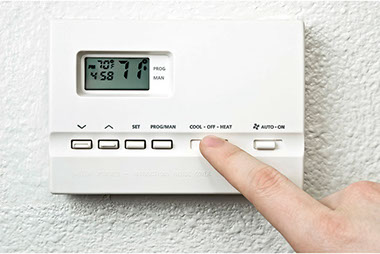
    Image of thermostat being set at 71 degrees.

    When temperatures drop, energy bills are higher. Duke Energy offers some simple energy (and money) saving tips:

    *  Check your heating system’s ductwork to ensure that it is well insulated and completely covered. Ductwork should be properly sealed and not allowed to hang loose under the house.

    *  Keep your thermostat at a comfortable setting. If you are going to be away for several days, turn the thermostat to a lower setting, but not off.

    *  Have your heating or cooling system checked each season by a qualified technician to make sure it is operating properly. Heating and cooling account for at least half of your energy bill.

    *  Check insulation, seal cracks, and weather-strips between heated and unheated areas such as garages, basements, and attics.

    *  If you have a window air conditioning unit, remove it for the winter months to prevent heat from escaping through and around the unit. If it cannot be moved, cover it to prevent drafts.

    *  Always make sure the fireplace damper seals tightly and remains closed except when a fire is burning or smoldering in the fireplace.

    *  Insulate your water heater with at least R-6 insulation. The water heater is the second-largest energy user in your home. You can save enough money in energy bills to pay back the cost of materials within months and then keep on saving.

    *  Ceiling fans help keep you comfortable in the summer and winter. Reversing the direction of the blades pushes warm air down into the room. Fans should turn counter-clockwise in the summer and clockwise in the winter.

    *  On sunny days, leave the draperies open to allow the sun’s rays to warm your house.

    © American Institute for Preventive Medicine