Category: Fitness

  • 3 “S”S To Get Fit During The Holidays

    BE FIT

    Jump roap shaped into a christmas tree with ornaments and fitness gear.

    Do you assume the holidays are too busy for exercise? Think the holidays are just about treats? Keep these three tips in mind and you could have a fit, healthy and happy holiday season!

    1.  Short bursts: Make your exercise bite-sized! Ten minutes of exercise here and there can be just as effective as 30 minutes at once. Try a quick walk first thing in the morning, at lunch and after work.

    2.  Stress relief: Is the holiday season too stressful? Exercise is one of the most effective ways to lower stress hormones in the body. Make time to move and you’ll feel great mentally and physically.

    3.  Savor it: Exercise doesn’t have to be a chore. Pick something you like, or play your favorite music while doing it. Make exercise your “me time.”

    Sources: National Institute of Diabetes and Digestive and Kidney Diseases, U.S. National Library of Medicine

    © American Institute for Preventive Medicine

  • 5 Things To Know About Yoga

    BE FIT

    Image of women in yoga position.

    Yoga typically combines physical postures, breathing exercises, and meditation or relaxation. Researchers are studying how yoga may be used to help improve health and to learn more about its safe use. If you’re thinking about practicing yoga, here are 5 things you should know from the National Center for Complementary and Alternative Medicine:

    1. Studies suggest that yoga may be beneficial for a number of conditions. Recent studies in people with chronic low-back pain suggest that a carefully adapted set of yoga poses can help reduce pain and improve function. Other studies also suggest that practicing yoga (as well as other forms of regular exercise) might have other health benefits such as reducing heart rate and blood pressure, and may also help relieve anxiety and depression.

    2. Research suggests that yoga is not helpful for asthma, and studies looking at yoga and arthritis have had mixed results.

    3. Yoga is generally considered to be safe in healthy people when practiced appropriately. However, people with high blood pressure, glaucoma, or sciatica, and women who are pregnant should modify or avoid some yoga poses.

    4. Practice safely and mindfully. Everyone’s body is different, and yoga postures should be modified based on individual abilities. Inform your instructor about any medical issues you have, and ask about the physical demands of yoga.

    5. Talk to your doctor about any complementary health practices you use, including yoga. Give them a full picture of what you do to manage your health. This will help ensure coordinated and safe care.

    © American Institute for Preventive Medicine

  • Commit To Be Fit

    BE FIT

    Image of middle-aged women with dumb bells.

    How are those resolutions going about now? You can make a renewed commitment to yourself and your health anytime. Here’s advice from Life Time Fitness to move forward:

    *Create a vision statement.Make your resolution a commitment and create a vision statement that projects clear personal investment and connects directly to your happiness and health. Once you’ve created your personal vision, you can identify what goals will get you there.

    *Don’t assume you know how to exercise.Many people who exercise think they know what to do when they walk into a gym, but it is common to use poor form, train at an inappropriate intensity, or choose the wrong exercises for your needs. A well-planned program using proper exercise technique will prove much more successful. Sit down with a well-qualified and certified personal trainer to talk about your exercise program to start on the right track.

    *Test your readiness.Ask yourself how ready you are to make an actual change. If your vision is health-based and you’ve made the goal of working out every morning of the week, ask yourself (on a scale of 1 to 10 with 10 being absolutely positive) how likely you’ll be able to commit and achieve that task and identify barriers that might get in the way. If your readiness is 7 or above, you’re ready to embark on your vision. If it’s below 7, change or revise your goal until you’re confident enough to know you’ll succeed. Small steps to succeed are better than big steps to fail.

    *Junk the junk.Don’t think you can stick to your diet while keeping junk food in the house. Make a commitment to get rid of all the foods that don’t promote health. Instead, fill your kitchen with good choices.

    *Put it on the fridge.Laminate it, frame it or post it on your mirror. The goal is to have your resolution statement somewhere where you will see it often as a reminder of what you are working toward. If you’re a social person, share it.

    © American Institute for Preventive Medicine

  • Fueling Your Workout The Healthy Way

    BE FIT

    Image of man at the gym.

    Food is your body’s fuel. When it comes to exercise, healthy food can power you through a workout session, while less healthy food can leave you feeling flat.

    Finding the right pre-workout foods doesn’t have to be complicated. Listen to your body and keep track of your diet. This can help you discover what you should eat – and avoid eating – when you want to make the most of your exercise time.

    No “quick fixes”

    Though many products on the market claim to boost energy and performance, many of them aren’t as healthy as nutritious, whole foods. Some energy bars and drinks contain high levels of sugar, caffeine and other additives. These may give you a quick “jolt,” but when your blood sugar drops and the caffeine wears off, you could feel sluggish or downright exhausted.

    Is timing everything?

    Some athletes swear by eating 30 minutes before a workout. Others experience cramping or tiredness if they eat too close to when they exercise.

    If you’re doing an intense workout, such as running or high-impact aerobics, you may need to give your body longer to digest a meal. But lower-intensity activities, such as walking or gardening, may be more enjoyable if you’ve had a small meal first.

    Healthy pre-workout choices

    Whole foods are often a great choice pre-workout – and in daily life. But don’t stick to fruits and vegetables only. The body needs some protein and fat to make energy. Try avocados, nuts, seeds, eggs, fish or beans with some fruit or veggies. If you’re going to exercise within the hour, make it a smaller portion.

    Skip sugary treats, sweetened beverages, and energy bars and drinks. Drink plenty of water before your workout and continue to drink during and afterward. If you’ll be sweating excessively, a sports drink may be advised – but make water the drink of choice most of the time.

    Coffee and exercise – a good match?

    Some people find they have a better workout after they’ve had their morning cup of joe. This can be helpful for those who already drink coffee, but it’s not for everyone. Coffee can dehydrate you, so drink plenty of water. And, if you don’t already drink caffeinated beverages, you could end up jittery or anxious. If your doctor has told you to avoid caffeine, don’t try this.

    Consuming the right foods at the right time may help you feel your best during and after your workout.

    © American Institute for Preventive Medicine

  • Let’S Move

    BE FIT

    Image of women ice skating.

    Tis the season to-get active. Here are a few activities and steps suggested by the government’s “Let’s Move” initiative for active families:

    *  Give children toys that encourage physical activity such as balls, kites, and jump ropes.

    *  Encourage children to join a sports team or try a new physical activity.

    *  Limit TV time and keep the TV out of a child’s bedroom.

    *  Allow a safe walk to and from school a few times a week.

    *  Walk around the block after a meal.

    *  Make a new house rule: no sitting still during TV commercials.

    *  Find time to spend together doing  a fun activity: family park day, swim day, or bike day.

    *  Issue a family challenge to see who can be the first to achieve a physical activity goal.

    *  Encourage schools to hold recess before lunch to increase physical activity before mealtime.

    *  Volunteer to help with after-school physical activity programs or sports teams.

    © American Institute for Preventive Medicine

  • So How (Exactly) Does Exercise Help The Heart?

    BE FIT

    Image of older man in the swimming pool.

    Exercise benefits the heart by decreasing its workload. Exercise improves the ratio between the heart’s demand for oxygen and its supply through the coronary arteries.

    With exercise, the heart gets stronger because it gets bigger and is able to pump more efficiently, according to Joseph Libonati, PhD, associate professor of nursing at Penn Nursing and a cardiac physiology expert.

    Exercise allows your heart to push out a greater volume of blood with every beat and it does so at a lower heart rate. It also improves the blood flow to the heart by improving the heart’s ability to have its coronary blood vessels dilate. Together, these changes improve both the supply and demand of the heart.

    How does exercise lower high blood pressure?

    Exercise helps lower high blood pressure by improving the ability of your blood vessels to dilate (grow larger), making the pressure on those vessels less. Exercise also improves your blood sugar levels and makes you leaner. This allows your heart to pump blood at lower pressures, thereby making your heart work less.

    What exercise is best for the heart?

    Using large muscle mass repetitively is best for heart health. Think about the acronymFIT:

    F– Frequency (5 days a week)

    I– Intensity (if you can talk, you’re at the right intensity)

    T– Time (30 to 60 minutes/day)

    Why is exercise important as you age?

    Exercise is important to maintaining healthy bones and muscles. As you age, you start to have smaller muscles and weaker bones. Activities that maintain muscles and bone mass help you age with a greater ability to function.

    Resistance training or weight training is a good way to maintain bone mass, so making this type of exercise part of your daily routine is important into your 40s and beyond. Also, maintaining muscle mass helps the body’s metabolism and can reduce the risk of obesity, diabetes, and high blood pressure.

    © American Institute for Preventive Medicine

  • 4 “S”S Of An Exercise Plan

    BE FIT

    Image of athletic shoes and a bottle of water.

    1.Sweat.Walking, jogging, stair climbing or biking are aerobic exercises. They get your heart pumping and your body sweating. These exercises are good for heart health and help to shed pounds.

    2.Strengthen.You don’t have to lift weights to get healthier muscles. Push-ups, using a resistance band, or lifting cans of soup will help tone your muscles. These exercises help build stronger bones, too.

    3.Stay still.Balance is an important way to help prevent falls and make you more coordinated. Try standing on one leg, using an exercise ball, or practicing yoga or tai chi.

    4.Stretch.Muscles need to be flexible to help prevent injury or soreness. Stretch gently after each workout as part of your cool-down.

    © American Institute for Preventive Medicine

  • A Shoulder To Lean On

    BE FIT

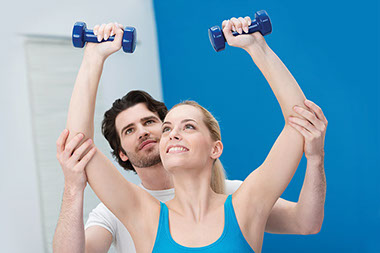
    Image of women and trainer exercising the shoulders.

    Shoulder injuries are common. Why? Because of improper exercise technique, say exercise experts at the American Council on Exercise (ACE), and because people commonly over-train one or two deltoid muscles while neglecting others.

    Strength-training routines are typically dominated by exercises that train only the front of the shoulder, which is actually comprised of three distinct muscles. So ACE looked into the most effective exercises for strengthening the overall shoulder and preventing injury.

    The result? Researchers from the University of Wisconsin, LaCrosse shrugged their shoulders when asked to pick the top exercise. Results showed there is not one best exercise that completely works all muscles of the shoulders.

    Instead, for best results, exercisers should perform the dumbbell shoulder press to target the front, and either the 45-degree incline row or the seated rear lateral raise for the rear. Ask your gym’s expert to show you these techniques.

    69% of people will experience a shoulder injury at some point in their lives, according to the NIH.

    © American Institute for Preventive Medicine

  • Common Gym Fears & Solutions

    BE FIT

    Image of person at gym with a trainer.

    If going to the gym makes you nervous, you’re not alone. Many people feel uncomfortable going to a new place with new people. But, if you find ways to deal with these fears, you could end up with a healthy habit that makes you feel great!

    Fear #1: I don’t know how to use the equipment.

    Solution: Ask for help from others. This can be a gym employee, personal trainer or a trusted friend. When choosing a gym, choose one that is well-staffed and has helpful employees who make you feel comfortable. Another option is to join a gym your friend already belongs to, and set up a time to go with them. Some gyms have personal trainers who work with members and show them how to use the machines and other equipment.

    Fear #2: I don’t know what to do at the gym.

    Solution: Have a plan before you go. Many fitness websites have printable exercise plans, or you can make your own by writing down a few activities yourself. Start with simple things you already know how to do, such as walking or running. Another option is to take a class you’ll enjoy and follow with a few minutes of stretching.

    Fear #3: I don’t want people looking at me while I exercise.

    Solution: Many people feel self-conscious at first. But, most people are there to exercise – not look at others. And they may be just as nervous about others watching them as you are. Wear comfortable clothing. Don’t worry about the latest styles, but choose something that makes you feel good and allows you to move freely.

    If you’re not comfortable going to a gym, don’t let that stop you from exercising. Choose workout videos that can be done at home. Many libraries have a variety of videos so you can try before you buy. If those don’t appeal to you, lace up your shoes and walk around your neighborhood.

    © American Institute for Preventive Medicine

  • Fun, Fast Indoor Workouts

    BE FIT

    Image of middle-aged man with headphones on dancing.

    When the winter months hit, it can be difficult to get outside to exercise. Snow, ice, wind, and rain can put a damper on your regular walk around the neighborhoods.

    But regular exercise cuts your risk for heart disease, diabetes, depression, and even some cancers, according to the CDC. So don’t cut your workout routine when the weather doesn’t cooperate. Bring the workout into your home with these tips:

    1.Just dance.Not only is it fun, but you can burn a lot of calories and customize it to work for you. Turn on your favorite tunes and start moving. For maximum benefit, do a 5-minute warm-up, 20-30 minutes of active dancing, and a 5-minute cool down. If you can’t do that much to start, just try a few minutes and add more time each week as you are able.

    2.March or jump.If dancing isn’t for you, marching around the house, or even just in your living room, can provide great benefits. Mix it up every few minutes by doing a few jumping jacks. You can also “pretend” you’re jumping rope by doing the motions without a rope. Watch videos that guide you through indoor walking or other aerobic activities.

    3.Strength training.You don’t need fancy weight machines or equipment. Use a resistance band to strengthen your arms and legs. Try simple exercises like squats, lunges, and push-ups. Take care to do them correctly. If you have an injury or health condition that restricts movement, talk with your doctor about exercises that are right for you.

    With a little creativity, you can have your own body-and-mind-boosting workout in the comfort of your home – no matter what the weather.

    © American Institute for Preventive Medicine