Category: Fitness

  • Make An Appointment To Exercise & Keep It

    Fitness

    Image of an exercise class.

    Like many people, you’re probably wondering when you’ll find the time to exercise when your days are already jam-packed with job responsibilities, family demands, and other obligations. It’s true that trying to fit something new, like exercise, into a busy schedule takes some doing. But it can be done. Here are some pointers to get you started.

    *  Make an appointment to exercise, just as you would schedule any other important obligation, and write it on your calendar.

    *  Choose an exercise or fitness activity that you’ll enjoy, so you’ll look forward to your workout and be less tempted to skip it.

    *  Look for openings in your schedule you may have overlooked-after the kids leave for school in the morning, before dinner, or during lunch hours you normally spend with friends or business colleagues.

    *  And one more thing: Don’t give up if you occasionally have to skip your workout because of a cold, bad weather, or emergencies. Perfect attendance isn’t important.

    Exercise Early

    What’s the best time of day to exercise? A study conducted by the Southwest Health Institute in Phoenix, Arizona, showed that 75 percent of morning exercisers were likely to still be at it one year later, as opposed to 50 percent of those who exercised at midday and 25 percent of those who exercised in the evening. It seems that as the day progresses, would-be exercisers are more likely to think of excuses to avoid working out.

    Page image from A Year of Health Hints book by the American Institute for Preventive Medicine. www.HealthyLife.com. All rights reserved.

    © American Institute for Preventive Medicine

  • Walk For Wellness

    Fitness

    Older women on a walk and using walking sticks.

    Many of us take it for granted, but walking does more than take us from one point to another. It’s an aerobic exercise that can improve your physical and emotional health. Walking can lower your risk of, and help manage, heart disease, diabetes, depression, and sleep issues, and can help you maintain a healthy weight.

    And best of all? It doesn’t require a gym membership or expensive equipment. Indoors or out, walking is a positive step towards living a healthier life.

    Page from HealthyLife Weigh book by the American Institute for Preventive Medicine. www.HealthyLife.com. All rights reserved.

    © American Institute for Preventive Medicine

  • Exercise Your Feet

    BE FIT

    Close up of feet walking on treadmill, with an overlapping illustration of a foot skeleton.

    Without strong and flexible feet, walking, running, and other kinds of movement may become painful.

    Just like every other part of your body, your feet need exercise. Next time you work out, include these movements for healthy feet:

    *Ankle circles:Keeping your leg still, slowly circle your ankle four or five times in one direction, then switch.

    *Calf raises:Standing near a wall or other support, lift up onto the ball mounds of your feet, then slowly lower back down 10-20 times. Focus on lifting straight up and straight down.

    *Toe lifts:Standing on bare feet, try lifting your big toe without moving your ankle or other toes. Then keep your big toe down and lift your other four toes together. Alternate back and forth.

    *Pick up a marble:Either standing with support or sitting in a chair, try picking up a marble or other small object using your toes.

    © American Institute for Preventive Medicine

  • No Time To Exercise? Move Your Body Instead

    BE FIT

    Father and son walking the dog.

    Exercise is great for your health. But sometimes it’s hard to fit it into a busy schedule. Don’t worry – you can do movement instead.

    If there are days when you don’t have time for exercise, you can still move. Adding movement into your day is a way to improve your health without investing as much time. There’s no gym or special equipment involved.

    Why should I move more?

    Studies show that people who move their bodies every day live longer than those who don’t. It’s also good for the environment. If you walk or bike to your destination, you save gas and carbon emissions. If you take the stairs instead of the elevator, you save electricity.

    Movement ideas

    Not sure how to get started with movement? You can find things that work for your life. Think about ways you can move instead of sit. Here are some ideas:

    *Avoid the elevator and take the stairs if you can.You can burn calories two to three times faster climbing stairs than walking briskly on flat ground. Can’t take it the whole way? Take the stairs halfway and the elevator the rest of the way. Try to take stairs instead of escalators, too.

    *Park farther away from the front door and walk a little more whenever possible.Many studies have shown that people who live in cities walk more and weigh less than people who live in areas where they drive more.

    *Whenever possible, bike or walk instead of driving.People who commute to work by biking or walking tend to weigh less than people who always drive.

    *If you live far from where you are going, consider driving part of the way and walking the rest of the way.Even a half-mile walk is good movement.

    *Choose hobbies you enjoy that are active, but don’t feel like exercise.This may include gardening, dancing or walking while listening to music or an audiobook.

    *Walk in place or lift weights while watching your favorite TV show.Stretch or walk in place while talking on the phone at home or work.

    Sources: American Heart Association, Veterans Health Administration

    © American Institute for Preventive Medicine

  • Start A Walking Group

    BE FIT

    Group of friends walking on a trail.

    Walking is hands down one of the best forms of exercise. Walking with a group is a great strategy to keep you motivated. And what better way to get involved in a walking group than to start one yourself!

    1. Identify target members. Do you want to invite the general public, only close friends, or people in your neighborhood? Know who you want to join.

    2. Choose a time. Based on who you plan to invite, pick a regular time slot and schedule about 60-75 minutes.

    3. Plan a route (and a backup). A good walking route is free, safe, well-maintained, and near your home or work. Also, select a backup indoor location, such as a mall or walking track, for when the weather is poor.

    4. Spread the word. Reach out to your target members with flyers, social media, phone calls, or emails. Aim for between 5 and 15 members.

    © American Institute for Preventive Medicine

  • Exercise On A Budget 2

    Fitness

    Image of women hiking.

    Lean times are no excuse to ignore your health.

    Don’t let gym memberships, personal training fees, or the cost of the latest exercise gadget weigh you down. Exercise is about moving, stretching, lifting, bending, breathing – things you can easily do at home. Or simply walk – around the block, at a mall, or on a local school’s track.

    Get started.

    Start with a few simple stretches to warm up your muscles. If you need help, go online for how-to instructions on everything from stretching to full routines. You can also find exercise tools to track your progress.

    No equipment necessary

    Do what you were taught in gym class – squats, push-ups, jumping jacks, and crunches. Lift your legs and arms, touch your toes, bend from side to side, jog in place, and twist. Just make sure you target all your major muscle groups at least once every week.

    No free weights? Try these substitutes.

    *  Use cans for triceps and biceps exercises instead of dumbbells.

    *  A gallon jug filled with water, sand, or powdered detergent is just as effective as a kettle bell for squats and arm lifts.

    *  Put a paper plate under one foot and lunge forward. You can also attach plates to both feet with rubber bands to simulate skating. Or, get down on all fours, put the plates under your hands and slide them back and forth for a great chest workout.

    *  Pantyhose move just as well as resistance bands for rowing and stretching routines.

    *  Use a chair or countertop as a push-up bench.

    *  A low, sturdy stool or a bottom stair can be used for a step exercise routine.

    Action Step

    Don’t wait until you have a block of time to exercise. You can do leg lifts in the elevator, calve raises in the grocery line, lunges as you walk the dog. Every little bit counts.

    Page image from Ways to Well-Being book by the American Institute for Preventive Medicine. www.HealthyLife.com. All rights reserved.

    © American Institute for Preventive Medicine

  • Mix-And-Match Training Menu

    Fitness

    Aerobic Dancing / Step Aerobics (low to high-impact)

    Aerobic dancing, step aerobics. Low to high impact.

    Body Benefits

    Excellent for cardiovascular health and overall body toning.

    Training Key

    Find an instructor who works in a style and tempo you feel comfortable with.

    Caution

    High-impact aerobics can strain the knees, hips and ankles. Step aerobics is lower-impact but should be avoided by anyone with knee problems.

    Bicycling (low-impact)

    Bicycling, low impact training.

    Body Benefits

    Excellent for aerobic endurance and weight control. Develops strong legs and thighs without pounding the feet, knees and ankles.

    Training Key

    Find riding partners to reduce wind resistance; learn to maintain a high pedal tempo (80 to 100 revolutions per minute)

    Caution

    Beginners should learn hand signals and rules of the road and should ride in a traffic-free setting.  Local cycling clubs offer courses on proper signaling and road etiquette.

    Running (high-impact)

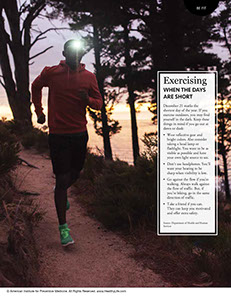
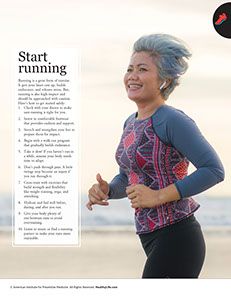
    Image of runner.

    Body Benefits

    Excellent for leg strength, aerobic fitness and weight control.

    Training Key

    Run at a pace that feels comfortable to you and walk should you feel the need. Whenever possible, seek out a soft training surface such as grass, dirt or a running track.

    Caution

    If you feel any aches or pain in your hips, knees, legs, feet or ankles, stop immediately and take several days off before resuming. If the pain lasts more than a week, see a doctor.

    Stair Climbing (low-impact)

    Image of women climbing oudoor stairs.

    Body Benefits

    Excellent for aerobic fitness, leg and buttock strength and overall toning.

    Training Key

    Short, quick steps work best.

    Caution

    Over striding can strain your knees.

    Stationary Bicycling (low-impact)

    Stationary bicycling, low impact.

    Body Benefits

    Excellent for cardiovascular fitness, weight control and leg strength. Because it develops the quadriceps, it’s a good complement to running.

    Training Key

    Varying the effort helps combat boredom. Use bikes with computerized workouts to add interest to the session.

    Caution

    The exercise bike is most effective when supplemented with other activities.

    Swimming (low-impact)

    Image of swimmer.

    Body Benefits

    Excellent for developing arms and shoulders and great for aerobic endurance. Also good for overall flexibility and fair for weight control. Reduces stress, too.

    Training Key

    Vary your stroke to keep interest. It’s only aerobic if you don’t stop.

    Caution

    Swimming skills take time to perfect. If yours are rusty, start off with a few lessons. Novice swimmers should always swim with a partner or under a lifeguard’s supervision.

    Tennis Racquetball (medium-impact)

    Image of man with racquet and tennis ball.

    Body Benefits

    Excellent for eye-hand coordination, balance and leg and arm toning. Moderately good for aerobic fitness and weight loss.

    Training Key

    Work on developing a smooth, consistent swing. Lessons will help your game improve more rapidly.

    Caution

    Wear shoes with good lateral support to prevent foot and ankle injuries.

    Walking (medium-impact)

    Image of person lacing up shoes.

    Body Benefits

    Good for leg strength and cardiovascular health.

    Training Key

    Pump your arms faster and your legs will follow suit. Try to fit walking into your daily routine. Find a friend to walk with you.

    Caution

    Make sure your shoes fit and are broken in before taking long walks.

    Weight Training (medium-impact)

    Image of person with weight behind head.

    Body Benefits

    Excellent for overall muscle, tendon and bone strength; mildly beneficial for the heart. Done properly, weight training can improve your performance in virtually any sport.

    Training Key

    Do between 8 and 12 repetitions of each exercise.

    Caution

    Don’t overdo it! If you use barbells, always have a friend spot you. Take at least 1 day to recover between weight-training sessions.

    Yoga (low-impact)

    Photo of yoga class in session

    Body Benefits

    Excellent for flexibility, relaxation and stress reduction.

    Training Key

    Find a good instructor who can modify yoga to suit your individual needs rather than someone who insists on “classical” yoga positions.

    Caution

    Don’t push. Develop your skills slowly and yoga will give you a lifetime of satisfaction.

    Page image from HealthyLife Weigh book by the American Institute for Preventive Medicine. www.HealthyLife.com. All rights reserved.

    © American Institute for Preventive Medicine

  • Walkwell™ Tracker

    Fitness

    Use this tracker to:

    *  Write down your weekly walking goals.

    *  Assist you in meeting your goals.

    *  Learn about proper walking technique.

    *  Keep a walking and weight record for 52 weeks.

    Why Walk?

    Walking is an easy form of exercise and does not cost a lot. It provides many benefits and has a very low risk of injury. Check the benefits/goals you wish to get from walking.

    *  Have more energy

    *  Feel better

    *  Look better

    *  Burn calories

    *  Lose weight

    *  Maintain a healthy weight

    *  Relieve tension and stress

    *  Build stamina

    *  Increase muscle tone

    *  Improve heart health and lung health

    *  Lower risk of heart disease, type 2 diabetes, and some cancers

    *  Help treat arthritis, heart disease, depression, diabetes, and/or high blood pressure

    *  Slow down bone loss (osteoporosis)

    *  Improve balance and lower the risk of falling

    How Do I Get Started

    Walk How Much?

    Walking is an easy way to get moderate and/or vigorous-intensity physical activity that adults are advised to get each week:

    1.  At least 2 hours and 30 minutes (150 minutes) of moderate-intensity physical activity (walking briskly for 3 miles per hour or faster, but not race-walking) OR

    2.  At least 1 hour and 15 minutes (75 minutes) of vigorous-intensity physical activity (race walking, jogging, or running) OR

    3.  A mix of 1 and 2

    Does 75-150 minutes each week sound like a lot of time? You don’t have to do it all at once. You can break up your activity into shorter times during the day. For example, take a 10-minute walk, 3 times a day, 5 days a week.

    Adults are also advised to do muscle-strengthening activities on 2 or more days a week that work all major muscle groups (legs, hips, back, abdomen, chest, shoulders, and arms).

    How Do I Get Started

    *  Consult your doctor or health care provider before you start an exercise program.

    *  Plan walking into your daily / weekly schedules.

    *  Write walking times on your calendar, daily planner, or “To Do List.”

    *  Choose the best times for you to walk.

    *  Pick times that you know you can stick to.

    *  Throughout the day, walk more. Sit less.

    *  Park your car farther away from the door of a store or business.

    *  Use extra free time to take mini-walks. The steps will add up!

    Wear What?

    *  Good walking shoes with an arch support to absorb shock and cushion your feet

    *  Clothing that fits loosely and is made of fabrics that absorb sweat and remove it from your skin

    *  Sunscreen on exposed skin to protect it from harmful ultraviolet (UV) rays

    *  A hat and sunglasses (if walking outside) to protect your head and eyes from UV rays

    *  A fanny pack to carry:

    – Identification

    – Cell phone

    – Money

    – Sugar snack (if diabetic)

    *  Pedometer – if you want to keep track of your steps

    Walk Where?

    *  Indoors from room to room

    *  Neighborhoods with sidewalks

    *  Parks and hiking trails

    *  The mall

    *  On a treadmill or an elliptical at home or a local gym

    *  Indoors and outdoors at your place of work

    *  Tracks at local schools and community centers

    *  Map out miles and/or 1,000 to 10,000 steps using these Web sites:

    *Also has a smartphone app

    Walk with Whom?

    *  Family members. Make it a family activity.

    *  A friend or neighbor

    *  A mall walking group

    *  Co-workers. Walk during lunch and/or break times.

    *  Join or start a walking club at your place of work or with your neighbors.

    Walking with a buddy or a group of walkers decreases boredom, provides distraction, and helps keep you motivated.

    Get information and support online from:

    www.startwalkingnow.org

    http://walking.about.com/c/ec/115.htm

    Walking Program

    Sample Program Using Steps

    Use a pedometer to track your steps.

    1.  Wear the pedometer every day for one week to find out how many steps you take in a day.

    2.  Record your steps.

    3.  Add the number of steps you took from Sunday to Saturday. This is the total number of steps you took for Week 1.

    4.  Divide this total number of steps by 7 for an average number of steps per day.

    5.  Each week, add more steps each day until you reach 10, 000 or more steps a day. For example, if your average number of steps per day for week 1 was 2,000; add 500 steps per day every week until you are walking 10,000 steps a day.

    Warm Up

    *  Walk slowly for 5 minutes.

    *  Stretch for 5 or more minutes.

    *  Stretch only to the point of comfort. You should feel mild tension, not pain.

    *  Never bounce.

    – To stretch your arms:  Hold one arm straight out from your side, level with shoulder. Swing your arm across your chest as far as it is comfortable. Then swing it toward your back as far as it will comfortably go. Alternate arms.

    – To stretch your back: Stand with your feet apart. Clasp your hands high above your head. Lean your head back and look up. Hold for 5 seconds. Relax. Repeat 2-4 times.

    – To stretch your legs: Stand up straight and balance yourself with your hand against a wall or chair. Bend one knee, grasp that ankle, and draw the leg up and back. Hold for 10 seconds. Repeat with your other leg.

    Walk This Way

    *  Step down on the back of your heels and roll onto your toes. Point your toes forward.

    *  Keep your chin up and your shoulders slightly back.

    *  Swing your arms at your sides. Try alternating bicep curls while you walk.

    *  Breathe in deeply. Exhale fully.

    Cool Down

    *  Walk at a slower pace for 3-5 minutes.

    *  Breathe slowly and rhythmically.

    Get Motivated!

    *  Walk with a buddy.

    *  Bring music with you. Choose music to match your mood and pace!

    *  Walk the dog! If you don’t have one, walk with your neighbor when he or she walks the dog or volunteer at a local animal shelter.

    *  Help the environment. Walking instead of taking the car helps our climate.

    *  Notice the beauty around you.

    *  Use walks to clear your head and sort out problems.

    *  Meet new people! Say “Hello” to the neighbors.

    *  Change it up. Walk in different areas or at different times of the day.

    *  Reward yourself when you reach a goal.

    Walk for a Cause

    Take part in national fundraising fitness-related walks that are held locally.

    American Heart Association’s Heart Walk

    www.heart.org/HEARTORG

    Step Out: Walk to Fight Diabetes

    http://stepout.diabetes.org

    March of Dimes

    www.marchforbabies.org

    Susan G. Koman Breast Cancer 3-Day

    http://ww5.komen.org

    Walk to Cure Diabetes

    www2.jdrf.org

    Walk Like MADD (Mothers Against Drunk Driving)

    www.madd.org

    Walk MS (Multiple Sclerosis)

    www.walkms.org

    Walking Burns Calories

    The number of calories you burn with walking depends on your weight and metabolism, how fast you walk, how long you walk, and factors in your walking environment.

    Step Equivalents for Distances

    Physical Activities / Step Equivalents & Calories Burned per 30 Minutes (155 Pound Person)

    Cover image to the WalkWell book by the American Institute for Preventive Medicine. www.HealthyLife.com. All rights reserved.

    © American Institute for Preventive Medicine

  • Be Strong At Any Age

    BE FIT

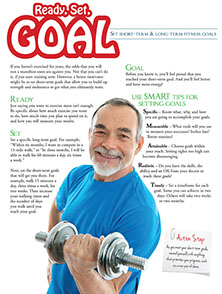
    Older man using weights.

    When you think of exercise, do you think of going for a run or taking an aerobics class? Those are great cardio workouts. But there is more to fitness than just cardio.

    Strong is healthy

    Strength training or lifting weights is a big part of being healthy and fit. Many people don’t do strength training because they don’t want to “bulk up.” Older adults might skip it because they think it’s only for younger people who are more muscular.

    You won’t get big bodybuilder muscles from doing strength training. That is, unless you train hard with that goal in mind. And many older adults can safely do strength training and find that they love how it makes them feel.

    If you do regular strength exercises, you will get a stronger body and better quality of life at any age. No bodybuilder is needed!

    Research shows that strength training can lower the risk of heart disease and other health conditions. It also helps you stay independent as you get older. Older adults who do strength training may find that everyday tasks are much easier. This can include things like getting out of a chair or climbing stairs.

    Strong is good for the mind

    The benefits of a strong body don’t stop at the muscles. Research also shows that strength training may reduce the effects of post traumatic stress disorder (PTSD). It can also help boost self-esteem.

    You can start today

    If you don’t have equipment, like weights, you can use things around the house, like soup cans. You can also use your own body weight. Think push-ups, planks and other similar exercises. They use your body weight and gravity to build muscles.

    A good way to start is with an exercise video or online class. You don’t have to go to a gym. But before you start, talk to your doctor. Ask if a new exercise program is safe for you. Talk about things you should or should not do to stay safe and help avoid injury.

    Give strength training a chance. You may find that it makes you feel better than you thought possible! A diet with adequate protein can help build muscle at any age and even promote healing. Talk to your doctor if you plan to make major diet changes.

    Source: National Institutes of Health

    © American Institute for Preventive Medicine