Category: Healthy Eating

  • Arm Yourself With A Vegetable Scrubber

    HEALTHY EATING

    Image of vegetables being washed in a scrubber.

    A University of Nebraska-Lincoln food safety specialist said it is important to properly wash fresh produce before eating to reduce harmful microorganisms that could cause foodborne illness.

    Wash produce with running water and then let that water go down the drain. Do not just soak the produce, said Julie Albrecht, UNL Extension food safety specialist at the Institute of Agriculture and Natural Resources.

    If there is something on the outside of a food, soaking it could allow the microorganisms to spread to other parts of the food or to other produce in the same sink. Running water washes the microorganisms down the drain.

    “It’s really just about preventing cross contamination,” Albrecht said. “Always use a colander or strainer so the water goes through the produce instead of just letting produce sit in water.”

    It is important to wash all fresh produce, even ones with rinds that are not eaten, Albrecht said. Bacteria could be living on the surface and then spread to the inside of the fruit when the rind is cut.

    Scrub foods with tough surfaces, such as melons and potatoes, with a vegetable scrubber.

    Immediately refrigerate fresh produce after cutting it. Most fruits and vegetables can be stored at 40ºF or below, which is cold enough to prevent microorganisms from growing.

    “Once you cut something or peel it, keep it cold, refrigerate it. Do not let it sit out at room temperature because microorganisms grow best around temperatures of 80 to 100. Plus, your food will be crisper and of a better quality,” Albrecht said.

    Leafy vegetables and tomatoes have been linked to foodborne illness outbreaks in recent years, so take extra care to wash them and keep them cold, Albrecht said.

    Be sure to also wash hands, surfaces, and utensils before handling raw produce.

    While shopping, only buy the best-looking produce that will stay fresh the longest. “Pick high-quality produce with no bumps or scratches at the peak of ripeness or maybe a little under ripe,” Albrecht said. “And make sure there is no mold, especially on berries.”

    © American Institute for Preventive Medicine

  • Do “Meal Replacement” Diets Work?

    HEALTHY EATING

    Image of a nutrition bar.

    It seems simple enough: to cut calories, sip a shake or eat a bar instead of a meal. There’s no risk of accidentally eating too much, and you don’t have to spend time preparing a meal or measuring portions.

    Also known as meal replacement diets, these programs have their pros and cons. A study published in The Journal of the Academy of Nutrition and Dietetics showed they can help people effectively lose weight. But, no single diet works for everyone. Before you try meal replacement, here’s what you should know:

    *  Talk with your doctor before you start any diet plan.

    *  Eat plenty of whole foods daily. Fruits, vegetables, whole grains, lean protein, low-fat dairy and healthy fats are recommended by the USDA. Bars and shakes cannot fully replace the nutrients you get from whole foods.

    *  Get the right amount of calories. There’s a healthy range of calories based on your age, weight and activity level. Learn yours by going to the USDA’s SuperTracker Tool atsupertracker.usda.gov.

    *  Drink plenty of water between meals to stay hydrated. This can improve your energy levels and may help you fight off hunger.

    If you follow the guidelines, you may find success with a meal replacement plan. Be sure to follow the plan as recommended and still eat nutritious foods at other meals. If you find you’re too hungry or it’s not working for you, talk with your doctor or a dietitian about another option.

    © American Institute for Preventive Medicine

  • Fiberize Your Kitchen

    HEALTHY EATING

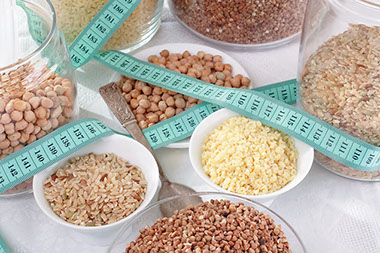
    Image of different grains in bowls and jars.

    To stock your kitchen with whole grains and fiber-containing foods from cupboard to refrigerator to freezer, use this handy list to get started, suggests Anita Kobuszewski, RD, author of Food: Field to Fork, How to Grow Sustainably, Shop Wisely, Cook Nutritiously, and Eat Deliciously. She reminded, “Remember-nutrition doesn’t begin until the food passes your lips.”

    *  Fresh and canned fruits and vegetables

    *  Dried fruits such as raisins and cranberries

    *  Preserves made with whole fruit

    *  Whole wheat, rye, cornmeal, soy, and buckwheat flours

    *  Whole-grain and fortified breads, crackers, bagels, and 100% whole wheat or whole-grain rolls

    *  Ready-to-eat fortified and whole-grain breakfast cereals

    *  Cooked cereals including quick-cooking whole-grains like oatmeal and quinoa

    *  Brown long-grain, brown short-grain, and wild rice

    *  Whole-grain spaghetti, macaroni, and other pastas

    *  Corn and whole wheat tortillas

    *  Air popped popcorn and lower fat microwave varieties

    *  Canned or dried garbanzo beans, pinto, black and lima beans; split peas, and black-eyed peas; refried beans, hummus

    *  Peanut butter

    *  Nuts (such as pecans, almonds, and walnuts) and seeds (such as flax seed, sesame, pumpkin, and sunflower seeds)

    *  Vegetable soups, chili with beans, minestrone

    *  Canned or frozen vegetarian dishes such as chili or cheese lasagna

    © American Institute for Preventive Medicine

  • Healthier Super Bowl Snacks

    HEALTHY EATING

    Image of football.
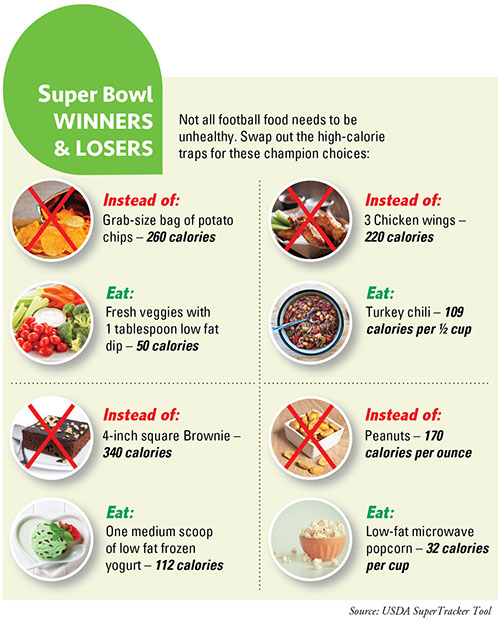
    Chart showing healthy options for super bowl snacks.

    On Super Bowl Sunday, people across the country will gather at homes, restaurants, and bars to watch the big game and enjoy game-day food. Sadly, traditional football fare tends to be high in fat and calories and low in nutrition. The Calorie Control Council says many Super Bowl fans will consume 2,000 calories or more during the game. That’s about a full day’s worth of calories in just a few hours.

    So how can you enjoy the game without the unhealthy side effects? Here are a few tips to help:

    *  Keep a zero-calorie drink like water in your hand, and sip on it throughout the day instead of snacking on food.

    *  Keep your distance from the kitchen or wherever the food is sitting out. If it’s out of sight, you’ll be less likely to mindlessly reach for snacks when you’re not hungry.

    *  If fresh fruit and veggies are available, fill your plate with those. This leaves little room for other choices.

    Be mindful of how much you’re eating, and stick to only a small serving of the high-calorie foods. If you’re cooking, take the opportunity to prepare a variety of healthy but fun choices for your guests.

    © American Institute for Preventive Medicine
  • Is Cinnamon Good For Your Health?

    HEALTHY EATING

    Image of cinnamon.

    Cinnamon is often used in sugar-loaded treats like cinnamon rolls and lattes. And though it’s a popular spice for desserts, it’s not necessarily an unhealthy choice. The spice has been used for thousands of years, and some recent studies suggest cinnamon may even have health benefits:

    *  A study in the journal Diabetes Care studied 60 people with type 2 diabetes. Some were given cinnamon capsules, and others were given a placebo (a fake pill that contained no cinnamon). Those who consumed the cinnamon for 40 days had lower levels of blood sugar, triglycerides, LDL (“bad”) cholesterol, and total cholesterol.

    *  A study in the Journal of Nutrition suggests that cinnamon and other spices may help reduce triglyceride levels after eating a fatty meal.

    *  The Journal of Neuroimmune Pharmacology published a study that suggests cinnamon may be able to protect the brain against changes that can cause Parkinson’s disease.

    Want to spice up your health with cinnamon? Try adding it to your favorite foods or drinks in place of sugar. Its natural flavor can be a welcome addition to coffee, tea, oatmeal, fruit, and even chili.

    High doses of cinnamon can be dangerous, though. Be sure to talk with your doctor before taking cinnamon or other natural supplement.

    © American Institute for Preventive Medicine

  • Packing A Lunch Punch

    HEALTHY EATING

    Image of lunch bag with a water bottle, a sandwich, apples and orange.

    Plan ahead and first wash your hands before packing a school lunch (or your own).

    “Think about the perishability of the foods you’re making,” said Rutgers University professor Don Schaffner, a food scientist and spokesperson for the Institute of Food Technologists. “Perishable foods can remain at room temperature for no more than 2 hours. Properly refrigerated foods can last a long time, but most school children won’t have access to a refrigerator where they can store their lunchbox.”

    The Institute offers some guidance for parents as they pack lunches:

    *  Start each day with a clean box or bag. Insulated, vinyl lunch bags are popular and do better at keeping foods cool than paper bags or metal lunch boxes.

    *  Clean out lunch bags using warm soapy water and allow them to dry completely overnight before packing the next day. This helps deter the growth of bacteria in the bag.

    *  Choose secure packing materials, such as sealable, single-use sandwich bags that can be disposed of when used, or reusable plastic wear that is dishwasher safe.

    *  As much as possible, opt for foods that are not perishable, such as peanut butter and jelly sandwiches. (Follow the school’s policy on peanut butter. It may not be allowed due to peanut allergies.) PBJs will last from the time you prepare it in the morning until lunchtime. Single-serve fruits in prepackaged containers are also great options because they’re less perishable.

    *  Encourage older kids to assemble lunch on their own at school. Pack bread in one container and place fillings like meat or cheese separately with a cold pack. Having kids assemble the sandwich at lunchtime ensures the freshest possible results!

    *  Cold packs are designed to keep foods and drinks cold, not cool them down. If you start with room-temperature ingredients in the morning, it’s unlikely the cold pack will be able to cool them enough by lunchtime. Instead, refrigerate items the night before.

    *  Always use a cold pack when you are packing anything perishable, like cheese and meat slices or fresh-cut fruit with a yogurt-based dip. Place the perishable food right against the cold pack in the bag.

    *  For hot foods like chili, soup, or stew, use an insulated container. Before storing the food, fill the container with boiling water, let it stand for a few minutes, empty it, and then add the hot food.

    © American Institute for Preventive Medicine
  • State Fair Food. How Unhealthy?

    HEALTHY EATING

    Image of state fair food booths.

    State fair food booths are famous for deep-frying most anything-even butter. It’s not unusual for a single serving to hit 500 or even 1,000 calories, with dozens of grams of fat.

    As unlikely as it may sound, it is possible to get a taste of a state fair without overindulging, says Dr. Donald Hensrud, a Mayo Clinic specialist in nutrition and preventive medicine.

    *  Give yourself a good start and eat something healthy before you go. Have some fruit to start the day or a salad before you go in the afternoon.

    *  Work off the extra calories through walking, which is easy to do at the fair.

    *  Burn off extra calories by getting in an extra workout or two, before or after the fair.

    *  Decide ahead of time how much and what you’ll indulge in. If you have a plan, you’re less likely to overeat. Turkey legs on the midway or dairy barn homemade ice cream? Pick one and plan ahead.

    *  Split portions with family or friends. This will not only help decrease calorie intake, but also lets you enjoy more tastes and may help to save money.

    *  Drink plenty of water to stay hydrated and aid the digestive process. Stay away from non-diet soda. It’s loaded with calories and sugar and has no nutritional benefit. Drink water instead.

    *  Don’t panic if you overindulge. Return to your normal eating routine the next day.

    © American Institute for Preventive Medicine

  • Understanding Carbs

    HEALTHY EATING

    Image of different type of breads.

    Carbohydrates (or carbs) are one of the main types of nutrients in our diets. Fats and protein are other nutrients.

    Carbs with a simple chemical structure are called sugars. Sugars are found naturally in foods such as fruits, vegetables, and milk products. They’re also added to many foods and drinks.

    Complex carbs, such as starches and fiber, are found in whole-grain breads and cereals and in starchy vegetables such as potatoes.

    Your digestive system changes the carbs you eat into glucose, a type of sugar that your body uses for energy.

    Simple carbs are more quickly digested and absorbed than complex carbs, so simple carbs can raise your blood glucose levels faster and higher. If you have diabetes, you need to manage your blood glucose levels. High blood glucose can damage your tissues and organs.

    It makes sense to eat more complex carbs, according to researchers at NIH. And not just people with diabetes, but everyone. Complex carbs are more gradually absorbed and help control blood sugar levels.

    Whole foods with complex carbs will give you more minerals and vitamins too and are usually good sources of fiber.

    Make Wise Carb Choices

    *  Try different kinds of beans and lentils.

    *  Choose cereals high in fiber (5 or more grams per serving, read the label for this information).

    *  Switch to whole grains. Look for whole-grain bread, whole-wheat pasta, brown or wild rice, barley, quinoa, and bulgur.

    *  Eat more fresh fruits and vegetables and drink less juice.

    *  Snack on fruit and small portions of nuts and seeds.

    *  Limit candy.

    © American Institute for Preventive Medicine
  • White Chicken Chili

    HEALTHY EATING

    Image of a bowl of white chicken chili.

    Ingredients

    4 cups white beans (cooked or low-sodium canned)

    1 tablespoon olive oil

    2 red peppers (chopped)

    1 large onion (chopped)

    1 chopped green chili (adjust to taste)

    3 cloves garlic (minced)

    1 tablespoon chili powder

    1 teaspoon cumin

    1 teaspoon oregano

    2 cups low-sodium chicken broth

    2 cups low-fat milk

    1/4 cup chopped, fresh cilantro (flat-leaf parsley)

    3/4 pounds chicken (cooked and cubed)

    6 corn tortillas (toasted and cut into 1-inch squares)

    Directions

    1. Sauté peppers and onion in olive oil.

    2. Add green chili, garlic, spices and chicken broth. Simmer for 20 minutes.

    3. Add low-fat milk, cooked beans, and cooked chicken. Allow to thicken before adding cilantro. Heat through.

    4. Top chili with crisp tortillas before serving.

    If using canned white beans, rinse and drain them to lower sodium. You can use any vegetable oil in place of olive oil and fresh parsley in place of fresh cilantro. In place of chili powder, you can use a mix of other spices such as cayenne pepper, cumin, or oregano. In place of oregano, you can use Italian mixed herbs/seasonings, basil, or thyme.

    Serves 10. Per serving: Calories: 210; Total fat: 5 g; Saturated fat: 1 g; Sodium: 150 mg; Total carbohydrate: 25 g; Fiber: 5 g; Protein: 18 g

    Source: USDA Healthy Eating on a Budget Cookbook

    © American Institute for Preventive Medicine

  • Baked Salmon Dijon

    HEALTHY EATING

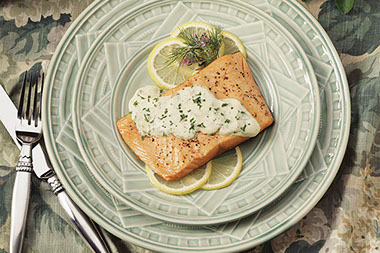
    Image of a baked salmon dijon.

    Ingredients:

    1 c fat-free sour cream

    2 tsp dried dill

    3 Tbsp scallions, finely chopped

    2 Tbsp Dijon mustard

    2 Tbsp lemon juice

    1-1/2 lbs salmon fillet with skin, cut in center

    1/2 tsp garlic powder

    1/2 tsp black pepper

    As needed, fat-free cooking spray

    Directions

    Whisk sour cream, dill, onion, mustard, and lemon juice in small bowl to blend. Preheat oven to 400ºF. Lightly oil baking sheet with cooking spray. Place salmon, skin side down, on prepared sheet. Sprinkle with garlic powder and pepper. Spread with the sauce. Bake salmon until just opaque in center, about 20 minutes.

    Makes 6 servings. Serving size: 1 piece (4 oz). Each serving provides 196 calories, 7 g total fat, 76 mg cholesterol, 229 mg sodium, less than 1 g fiber, 27 g protein, 5 g carbohydrate

    A heart-healthy recipe from the US Department of Health and Human Services, National Institutes of Health National Heart, Lung, and Blood Institute

    © American Institute for Preventive Medicine