Category: Healthy Eating

  • ”Healthy” Foods That Don’T Help With Weight Loss

    HEALTHY EATING

    Image of yogurt with granola and berries.

    Weight loss can be a difficult task. What works well for one person may not work for another. In addition, so many foods on store shelves claim they are “natural,” “reduced calorie”  or “light.” Does this mean you should eat them when you’re trying to lose some weight?

    Weight-loss or “diet” claims on food aren’t always a sign that you should eat them when you’re hoping to slim down. Some of these foods can be filled with unhealthy additives, sugar or salt. Beware of these “healthy” foods during your next trip to the store:

    Low-calorie or light breads

    While some lower calorie breads are nutritious, others are not. Some diet breads contain little to no fiber. Because fiber makes you feel full, these diet breads may make you feel hungry soon after eating them. Before buying any “light” or diet breads, check the nutrition label for fiber content. You may be better off eating a “whole grain” type of bread that contains more nutrition and fills you up.

    Light yogurt

    Yogurt can be a healthy choice, filled with calcium, friendly bacterial cultures and protein. But, many “light” yogurts have low protein and contain additives such as artificial sweeteners, leaving you feeling hungry again before your next meal. For a healthy yogurt, look for one that contains little to no added sugar or sweeteners, and at least 10 grams of protein. Many Greek varieties contain a good amount of protein. Sweeten your yogurt with fresh or frozen fruit.

    Light salad dressings

    Many salad dressings cut out extra fat from oils, replacing it with sugar, salt and flavorings. But, the healthy fats found in vegetable oils like olive oil don’t have to be avoided completely. In fact, small amounts can help you feel full and are heart-healthy. Add a splash of olive oil and your favorite vinegar to salad for a healthy dressing without unhealthy ingredients. The key is to limit the amount of oil to 1-2 teaspoons at a time.

    Granola

    This food seems so healthy, packed with whole grain oats, raisins and nuts. But, many granola cereals and snacks contain loads of sugar, making it easy to eat a few hundred calories in one portion. If you enjoy granola, measure out your serving size to see how much you are really eating. And, look for varieties with little to no added sugars and salt.

    Sources: Academy of Nutrition and Dietetics, Department of Health and Human Services, National Institute on Aging

    © American Institute for Preventive Medicine
  • Kitchen Shortcuts For Faster Homemade Meals

    HEALTHY EATING

    Image of man prepping food in the kitchen.

    It’s hard to find time to get a home-cooked meal on the table when meal times come around. Many people are juggling work, responsibilities with family, housework and kids’ activities, to name a few.

    Plus, for those who aren’t experts in the kitchen, cooking dinner can seem like an impossible task. But, if you learn to take some shortcuts, it can be easier than you think. Try these tips to help you make a homemade meal with fewer hassles:

    *Purchase a few meals at once.If you can’t shop for a whole week, aim for three meals. Get the ingredients for those meals, and you’ll be ready for half of your week without any extra trips to the store.

    *Do a big chopping session.Clean and chop all veggies and fruits at once while you’ve got out your cutting board and knife. Then, put the ingredients in bags or containers with lids, and put them in the fridge or freezer. Once you’re ready to cook dinner, your chopped ingredients are ready to be cooked or thrown into the dish you’re preparing.

    *Freeze extra.Consider buying extra onions, carrots, green beans, or other veggies that frequently need to be chopped. Chop up more than you need, put the extras in freezer bags, and freeze until the next time you need them.

    *Make a big batch of rice or whole grains.When cooking rice, quinoa, or other grains, cook extra, place it in bags, and freeze. Simply thaw and microwave your grains when you’re ready to use them.

    *Plan ahead.Tackle the next meal before you go to bed the night before. Start thawing any frozen meats or other ingredients in the fridge. Make sure you have the ingredients and recipe you need for the next day.

    *Double up.Whenever possible, make a double recipe and freeze the extra. Soups, stews, meats and tomato-based sauces often freeze well. Frozen leftovers make a quick and nutritious meal on a busy night.

    *Check out make-ahead meals for the slow cooker.You can find slow cooker freezer meals online that allow you to make it ahead, throw the prepped meal in a bag, and freeze. Then, you have a meal that’s ready to put into the slow cooker in the morning to be ready for dinner time.

    Most successful meals come down to planning in advance. This means you may need to do the prep work the night before or on the weekend. Though it requires some effort to make a home-cooked meal, it’s worth the time and energy. You’ll be able to make a healthy meal for you and your family and may save some money, too.

    © American Institute for Preventive Medicine

  • Picky Eater?

    HEALTHY EATING

    Image of young child with a sad face looking down at a bowl of brussel sprouts.

    Is dinner time a war zone at your house? Do you fight battles with your kids over vegetables and mac and cheese?

    Picky eating is as normal as potty-training. Even the best of parents can have a difficult time getting their child to eat. In fact, picky eating is one of the most common events in children, often outgrown as the child reaches adolescence.

    But when eating behavior affects normal development, it could be something much more serious-a pediatric feeding disorder.

    “The difference between a fussy eater and a child with a feeding disorder is the impact the eating behavior has on a child’s physical and mental health,” said Dr. Peter Girolami, clinical director of the Pediatric Feeding Disorders Program at the Kennedy Krieger Institute in Baltimore.

    Pediatric feeding disorders are more common than most think, affecting 1 in 10 infants and children. Some kids just don’t eat enough calories and nutrients to thrive.

    Common symptoms of a pediatric feeding disorder are these:

    *  A sudden change in eating habits lasting longer than 30 days

    *  Delayed development of skills needed to feed or eat foods with greater textures

    *  Weight loss or failure to gain weight

    *  Choking/coughing during meals

    *  Unexplained fatigue, loss of energy

    *  Disruptive behavior during mealtime, throwing utensils

    Early diagnosis and treatment is extremely important.

    © American Institute for Preventive Medicine
  • Summer Salmon

    HEALTHY EATING

    Image of a person cutting salmon.

    Ingredients

    Juice from 1 orange

    1 tablespoon extra-virgin olive oil

    1 teaspoon honey

    1 teaspoon mustard

    Kosher salt (optional) and freshly ground black pepper

    1 skinless salmon fillet (6-ounce)

    1/4 cup whole-wheat linguine

    6 asparagus spears (chopped)

    1/4 medium onion (chopped)

    1 clove minced garlic

    4 sprigs fresh parsley (leaves removed and chopped)

    2 fresh basil leaves (thinly sliced)

    1 teaspoon freshly grated Pecorino cheese

    Directions

    In a small bowl, whisk together the orange juice, 1 teaspoon olive oil, honey, and mustard. In a medium sauté pan over moderate heat, warm 1 teaspoon olive oil. Add the salmon and cook for 4 minutes. Flip the salmon over, add the orange sauce, and continue to cook until the salmon is golden and cooked through, about 4 more minutes. Season with salt (optional) and pepper and transfer to a plate.

    In a medium pot of boiling water, cook the pasta until al dente, about 5 minutes. Add the asparagus and continue cooking for 2 more minutes. Drain the pasta and asparagus and transfer to a bowl.

    In a medium sauté pan over moderate heat, warm the remaining 1 teaspoon of olive oil. Add the onion, garlic, parsley, and basil and sauté, stirring occasionally, about  3 minutes. Add the onion and garlic mixture to the pasta, sprinkle with cheese, and toss to combine. Serve the salmon alongside the pasta with asparagus.

    Makes 2 servings: Per serving: 273 calories, total fat 14g, protein 22g, fiber 4g, sodium 157 mg

    From the US Department of Agriculture, USDA Mixing Bowl; find more recipes at www.usda.gov/whatscooking

    © American Institute for Preventive Medicine

  • Veggie Barley Salad With Orange Vinaigrette

    HEALTHY EATING

    Image of veggie barley salad with orange vinaigrette.

    Ingredients:

    1 cup pearl barley

    1 medium tomato (chopped)

    2 medium carrots (shredded)

    1 medium red, orange or yellow bell pepper (seeded and chopped)

    2 cups fresh spinach (chopped)

    1-1/2 ounces orange juice

    3 tablespoons olive or canola oil

    2 tablespoons apple cider vinegar  (or any other mild vinegar)

    1 teaspoon honey

    Salt and freshly ground black pepper

    Directions:

    1. Bring a large pot of water to a boil. Add barley and cook, uncovered, until tender, about 40 minutes. Transfer to a large bowl.

    2. Add the tomato, carrots, bell pepper and spinach, and stir to combine.

    3. In a small bowl, whisk together the orange juice, olive or canola oil, vinegar, honey, salt and pepper. Pour the vinaigrette over the barley salad and mix thoroughly.

    4. Refrigerate overnight for best results.

    Servings: 4.

    Calories: 294, Total Fat: 11 g, Saturated Fat: 2 g, Sodium: 81 mg, Total Carbohydrate: 44 g, Dietary Fiber: 8 g, Protein: 5 g

    Source: USDA Mixing Bowl

    © American Institute for Preventive Medicine
  • Zucchini Casserole

    HEALTHY EATING

    Image of zucchini casserole.

    Ingredients

    1 pound sausage (ground)

    1 cup onion (small, diced)

    3 cups zucchini (small, diced)

    3 cups squash (small, yellow, diced)

    3 cups potatoes (medium, peeled and diced)

    1 can tomatoes (Italian stewed, cut up)

    Directions

    Brown sausage and onion together in a skillet; drain. Mix all ingredients together and place in a casserole dish. Cover with foil and bake at 350 degrees F for 45 minutes. Instead of using the Italian stewed tomatoes, you could use fresh diced tomatoes with some Italian spices added.

    Makes 6 servings: Per serving: 220 calories, 9 g total fat, 11g protein, 25 g carbs, 3 g fiber,

    460 mg sodium.

    From the USDA What’s Cooking? Find more recipes at www.usda.gov/whatscooking.

    © American Institute for Preventive Medicine
  • Black Bean Burgers

    HEALTHY EATING

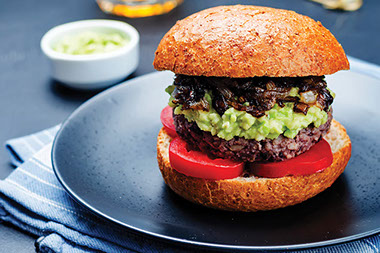
    Image of a black bean burger.

    Ingredients

    1 can of 15.5 ounce low-sodium black beans (drained and rinsed with cold water)

    1 large egg

    1/2 cup cooked brown rice*

    2 scallions (green and white minced, about 1/4 cup)

    2 Tablespoons chopped fresh cilantro (or basil leaves or a combination)

    1 garlic clove (peeled and minced)

    1/4 teaspoon dried oregano or basil

    1 teaspoon vegetable oil

    1/2 teaspoon salt

    1/2 teaspoon black pepper

    4 whole-wheat buns

    Directions

    1. Add beans to a bowl and mash with a fork until chunky. Add the egg and mix well.

    2. Add precooked rice*, scallions, cilantro, garlic and oregano, salt and pepper and mix until well combined.

    3. Divide the mixture into 4 portions and form each portion into a patty about ¾ to 1 inch thick.

    4. Place a large skillet on the stove on high heat. When the skillet is hot, add oil. Add burgers and cook 4 to 5 minutes per side until browned on both sides and heated throughout. Place on a whole-wheat bun.

    *Try using old-fashioned rolled oats, leftover cooked barley or Panko breadcrumbs instead of prepared rice.

    Serve with your favorite toppings, such as lettuce, tomato, guacamole, salsa, low-fat cheese or low-fat yogurt.

    Serves 4. Per serving: Calories: 274; Total Fat: 5 g; Saturated Fat: 1 g, Sodium: 668 mg; Total Carbohydrate: 47 g; Dietary Fiber: 12 g; Protein: 13 g

    Source: What’s Cooking? USDA Mixing Bowl

    © American Institute for Preventive Medicine
  • Easy Food Swaps For A Healthier You

    HEALTHY EATING

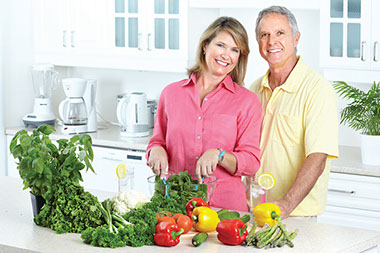
    Image of middle-aged couple preparing food in their kitchen.

    What if you could be healthier without making a bunch of drastic changes? No extreme dieting or starving, but just taking some small steps to improve your food choices. It is possible if you know which foods to eat more of, and which ones to scale back on. The American Heart Association recommends a few simple switches that can add up to better overall health:

    *  Don’t cook with butter, lard, or shortening. Use vegetable oils that are high in unsaturated fats. Great choices include olive, canola, walnut, and safflower oils.

    *  When purchasing canned soups or vegetables, look for lower-sodium or “no salt added” varieties. Choose frozen vegetables without added salt or sauces.

    *  Avoid foods with added sugar, such as canned fruits with syrup. Choose canned fruits with no sugar added and/or packed in 100 percent fruit juice.

    *  Use nonstick cooking spray instead of shortening for recipes that call for “greased” cookware.

    *  When buying bread or crackers, look for those labeled “whole grain” or “whole wheat.” These choices contain more fiber and nutrients than refined grains.

    *  Cut back on red meat by using ground turkey or chicken in place of ground beef in recipes. Turkey tacos, meatballs, or chili can be just as tasty and many people can’t tell the difference.

    These simple tips can help you cut back on saturated fat, excess sugar and sodium. This adds up to great health benefits without having to change your eating habits entirely.

    © American Institute for Preventive Medicine

  • Fruit And Peanut Butter Dip

    HEALTHY EATING

    Image of fruit and peanut butter dip.

    Ingredients

    1 cup apple slices

    1 cup banana slices

    1 cup pear slices

    1 cup grapes

    1 cup strawberries

    1 cup melon slices

    1/2 cup yogurt, nonfat plain

    1/2 teaspoon vanilla

    1/3 cup peanut butter

    Directions

    1. Prepare fruit by washing and slicing, if necessary.

    2. Arrange fruit on a plate around a small bowl.

    3. To make dip, combine yogurt, vanilla and peanut butter in a small bowl.

    4. Mix well.

    5. Chill dip in refrigerator until ready to serve.

    Note: Can use six cups of any washed fruit.

    Source: Colorado State University and University of California at Davis, Eating Smart Being Active Recipes

    © American Institute for Preventive Medicine
  • Healthy Trail Mix

    HEALTHY EATING

    Image of trail mix.

    Ingredients:

    1/2 cup cherries, dried, not packed

    1/2 cup apples, dried, pieces

    1/4 cup apricots, dried

    1/2 cup English walnuts, pieces

    1/4 cup sunflower seeds, raw

    1/2 cup raisins, not packed

    1/4 cup banana chips

    1/4 cup almonds, whole, raw

    Directions

    Mix all ingredients in a bowl and divide into small storage bags for portion control and portability. Makes 3 cups. One quarter cup is 180 calories, 3 g fiber, 24 carbs, 3 g protein, 10 grams fat.

    © American Institute for Preventive Medicine