Category: Healthy Eating

  • Meatless Meals (Try It)

    HEALTHY EATING

    Image of yellow and red peppers stuffed with rice and other vegetables.

    You don’t have to become a vegetarian to enjoy a meatless meal. Try working more meatless meals into your week, suggests the Recipe Doctor, Elaine Magee, MPH, RD, author of Food Synergy.

    *  Substitute a soy “meat” product for the meat ingredient in casseroles, stews, tacos, and chili.

    *  Break out a can of beans. They make great meal replacers because they’re super satisfying, with high amounts of protein and fiber. In a nice vegetable stew bursting with beans, you might not notice the meat is missing.

    *  Try a veggie potpie featuring potatoes, peas, mushrooms, and any other vegetables with vegetarian gravy and pie crust.

    *  Make Mexican dishes (burritos, nachos, enchiladas, for example) featuring beans and veggies instead of beef and chicken.

    *  Stir-fry Chinese cuisine with veggies and tofu and serve over rice or noodles.

    *  Stuff bell peppers with a mixture of rice with spices and vegetables plus vegetarian sausage, tofu, or beans to make the dish more satisfying.

    *  Layer lasagna with veggies instead of meat. Spinach replaces ground beef.

    *  A grilled Portobello mushroom can stand in for a burger on a bun.

    © American Institute for Preventive Medicine

  • Pumpkin And White Bean Soup

    HEALTHY EATING

    Image of pumpkin and white bean soup.

    Ingredients

    1 can small white beans (15 ounces)

    1 small onion (finely chopped)

    1 cup water

    1 can pumpkin (15 ounces)

    1-1/2 cups apple juice

    1/2 teaspoon cinnamon

    1/2 teaspoon black pepper

    1/4 teaspoon salt

    1/8 teaspoon nutmeg, allspice, or ginger (if you like)

    Directions

    1. Mash white beans, onion and water with a fork or blender until smooth. Set aside.

    2. In a large pot, add the pumpkin, apple juice, cinnamon, black pepper and salt. If using nutmeg, allspice or ginger, add that too. Stir.

    3. Add the bean mix to the pot.

    4. Cook over low heat for 15-20 minutes, until warmed through.

    Source: What’s Cooking? USDA Mixing Bowl

    © American Institute for Preventive Medicine

  • Tasty News

    HEALTHY EATING

    Image of women of a hot cup of tea.

    What we view as the sense of taste is actually a combination of smell, taste, and texture, with smell playing a major role. A single taste bud can have dozens of receptor cells that send signals of sour, sweet, salty, and bitter through nerve channels to the brain.

    The tongue is covered with taste buds, and the back of the mouth is sensitive to bitter tastes-perhaps as a last-ditch chance to expel something toxic. Taste also plays a role in digestion, preparing the stomach for a meal.

    But one of the most interesting things about taste, according to University of Virginia neuroscientist David Hill, is that taste cells regenerate, or turn over, about every 10 days, much like skin cells.

    Burn your tongue? No worries; those cells will regrow and you’ll regain your normal sense of taste within days.

    © American Institute for Preventive Medicine

  • Vinegar Can Be Tasty – And Healthy

    HEALTHY EATING

    Image of a varity of different vinegars.

    White vinegar has a number of household uses. Some people use it for cleaning, laundry and flushing out the coffee maker. It’s also been used for centuries to preserve food, especially vegetables.

    But don’t let the strong vinegar odor turn you off from all vinegars. In fact, there are many different types that are both healthful and delicious. Many of them have a mild, pleasing taste that pairs well with a variety of foods. Some are even naturally sweet enough to dress up fruits and healthy desserts.

    Vinegar is made when a liquid that contains starch and sugar is fermented. It comes from the French words “vin” and “aigre” which mean “sour wine.” The liquid ferments into alcohol, then ferments again into vinegar. It is believed that vinegar was made by chance thousands of years ago when some wine was left too long in its cask.

    The right vinegar can add flavor without adding sodium, calories, fat or unhealthy additives. It can add acidity to soups and stews, or works well for marinating meat and vegetables.

    Go beyond the standard vinegar and oil combination and check out these delicious vinegars in your next cooking experiment. There are dozens of types of vinegars, and some can be difficult to find except in specialty stores. The following types are generally easy to find in most stores.

    Distilled white vinegar

    The most common type seen in stores, it is made from fermented alcohol. White vinegar has a strong taste and odor and is great for making pickles, poached eggs and buttermilk.

    Balsamic

    Made from fermented grapes, balsamic becomes sweeter and almost like syrup the longer it ages. It adds flavor to pasta and vegetarian dishes and pairs well with fruit.

    Apple cider vinegar

    Made from fermented apples, apple cider vinegar is very versatile. It adds zest and subtle sweetness to salad dressings and slaws, as well as meat marinades.

    Malt vinegar

    This light brown vinegar, made from barley, is commonly used on french fries and fish and chips. Use it on healthier choices like baked potatoes and grilled chicken for a kick that’s not too overwhelming.

    Red wine vinegar

    This lively, strong tasting vinegar is ideal for meat marinades and dark sauces.

    White wine vinegar

    Don’t confuse this with distilled white vinegar. It is also much milder than red wine vinegar. White wine vinegar is great for those who want a subtle taste or who don’t want to change the color of their food.

    Rice vinegar

    Plain rice vinegar is mild and clean-tasting. It works well with most recipes that require vinegar without a strong taste, especially stir-fries and salad dressings.

    © American Institute for Preventive Medicine

  • Asian-Style Steamed Salmon

    HEALTHY EATING

    Concept image of plate with "DO NOT" sign and clock hands.

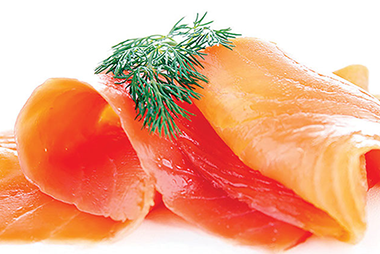
    This is a fast and easy way to make heart-healthy salmon for a weeknight dinner.

    Ingredients

    1 cup low-sodium chicken broth

    ½ cup shiitake mushroom caps, rinsed and sliced (or substitute dried shiitake mushrooms)

    2 tablespoons fresh ginger, minced (or 2 teaspoons ground)

    ¼ cup scallions (green onions), rinsed and chopped

    1 tablespoon less sodium soy sauce

    1 tablespoon sesame oil (optional)

    12 ounces salmon fillet, cut into 4 portions (3 ounces each)

    Directions

    1.  Combine chicken broth, mushroom caps, ginger, scallions, soy sauce and sesame oil (optional) in a large, shallow sauté pan. Bring to a boil over high heat, then lower heat and simmer for 2-3 minutes.

    2.  Add salmon fillets, and cover with a tight-fitting lid. Cook gently over low heat for 4-5 minutes or until the salmon flakes easily with a fork in the thickest part (to a minimum internal temperature of 145 °F).

    3.  Serve one piece of salmon with ¼ cup of broth.

    Nutrition per serving: Servings 4. Calories 175; Total fat 9 g; Saturated fat 2 g; Sodium 208 mg; Total fiber 1 g; Protein 19 g; Carbohydrates 4 g

    Source: National Institutes of Health Keep the Beat Recipes

    © American Institute for Preventive Medicine

  • 5 Reasons You Need Fat In Your Diet

    HEALTHY EATING

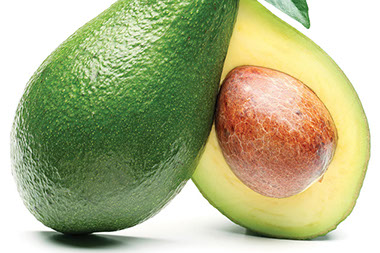
    Image of avocado.

    Energy:

    Fat provides a highly concentrated form of energy. One gram of fat gives you 9 calories of energy, which is over twice that provided by carbohydrates or protein.

    Organs need a cushion:

    A cushion of fat helps protect organs from injury and holds them in place.

    Cell structure:

    Whether it is hair, skin, or eyes, fats make up part of the membrane that surrounds each cell of the body, and without them the rest of the cell can’t function.

    Immune function:

    Without good fats in our diet, immune function becomes partially impaired and our bodies are susceptible to foreign invaders such as bacterial and viral infections.

    Nutrient transport:

    Vitamins A, D, E, and K are fat-soluble vitamins and need fat to help the body transport, store, and absorb them.

    © American Institute for Preventive Medicine

  • Buy Local. Eat Local.

    HEALTHY EATING

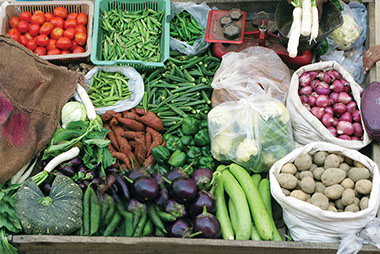
    Image of a farmer's market stand filled with vegetables.

    Did you know the average supermarket produce travels about 2,000 miles to your neighborhood grocery store? Farmers’ market produce travels less than 50 miles, according to University of Nebraska-Lincoln Extension experts who offer these buying and storing tips:

    *Go right home from the market.Foods will decline in quality, and perishable foods such as meats and eggs can pose food safety problems if left sitting in your car. Bring along a cooler with ice if it will take more than an hour or so to get perishables into your refrigerator.

    *Store at room temperature:bananas, melons, onions, potatoes, sweet potatoes, tomatoes, and winter squash. Store them in a clean, dry, well-ventilated place, away from direct sunlight and away from areas where meat is prepared.

    *Ripen on the counter and then put in the refrigerator:avocados, kiwifruit, nectarines, peaches, pears, and plums. Do not keep produce in a sealed plastic bag on the countertop. This slows ripening and may increase off-odors and decay from the buildup of carbon dioxide and depletion of oxygen inside the bag.

    *Store in refrigerator most other fresh fruits and vegetables.Use your refrigerator crisper drawer for whole produce. Store fruits in a separate refrigerator crisper drawer from vegetables. Fruits give off ethylene gas, which can shorten the storage life of vegetables. Some vegetables give off odors that can be absorbed by fruits and affect their quality.

    *Refrigerate fruits and vegetables in perforated plastic bags.This helps maintain moisture yet provide air flow. Make your own: use a sharp object to make several small holes in a food-grade plastic bag (about 20 holes per medium-size bag). Air-tight plastic bags can lead to the growth of mold or bacteria.

    *Wash your hands and produce thoroughly.Wash produce before you use it, NOT when you bring it home. Fresh produce has a natural protective coating that helps keep in moisture and freshness. Washing produce before storage causes it to spoil faster.

    *Remove and discard outer leaves.Rinse under clean, running water just before preparing or eating. Don’t use soap or detergent. It can get into produce and make you sick. Rub briskly-scrubbing with a clean brush or hands-to clean the surface. Dry with a clean cloth or paper towel. Rinse produce even when the peel is removed-such as melons and citrus fruits. Once you have cut through the protective skin of fruits and vegetables, bacteria can enter. Refrigerate cut or peeled fruits and vegetables within 2 hours.

    *Take your own bags or baskets to the farmers’ markets.And be sure to wash them too. Bacteria can grow inside.
    © American Institute for Preventive Medicine

  • Easy Snack Substitutions

    HEALTHY EATING

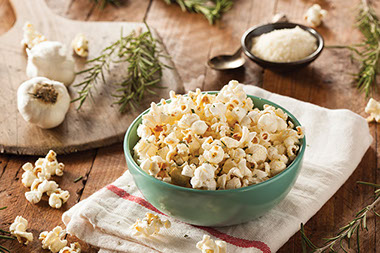
    Image of popcorn in a bowl.

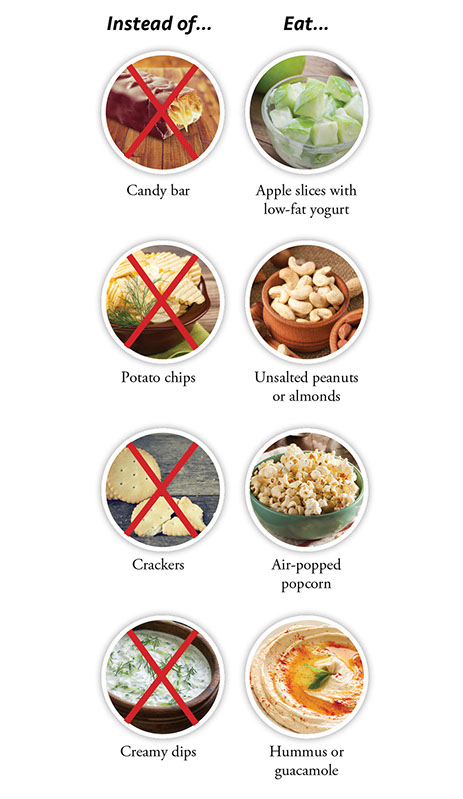
    Skip the vending machine and processed foods when you need to fill up between meals. Try these alternatives to everyday unhealthy snacks:

    © American Institute for Preventive Medicine

  • Get Your Iron In The Kitchen!

    HEALTHY EATING

    Image of couple in the kitchen.

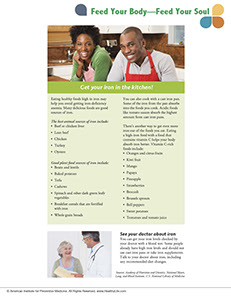
    Eating healthy foods high in iron may help you avoid getting iron-deficiency anemia. Many delicious foods are good sources of iron.

    The best animal sources of iron include:

    *  Beef or chicken liver

    *  Lean beef

    *  Chicken

    *  Turkey

    *  Oysters

    Good plant food sources of iron include:

    *  Beans and lentils

    *  Baked potatoes

    *  Tofu

    *  Cashews

    *  Spinach and other dark green leafy vegetables

    *  Breakfast cereals that are fortified with iron

    *  Whole grain breads

    You can also cook with a cast iron pan. Some of the iron from the pan absorbs into the foods you cook. Acidic foods like tomato sauces absorb the highest amount from cast iron pans.

    There’s another way to get even more iron out of the foods you eat. Eating a high-iron food with a food that contains vitamin C helps your body absorb iron better. Vitamin C-rich foods include:

    *  Oranges and citrus fruits

    *  Kiwi fruit

    *  Mango

    *  Papaya

    *  Pineapple

    *  Strawberries

    *  Broccoli

    *  Brussels sprouts

    *  Bell peppers

    *  Sweet potatoes

    *  Tomatoes and tomato juice

    See your doctor about iron

    You can get your iron levels checked by your doctor with a blood test. Some people already have high iron levels and should not use cast iron pans or take iron supplements. Talk to your doctor about iron, including any recommended diet changes.

    Sources: Academy of Nutrition and Dietetics, National Heart, Lung, and Blood Institute, U.S. National Library of Medicine

    © American Institute for Preventive Medicine

  • Heart-Shaped Foods Help Your Heart

    HEALTHY EATING

    Image of a berry and strawberry.

    While some dietitians extol the virtues of red wine, dark chocolate, and salmon for heart health, Dr. Katie Eliot, assistant professor of nutrition and dietetics at Saint Louis University, has a different plan.

    Keep it simple. Look to heart-shaped foods to protect your heart.

    “Being red and heart shaped can be a tip off that some foods are good for your heart,” Dr. Eliot said. “Many heart-shaped fruits and vegetables are great sources of antioxidants. These compounds act like shields, taking the hit from free radicals that otherwise damage the body and cause heart disease and cancer.”

    For instance, strawberries and raspberries are loaded with vitamin C and an antioxidant that prevents plaque from forming in arteries. Cherries contain an antioxidant that is thought to protect the blood vessels and is high in potassium, which helps lower blood pressure.

    Tomatoes and red peppers are rich in the antioxidant lycopene, which is in many red fruits and vegetables and works magic by neutralizing free radicals. And acorn squash and apples contain a type of fiber, which reduces bad cholesterol that can clog up your arteries to cause heart attacks and stroke.

    © American Institute for Preventive Medicine