Category: Healthy Eating

  • Mushrooms: Eat Your Fungi!

    HEALTHY EATING

    Image of mushrooms.

    Botanically speaking, mushrooms are not a vegetable, but a type of fungi. However, this doesn’t make them any less nutritious. In fact, mushrooms have some important nutrients and health benefits.

    Mushrooms love the sun

    Vitamin D has been a hot topic lately in nutrition news. Some research suggests the nutrient may help prevent some types of cancer. It also plays a role in a healthy immune system and building strong bones.

    Mushrooms contain a nutrient that turns into vitamin D when exposed to sunlight. Some stores sell mushrooms processed this way. Look for “high vitamin D” mushrooms. Or, you can make them yourself by setting your fresh mushrooms in the sun for a few minutes.

    Versatile & healthy

    Mushrooms have many other health benefits as well. They add flavor and interest to many recipes without adding many calories. They are very low in fat and sodium, and have fiber and a small amount of protein.

    Mushrooms have some B vitamins, and contain the minerals selenium and potassium. Try adding them to pasta, pizza and meat dishes. They can also be eaten as a side dish alone: wash, slice and sauté them in a pan with a splash of olive oil and garlic until they are cooked through.

    Portabella mushrooms are large enough to be eaten on a bun as a “portabella burger.” In fact, one whole portabella mushroom has just 18 calories, 1 gram of fiber, and less than half a gram of fat. That’s a healthy burger alternative that’s worth a try!

    Mushroom safety

    Mushrooms grow almost anywhere that gets enough shade and moisture. But, this doesn’t mean people should pick wild mushrooms and eat them. In fact, many people have gotten sick or worse from eating wild mushrooms.

    Many poisonous mushrooms look very similar to those safe to eat. Some types can cause vomiting, diarrhea and kidney damage. They can even cause death in rare cases.

    To avoid poisonous mushrooms, only eat those purchased from a reputable supermarket or have been inspected and identified as safe by a mushroom expert.

    Some people are allergic to mushrooms and cannot safely eat them. If you have severe allergies and have never eaten mushrooms before, ask your allergist before trying them.

    Sources: United States Department of Agriculture (USDA), Produce for Better Health Foundation

    © American Institute for Preventive Medicine

  • Salmon’S Health Benefits

    HEALTHY EATING

    Image of salmon.

    NUTRITION FACTS

    *  High quality protein

    *  Vitamins: Niacin, thiamin, B6, B12, and D

    *  Minerals: Calcium, iron, magnesium, potassium, phosphorus, selenium, and zinc

    *  Omega-3 fatty acids

    HELPS IMPROVE memory and brain function

    LOWERS THE RISK of cardiovascular disease and cancers of the colon, kidney and prostate gland

    LOWERS INFLAMMATION which can be beneficial for arthritis

    AIDS IN MAINTAINING insulin levels in the body

    HELPS PREVENT macular degeneration and vision loss

    © American Institute for Preventive Medicine

  • The Best Foods To Help You Focus

    HEALTHY EATING

    Image of different vegetables shaped into an apple.

    You know the right foods are good for your body, but did you know they can help your brain too? Many foods can actually improve brain function, according to the Academy of Nutrition and Dietetics:

    *Vegetables.All vegetables can benefit the brain, but certain vegetables seem to be especially helpful. Cruciferous vegetables like broccoli, cabbage or cauliflower boost brain power. Dark leafy greens, such as spinach, kale, mustard greens and dark lettuce, also improve concentration and memory.

    *Dark-colored berries.Blackberries, blueberries and cherries have nutrients that your brain needs for optimal function. Fresh or frozen are great options. If you choose dried fruits, read the label and avoid any with added sugar.

    *Omega-3 fatty acids.Fatty fish, such as salmon, bluefin tuna, sardines and herring contain high amounts of omega-3 fatty acids. Vegetarian sources include flaxseeds, chia seeds and walnuts.

    In addition, these foods are also great for your heart and overall health. Try working them into your daily diet for maximum brain benefit and a healthier you.

    © American Institute for Preventive Medicine

  • Wash And Eat

    HEALTHY EATING

    Image of man holding a bowl of fruit.

    Pesticides are compounds that help to protect crops from devastating pests and weeds. Whether conventional or organic, farmers safely and carefully use pesticides as necessary to control insects, weeds, and fungus (organic farming does permit the use of certain pesticides), says the International Food Information Council.

    Pesticide residues are tiny amounts of chemicals that may remain on food from their application to crops while being grown on the farm. Some crops are less susceptible to pesticide residues, such as those with a husk (corn), shell (peanuts), or skin (bananas). However, even those without an outer layer are safe to eat, and simply washing raw fruits and vegetables before eating them removes most traces of pesticide residues.

    © American Institute for Preventive Medicine

  • Avocado-Green Tea Popsicle

    HEALTHY EATING

    Avocado green tea popsicles.

    Ingredients

    1 avocado (halved, pitted)

    1 banana (peeled, roughly chopped)

    1 cup fat-free milk

    1/2 cup fat-free, plain Greek yogurt

    1 tablespoon green tea matcha powder

    1 tablespoon honey

    Directions

    1.  Halve the avocado and remove the pit. Spoon the avocado’s flesh into a food processor or blender. Add the chopped banana, milk, yogurt, matcha powder, and honey.

    2.  Purée until mixture is smooth.

    3.  Carefully pour mixture into 6 (4-ounce) popsicle molds. Insert popsicle sticks and freeze until firm, at least 8 hours.

    4.  Place the outside of the popsicle mold under warm running water to easily remove popsicle from the mold.

    Nutrition per serving: Servings 6. Calories 106; Total Fat 5 g; Saturated Fat 1 g; Sodium 27 mg; Total Carbohydrate 13 g; Dietary Fiber 3 g; Protein 4 g.

    © American Institute for Preventive Medicine

  • 6 Reasons To Eat Oranges Daily

    HEALTHY EATING

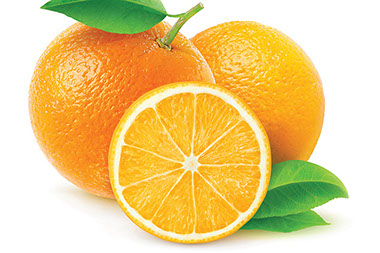
    Image of an orange.

    1. Vitamin C

    One large orange gives you 130 percent of your daily need for vitamin C. This vitamin helps boost immunity and fight cancer.

    2. Fiber

    One sweet, juicy orange delivers 4 grams of fiber. Fiber helps with digestion and may help prevent heart disease and some cancers.

    3. Minerals

    Oranges also contain important minerals such as calcium, magnesium, copper, phosphorus and potassium. These minerals are important for immune health, nervous system and muscle function, and many other body processes.

    4. B vitamins

    Oranges contain several of the B vitamins, which help the body’s cells work properly and provide you with energy.

    5. Calorie-Friendly

    One orange is a lower calorie option to satisfy your craving for something sweet.

    6. Phytochemicals

    Oranges contain hundreds of these plant chemicals that support many metabolic functions in the body.

    Sources: United States Department of Agriculture, National Institutes of Health

    © American Institute for Preventive Medicine

  • Chocolate Milk May Be The Best-Kept Secret

    HEALTHY EATING

    Image of young boy drinking chocolate milk.

    Chocolate milk may be the best-kept secret for making sure kids get the calcium they need every day. Contrary to popular myths, chocolate milk is nutrient-rich, adds only a few more calories and not much caffeine, and is kids’ number-one flavor pick. Kids have a limited time to build up their “bone bank.” The calcium in chocolate milk is one way to assure timely deposits, according to the National Dairy Council.

    © American Institute for Preventive Medicine

  • Easy Ways To Cut Back On Sugar

    HEALTHY EATING

    Image of sugar spilled out on a table with the words "Sugar Free" spelled out.

    Lowering your sugar intake doesn’t have to be a struggle. Here are some tips:

    *  Keep your favorite fresh fruits ready-to-eat in the fridge or at work. Reach for these when you have a sugar craving.

    *  Get candy and sweet treats out of the house. Avoid vending machines at work. Out of sight, out of mind.

    *  Be selective about treats. Allow yourself a slice of grandma’s pumpkin pie if you really want it. Just make it a small piece and an occasional treat, not an  everyday habit.

    *  Drink water with lemon instead of soda, sports drinks, or juice. Or, make your own fruit water by putting your favorite fresh or frozen fruits in a large bottle, and fill the rest with ice water.

    *  Make a gradual change. Don’t try to cut out all sugar at once. Instead, try cutting a little here, and a little there, to get used to less of it.

    *  Decrease the sugar in recipes. When cooking or baking, try using about half the sugar you normally would. You may not notice a difference in taste.

    © American Institute for Preventive Medicine

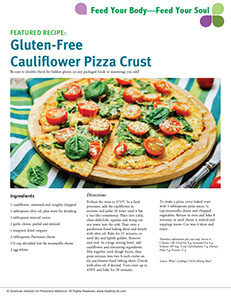
  • Gluten-Freecauliflower Pizza Crust

    HEALTHY EATING

    Image of cauliflower crust pizza.

    Be sure to double-check for hidden gluten on any packaged foods or seasonings you add!

    Ingredients

    1 cauliflower, stemmed and roughly chopped

    1 tablespoon olive oil, plus more for drizzling

    1 tablespoon minced onion

    2 garlic cloves, peeled and minced

    1 teaspoon dried oregano

    2 tablespoons Parmesan cheese

    1/4 cup shredded low-fat mozzarella cheese

    2 egg whites

    Directions

    Preheat the oven to 375°F. In a food processor, add the cauliflower in sections and pulse 10 times until it has a rice-like consistency. Place into a dry, clean dishcloth, squeeze and wring out any water into the sink. Pour onto a parchment-lined baking sheet and drizzle with olive oil. Bake for 25 minutes, or until dry and lightly golden. Remove and cool. In a large mixing bowl, add cauliflower and remaining ingredients. Mix together until dough forms, then press mixture into two 8-inch circles on the parchment-lined baking sheet. Drizzle with olive oil, if desired. Turn oven up to 450°F and bake for 20 minutes.

    To make a pizza, cover baked crust with 3 tablespoons pizza sauce, ¼ cup mozzarella cheese and chopped vegetables. Return to oven and bake 8 minutes, or until cheese is melted and toppings warm. Cut into 4 slices and enjoy.

    Nutrition information for crust only: Serves 4. Calories 120; Total Fat 8 g; Saturated Fat 4 g; Sodium 185 mg; Total Carbohydrate 5 g; Dietary Fiber 5 g; Protein 11 g

    Source: What’s Cooking? USDA Mixing Bowl

    © American Institute for Preventive Medicine

  • How Cooking At Home Helps You Score Healthy Points

    HEALTHY EATING

    Image of cooking pot fill with different vegetables.

    Most people enjoy an occasional night out at a favorite restaurant. Unfortunately, many Americans eat out too frequently, and this often means consuming more calories and fat. The Academy of Nutrition and Dietetics says restaurant portions are often too large, contributing to overeating and obesity. A serving of French fries 20 years ago was 2 ounces and 210 calories. Today, it averages 7 ounces and 610 calories!

    Cooking at home allows you to control portion sizes, calories, fat, and sodium. Challenge yourself to eat at home just once or twice a week more. You may find that you save money and lose excess weight by cooking your own meals more often.

    © American Institute for Preventive Medicine