Category: Healthy Eating

  • Recipe: Sweet Potato Cheesecake

    HEALTHY EATING

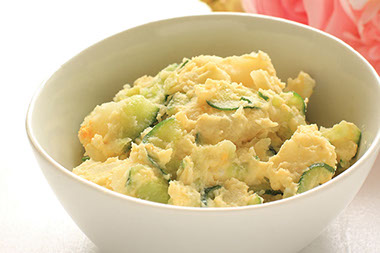
    Sweet potato cheesecake with a couple pieces missing.

    Try this twist on the classic pumpkin pie. The natural sweetness of sweet potatoes means less sugar is needed to enjoy this delicious dessert.

    Ingredients

    1 cup gingersnaps or graham crackers (finely crumbled)

    3 tablespoons butter

    8 ounces cream cheese (light, softened)

    1 cup sweet potatoes (cooked, mashed)

    1/3 cup sugar

    1-1/2 teaspoons pumpkin pie spice

    1 teaspoon grated orange peel

    1 teaspoon vanilla

    5 egg whites

    1 cup milk (evaporated, reduced-fat 2%)

    Directions

    Crust:Combine crumbs and butter. Press mixture into bottom and 1 inch up sides of an 8-inch springform pan. Set aside.

    Filling:

    1.  In a large mixing bowl, beat cream cheese, sweet potatoes, egg whites, sugar, pumpkin pie spice, orange peel, and vanilla until combined. DO NOT OVER BEAT.

    2.  Stir in milk. Carefully pour into prepared pan.

    3.  Bake at 350 degrees for 60-70 minutes until the center appears set.

    4.  Cool on a wire rack for 45 minutes. Cover and chill thoroughly.

    5.  Remove sides of pan.

    6.  Garnish with dessert topping and orange peel.

    Nutrition Information: (14 servings). Per serving: 139 kcals, 6g total fat, 3g saturated fat, 137 mg sodium, 17g carbohydrates, 1 g dietary fiber, 5 g protein.

    Source: U.S. Department of Agriculture

    © American Institute for Preventive Medicine
  • Vegan Diet: Myths & Facts

    HEALTHY EATING

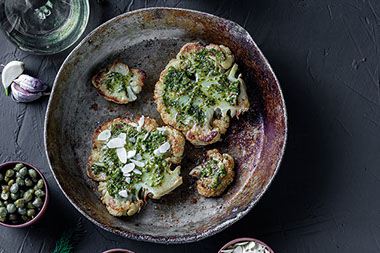
    Stuffed butternut squash with chickpeas, cranberries, quinoa cooked in nutmeg, cloves, cinnamon.

    Vegan diets excludes all animal products, including meat, eggs, milk, cheese, and even honey. A vegan diet CAN be healthy when done right. Let’s take a closer look.

    Myth #1: Vegan diets are short on protein

    Fact: While animal foods contain concentrated protein, many plant foods also contain protein. As long as a variety of plant proteins are eaten at every meal, getting adequate protein is no problem. Vegan sources of protein include:

    *  Beans

    *  Legumes

    *  Nuts

    *  Seeds

    *  Soy products

    *  Whole grains such as quinoa, oatmeal, and millet

    Myth #2: Dairy is needed for strong bones

    Fact: Calcium, vitamin D, vitamin K, and magnesium are all essential nutrients for strong bones. However, dairy is not the only food source. Lots of plants contain those nutrients:

    *  Spinach

    *  Broccoli

    *  Tofu

    *  Edamame

    *  Beans and chickpeas

    *  Chia seeds

    Safe amounts of sunlight provide vitamin D, but supplements of both vitamin D and calcium may be beneficial.

    Myth #3: Vegan diets cause malnutrition

    Fact: Poor nutrition is possible for anyone who doesn’t make wise food choices. Being vegan does require a certain amount of planning to ensure adequate protein, fat, and nutrient intake. But being a healthy vegan is very doable.

    Because it is plant-based, a balanced vegan diet may decrease the risk of some chronic diseases such as:

    *  Heart disease

    *  Diabetes

    *  High blood pressure

    *  Obesity

    Myth #4: Vegan diets aren’t safe for children

    Fact: Kids can be healthy vegans, too. However, due to their unique nutritional needs, it takes extra care and planning to ensure their growing bodies get enough protein, fat, vitamins, and minerals. It’s best to work with a pediatrician to ensure a vegan diet works  for your child.

    Myth #5: Vegan diets are restrictive

    A vegan diet may not be for everyone. But, those who follow this way of eating enjoy a wide variety of delicious plant foods. If you choose to switch to a vegan diet, give yourself plenty of time to adapt to new ways of shopping, cooking, and eating.

    © American Institute for Preventive Medicine
  • Cracking The Benefits Of Eggs

    HEALTHY EATING

    Image of an egg in a frying pan.

    Very low sugar

    For people who need to watch their sugar or carbohydrate intake, eggs can be a good option. A large egg contains less than a fifth of a gram of natural sugar.

    Protein

    A large egg contains about 6 grams of high-quality protein. Protein can help you feel fuller, longer. This is because it’s slower to digest than carbohydrates.

    Protein is the building block for many important functions in the body. It helps build new skin, bones, muscles and blood.

    Protein may also help you keep your energy levels up throughout the day.

    Healthy fats

    Eggs contain omega-3 fats. These fats help with brain function. Experts think omega-3 fats may also help improve heart health.

    Eggs are low in saturated fat. Saturated fat is the type of fat linked to heart disease and other health problems. Most of the fat in eggs is found in the yolk.

    Vitamins and minerals

    Eggs contain a number of vitamins, including:

    *  Vitamin A, which is important for eye health

    *  Vitamin B12, which helps make red blood cells

    *  Folate, which can help prevent certain birth defects in pregnant women and is needed to make DNA in the body

    *  Vitamin D, which is important for bone health and immune system function

    Eggs also contain minerals that the body needs, such as iron, selenium and iodine.

    Enjoy eggs safely

    Eggs should be cooked thoroughly before eating. Raw or undercooked eggs can have dangerous bacteria like salmonella. This can make a person very sick. But, cooking eggs until the yolks are firm helps avoid this risk. Eggs should also be kept in the refrigerator. Don’t use any eggs that are past the expiration date.

    If you have any health conditions, ask your doctor before making changes to your diet.

    Sources: Academy of Nutrition and Dietetics, National Institutes of Health, United States Department of Agriculture

    © American Institute for Preventive Medicine
  • Escape The Holiday Carbohydrate Trap

    HEALTHY EATING

    Small chaulk board with the word CARBS written with a variety of carbs.

    The holidays can feel like one big carbohydrate trap. For people who are watching their carb intake, this time of year can be challenging. Between all the bread, mashed potatoes, and desserts, many people throw up their hands and declare, “I’ll start eating better AFTER the holidays.” But, there is no reason to take an all-or-nothing approach. You can enjoy holiday meals and avoid overdoing it.

    Whether you’re managing diabetes or just trying to eat fewer empty carbs, here are some holiday eating tips:

    *Focus on eating more vegetables.Have the turkey and some of your favorite veggie sides, and hold off on the mashed potatoes or rolls. You might find yourself satisfied, but if not, you can always go back for another serving.

    *Bring a dish you know is low-carb.Make sure it is something you enjoy eating, and that feels festive for the occasion. You’re not depriving yourself; you’re enjoying delicious, low-carb food.

    *Think in advance about what foods are worth the indulgence.Instead of sitting down and throwing caution to the wind, pick one or two of your favorite carbohydrate-rich foods to enjoy. If you really want dessert, try limiting your servings of potato, rolls, stuffing, and macaroni in your main meal.

    *Have a healthy snack in advance.If you show up at the table starving, you’re more likely to be tempted. A handful of nuts or an apple with peanut butter can take the edge off and prevent overeating.

    © American Institute for Preventive Medicine
  • Magnificent Magnesium

    HEALTHY EATING

    Image of magnesium food sources.

    Magnesium plays a role in more than 300 functions in the body. It is needed for muscle and nerve function, bone health, blood sugar control and regulating blood pressure. We also need magnesium to release energy in our body.

    Long-term low levels of magnesium could be linked to certain health problems like migraine headaches, osteoporosis, type 2 diabetes and high blood pressure. This doesn’t mean magnesium can cure these diseases. It also doesn’t mean that low magnesium is the only cause. Many factors are involved with these health conditions. Researchers are still working to learn how magnesium is connected to these health conditions.

    Today’s foods & magnesium

    The recommended dietary allowance (RDA) for magnesium is 320 mg for women and 420 mg for men. Most people get their magnesium from food.

    But, some researchers believe that levels of magnesium in foods may be getting lower. Also, magnesium is not found in most processed or packaged foods. That’s why it’s recommended to get the magnesium your body needs by eating healthy foods.

    People with type 2 diabetes or digestive diseases may have a higher risk of not getting enough magnesium. In addition, certain medicines can cause depletion of magnesium. These medicines include:

    *  Loop diuretics, including furosemide and bumetanide

    *  Thiazide diuretics, including hydrochlorothiazide and ethacrynic acid

    *  Proton pump inhibitors (PPIs), including esomeprazole magnesium and lansoprazole

    If you take these medicines, your doctor may talk to you about your magnesium levels and whether you need extra magnesium.

    Should I take a supplement?

    There are many different types of magnesium supplements. Some do not absorb in the body very well. High doses of magnesium supplements can cause diarrhea, nausea, and stomach cramps. Extremely high doses can also be toxic.

    Magnesium can also interact with certain medicines. If you take any of the following medicines, do not take magnesium supplements within two hours of taking your medication:

    *  Biophosphonates like alendronate, which treat osteoporosis

    *  Antibiotics including tetracyclines and quinolones

    However, getting magnesium from healthy foods does not cause these side effects. If you’re interested in a supplement, always ask your doctor first to be sure it’s safe for you.

    Source: National Institutes of Health

    © American Institute for Preventive Medicine
  • Popcorn: A Healthy Corn Option

    HEALTHY EATING

    Popcorn in a bowl on a yellow background.

    Fresh corn is healthy, but there’s another great way to enjoy corn: popcorn.

    When you think of popcorn, you might think of movie theatres and lots of butter. But popcorn is a naturally healthy food without all the extra butter, oil and salt.

    Popcorn is whole grain corn. It’s made from a specific type of corn that pops open when it’s heated. It can be a healthy alternative to higher-calorie snacks like potato chips and crackers. One cup of air-popped corn has just 31 calories and over one gram of fiber.

    To keep it healthy, go light on the butter, oil and salt.

    Source: United States Department of Agriculture

    © American Institute for Preventive Medicine
  • Roasted Brussels Sprouts, Potatoes & Chicken

    HEALTHY EATING

    Roasted brussels sprouts, potatoes and chicken.

    To introduce a new vegetable, try serving it with something you already enjoy. Pairing Brussels sprouts with potatoes and chicken is a good way to try them out.

    Ingredients

    3 cups Brussels sprouts (fresh or frozen halved vertically, about 3/4 pound)

    4 small red potatoes (cut into chunks)

    1/2 cup chopped onion

    2 cloves garlic (minced)

    2 tablespoons olive oil

    1/4 teaspoon salt

    1/8 teaspoon pepper

    1/2 cup non-fat ricotta cheese (or cottage cheese)

    1/4 cup Part-skim mozzarella cheese (shredded)

    2 tablespoons nonfat milk

    1 pound boneless chicken breast (4 portions)

    2 tablespoons fresh rosemary sprigs and pomegranate seeds

    Directions

    1.  Preheat oven to 325 degrees Fahrenheit.

    2.  In a 2-quart baking dish coated with cooking spray, toss Brussels sprouts, potatoes, onion and garlic with 1 tablespoon olive oil, salt and pepper.

    3.  In a small bowl, mix cheese with milk.

    4.  Coat chicken breasts with remaining olive oil.

    5.  Nest chicken among vegetables in baking dish.

    6.  Top with cheese mix.

    7.  Cover with foil and bake for 40-45 minutes or until chicken is done. Optional: Garnish with fresh rosemary and pomegranate seeds.

    Nutrition per serving: Servings 4. Calories 400; Total Fat 12 g; Saturated Fat 3 g; Sodium 370 mg; Total Carbohydrate 40 g; Dietary Fiber 6 g; Protein 35 g

    Source: Produce for Better Health Foundation

    © American Institute for Preventive Medicine
  • Vegetarian Alternatives To Turkey

    HEALTHY EATING

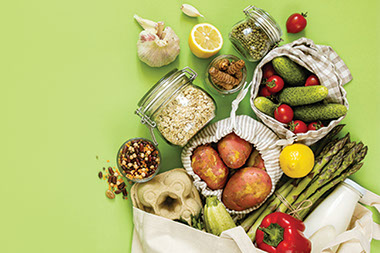
    Variety of fresh food ingredients.

    Your vision of a traditional Thanksgiving feast may have a giant roasted turkey as its centerpiece. But, increasingly, people are turning to vegetarian or low-meat diets as a healthy and environmentally friendly option. Whether you’re hosting a vegetarian holiday meal or just want to have vegetarian options available alongside your turkey, don’t worry. Vegetarian dishes are just as plentiful, easy to prepare, and satisfying. Try these four ingredients as vegetarian features at your holiday meal.

    Winter Squash

    A baked winter squash filled with delicious vegetables or stuffing mixture is delicious and will add an impressive fall display to your table. Here are a few types of winter squash that make the best holiday meal main dish:

    *  Pumpkin

    *  Acorn squash

    *  Butternut squash

    *  Spaghetti squash

    Tofurky

    The name says it all – tofu plus turkey makes tofurky. There are a variety of brands available, and you can even find it made into traditional turkey shapes.

    Remember that plain tofu itself doesn’t have a lot of flavor. If the brand you choose isn’t seasoned, find a recipe that is big on spices and flavorful ingredients.

    Mushrooms

    Mushrooms provide a big, savory taste. It’s easy to make them the star of the show. So many main dishes are enhanced with mushrooms, and they can even take the place of meat in some classic dishes.

    *  Stuffed mushroom caps

    *  Mushroom risotto or casserole

    *  Mushroom soup

    *  Mushroom with pasta

    Lentils

    Lentils have a deeper, meatier flavor and texture compared to other beans. Their savory profile makes them an easy feature for the main dish. They also pair well with cheese or nuts for added flavor.

    *  Lentil soups or stews

    *  Lentil meatloaf or meatballs

    *  Lentil salads

    *  Cheesy lentil bakes or casseroles

    © American Institute for Preventive Medicine
  • Cranberries A Healthy Holiday Dish

    HEALTHY EATING

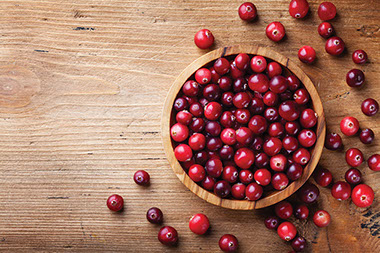
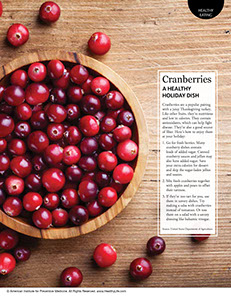
    Bowl of cranberries.

    Cranberries are a popular pairing with a juicy Thanksgiving turkey. Like other fruits, they’re nutritious and low in calories. They contain antioxidants, which can help fight disease. They’re also a good source of fiber. Here’s how to enjoy them at your holiday:

    1.  Go for fresh berries. Many cranberry dishes contain loads of added sugar. Canned cranberry sauces and jellies may also have added sugar. Save your extra calories for dessert and skip the sugar-laden jellies and sauces.

    2.  Mix fresh cranberries together with apples and pears to offset their tartness.

    3.  If they’re too tart for you, use them in savory dishes. Try making a salsa with cranberries instead of tomatoes. Or toss them on a salad with a savory dressing like balsamic vinegar.

    Source: United States Department of Agriculture

    © American Institute for Preventive Medicine
  • Farmers Market: Fresh Produce & More

    HEALTHY EATING

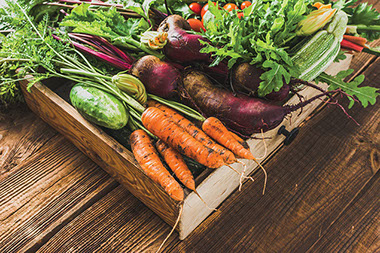
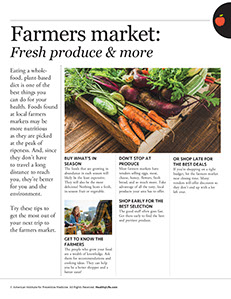
    Variety of fresh produce in wooden box.

    Eating a whole-food, plant-based diet is one of the best things you can do for your health. Foods found at local farmers markets may be more nutritious as they are picked at the peak of ripeness. And, since they don’t have to travel a long distance to reach you, they’re better for you and the environment. Try these tips to get the most out of your next trip to the farmers market.

    Buy what’s in season

    The foods that are growing in abundance in each season will likely be the least expensive. They will also be the most delicious! Nothing beats a fresh, in-season fruit or vegetable.

    Get to know the farmers

    The people who grow your food are a wealth of knowledge. Ask them for recommendations and cooking ideas. They can help you be a better shopper and a better eater!

    Don’t stop at produce

    Most farmers markets have vendors selling eggs, meat, cheese, honey, flowers, fresh bread, and so much more. Take advantage of all the tasty, local products your area has to offer.

    Shop early for the best selection

    The good stuff often goes fast. Get there early to find the best and prettiest produce.

    Or shop late for the best deals

    If you’re shopping on a tight budget, hit the farmers market near closing time. Many vendors will offer discounts so they don’t end up with a lot left over.

    © American Institute for Preventive Medicine