Category: Healthy Eating

  • Sensational Six-Layer Dinner

    HEALTHY EATING

    Image of a person cutting carrots.

    Ingredients

    2 potatoes (medium, sliced)

    2 cups carrot (sliced)

    1/4 teaspoon black pepper

    1/2 cup onion (sliced)

    1 pound ground beef (browned & drained)

    1-1/2 cups green beans

    1 can tomato soup

    Directions

    Lightly oil or spray baking dish with cooking spray. Layer ingredients in the order given. Cover. Bake at 350ºF for 45 minutes or until tender and thoroughly heated. Uncover and bake 15 more minutes. For variation, use peas or corn instead of green beans. Use your favorite cream soup instead of tomato soup.

    Makes 6 servings: 260 calories, 6 g total fat, 25 g protein, 26 g carbs, 3 g fiber, 480 mg sodium*

    *To reduce sodium content, use reduced-sodium canned soups.

    From the US Department of Agriculture’s What’s Cooking Mixing Bowl.

    © American Institute for Preventive Medicine

  • The Rise Of Food Allergies

    HEALTHY EATING

    Image of an older Asian couple stretching.

    The body’s immune system is designed to fight off unwanted invaders, such as viruses, bacteria and fungi. But when the immune system reacts to something that isn’t usually harmful, such as pollen, dust, or certain foods, it’s considered an allergy.

    The Centers for Disease Control and Prevention (CDC) says 5 out of every 100 children in the U.S. have a food allergy today. About 4 percent of all adults also have food allergies.

    While some reactions may be mild, such as hives or tingling, other food allergies can cause a life-threatening allergic reaction known as anaphylaxis.

    Increase in allergies – and questions

    The Centers for Disease Control and Prevention reports that food allergies increased 18 percent among children from 1997 to 2007.

    Researchers are still trying to find out why food allergies continue to increase. However, they do know a few key facts about food allergies:

    *  Up to 90 percent of all food allergies involve eggs, dairy, peanuts, tree nuts, fish, shellfish, wheat and soy.

    *  Food allergies can occur at any age, not just during childhood. Even if you’ve eaten a food before without problems, you can become allergic to it later.

    *  If you have a parent with allergies, asthma, or eczema, you are more likely to have food allergies.

    *  Kids with food allergies are up to 4 times more likely to have asthma and other allergies, such as hay fever.

    *  Allergies to fish, shellfish, peanuts, and tree nuts tend to last a person’s entire life. Dairy, egg, and soy allergies are sometimes outgrown.

    *  There is no cure for allergies: the allergic food must be avoided.

    A recent analysis in the Journal of the American Medical Association shows that introducing some allergenic foods to a baby earlier in life could lower the risk of food allergies. Talk to your pediatrician before giving your child new foods, especially if allergies run in the family.

    Severe allergic reactions: WHAT TO DO

    Anaphylaxis is a severe allergic reaction that can be deadly. Symptoms include facial or lip swelling, paleness, weakness, difficulty breathing, vomiting and fainting. If someone is having anaphylaxis, it’s important to:

    *  Ask if the person has epinephrine (EpiPen or another injector) and see if they need help injecting it. It is usually injected into a person’s thigh. This should be done quickly.

    *  Call 911 immediately.

    *  Even if the person starts to feel better, he or she should still go to the hospital and seek medical care. The epinephrine delays the reaction, but the allergy must still be treated by a doctor right away.

    © American Institute for Preventive Medicine

  • Watermelon Feta Salad

    HEALTHY EATING

    Image of a watermelon feta salad.

    Ingredients

    7-8 lb. seedless watermelon, chilled

    1/2 cup extra virgin olive oil

    3 limes, juiced

    1/2 cup fresh mint leaves

    1-1/2 tsp salt

    3/4 tsp pepper

    1 cup crumbled feta cheese

    Directions

    Cut off watermelon rind and chop fruit into 1-inch chunks. Place chunks in a colander to drain. Chop up mint. Toss with the watermelon chunks and dressing (see recipe below). Sprinkle feta cheese on top. Serve immediately.

    To make the dressing:

    In a small bowl, whisk together olive oil, fresh lime juice, salt and pepper.

    Serves 8: Per serving: Calories: 233; Total Fat: 18 g; Saturated Fat: 5 g; Sodium: 211 mg; Total Carbohydrate: 18 g; Dietary Fiber: 1.5 g; Protein: 4 g

    © American Institute for Preventive Medicine

  • A Jolt Of Java

    HEALTHY EATING

    Image of 3 coffee cups around coffee beans.

    The addictive drug caffeine (yes, it’s a drug) is naturally found in coffee beans and is added to other drinks and foods. So how much is in your daily cup?

    Here’s what the Center for Science in the Public Interest says. (Numbers are in milligrams per 8 ounce cup, unless otherwise stated, so judge accordingly because who drinks just 8 ounces?)

    * Note: The FDA advises consumers to talk with their health care providers before using any product marketed as an “energy shot” or “energy drink.”

    *  Brewed coffee 102 to 200 (by comparison, brewed decaf 5)

    *  Instant coffee 27 to 173

    *  Starbucks brewed 160 (Starbucks vanilla latte 75 or 1 oz Espresso 75)

    *  Dunkin’ Donuts 103

    *  Starbucks Tazo Chai tea 50

    *  Brewed tea 40-120

    *  Arizona Iced Tea, black 16; green 7.5

    *  Snapple, Just Plain Unsweetened 9

    *  5-Hour Energy (1.93 oz) 207*

    *  Monster Energy 80 (but the cans are 16 oz so 160)*

    *  Coke, regular or diet 54 (12 oz); Classic 35

    *  Sprite, regular or diet 0

    *  SoBe Essential 48

    *  Ben & Jerry’s Coffee Heath Bar Crunch 84

    *  Hershey’s Chocolate Bar (1.55 oz) 9

    *  Hershey’s Kisses (9 pieces) 9

    *  Excedrin (Extra Strength, 2 tablets) 130

    © American Institute for Preventive Medicine

  • Choosing Healthy Oats

    HEALTHY EATING

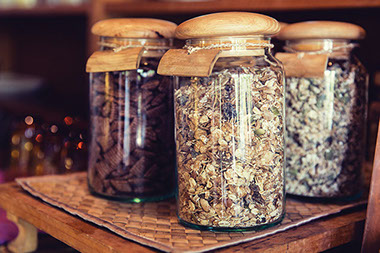
    Image of oats in jars.

    Even healthy foods can be made unhealthy through processing and adding unnecessary sugar and fat. How do you know which oats are best for your family?

    Steel-cut, rolled or instant?

    You can choose any type of oatmeal that is made with whole oats. They all contain very similar nutritional value. Instant oats are precooked and cut thinner to reduce cooking time. Steel-cut oats tend to be chewier than “old fashioned” or rolled oats, but both are equally nutritious. The best type of oat is the one you like and cook regularly.

    Look at ingredients and the nutrition label before you buy.

    Many commercially made oatmeals, especially ones that appeal to children, contain 12 grams of sugar or more. Some also contain artificial colors, sweeteners or flavors. Buy plain instant oatmeal packets and sweeten your child’s portion with a little honey, fruit or jelly.

    © American Institute for Preventive Medicine

  • Eat Out, Eat Healthy: Here’S How

    HEALTHY EATING

    Image of sign that says 'Eating Out'

    Many people find that eating at restaurants can be hard on the diet. Restaurants usually offer an array of high-fat, high-sugar, and deep fried foods that can be tough to resist. But, eating out doesn’t have to be off limits.

    Before choosing what to eat, you need to decide where to eat. One of the best ways to stay on the healthy track is to do some research first. Many restaurants offer calorie counts and other nutrition information on their website. Check out which foods fall within your diet with regards to calories and fat. This can help you steer clear of foods that may seem healthy, such as certain salads, but are actually loaded with calories.

    And, making changes to dishes is a good way to get exactly what you want. Think about whether the restaurant:

    *  Will allow you to make substitutions without hassle or extra cost

    *  Uses healthier cooking methods, such as broiling, grilling, and baking instead of frying

    Once you’ve chosen your place, it’s time to pick your plate. Follow these guidelines for a healthy and enjoyable meal:

    *Don’t be afraid to ask questions.Ask the server about how a dish is prepared and what comes with it. Does it come with butter or oil? Can these items be placed on the side or taken off completely?

    *Eat slowly and watch portion sizes.Many restaurant portions are big enough for two meals. Consider splitting your meal with another person if this is allowed. Or, ask the waiter to box half of your meal right away.

    *If possible, ask for no salt to be added to your food.And, just say “no” to the salt shaker on the table.

    *Skip the pre-meal bread that often spoils your diet and appetite.Ask for no bread to be brought to the table.

    *Choose foods that taste good without being fried, such as grilled chicken, seafood, and fresh vegetables.

    *Watch out for drinks.Many beverages, such as lemonade, juices, and alcoholic drinks, are high in calories. Stick to water and drink plenty of it before and during the meal. This may help stave off hunger.

    *Be creative with dessert.Don’t look at the tempting dessert menu. Instead, ask for a bowl of fresh fruit if you’re craving something sweet. Or, keep sugar-free mints or gum with you to pop in your mouth after dinner.

    Source: American Diabetes Association

    © American Institute for Preventive Medicine

  • Good Cheer For Holiday Dieting

    HEALTHY EATING

    Image of gift sitting on a plate.

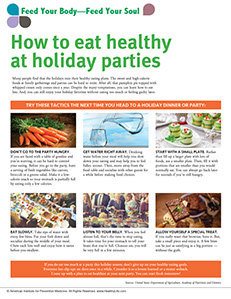
    Big holiday coming up? Don’t panic. With a good game plan and strategic planning you and your diet can not only survive holidays but you can actually thrive on them. Holidays do not have to be a time of feast or famine-you can strike a happy balance between gorging and self-sacrifice.

    *  Review your eating habits from the previous year’s celebration. Does food take center stage during the holidays? Do you genuinely enjoy foods like fruitcake, for example, or do you just eat them out of custom and tradition?

    *  Before digging in at a big holiday feast, imagine how you will feel after eating it. Visualize the bloated, uncomfortable, and guilty feelings you’ve experienced on past occasions.

    *  Forget about being “perfect” on holidays. Stringent dieting may be unrealistic and you could sabotage your efforts by setting standards that are too high. Don’t set yourself up for failure by only thinking of what you can’t have. Concentrate instead on healthy options such as fruit baskets.

    *  Learn to be festive without depending on alcohol. A drink here, a toast there-the calories of alcohol can add up. Substitute club soda or mineral water for alcohol.

    *  If you’re invited to someone’s home for dinner, ask if you can bring a dish, then make it  low-calorie. (And be sure to make plenty. Low-calorie foods are usually very popular.)

    *  Remember that the major purpose of the holidays is to enjoy family and friends. Food and alcohol are secondary factors.

    © American Institute for Preventive Medicine

  • How Sweet It Is

    HEALTHY EATING

    Image of different types of sweeteners.

    Is sugar really bad for us? How about artificial or low-calorie sweeteners?

    Our bodies need one type of sugar, called glucose, to survive. “Glucose is the number one food for the brain, and it’s an extremely important source of fuel throughout the body,” said Dr. Kristina Rother, pediatrician with the National Institute on Health and expert on sweeteners.

    But there’s no need to add glucose to your diet, because your body can make the glucose it needs by breaking down food molecules like carbohydrates, proteins, and fats. Some sugars are found naturally in foods such as fruits, vegetables, and milk.

    Much of the sugar we eat isn’t found naturally in food but is added during processing or preparation.

    Although sugar itself isn’t bad, said Dr. Rother, “Sugar has a bad reputation that’s mostly deserved because we consume too much of it. It’s now in just about every food we eat.”

    You can cut down on added sugars. NIH in Health offers these suggestions:

    *  Choose water, fat-free milk, or unsweetened tea or coffee instead of sodas, sports drinks, energy drinks, and fruit drinks.

    *  Reduce sugar in recipes. If a recipe says 1 cup, use 2/3 cup.

    *  To enhance flavor, add vanilla, cinnamon, or nutmeg.

    *  Eat fresh, canned, frozen, and dried fruits without added sugar. Choose fruits canned in their own juice rather than in syrup.

    *  Use fruits to top foods like cereal and pancakes rather than sugars, syrups, or other sweet toppings.

    *  Read the ingredients list to pick food with little or no added sugar.

    © American Institute for Preventive Medicine

  • Non-Dairy Calcium-Rich Foods

    HEALTHY EATING

    Image of almond milk.

    Even if you can’t eat dairy, there are plenty of foods that can help you meet your recommended daily calcium intake.

    *  Calcium-fortified soy and almond milk

    *  Tofu

    *  Calcium-fortified orange juice

    *  Sardines

    *  Edamame

    *  Kale, collard greens, broccoli

    *  Figs

    *  White beans

    *  Okra

    © American Institute for Preventive Medicine

  • Shake Salt

    HEALTHY EATING

    Image of nutrition label.

    About 75% of the total sodium (salt) you get in your diet comes from sodium already in packaged and restaurant foods, not from the salt shaker, said an FDA deputy commissioner. That makes it very difficult for you to reduce your sodium intake because the foods you have available to you in the marketplace already have high levels in them.

    So what can you do? The FDA offers some advice:

    *  When shopping for food, read food labels and choose foods that are lower in sodium.

    *  Foods providing 5% (Percent Daily Value or %DV on the label) are considered low. And 20%DV is considered high (avoid these foods).

    *  The CDC identified 10 surprising foods as the greatest sources of sodium: breads and rolls; luncheon meat, such as deli ham or turkey; pizza; poultry, fresh and processed, much of the raw chicken bought from a store has been injected with a sodium solution; soups; cheeseburgers and other sandwiches; cheese, natural and processed; pasta dishes; meat dishes, such as meat loaf with gravy; and savory snack foods, such as potato chips, pretzels, and popcorn.

    © American Institute for Preventive Medicine