Category: Healthy Eating

  • The Salty 6: Hidden Sources Of Salt

    HEALTHY EATING

    Image of a bowl of soup.

    Salt, or sodium, can affect your risk of heart disease and high blood pressure. Many Americans already eat much more than the daily recommended amount of salt. Even if you skip the salt shaker, many foods already have high amounts of salt in them. In fact, more than 75 percent of the salt we consume is already in our foods. It’s not coming from the salt shaker! Be aware of these “salty 6” and start eating less of these foods:

    1. Breads and rolls

    When eaten several times a day, these foods add up to a lot of sodium. Most bread has 100 to 200 mg of sodium per slice. Check labels for lower-sodium varieties.

    2. Pizza

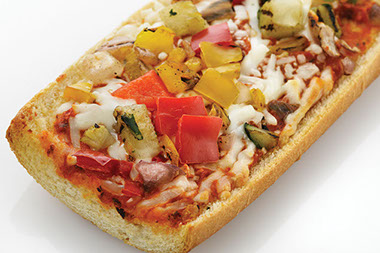
    The cheese, crust and tomato sauce used for pizza often contain a high amount of sodium. Add pepperoni and sausage and you’ve got a sodium explosion. Ask for less cheese and sauce, skip the meat toppings, and add more veggies. Pair it with steamed vegetables, a salad or fruit to help fill you up.

    3. Sandwiches

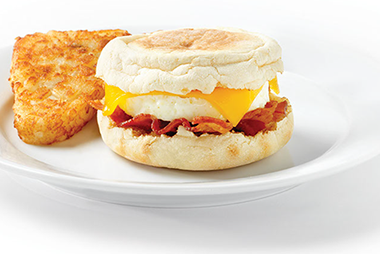
    Restaurant burgers, hot dogs and sandwiches may contain all of your salt allowance for the day. Make burgers at home without salt or ask for a lower-sodium option when eating out (e.g., roasted chicken sandwich). You can also share the sandwich with a friend and fill up on a fresh salad.

    4. Lunch meat or cold cuts

    Six thin slices of deli meat may contain half of your entire day’s worth of salt. Look for lower-sodium lunch meats or skip the deli meats altogether. Instead, try hummus, sautéed vegetables, tuna without salt or eggs as other tasty sandwich options.

    5. Soup

    Canned or pre-packaged soups may have almost an entire day’s worth of salt in one serving. Make homemade soup, if possible, or check labels to find lower-sodium versions. Remember, your taste buds will become more sensitive to less sodium over time.

    6. Burritos and tacos

    Toppings and fillings are often loaded with sodium. For a healthier version, choose burritos and tacos that are veggie-friendly and have less meat and cheese.

    Replace these salty foods with fruits, vegetables, whole grains, lean fresh meat and dairy. And, when you season your foods, choose a salt-free herb blend that adds flavor without any sodium.

    Source: American Heart Association

    © American Institute for Preventive Medicine

  • Ways To Improve Heart Health

    HEALTHY EATING

    Images of fruits and vegetables shaped into a heart.

    (With ingredients in the foods you already eat)

    Poor diet increases the risk of high blood pressure, high cholesterol, and poor circulation-3 major factors that affect overall heart health. Know which nutrients and foods in your diet may decrease risk for heart disease-the number one cause of death in the U.S.

    Phytosterols:Compounds similar to cholesterol that are found in all edible plants. They help reduce low density lipoprotein (LDL) cholesterol, which is a main risk factor for heart disease.

    Cocoa flavanols:Can help maintain the elasticity of blood vessels, which contributes to normal blood flow. Quite simply: dark chocolate.

    Omega-3 fatty acids:Primarily found in fish. Have been shown to decrease triglyceride levels, potentially lowering blood pressure.

    Hydroxytyrosol:An antioxidant found in olive oil, protects blood lipids (fats) from oxidative damage.

    Blueberries: May reduce high blood pressure.

    Oat beta-glucan:Daily consumption of at least 3 grams (your morning cereal) effectively lowers cholesterol.

    Grape seed extract:Shown to support blood pressure within a normal range. This is ground up seeds from red wine grapes.

    Vitamin K:Helps to keep excess calcium out of blood vessel walls and improve cardiovascular health. Found in green leafy vegetables.

    Dairy:Daily consumption of low-fat milk products decreases the risk of high blood pressure.

    Almonds:Improves serum fatty acid profiles and decreases the overall risk of heart disease (a handful a day).

    Walnuts:Good source of omega-3 fatty acids and alpha linolenic acid (ALA) which help your heart by preventing dangerous heart rhythms that can lead to heart attacks.

    © American Institute for Preventive Medicine

  • Am I Hungry?

    HEALTHY EATING

    Image of empty dish plate.

    Learn to tell if you’re really hungry or just think you’re hungry. Before you grab something to eat, figure out if you are truly hungry or just bored. Maybe you are thirsty rather than hungry.

    Try this, says Anita Kobuszewski, RD, author of Food: Field to Fork, How to Grow Sustainably, Shop Wisely, Cook Nutritiously, and Eat Deliciously. Slow down and sit down. With your mouth closed, let your tongue rest relaxed, sinking low to the floor of your mouth. Close your eyes. Take a deep breath. Hold it for a count of 3. Exhale slowly through pursed lips. Relax. Repeat this 3 times.

    Before you open your eyes, ask your tummy if it’s hungry. If the answer is no, then move on. If the answer is yes, eat something healthy with protein, complex carbs, and a small amount of healthy fat. An example would be a glass of skim milk and a slice of whole grain toast with a dab of chunky peanut butter, or an apple with a dab of almond butter.

    The point is not to run on empty. The body needs a consistent flow of energy to keep all its systems running well.

    © American Institute for Preventive Medicine

  • Cinnamon Oatmeal Pancakes

    HEALTHY EATING

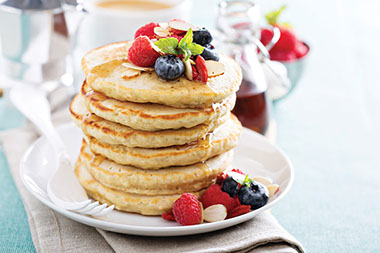
    Image of a cinnamon oatmeal pancakes.

    These pancakes taste good and are good for you.

    Ingredients

    1-1/2 cups flour

    1 teaspoon baking powder

    1/2 teaspoon salt

    1 Tablespoon cinnamon

    1 egg

    1-1/2 cups cooked oats

    1-1/2 cups evaporated milk

    1/4 cup water

    Nonstick cooking spray

    Directions

    1. Mix flour, baking powder, salt and cinnamon in a large bowl.

    2. In a separate bowl, combine egg, oats, milk and water, and stir well.

    3. Stir the oatmeal mixture into the flour mixture and stir until combined.

    4. Heat a large skillet coated with nonstick cooking spray over medium heat.

    5. Pour large spoonfuls of batter into the skillet. Cook until bubbles show on the tops of the pancakes, about 2 to 3 minutes. Flip over and cook an additional 2 minutes, or until golden brown and cooked through.

    6. Serve warm by themselves or top with canned or fresh fruit.

    Serves 10. Per serving: Calories: 120; Total fat: 2 g; Saturated fat: 1 g; Cholesterol: 25 mg; Sodium: 190 mg; Total carbohydrate: 20 g; Dietary fiber: 1 g; Total sugars: >1 g; Protein: 4 g

    Source: What’s Cooking? USDA Mixing Bowl

    © American Institute for Preventive Medicine

  • Eat Right For Your Lifestyle

    HEALTHY EATING

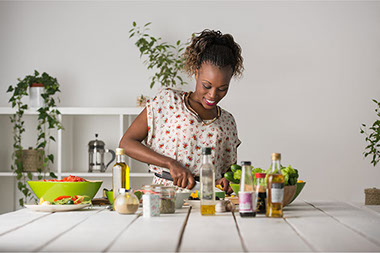
    Image of two women eating lunch.

    What’s your lifestyle? Busy parent, jet-setting exec, student, athlete, or vegetarian? Or some combination of these? Jim White, spokesperson for the Academy of Nutrition and Dietetics, says one size doesn’t fit all nutritional needs. You have flexibility in making healthy eating choices. He offers some suggestions:

    *Career-minded.Busy work days. Business travel. Eating on the fly. Suggestions: Keep single-serve packages of crackers, fruit, peanut butter, low-sodium soup, and canned tuna in your desk. Tuck portable, nonperishable foods in your purse, briefcase, or backpack for a meal on the run. Try granola bars, peanut butter and crackers, fresh fruit, trail mix, and single-serve packs of whole-grain cereal or crackers.

    *Athletes.Even for the casual workout. Your body needs fuel to function, so eat a light breakfast or snack before you exercise. Try low-fat yogurt, graham crackers with peanut butter, a banana, or cereal with low-fat milk. Before, during, and after exercise, replace fluids with plenty of water or a sports drink.

    *Students.Ah, the fast-paced lifestyle on a low budget. Stock smart grab-and-go snacks that combine protein and carbs to fuel you, such as apples with peanut butter, carrots and hummus, hard cooked eggs and fruit, banana and yogurt, almonds with low-fat cheese or whole-grain cereal. In the cafeteria, choose the salad bar but go easy on cheese, bacon, high-calorie add-ons, and  salad dressings.

    *Families.Quick and nutritious can be done. Keep things simple. Build a collection of favorite recipes and choose ingredients that you can use in more than one meal. For example, cook extra grilled chicken for chicken salad or fajitas the next day.

    *Vegetarians.You can include nutrient-rich beans in vegetarian chili, a hummus-filled pita sandwich, or veggie burger. Make popular items vegetarian, such as veggie pizza and pasta primavera.

    © American Institute for Preventive Medicine

  • Good Mood Foods

    HEALTHY EATING

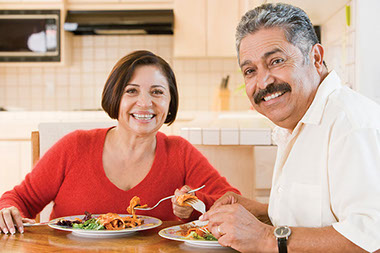
    Image of couple eating dinner.

    Colder temps, darker and longer days, and the temptation to eat more and move less. Sound like your winter schedule? Boost your mood with this advice from Highmark, a health care company.

    *Focus on nutrient-rich foods.Eating “comfort foods” may help you relax and give you a mood boost, but it’s only temporary. Nutrient-rich foods like fruits, vegetables, whole grains, and lean protein foods provide a consistent and long-lasting impact on your health, mood, energy, and alertness.

    *Cut back on your fat intake.A high-fat diet can be a real brain and energy drainer. Just say “no” to deep-fried foods and look for foods that contain no more than 3 grams of fat per serving.

    *Eat moderate portion sizes and avoid large meals.Have you ever wondered why you feel tired after eating a large meal? During periods of digestion, your blood supply is directed to the digestive tract and away from the rest of the body, which causes you to slow down.

    *Eat regular meals.Skipping meals can slow your metabolic rate, and the lower your metabolism, the lower your energy level. Plan regular meals and snacks to keep your metabolic rate and blood sugar levels normal to provide your brain the best means to function and handle stress.

    *Remember balance, variety, and moderation.The best strategy for maintaining a good mood, high-energy level, and concentration is to consistently eat a wide variety of foods high in nutritional value.

    © American Institute for Preventive Medicine
  • How To Eat Healthy At Holiday Parties

    HEALTHY EATING

    Image of holiday treat on small plate.

    Many people find that the holidays ruin their healthy eating plans. The sweet and high-calorie foods at family gatherings and parties can be hard to resist. After all, that pumpkin pie topped with whipped cream only comes once a year. Despite the many temptations, you can learn how to eat less. And, you can still enjoy your holiday favorites without eating too much or feeling guilty later.

    Try these tactics the next time you head to a holiday dinner or party:

    Don’t go to the party hungry.If you are faced with a table of goodies and you’re starving, it can be hard to control your eating. Before you go to the party, have a serving of fresh vegetables like carrots, broccoli or a greens salad. Make it a low-calorie snack so your stomach is partially full by eating only a few calories.

    Get water right away.Drinking water before your meal will help you slow down your eating and may help you to feel fuller, sooner. Then, move away from the food table and socialize with other guests for a while before making food choices.

    Start with a small plate.Rather than fill up a larger plate with lots of foods, use a smaller plate. Then, fill it with portions that are smaller than you would normally eat. You can always go back later for seconds if you’re still hungry.

    Eat slowly.Take sips of water with every few bites. Put your fork down and socialize during the middle of your meal. Chew each bite well and enjoy how it tastes before you swallow.

    Listen to your belly.When you feel almost full, that’s the time to stop eating. It takes time for your stomach to tell your brain that you’re full. Chances are, you will be very full in a few minutes.

    Allow yourself a special treat. If you really want that brownie, have it. But, take a small piece and enjoy it. A few bites can be just as satisfying as a big portion – without the guilt.

    If you do eat too much at a party this holiday season, don’t give up on your healthy eating goals. Everyone has slip-ups on diets once in a while. Consider it as a lesson learned or a minor setback. Come up with a plan to eat healthier at your next party. You can start fresh tomorrow!

    Sources: United States Department of Agriculture, Academy of Nutrition and Dietetics

    © American Institute for Preventive Medicine

  • Nutritional Treasure In The Trash

    HEALTHY EATING

    Image of beets with the greens still attached.

    Sometimes the best parts of the vegetables get thrown in the trash. So next time you’re cooking up vegetables and are about to toss out those extra parts, stop. Many vegetable parts are perfectly edible and are packed with nutrients and flavor.

    Here are some tips from the American Institute for Cancer Research to make the most of your veggies:

    *  Roasted pumpkin seeds are a fall favorite, but you can roast seeds from any winter squash, including butternut, acorn, and spaghetti squash. Squash seeds are a great source of protein. To roast, scoop out seeds, rinse, and drain. Let them dry, spread flat on a baking pan and bake at 300ºF for about 20-30 minutes until golden brown.

    *  Using the whole cauliflower, including the stem, in cauliflower “steaks” is trendy right now. Cut all the way through a cauliflower head from the top to make cauliflower steaks, which can be broiled or pan roasted. Or instead of mashed potatoes, try mashing the whole cooked cauliflower including the stem.

    *  Use a vegetable peeler or large knife to remove the thick, tough outer layer of the broccoli stem (if you use a knife, make 4 lengthwise cuts along the 4 sides of the stem to make a long rectangle). Try making creamy broccoli soup, which includes both the broccoli stems and florets.

    *  Buy beets with the greens still attached and it’s like getting two vegetables in one. Beet greens contain loads of vitamin C and beta-carotene-nutrients linked to lower cancer risk. Separate the greens from the beets by cutting just above where the stem begins. They’re great sautéed in olive oil, with garlic, salt, and pepper to taste.

    © American Institute for Preventive Medicine

  • Should I Be Gluten-Free?

    HEALTHY EATING

    Image of bread with the word 'Gluten' on wooden blocks.

    If you’ve seen the term “gluten-free” on food items and at restaurants, you may be wondering if you should be avoiding gluten.

    Gluten is a protein found in wheat, rye and barley. Many breads, pastas and cereals contain gluten. But, other products you wouldn’t suspect also have gluten like sauces, beer and malt beverages, and   pre-seasoned meats.

    Most people can eat gluten without any problems. But, people who have celiac disease have an immune system reaction to gluten. When they eat gluten, the immune system attacks the small intestine. This causes damage to the intestine, and it can’t work like it’s supposed to. This means the body can’t absorb the nutrients it needs.

    Symptoms of celiac disease

    In babies and children:

    *  Stomach aches, bloating, constipation, vomiting and/or diarrhea

    *  Foul-smelling or pale-colored stools

    *  Lack of proper weight gain

    *  Fatigue

    *  Being irritable or having behavior problems

    *  Attention deficit hyperactivity disorder (ADHD)

    *  Short stature

    *  Damage to tooth enamel

    In adults:

    *  Diarrhea or constipation

    *  Bone or joint pain

    *  Fatigue and weight loss

    *  Irregular menstrual periods

    *  Itchy, blistery skin rash

    *  Anxiety, depression or mood changes

    *  Bone loss (osteoporosis)

    *  Iron-deficiency anemia

    A mysterious condition

    To add to the confusion, celiac disease may come on unexpectedly. Some people have celiac disease for a while without symptoms. Then, something triggers the immune response and symptoms appear.

    To find out if someone has celiac disease, doctors usually do a blood test. If the blood test shows celiac disease as a possibility, another test must be done to confirm it. This is usually a biopsy (taking a small sample) of the inside of the intestine. If you are getting a blood test, don’t stop eating gluten beforehand. If you do, the test may not show an accurate result.

    Treatment for celiac disease

    People with celiac disease must follow a strict gluten-free diet for life. They will have to read food labels and get to know which foods may have gluten.

    People who are newly diagnosed with  celiac disease should work with a doctor and/or dietitian to learn how they can avoid eating and drinking all gluten-containing foods and beverages.

    Non-celiac gluten sensitivity

    Some people have health problems when they eat gluten but do not test positive for celiac disease. They find that when they stop eating gluten, the problems go away. This is known as non-celiac gluten/wheat sensitivity (NCGS).

    If you don’t have celiac disease or NCGS, experts say you should not avoid gluten. Gluten can be part of a healthy diet and eating “gluten-free” doesn’t mean it’s healthier for you.

    Sources: American Academy of Family Physicians, Celiac Disease Foundation, National Institute of Diabetes and Digestive and Kidney Diseases

    © American Institute for Preventive Medicine

  • The Skinny Ontransfat

    HEALTHY EATING

    Image of pencil erasing the words "Trans Fats".

    Saturated or unsaturated? Mono or poly? Good or bad?

    The FDA has taken action to phase out the remaining trans fat in the nation’s food supply.

    Unlike mono and poly unsaturated fats, which are liquid at room temperature, or saturated fats, which occur naturally in animal products such as butter and meat, trans fat is manmade by adding a hydrogen atom to oil and changing its molecular structure.

    Crisco may have been the original product for trans fat-a cheap way to add fat to foods and make them shelf-stable. Now, it can be found in everything from donuts to prepackaged cookie dough to boxed macaroni and cheese to microwave popcorn.

    “If it’s easy to make and it’s a convenience food, it may have some trans fat in it,” according to experts at Penn State Hershey Medical Center.

    Research has shown that trans fat increases bad cholesterol (LDL) levels and lowers levels of the good cholesterol (HDL) in the body. That can lead to a number of problems, such as hardening of the arteries, heart attack, heart disease, and stroke.

    The FDA’s action will remove trans fat from a category of foods known as “Generally Recognized As Safe” and place it in the category of food additive, which could open manufacturers up to liabilities if they don’t find an alternative.

    © American Institute for Preventive Medicine