Category: Healthy Eating

  • Classic Macaroni And Cheese

    HEALTHY EATING

    Image of a bowl of macaroni and cheese.

    Ingredients

    2 cups macaroni*

    ½ cup onion, chopped

    ½ cup fat-free evaporated milk

    1 medium egg, lightly beaten

    ¼ tsp ground black pepper

    1¼ cups (4 oz) low-fat sharp cheddar cheese, finely shredded

    Cooking spray

    Directions

    1. Preheat oven to 350° F.

    2. Cook macaroni according to package directions-but do not add salt to the cooking water. Drain and set aside.

    3. Spray casserole dish with nonstick cooking spray.

    4. Lightly spray saucepan with nonstick cooking spray. Add onion to saucepan and sauté for about 3 minutes over medium heat.

    5. In a bowl, combine macaroni, onion, and the remaining ingredients, and mix thoroughly.

    6. Transfer mixture into casserole dish.

    7. Bake for 25 minutes or until bubbly. Let stand for 10 minutes before serving.

    Makes 8 servings. Per serving: 200 calories, 4 g total fat, 11 g protein, 29 g carbs, 1 g fiber, 120 mg sodium

    *To increase fiber content, use whole wheat pasta.

    Source: The National Heart, Lung, and Blood Institute’s Heart Healthy Recipes

    © American Institute for Preventive Medicine
  • Fall In Love With Fall Vegetables

    HEALTHY EATING

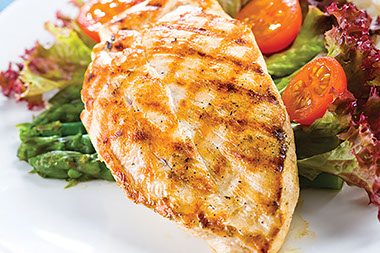
    Image of a variety of fall vegetables.

    Perhaps the days of watermelon and cucumbers are behind us for now, but fall has plenty of delicious in-season veggies and fruits to offer.

    Eating what’s “in season” often means you can get food that’s fresher, more nutritious, and costs less. Check out the grocery store or farmer’s market for some of these delicious fall favorites:

    *  Pumpkins

    *  Carrots

    *  Winter squash, such as acorn, butternut and buttercup

    *  Broccoli

    *  Cauliflower

    *  Sweet potatoes

    *  Mushrooms

    *  Spinach

    *  Grapes

    Of course, some produce is available year-round when it can be shipped from far away. But, check out where the food was grown to ensure you’re getting something fresh. The USDA requires that fresh and frozen fruits and vegetables, along with some meats and fish, have a label on them stating the “country of origin.” In general, the farther it’s had to travel, the less fresh it will be when it gets to your grocery store.

    Remember many of your favorites can be found in the frozen food section if it’s not available fresh at certain times of year.

    © American Institute for Preventive Medicine

  • Halloween Candy Control

    HEALTHY EATING

    Image of halloween treats.

    Despite all your work to help your kids eat healthy, holidays like Halloween can quickly throw your efforts off track. Candy in the stores and at school, and, of course, while trick-or-treating means your kids have plenty of access to junk food. It might be downright scary.

    While a little candy isn’t harmful, it can be easy to overdo it when junk food seems to be everywhere. And the health problems associated with sugary snacks and unhealthy foods are real:

    *  The Centers for Disease Control and Prevention says 1 in 5 school-aged children has obesity. While candy alone isn’t to blame, experts know that eating too many foods high in calories and low in nutrition (such as candy and sugary treats) are part of the problem.

    *  Sugary treats can cause cavities. The American Dental Association says some of the worst offenders are sticky treats that cling to teeth and those that sit in the mouth for a long time like hard candies and suckers. But, any high-sugar snack can spell trouble for someone’s dental health.

    The good news is, even health-conscious families can enjoy the fun of Halloween (and a few treats) if they have a plan in place before the spooky day arrives:

    *Don’t leave candy out where it can be grabbed any time.Kids (and adults) tend to reach for whatever is available, and may mindlessly eat whatever is sitting out. Put candy and other goodies in a hard-to-reach cupboard instead. This requires more effort to get to it, so it is “out of sight, out of mind.”

    *Teach kids moderation.If you make candy and sweets off-limits, kids may want the forbidden food even more. Instead, allow them a small treat after they’ve eaten a healthy dinner.

    *Lead by example.If you have a hard time avoiding sweet treats, now is a great time to make healthy eating a family effort. Reserve your candy and other treats for after dinner. Make it a small amount, such as one fun-sized candy bar.

    *Buy what you don’t like.If you like to grab a piece here and there while the trick-or-treaters visit your house, buy candy you won’t be tempted to eat.

    *Donate your candy!Teach kids to do good by giving their candy to soldiers and charitable causes, such as for kids who are in the hospital. A variety of organizations accept candy, but check first. Try your local food bank, Operation Gratitude, the Halloween Candy Buy Back and Ronald McDonald House.

    © American Institute for Preventive Medicine
  • The Importance Of Portions: Size Matters

    HEALTHY EATING

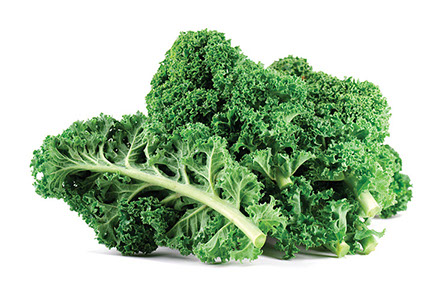
    Image of 2 bagels.

    If it seems like food portions are bigger today than they were years ago, it’s not your imagination. Health experts say that food sizes – and obesity rates – have grown in the last 20 years. Focusing on healthy foods is important. But portion sizes are also an important factor to think about when you eat. Whether it’s a cookie or a plate of spaghetti, how much you eat is just as important as what you eat. After all, the total calories you consume each day can mean the difference between gaining weight and losing it.

    Reality check: Portions are bigger today

    Take a look at these food comparisons, and find out what you need to do to burn off those extra calories.

    Bagel

    20 years ago: 140 calories, 3-inch diameter

    Today: 350 calories, 6-inch diameter

    Calorie difference: 210 calories

    You have to rake leaves for 50 minutes to burn the extra 210 calories. (Based on 130-pound person)

    Cheeseburger

    20 years ago: 330 calories

    Today: 590 calories

    Calorie difference: 260 calories

    You have to lift weights for 1.5 hours to burn the extra 260 calories. (Based on 130-pound person)

    Soda

    20 years ago: 85 calories, 6.5 ounces

    Today: 250 calories, 20 ounces

    Calorie difference: 165 calories

    You have to work in the garden for 35 minutes to burn 165 calories. (Based on 160-pound person)

    Source: National Heart, Lung, and Blood Institute Obesity Education Initiative

    © American Institute for Preventive Medicine

  • Organic? Comparing Apples To Apples

    HEALTHY EATING

    Image of couple at grocery store picking out peppers.

    Should you spend the extra cents to buy organic produce? Is organic a healthier choice? New findings from Stanford University cast some doubt on the benefits of buying organic.

    “There isn’t much difference between organic and conventional foods, if you’re an adult and making a decision based solely on your health,” said Dr. Dena Bravata from Stanford’s Center for Health Policy. The study compares the nutrition of organic and non-organic foods and is published in the Annals of Internal Medicine.

    This is the broadest study to date comparing organic and conventional foods. The researchers did not find strong evidence that organic foods are more nutritious or carry fewer health risks than conventional options, though consumption of organic foods can reduce the risk of pesticide exposure.

    The popularity of organic products, which are generally grown without synthetic pesticides or fertilizers or routine use of antibiotics or growth hormones, is skyrocketing in the United States. Organic foods are often twice as expensive as their conventionally grown counterparts.

    Although there is a common perception-perhaps based on price alone-that organic foods are better for you than non-organic ones, it remains an open question as to the health benefits.

    The researchers found no consistent differences in the vitamin content of organic products, and only one nutrient-phosphorus-was significantly higher in organic versus conventionally grown produce (and the researchers note that because few people have phosphorous deficiency, this has little clinical significance).

    There was also no difference in protein or fat content between organic and conventional milk, though evidence from a limited number of studies suggested that organic milk may contain significantly higher levels of omega-3 fatty acids.

    The review yielded scant evidence that conventional foods posed greater health risks than organic products. While researchers found that organic produce is 30 percent less likely to be contaminated with pesticides than conventional fruits and vegetables, organic foods are not necessarily 100 percent free of pesticides. What’s more, as the researchers noted, the pesticide levels of all foods fell within the allowable safety limits.

    “If you look beyond health effects, there are plenty of other reasons to buy organic instead of conventional,” noted Dr. Bravata. She listed taste preferences and concerns about the effects of conventional farming practices on the environment and animal welfare as some of the reasons people choose organic products.

    © American Institute for Preventive Medicine
  • Spooky And Not-So-Spooky Halloween Treats

    HEALTHY EATING

    Image of a brother and sister dressed for Halloween.

    Worst

    *  Chewy/sticky sweets, such as gummy candies, taffy, and even dried fruit can be difficult for children and adults to resist, and even more difficult to remove from teeth. They get stuck in the crevices between teeth, making it nearly impossible for saliva to wash them away.

    *  Sour candies are highly acidic and can break down tooth enamel quickly. The good news: Saliva slowly helps to restore the natural balance of the acid in the mouth. Wait 30 minutes to brush your teeth after consuming sour/acidic candies; otherwise, you are brushing the acid onto more tooth surfaces and increasing the risk of enamel erosion.

    *  Sugary snacks, including candy corn, cookies, and cake, all contain high amounts of sugar, which can cause tooth decay.

    Best

    *  Sugar-free lollipops stimulate saliva, which can help prevent dry mouth that leads to tooth decay.

    *  Sugar-free gum can actually prevent cavities as it not only dislodges food particles from between the teeth but also increases saliva-which works to neutralize the acids of the mouth and prevent tooth decay.

    *  Dark chocolate and its antioxidants can be good for the heart and may even lower blood pressure.

    As always, monitor your children’s candy intake this Halloween and all year round. Kids should be brushing their teeth twice a day for 2 minutes, the Academy recommends.

    © American Institute for Preventive Medicine
  • Top 10 Fruit Snacks For Kids

    HEALTHY EATING

    Image of child eating yogurt with strawberries and blue berries.

    Forget cookies. Fruit is now the number-one snack item parents give to children under the age of 6. That’s because leading researchers believe that parents are taking childhood nutrition more seriously.

    The Produce for Better Health Foundation suggests these top 10 fruit snacks for kids:

    *  Popsicles (freeze fruit juice to make your own)

    *  Fruit sandwiches (slices of apples or pears and low-fat cheese)

    *  Peanut butter and fresh fruit

    *  Fresh fruit dipped in low-fat yogurt

    *  Fruit smoothies

    *  Canned fruit or single-serve fruit cups

    *  Applesauce as a dip for fresh fruit slices

    *  Dried fruit packs such as raisins

    *  Fresh fruit dipped in poppyseed dressing

    *  Frozen fruit chunks such as bananas and grapes

    © American Institute for Preventive Medicine
  • What To Do With Holiday Leftovers

    HEALTHY EATING

    Image of a turkey wrap.

    Make a game plan for leftovers to avoid overeating, say experts from The University of Texas MD Anderson Cancer Center. You can turn holiday leftovers into new healthy dishes by reusing the following foods:

    White turkey meat

    *  Whip up your favorite chili recipe, but use turkey instead of ground beef.

    *  Wrap turkey, spinach leaves, and 2 tablespoons of cranberry sauce in a whole wheat tortilla.

    Mashed potatoes

    *  Mix in a healthy helping of cooked vegetables for a new twist on this side dish. Try cauliflower, broccoli, green beans, or carrots.

    Sweet potatoes

    *  Make a protein-packed sandwich spread or veggie dip by pureeing one-half cup sweet potatoes with one-half cup chickpeas. Eat only 1 or 2 tablespoons at a time.

    © American Institute for Preventive Medicine

  • Argentinian Grilled Steak With Salsa Criolla

    HEALTHY EATING

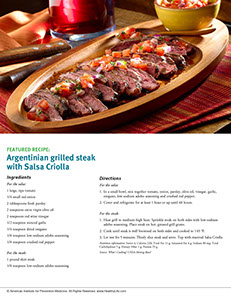
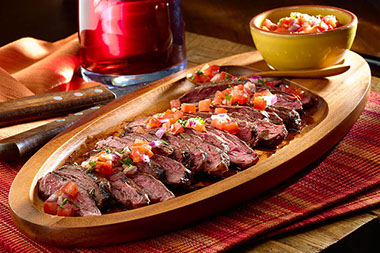
    Image of Argentinian grilled steak.

    Ingredients

    For the salsa:

    1 large, ripe tomato

    1/4 small red onion

    2 tablespoons fresh parsley

    2 teaspoons extra virgin olive oil

    2 teaspoons red wine vinegar

    1/2 teaspoon minced garlic

    1/4 teaspoon dried oregano

    1/8 teaspoon low-sodium adobo seasoning

    1/8 teaspoon crushed red pepper

    For the steak:

    1 pound skirt steak

    1/8 teaspoon low-sodium adobo seasoning

    Directions

    For the salsa:

    1.  In a small bowl, mix together tomato, onion, parsley, olive oil, vinegar, garlic, oregano, low-sodium adobo seasoning and crushed red pepper.

    2.  Cover and refrigerate for at least 1 hour or up until 48 hours.

    For the steak:

    1.  Heat grill to medium-high heat. Sprinkle steak on both sides with low-sodium adobo seasoning. Place steak on hot, greased grill grates.

    2.  Cook until steak is well browned on both sides and cooked to 145 °F.

    3.  Let rest for 5 minutes. Thinly slice steak and serve. Top with reserved Salsa Criolla

    Nutrition information: Serves 4. Calories 220; Total Fat 11 g; Saturated Fat 4 g; Sodium 80 mg; Total Carbohydrate 5 g; Dietary Fiber 1 g; Protein 25 g

    Source: What’s Cooking? USDA Mixing Bowl

    © American Institute for Preventive Medicine
  • Decode The Mysteries Of Food Expiration Dates

    HEALTHY EATING

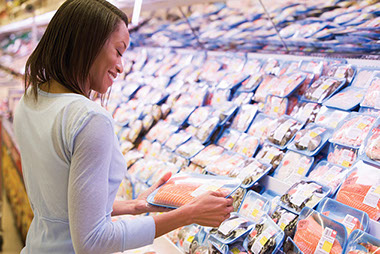
    Image of women at grocery store looking at a package of meat.

    Most U.S. food companies stamp lot codes and/or expiration dates on their products. But what do all these numbers really mean? The Institute of Food Technologists offers these answers. There are two types of codes:

    1.Lot Code:When manufacturers produce a product, they do so in batches. Each batch is given a unique series of numbers that makes it possible for manufacturers to track exactly when a problem occurred and which products need to be recalled.

    2.Expiration Dates:These are numbers represented in a date format that tells consumers when a food product is either no longer safe to eat or might not taste as good as it did when originally produced.

    There is little government regulation when it comes to expiration dates stamped on packages. According to the Department of Agriculture Food Safety and Inspection Service, there are a few different types of dates you should look for:

    *  Sell By is a guide for stores to know how long they can display a product before its quality begins to weaken. You can eat an item for some time after the “sell by” date.

    *  Best if Used By/Best Before is a guide to the quality or flavor profile of the food and does not refer to safety. For example, sour cream may grow increasingly sour over time, but it remains safe to consume.

    *  Use By is the closest to an expiration date. Using products after the date is not recommended. In some cases, food may lose nutrients, develop potentially harmful bacteria, and lessen in quality.

    © American Institute for Preventive Medicine