Category: Medical News

  • Hepatitis: Causes & Types

    MEDICAL NEWS

    Middle age man smiling.

    Hepatitis is a condition that affects the liver. If a person has hepatitis, their liver may be inflamed or damaged.

    What causes hepatitis?

    Many different things can cause hepatitis. They include:

    *  A virus

    *  Contaminated objects like needles or medical equipment

    *  Heavy alcohol use

    *  Certain medications

    *  Some medical conditions

    Different types of hepatitis

    Hepatitis A:

    *  Is spread through contaminated food, drinks or objects.

    *  Can make you sick for weeks or months, but most people recover.

    *  Can be prevented with a vaccine.

    Hepatitis B:

    *  Is spread through blood, semen or other body fluids.

    *  Can spread through sex, sharing personal items or sharing needles.

    *  Can cause long-term liver problems like liver failure and cancer.

    *  Can be prevented with a vaccine.

    Hepatitis C:

    *  Is spread through blood.

    *  Can spread when people share needles or other equipment.

    *  Causes long-term infection in about half of all cases.

    *  Can cause cirrhosis (scarring) of the liver.

    *  More than 90 percent of people can be cured with proper medical treatment – new treatment has very few side effects.

    Ask your doctor about hepatitis

    Many people may have hepatitis and don’t know it. You may not have any symptoms at first. That’s why it’s important to talk to your doctor. They can find out if you need a vaccine or if you should get tested for hepatitis. Proper medical care can help prevent, treat or cure this disease.

    © American Institute for Preventive Medicine

  • Smoking Triggers And How To Beat Them

    MEDICAL NEWS

    Cigarettes and nicotine gum.

    Many people have tried to quit smoking but couldn’t. There are many reasons for this, but one of them is because of triggers. A trigger is something that makes you want to smoke.

    Emotional triggers

    When you have certain emotions, you may get the urge to smoke. They may include feeling stressed, nervous, depressed or even bored.

    You can help stop these triggers by dealing with your emotions in other healthy ways. Try meditation, deep breathing or exercise to help manage stress and anxiety. Exercise is also a great way to beat boredom and fight depression. Listen to calming music or talk to a friend who can encourage you to keep up your efforts to quit.

    Pattern triggers

    Sometimes you’re used to smoking when you do something else, such as drinking coffee or alcohol. This is known as a pattern trigger. You may also like to smoke after eating or during a work break.

    Change your routine to help avoid these patterns. Chew your favorite gum, suck on a hard candy or mint or go for a walk. Try brushing your teeth after meals, coloring in an adult coloring book or squeezing a stress relief ball.

    Social triggers

    Many people want to smoke at bars, parties or when they’re with people who smoke. These can be powerful triggers for you to smoke.

    It’s best to avoid these triggers if you’re trying to quit. Instead, surround yourself with people who don’t smoke or who want you to quit. Try taking a class or find a hobby, such as painting or cycling.

    Withdrawal triggers

    Your body will crave nicotine when you quit smoking. Nicotine is very addictive and you may go through withdrawal. Withdrawal triggers include:

    *  Cravings for cigarettes or e-cigarettes

    *  Feeling like you need to do something with your hands or mouth

    *  Feeling restless or uncomfortable

    Withdrawal can be very difficult to manage. As with other triggers, spend time with people who don’t smoke and who want you to quit. Find things to do that have nothing to do with smoking. Avoid places or situations where you might see or smell cigarettes or vaping.

    Quitting is hard. But if you have support from your doctor, family and friends, you can do it. Millions of people have quit and you can too!

    Source: Smokefree.gov

    © American Institute for Preventive Medicine

  • What’S The Secret To A Long Life?

    MEDICAL NEWS

    Father and adult son talking while drinking coffee.

    Today many people are living longer than ever. Part of this is because of advances in medical care. But there are things you can do to live a long, healthy life too. Here are some tips that could help you live longer.

    Exercise

    Experts in aging and health say exercise may be the most important thing you can do to live longer. But why?

    As we age, we lose some muscle. This can lead to less energy and achy joints, which may cause you to exercise less and sit more. This, in turn, raises the risk of disease as well as death.

    People of any age can learn to get active. Not sure how to start? Talk to your doctor about options that are safe and healthy for you.

    Shed extra pounds

    Having a BMI higher than 30 raises the risk of all causes of mortality (death). It can lead to health problems like heart disease, stroke, diabetes and some cancers.

    You may not need to lose a lot to improve your health. Even losing 10-15 pounds can make a difference.

    Losing weight isn’t easy. But there are safe and healthy ways to do it. Eating healthier foods and getting regular exercise will help, but ask your doctor for advice.

    Quit smoking (or don’t smoke)

    Smoking increases the risk of lung disease, cancers, heart disease and diabetes. The good news is that when you quit smoking, your risk of smoking-related death starts to decrease. It can add years to your life if you quit today!

    Many people are able to quit smoking with help from a doctor or therapist. They may also use nicotine replacement products like patches, gum or an inhaler. Ask your doctor for help with your plan to quit.

    Do I need good genes?

    We may think a long life is all in our family history. But genes are only a piece of the health puzzle.

    Experts in aging say that your own healthy behaviors mean much more than genes. In fact, many people could live to 90 with a healthy lifestyle, regardless of genes, according to experts at the National Institutes of Health.

    Harness the power to live longer by starting healthy habits!

    Sources: Centers for Disease Control and Prevention, National Institutes of Health

    © American Institute for Preventive Medicine

  • Be Kind To Your Kidneys

    MEDICAL NEWS

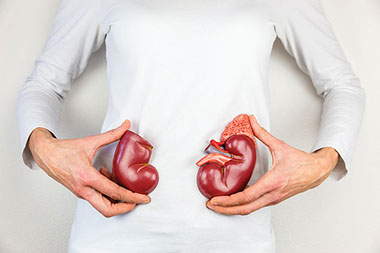
    Image of person holding plastic kidneys.

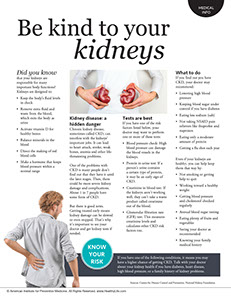
    Did you know that your kidneys are responsible for many important body functions? Kidneys are designed to:

    *  Keep the body’s fluid levels in check

    *  Remove extra fluid and waste from the blood, which exits the body as urine

    *  Activate vitamin D for healthy bones

    *  Balance minerals in the blood

    *  Direct the making of red blood cells

    *  Make a hormone that keeps blood pressure within a normal range

    Kidney disease: a hidden danger

    Chronic kidney disease, sometimes called CKD, can interfere with the kidneys’ important jobs. It can lead to heart attack, stroke, weak bones, anemia and other life-threatening problems.

    One of the problems with CKD is many people don’t find out that they have it until the later stages. Then, there could be more severe kidney damage and complications. About 1 in 7 people have some form of CKD.

    But there is good news. Getting treated early means kidney damage can be slowed or even stopped. That’s why it’s important to see your doctor and get kidney tests if needed.

    Know your risk

    If you have one of the following conditions, it means you may have a higher chance of getting CKD. Talk with your doctor about your kidney health if you have diabetes, heart disease, high blood pressure, or a family history of kidney problems.

    Tests are best

    If you have one of the risk factors listed below, your doctor may want to perform one or more of these tests:

    *  Blood pressure check: High blood pressure can damage the blood vessels in the kidneys.

    *  Protein in urine test: If a person’s urine contains a certain type of protein, it may be an early sign of CKD.

    *  Creatinine in blood test: If the kidneys aren’t working well, they can’t take a waste product called creatinine out of the blood.

    *  Glomerular filtration rate (GFR) test: This measures creatinine levels and calculates other CKD risk factors too.

    What to do

    If you find out you have CKD, your doctor may recommend:

    *  Lowering high blood pressure

    *  Keeping blood sugar under control if you have diabetes

    *  Eating less sodium (salt)

    *  Not taking NSAID pain relievers like ibuprofen and naproxen

    *  Eating only a moderate amount of protein

    *  Getting a flu shot each year

    Even if your kidneys are healthy, you can help keep them that way by:

    *  Not smoking or getting help to quit

    *  Working toward a healthy weight

    *  Getting blood pressure and cholesterol checked regularly

    *  Annual blood sugar testing

    *  Eating plenty of fruits and vegetables

    *  Seeing your doctor as recommended

    *  Knowing your family medical history

    Sources: Centers for Disease Control and Prevention, National Kidney Foundation
    © American Institute for Preventive Medicine

  • Infertility: When To See A Doctor

    MEDICAL NEWS

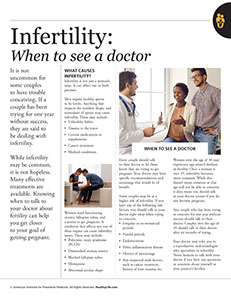
    Young couple talking to doctor.

    It is not uncommon for some couples to have trouble conceiving. If a couple has been trying for one year without success, they are said to be dealing with infertility.

    While infertility may be common, it is not hopeless. Many effective treatments are available. Knowing when to talk to your doctor about fertility can help you get closer to your goal of getting pregnant.

    What causes infertility?

    Infertility is not just a woman’s issue. It can affect one or both partners.

    Men require healthy sperm to be fertile. Anything that impacts the number, shape, and movement of sperm may cause infertility. These may include:

    *  Unhealthy habits

    *  Trauma to the testes

    *  Certain medications or supplements

    *  Cancer treatment

    *  Medical conditions

    Women need functioning ovaries, fallopian tubes, and a uterus to get pregnant. A condition that affects any one of these organs can cause infertility issues. These may include:

    *  Polycystic ovary syndrome (PCOS)

    *  Diminished ovarian reserve

    *  Blocked fallopian tubes

    *  Menopause

    *  Abnormal uterine shape

    When to see a doctor

    Every couple should talk to their doctor to let them know they are trying to get pregnant. Your doctor may have specific recommendations and screenings that would be of benefit.

    Some couples may be at a higher risk of infertility. If you have any of the following risk factors, you should talk to your doctor right away when trying to conceive:

    *  Irregular or no menstrual periods

    *  Painful periods

    *  Endometriosis

    *  Pelvic inflammatory disease

    *  History of miscarriage

    *  Any suspected male factors, such as cancer treatment, history of teste trauma, etc.

    Women over the age of 30 may experience age-related declines in fertility. Once a woman is over 35, infertility becomes more common. While this doesn’t mean someone at that age will not be able to conceive, it does mean you should talk to your doctor sooner if you do not become pregnant.

    Any couple who has been trying to conceive for one year without success should talk to their doctor. Couples over the age of 35 should talk to their doctor after six months of trying.

    Your doctor may refer you to a reproductive endocrinologist who specializes in infertility. Never hesitate to talk with your doctor if you have any questions or concerns about yourself or your partner’s fertility.

    © American Institute for Preventive Medicine
  • Stop The Spread Of Respiratory Infections

    MEDICAL NEWS

    Women sitting with a portable oxygen mask.

    The winter months are a peak time for the spread of infectious respiratory diseases. Cold weather often keeps people indoors, where it is easier for infections to spread.

    Infectious respiratory diseases include the common cold, as well as other respiratory illnesses that can be more serious. Some people may be at increased risk of severe side effects from respiratory disease, including the elderly, children, and the immunocompromised.

    Preventing the spread of respiratory disease helps keep everyone in your family and community safe. A few simple precautions can make all the difference. Once you know how these diseases are spread, you can take steps to contain them and make this winter a healthy one.

    Airborne transmission

    The most common way infectious respiratory diseases spread is by small aerosols that become airborne when an ill person coughs, laughs, talks, or sneezes. These tiny aerosols can hang in the air for hours and easily travel to the lungs when inhaled.

    Surface transmission

    Contact with a surface that is contaminated with droplets from an infected person is another route of transmission. If you touch something that has saliva or mucus on it and then later touch your mouth or face, you can become infected with the virus.

    Close contact transmission

    Being in close contact with someone infected with a virus can result in exposure to large virus-laden respiratory droplets. In contrast to the tiny aerosols that can hang in the air for an extended period, larger droplets fall quickly and most likely to spread when people are less than 3 feet apart.

    Types of infectious respiratory viruses

    *  Chickenpox

    *  Coronavirus infections (including SARS-CoV and MERS-CoV)

    *  Diphtheria

    *  Influenza (flu)

    *  Legionnaires’ disease

    *  Measles

    *  Middle East Respiratory Syndrome (MERS)

    *  Mumps

    *  Pneumonia

    *  Pneumococcal meningitis

    *  Rubella (German measles)

    *  Severe Acute Respiratory Syndrome (SARS)

    *  Tuberculosis

    *  Whooping cough

    Prevent the spread

    *  Minimize close contact with ill people.

    *  Wash your hands regularly with soap and water.

    *  Don’t share personal items such as food and utensils.

    *  Ask your doctor which vaccines are recommended for you, including the flu and COVID vaccines.

    *  Cover coughs and sneezes with your elbow and tissues (not your hands!).

    *  Stay home if you are ill.

    © American Institute for Preventive Medicine
  • When Blood Pressure Is Low

    MEDICAL NEWS

    Man taking his blood pressure at home.

    High blood pressure gets a lot of attention. But low blood pressure can cause health problems as well.

    If blood pressure is too low, your organs will not receive enough blood. This can quickly become dangerous. While a one-time low blood pressure reading is not usually concerning, a doctor should address chronic low blood pressure that occurs with other symptoms.

    Symptoms

    The normal range for blood pressure is between 90/60 mm/Hg to 120/80 mm/Hg. However, some people naturally have lower blood pressure than others. Low blood pressure is a problem when accompanied by any of these symptoms:

    *  Feeling dizzy or lightheaded

    *  Nausea or vomiting

    *  Blurry vision

    *  Confusion

    *  Fainting

    *  Fatigue

    *  Weakness

    *  Clammy, pale skin

    *  Rapid, shallow breathing

    *  Sleepiness

    *  Depression

    Causes

    Low blood pressure can be a sign of a problem that needs to be addressed right away. Causes may include:

    *  Severe allergic reaction

    *  Sudden loss of blood volume due to dehydration, injury, or internal bleeding

    *  Septic shock caused by infection impacts the blood vessels causing blood pressure to drop

    *  Heart problems such as heart attack or changes in heart rhythm, which may prevent the heart from pumping blood efficiently

    *  Certain medications or substances can lower blood pressure

    *  Orthostatic hypotension which is temporary and happens when you change position quickly

    *  Endocrine or hormone imbalances

    Treatment

    If you have low blood pressure, your doctor is your best resource for treatment. Depending on the specific cause, treatment may include:

    *  Changing or switching medications if recommended by your doctor

    *  Drinking more fluids to stay well hydrated

    *  Moving slowly when going from sitting to standing

    *  Wearing compression socks to prevent blood from pooling in the legs

    *  Medicines to increase heart strength and improve blood pressure

    *  Avoiding alcohol

    *  In severe cases, receiving blood through an IV

    © American Institute for Preventive Medicine
  • Be Smart About Seizures

    MEDICAL NEWS

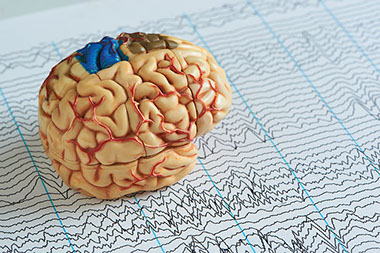
    A brain model.

    A seizure is a sudden surge of electrical activity in the brain. It can cause a person to have uncontrolled movements. A grand mal seizure or tonic-clonic seizure is the most serious. It usually involves jerking movements, shaking and the inability to talk or communicate.

    When it comes to seizures, there are plenty of myths. Knowing the truth about seizures could save someone’s life.

    Myth:A person having a seizure could swallow their tongue.

    Truth:This is not possible. Never put something in a person’s mouth if they are having a seizure.

    Myth:You should hold the person down.

    Truth:Do not try to hold or move the person unless they are in immediate danger of getting hurt. You can help get them on the floor and turn on their side. This keeps the person from injuring themselves or falling.

    Myth:You should always give mouth-to-mouth or CPR during a seizure.

    Truth:People usually start breathing normally after the seizure is over. But if the patient stops breathing for more than 30 seconds, call 911 and begin CPR.

    Should you call 911?

    Call 911 if:

    *  The person has never had a seizure before.

    *  The person stops breathing for more than 30 seconds, or has trouble breathing after the seizure.

    *  The seizure happened in the water.

    *  The person is pregnant.

    *  The person doesn’t wake up after the seizure.

    *  The person has a health condition like heart disease or diabetes.

    *  The seizure lasts longer than five minutes.

    *  The person is hurt.

    Source: Centers for Disease Control and Prevention

    © American Institute for Preventive Medicine

  • Is It Overactive Bladder Or Just ‘Normal’?

    MEDICAL NEWS

    Close up of hands holding toilet paper.

    Most of us don’t think about bladder health unless there’s a problem like an infection or leakage. Millions of people live with overactive bladder (OAB). OAB is not a disease. It’s a name for a group of symptoms that affect urination.

    What is OAB?

    Normally, a person might feel like they need to urinate, so they hold it until they reach the toilet. But with OAB, you suddenly feel like you have to go right now – you can’t hold it. This can happen even if your bladder isn’t full. The bladder muscles may be overactive, which leads to the urgent feeling.

    Some people with OAB may have to go to the bathroom too often during the day or at night. They may go more than once per night or more than 8 times during the day.

    OAB doesn’t always cause leaking or accidents, but it can. This is called urge incontinence, and about half of people with OAB have this bladder condition.

    Treatments for OAB

    Many people don’t get treatment for OAB because they are embarrassed. But talking with a doctor means you can get treatment. Many people are able to control OAB with one or more of the following:

    *  Diet changes

    *  Kegel exercises, pelvic floor physical therapy

    *  Medications

    *  Bladder Botox

    *  Nerve stimulation procedures

    Most people do not need surgery for OAB. But doctors may suggest it if other treatments didn’t work and your OAB is severe.

    Just a ‘weak bladder’?

    OAB becomes more common as we age. But this doesn’t mean it’s part of getting older and that we should ignore it. OAB can interfere with your social and professional life. You don’t have to live with it.

    Speak up about bladder problems

    If you notice bladder trouble, your doctor can help. Make an appointment to talk about your symptoms. It’s the first step to getting relief so you can get back to living your life.

    Sources: National Association for Continence, Urology Care Foundation

    © American Institute for Preventive Medicine
  • Talking About Oral Cancer

    MEDICAL NEWS

    Image of dentist with illustration of a tooth.

    More than 10,000 people will die of oral cancer this year. Oral cancer is not one type of cancer.

    It is a group of cancers that may affect the:

    *  Lips

    *  Inside of the cheeks

    *  Gums

    *  Tongue

    *  Inside the mouth (roof or floor of the mouth)

    *  Tonsils

    *  Middle of the throat

    Watching your mouth

    Knowing the signs of oral cancer is important. If it’s caught early, the outcome is better. So, look regularly for any changes in your mouth and see a dentist if you notice anything.

    Signs of oral cancer may include:

    *  Numbness, pain or tender areas in the mouth or lips

    *  A sore or irritated area in the mouth that doesn’t go away

    *  A white or red patch

    *  A lump in the mouth or throat

    *  An area that feels thicker or rougher than normal

    *  Trouble with chewing, swallowing or speaking

    *  Trouble moving the tongue, mouth or jaw

    *  Teeth that appear to have moved or don’t fit together properly anymore

    *  Feeling like something is in your throat

    *  Change in voice not due to a cold or common illness

    Many of these symptoms are due to simple, treatable problems. But, it’s important to get them checked by a dentist quickly. Your dentist can diagnose the problem and get you started on the treatment you need.

    Am I at risk?

    Certain things can make oral cancer more likely to happen. Researchers say that men are more than twice as likely to get oral cancer than women. People who smoke or drink large amounts of alcohol are also at a higher risk. This is especially true if they are over 50 years old.

    Some oral cancers are caused by a virus known as the human papilloma virus (HPV). You can catch HPV through sexual contact, which can cause certain cancers in the throat and back of the mouth.

    What can I do?

    *  Get regular dental checkups. Your dentist can check for symptoms of oral cancer.

    *  Tell your dentist about any changes to your lips, teeth, gums, mouth, tongue or throat.

    *  Don’t smoke – or quit if you do smoke.

    *  Drink only moderate amounts of alcohol or less. This is usually two drinks for men per day, and one drink for women per day.

    *  Talk to your doctor about whether you should get the HPV vaccine.

    Source: American Dental Association

    © American Institute for Preventive Medicine