Category: Medical News

  • The Abcs Of Hepatitis

    MEDICAL NEWS

    Illustration of liver.

    Millions of Americans are living with hepatitis today, and many don’t know they have it. Hepatitis can be serious and can lead to lifelong health problems. To help fight this dangerous disease, it’s important to know how it is spread and what you can do to prevent it.

    What is hepatitis?

    Hepatitis is an inflammation of the liver. Without the liver, the body cannot process nutrients, fight infection, or filter the blood. Hepatitis can make someone very sick. Some people with viral hepatitis can get liver cancer or severe scarring of the liver, known as cirrhosis.

    How does someone get hepatitis?

    The three most common types of viral hepatitis are spread in different ways:

    *  Hepatitis A can spread if a person eats or drinks something that has been contaminated with the virus. A person with hepatitis A spreads the virus through their stool.

    *  Hepatitis B can spread when blood, semen or other body fluids from an infected person get into the body of another person. This can happen during childbirth, sexual contact, getting tattoos or piercings, sharing needles or medical equipment, or sharing personal items, such as razors.

    *  Hepatitis C spreads through blood. Sharing needles or personal equipment that comes into contact with blood is the main way it gets spread. It may also spread during sexual contact. Like hepatitis B, Hep C can infect a baby during childbirth if the mother has it.

    How do I prevent hepatitis?

    Many people don’t have symptoms of hepatitis and don’t know they are infected. This means they can spread it to others without knowing it.

    The best ways to help prevent the spread of hepatitis are:

    *  Getting the vaccine, if needed. Vaccines are available for hepatitis A and B.

    *  Getting screened for hepatitis if you are at risk and getting treatment when available.

    *  Being aware of risk factors and avoiding them whenever possible. This may include not sharing needles or other personal equipment as listed on this page. Use latex condoms during sexual activity.

    Is there a cure for viral hepatitis?

    Most people who get hepatitis A will recover after a few weeks or months. People with hepatitis B may need to be checked regularly for liver damage, and the infection may be lifelong. Hepatitis C can often be cured with today’s advanced medications.

    Ask your doctor if you are at risk for hepatitis and whether you should be screened or vaccinated.

    Sources: Centers for Disease Control, World Health Organization

    © American Institute for Preventive Medicine

  • Decoding Sunscreen Labels

    MEDICAL NEWS

    Image of a man placing sunscreen on his face.

    You may already know you should wear sunscreen to decrease your risk of skin cancer and sun damage. In fact, the Skin Cancer Foundation says that wearing sunscreen regularly can decrease your chance of getting melanoma (the deadliest skin cancer) by 50 percent. Wearing sunscreen regularly will also help you avoid signs of aging like wrinkles and dark spots.

    But the sunscreen aisle at the store leaves many people feeling overwhelmed. There are so many choices, different labels, numbers and ingredients. How do you choose one?

    The best sunscreen is one you like, because you should use it every day, says the American Academy of Dermatology (AAD). Here’s how to narrow it down and choose the sunscreen that’s right for you:

    BROAD SPECTRUM

    Always look for the words “broad spectrum.” This means it protects against both kinds of UV rays, and it’s important for proper protection.

    SPF

    Choose an SPF of at least 30.

    SPF NUMBERS

    Don’t let high numbers fool you. The Skin Cancer Foundation says higher SPF sunscreens do protect more, but not by much. No matter what the SPF number says, you still need to reapply at least every two hours, and always after toweling off, sweating or swimming.

    WATER RESISTANT

    If you’re going to be sweating or swimming, choose one that says “water resistant.” There is no such thing as “waterproof” sunscreen. The bottle will say how long the sunscreen will remain water resistant. It may say “40 minutes” or “80 minutes.” That’s how often you need to reapply it when you’ve been in the water.

    LIPS

    Choose a sunscreen for your lips too. A lip balm with broad spectrum SPF 30 is also important. Skin cancer can – and does – affect the lips.

    GELS vs CREAMS

    Sunscreen gels are great for oily skin, while creams work well for dry skin.

    SENSITIVE SKIN

    If you have sensitive skin, consider a physical-only sunscreen. This means the active ingredients on the bottle will only include titanium dioxide or zinc oxide, or both. While chemical sunscreens work well, they can irritate some sensitive-skin types.

    PRICE TAG

    Expensive doesn’t always mean better. A higher price tag may be due to the brand name or certain extra ingredients that make it feel nicer or smell good. It doesn’t mean it will protect you more than a cheaper bottle.

    NO COMBINATION

    Don’t choose a combination sunscreen and insect repellant. The AAD says sunscreen should be reapplied liberally every two hours. But insect repellant should only be applied lightly every several hours as needed.

    BABIES

    Most sunscreens are only approved for babies over 6 months of age. Look for a physical-only sunscreen or one formulated for babies. Babies younger than 6 months should be kept in the shade and covered with lightweight protective clothing and hats, says the American Academy of Pediatrics.

    © American Institute for Preventive Medicine

  • Immunize Your Child

    MEDICAL NEWS

    Image of child receiving a shot by a doctor.

    As summer comes to a close, it’s time to think about going back to school. One of the most important things you can do for your child’s health is to make sure he or she is up-to-date on vaccines, which can protect against many dangerous diseases.

    Vaccine requirements

    Many states require that kids have certain vaccines (shots or immunizations) before they can come to school. The best way to ensure your child is fully protected is to talk to your child’s doctor. You can also find information about vaccines on the Centers for Disease Control website atwww.cdc.gov/vaccines.

    Some diseases, such as mumps and polio, have become very rare thanks to vaccines. But outbreaks of some diseases are still happening, and immunization is the best way to protect your child from a serious illness. For instance, 2014 had a record number of measles cases and many outbreaks of whooping cough have been occurring in schools across the U.S.

    Start vaccines on time

    Babies, toddlers and preschoolers get a number of vaccines early in life to help protect them from 14 life-threatening illnesses. This includes measles, mumps, whooping cough and more, which used to be common – and very dangerous – for young children.

    But vaccines aren’t just for little ones. As children get older, they may need “boosters” to help protect them as the first vaccine begins to wear off. And, certain vaccines like the flu shot need to be given every year for protection.

    Vaccines protect everyone

    When disease outbreaks happen, a vaccinated person is much less likely to get sick. If they do get it, they usually get a much milder case.

    Getting all vaccines on time means you are protecting your own child and others around them. This is known as “herd immunity.” When 90 to 95 percent of people in a community are vaccinated, it’s almost impossible for these dangerous diseases to spread. But when vaccine rates go below 90 percent, diseases can take hold and spread. This weakens the immunity of an entire community.

    If you’re not sure if your child needs vaccines, call your child’s doctor today and beat the back-to-school rush. Catch-up vaccines can be given, if needed, even if your child missed some shots before.

    Concerned about vaccines?

    The U.S. supply of vaccines is extremely safe and effective. When reading something about vaccines, be sure the information comes from a credible source with data to prove the statements. Many false claims have been made about vaccines. Some of these false claims can be found on the Internet even after they’ve been proven wrong. If you have questions, ask your child’s doctor or visithttps://ivaccinate.org

    to get answers to many common concerns.

    © American Institute for Preventive Medicine

  • Get Immunized

    MEDICAL NEWS

    Image of a needle and immunizations.

    Each August, National Immunization Awareness Month (NIAM) encourages all people to protect their health by being immunized against infectious diseases. This year, the National Public Health Information Coalition is coordinating NIAM activities and along with CDC is focusing on four weekly themes:

    A Healthy Start

    If you are pregnant or are planning a pregnancy, get vaccines as advised by your health care provider. These include vaccines for flu and whooping cough.

    Today’s childhood vaccines protect against 14 serious and potentially life-threatening diseases, including polio, measles, whooping cough and chickenpox. Most childhood vaccines are given during a baby’s first 2 years. That’s why it feels like so many vaccines so soon. Learn which vaccines a child needs from birth to age 6 atwww.cdc.gov/vaccines/schedules/easy-to-read/child.html.

    Back to School

    Schools are highly prone to outbreaks of infectious diseases because students can easily transmit illnesses to one another as a result of poor hand washing, uncovered coughs and dense populations. Check out the immunization schedule for all recommended vaccines for ages 7 to 18 atwww.cdc.gov/vaccines/schedules/easy-to-read/preteen-teen.htm.

    Off to the Future

    Because some diseases can spread quickly in settings like college dorms and classrooms, many colleges and universities have vaccine requirements for school entry. College-age students should get vaccines not yet received in childhood and follow the adult vaccine schedule, as needed.

    Not Just for Kids

    Did you know that adults age 19 and older need a Tdap vaccine for whooping cough if they did not get it as a teen? Adults should also get vaccines for: tetanus / diphtheria every 10 years, shingles at age 60 or older, and pneumonia at age 65. See CDC’s adult vaccine schedule for these and other vaccines atwww.cdc.gov/vaccines/schedules/downloads/adult/adult-schedule-easy-read.pdf.

    © American Institute for Preventive Medicine

  • Small Changes Your Heart Will Love

    MEDICAL NEWS

    Image of a basket filled with fruits and vegetables.

    You may know the basics of heart health that include a healthy diet, exercise, healthy weight, and avoiding tobacco. But, don’t let these major goals overwhelm you. Instead, take small steps each day that add up to big heart-healthy benefits.

    Say bye-bye to beige and eat the rainbow.

    Look at your plate’s color before you eat a meal. If it’s mostly browns, such as breads, pasta and meat, see if you can brighten it up with fruits and vegetables. Leafy greens, yellow peppers, carrots, blueberries and strawberries are just a few of the brightly colored foods that are great for your heart.

    Cut back on sodium when you can.

    If you’ve been eating salt for years, it can be hard to cut it out completely. But you may not taste the difference if you gradually replace some of the salt in your diet with herbs and spices without sodium. Cutting back on sodium can reduce your risk of heart attack, heart failure, and stroke. Many processed foods already contain high amounts of sodium, and adding salt to food greatly increases sodium intake for many people.

    Walk, if you can’t run.

    For many people, jogging, running, or other high-intensity workouts aren’t possible. Fortunately, you don’t have to choose a tough workout to get heart benefits. Start walking just a few minutes a day. Increase the amount of time you walk when you can until you are walking 30 minutes a day most days of the week. Brisk walking can be just as beneficial to your heart as running.

    If you use tobacco, keep trying to quit.

    Quitting tobacco is hard, and many people struggle to succeed. You may have strong urges to use tobacco or you may slip up and start again after you’ve quit. When this happens, be patient with yourself. Understand that many people have to quit several times before they’ve quit for good. When you quit, your heart – and your entire body – will start to heal. You’ll reduce your risk of heart disease, lung cancer, and many other serious diseases. Talk with your health care provider about prescription medication or nicotine replacement therapy.  Many of these treatments are now covered by insurance.

    Source: American Heart Association

    © American Institute for Preventive Medicine
  • Top Excuses For Not   Getting A Flu Shot (And Why You Should)

    MEDICAL NEWS

    Image of blocks that spell out "flu vaccine".

    Seasonal flu is caused by a virus that can fly through the air, hitch a ride on a handshake, hug or kiss, and is extremely good at infecting people and making them sick.

    It can spread by person-to-person contact or it can land on a surface, such as a doorknob, handrail, or elevator button, only to be picked up by the next unsuspecting person to come along. Maybe even you.

    The best way to avoid the flu this year is to get the widely available flu vaccination from your family doctor, pharmacy, or one of the many flu vaccine clinics sponsored by local health departments, says Dr. Katharine Garnier, a family physician at the University of Medicine and Dentistry of New Jersey-School of Osteopathic Medicine.

    Still, some people routinely avoid this annual shot. For those who are looking for a reason not to get inoculated, Dr. Garnier (humorously) gives her top 10 unwise reasons not to get a flu shot this year:

    1. I’m feeling incredibly lucky this year.

    2. The vaccine is inexpensive so it probably doesn’t work.

    3. I’m not afraid of body aches … or headaches … or sore throats … or dangerously high fevers … and I never get sick!

    4. I like the idea of having a real reason to call in sick for work.

    5. That cute little paper mask over my nose and mouth is a trendy fashion statement.

    6. Getting really, really sick is a great way to lose a few pounds without dieting.

    7. I’m not planning to leave my house, or let anyone in, for the next six months anyway.

    8. I’m anxious to find out if my insurance company really will cover a hospital stay.

    9. I went to the county fair and didn’t get swine flu, so I must have a natural immunity.

    10. Getting sick with the flu will give me a reason to visit relatives I don’t really like so that I can share the virus with them!

    Protect yourself and others. Get a flu shot.

    © American Institute for Preventive Medicine
  • You May Need To Get Tested For Hepatitis C

    MEDICAL NEWS

    Image of doctor talking to a patient.

    An estimated 3.2 million Americans are infected with chronic hepatitis C, a viral infection of the liver. Among those are larger numbers of Veterans and baby boomers.

    The CDC recently recommended that all baby boomers in the U.S. (those born between 1945 and 1965) get a simple one-time blood test for hepatitis C. They estimate that this testing could identify more than 800,000 additional people with the disease.

    Here’s what we know:

    *  Chronic hepatitis C won’t go away on its own.

    *  Many people living with hepatitis C are not aware they have the condition and may go years without showing symptoms. Hepatitis C is treated with a combination of medications.

    *  The rate of hepatitis C among people born in 1945 through 1965 is about 4%, compared to about 1% among other Americans. That difference is likely due to risky behaviors among this group.

    *  You can get hepatitis C from infected blood or body fluids. Today, the most common way people get infected is by needle-sharing during intravenous drug use. Most new infections occur among drug users. In addition, an infected pregnant woman can infect her unborn baby.

    *  Since 1992, when reliable blood screening procedures became available, the risk of transmission of hepatitis C by blood transfusion has fallen to less than one per million units of transfused blood, according to the CDC. Rarely, the virus can be transmitted through sexual intercourse.

    *  Hepatitis C is not transmitted through shaking hands, coughing, sneezing, breastfeeding, or sharing cups and utensils.

    *  Hepatitis C can cause serious liver problems.

    © American Institute for Preventive Medicine

  • Alcohol – Know Your Limits

    MEDICAL NEWS

    Image of three different cocktails.

    Drinking too much, even just one time, can harm your health. Take a look at what too much alcohol can do to the body.

    Brain:Alcohol interferes with the brain’s communication signals. This causes problems with thinking clearly and making decisions. It can also affect mood and behavior. These effects can be long-term.

    Heart:Alcohol can cause an irregular heartbeat and can interfere with the heart’s ability to pump blood. Too much alcohol may increase the risk of stroke and high blood pressure.

    Liver:Drinking too much can permanently damage the liver. In some cases, heavy drinking can lead to liver failure, liver cancer, and death.

    A moderate amount of alcohol may be safe for most people who don’t have health problems. For people who drink alcohol, a moderate amount is:

    *  Women: No more than 1 drink per day

    *  Men: No more than 2 drinks per day

    Drunk driving

    Driving after you’ve had too much alcohol can be deadly for you and others. Just two alcoholic drinks can affect your ability to drive. One person in the U.S. dies every 53 minutes due to an alcohol-related car crash. Help prevent these tragedies by:

    *  Choosing a designated driver

    *  Calling a cab when you’ve had too much alcohol

    *  Not letting friends drink and drive

    *  Offering non-alcoholic drinks at parties and reminding guests not to drink and drive

    Behavior Problems

    Drinking too much can lead to violence, risky behavior, and even suicide or homicide.

    Sources: National Institutes of Health, American Liver Foundation, Centers for Disease Control and Prevention

    © American Institute for Preventive Medicine

  • Diabetes-Related Vision Loss Increasing

    MEDICAL NEWS

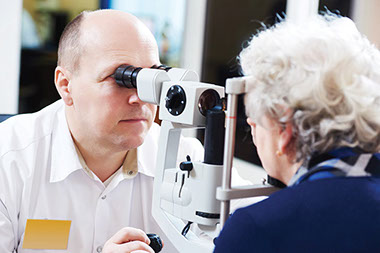
    Image of older women with thumbs up at an eye doctor appointment.

    More than 30 million Americans live with diabetes today. Living a healthy life with diabetes is possible, but it is a serious disease that requires proper medical care.

    Diabetic retinopathy is a possible complication of diabetes. It is caused by damage in the blood vessels of the eye’s retina. It is also a leading cause of vision loss and blindness.

    Diabetic retinopathy rates are rapidly increasing, according to the National Eye Institute. From 2000 to 2010, diabetic retinopathy cases increased 89 percent from 4.06 million to 7.69 million. And, that number is expected to nearly double by the year 2050.

    Keeping eyes healthy

    If you have diabetes, there are ways to lead a healthy life and avoid problems like diabetic retinopathy. The National Institute of Diabetes and Digestive and Kidney Disease recommends:

    *Keep blood glucose (blood sugar) levels under control.High blood glucose damages the blood vessels on the retina over time. The blood vessels may become blocked, cutting off blood supply to the retina. Work with your doctor to set a target blood glucose number. Get clear instruction from your medical team on how you can meet your goal. A healthy diet, regular exercise, and certain diabetes medicines may be needed.

    *Track your blood pressure.Many people associate blood pressure with heart disease, but it matters for diabetes too. Long-term high blood pressure also harms your retina’s blood vessels. Be sure to have your blood pressure checked regularly. Ask your doctor how often it should be checked. If you need blood pressure medicine, take it exactly as your doctor prescribes.

    Early signs of eye problems

    Diabetic retinopathy may not have any early signs or symptoms. That’s why it’s important to keep blood sugar and blood pressure under control, even if you feel fine.

    If you notice any of the following problems, see your doctor:

    *  Double vision

    *  Blurry vision

    *  Seeing rings, flashes or spots

    *  Eye pain or a feeling of pressure in the eye

    *  Trouble seeing out of the corner of your eye

    You can take steps to manage diabetes. Talk to your doctor, nutritionist, and medical team about keeping your eyes – and your entire body – as healthy  as possible.

    © American Institute for Preventive Medicine

  • Is It The Flu?

    MEDICAL NEWS

    Image with the words "Fight the Flu" written in a banner.

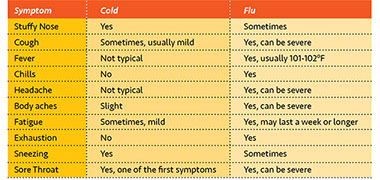
    Influenza, or the flu, circulates every winter and leaves thousands of people sick with a cough, aches, fever, and fatigue. The flu is much more serious than a cold: thousands of people die each year from flu-related complications. Unfortunately, many people don’t realize they have the flu until it’s too late. By then, they may have exposed people at work, school, or other public places. Here’s how to know if you have the flu, or just a cold:

    Chart showing symptoms of the cold vs the flu.

    When you come down with a cold, your symptoms usually appear very gradually over a few days. They often start with a sore throat followed by a runny nose. The flu often hits hard, very quickly. Symptoms appear suddenly and the exhaustion and aches can quickly become severe.

    If in doubt, try to stay home and stay away from others when you’re sick. In particular, try to avoid exposing young children and older adults, who may be more likely to suffer from flu-related problems. Wash your hands frequently and encourage others in your household to do the same.

    If you think you have the flu, call your doctor right away. You may be able to take an antiviral medication (brand name: Tamiflu), which can decrease your symptoms and the amount of time you are sick. Antiviral medications should be taken within 48 hours of the start of symptoms.

    Finally, talk to your doctor about getting a flu shot each year: it’s the number one way to help avoid getting – and spreading – the flu!

    Sources: Centers for Disease Control, U.S. Department of Veterans Affairs

    © American Institute for Preventive Medicine