Medication

Tell Your Doctor
Before medicine is prescribed for you, let your doctor know the names and doses of all of the medicines and dietary supplements you take. Let your doctor know if you have medicine allergies or have had bad side effects from a medicine. Be prepared to discuss other concerns, too.
* Bring all of your prescribed and over-the-counter (OTC) medicines, vitamins, and herbs, in their original containers, with you to office visits.
* Ask your health insurance plan for a printout of the prescribed medicines you take.
* Make an easy-to-use “pill card” at the Web site:www.ahrq.gov/qual/pillcard/pillcard.htm.
* Use the “Medicine Record Form” below. Fill in the lines and check boxes as needed. Add new medicines when you get them. Make copies of the blank form so you can use it again.
* If it is hard for you to swallow pills
* If cost is a factor. There may be a generic or lower-cost medicine.
* If you use alcohol, tobacco, or “street” drugs
* If your health plan has a list of medicines they use. This is called a formulary. Your health plan provides a list. Take the list with you.
* If your health plan lets you order 3 months worth of prescriptions by mail. Your doctor will have to write the prescription for a 3-month supply.
* If another health provider is treating you for any problem, such as high blood pressure
* If you are or could be pregnant or if you are breast-feeding
Questions to Ask
When prescribed medicines, get answers to the below questions.
* What is the name of the medicine? What will it do? When should it be taken?
* How long should it be taken?
– Do I need to get one or more refills?
– Will I need more or less of this medicine as time goes on?
– Will I need this medicine the rest of my life?
– Is there a way to measure if what I take is enough or too much? Are any tests needed to show if the medicine is helping?
– How often should we review my use of this medicine?
* Are there side effects? What do I do about side effects, if I have any? Which side effects should I let you know about?
* Should I take it with a lot of fluids? If so, how many ounces of fluid per day?
* Should I take it with food or on an empty stomach?
* Is there anything I should avoid while taking it (e.g., alcohol, grapefruit juice, sunlight, etc.)?
* Is there a generic form?
* How should I store the medicine? Is the medicine less potent once the container is opened?
* Will it interact or interfere with other medicines I am taking?
* Should I stop taking it if I feel better?
* What should I do if I miss a dose? Should I take it as soon as I remember or should I wait until the next scheduled dose? If I miss a dose (or more), how will this affect other medicines I take? Do I need to change how I take any of them?
* Do you have any written information on the medicine? (You can ask your pharmacist for this, too.)
Dos and Don’ts
Dos for Safe Use
* Use the same pharmacy for all prescribed medicines. Your pharmacist can check for harmful interactions.
* Check with your doctor or pharmacist before taking OTC medicines, herbal products, and supplements.
* When you get your medicine, read the label and look at the medicine. If you have any concerns, tell your pharmacist.
* Keep medicines in their original containers and out of the reach of children.
* Throw away all expired medicines. Crush pills. Dissolve them in water. Mix this with used coffee grounds or kitty litter and put it in the trash in a sealable bag.
* Try to reduce the need for medicines, such as sleeping pills and laxatives. Check with your doctor on ways, other than medicines, to help treat your problems.
Don’ts for Safe Use
* Don’t stop taking medicines your doctor has prescribed, even if you feel better. Check with your doctor first.
* Don’t drink alcohol while on a medicine if you don’t know its effect. Some medicines, such as sedatives, can be deadly when used with alcohol. Read medicine labels for warnings.
* Never take someone else’s prescribed medicine. Don’t give your prescribed medicine to others.
* Don’t take medicine in the dark. Make sure the light is on so you can read the label. Wear your glasses or contact lenses, if you need to.
* Don’t buy an OTC medicine if the package is damaged or has been tampered with.
Tips to Make Sure You Take Your Medicine(s)
* Follow your treatment plan. Keep a current Medicine Record Form. Check it regularly.
* Use products called compliance aids:
– Check-off calendars
– Containers with sections for daily doses. Some have 4 separate sections for each day; one each for Breakfast, Lunch, Dinner, and Bedtime.
– Caps (or wristwatches) that beep when it is time to take a dose
* Ask family members or friends to remind you to take a dose and check that you took it.
* Talk to your doctor if you don’t take your medicines as prescribed. It’s okay to feel guilty or embarrassed. But don’t let this stop you from talking to your doctor.
OTC Medicines
Over-the-Counter (OTC) Medicines
Over-the-counter (OTC) medicines are ones that you can get without a prescription. In general, they are less potent than prescribed ones.
Use OTC Medicines Wisely
* Ask your doctor what OTC products you should avoid and which ones are safe for you to use. These include herbal products and supplements. Find out what your doctor prefers you take for pain and fever. Ask your pharmacist if an OTC medicine is safe for you to take with your prescribed medicines.
* Do not exceed the dose on a label or take OTC medicines on a regular basis unless your doctor tells you to.
* If you have an allergy to a medicine, check for it in the list of ingredients on all medicines.
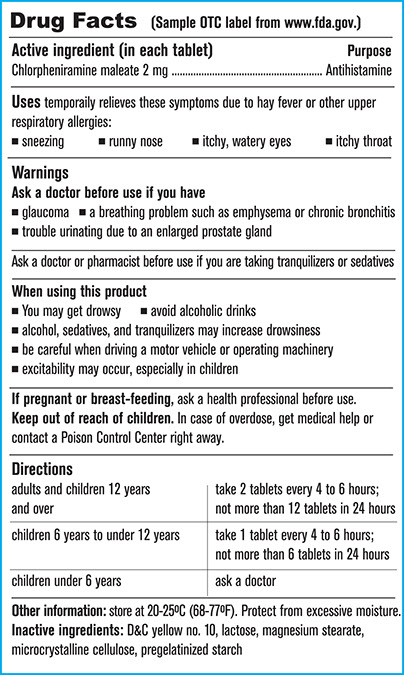
* Read information and warnings on the label to help you decide whether or not the product is safe for you to take. Check with your doctor or pharmacist, too. For information on reading OTC medicine labels, accesswww.fda.gov. Search for “Over-the-Counter Medicine Label.”
* Don’t take an OTC medicine if you are pregnant or nursing a baby unless your doctor says it is okay.
* Be sure to store medicines in a convenient dry place, out of children’s reach.
* Don’t ever tell children that medicine is candy.
* Before you take an OTC medicine, check the expiration date. Replace items as needed.
Your Home Pharmacy
© American Institute for Preventive Medicine