Category: Uncategorized

  • 5 Things To Know About Lung Cancer

    MEDICAL NEWS

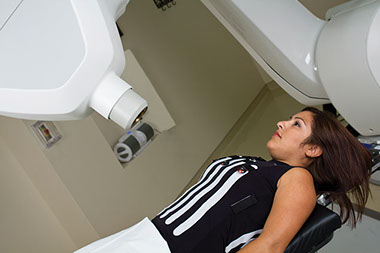
    Image of women getting a lung scan.

    Lung cancer is the country’s leading cause of cancer death. Many of the 160,000 deaths from lung cancer in the U.S. can be prevented. Dr. Bruce Johnson, the director of the Lowe Center for Thoracic Oncology at Dana-Farber Cancer Institute, sorts out the facts about lung cancer and offers simple ways to reduce risk.

    1. Lung cancer targets more than just smokers. The greatest risk factor for lung cancer is smoking, but nonsmokers can also develop lung cancer. About 10 to 15 percent of lung cancer cases occur in nonsmokers, many of them women.

    2. Know the warning signs. They can be subtle but symptoms to be aware of include a cough that does not go away, shortness of breath, back and shoulder pain, and coughing up blood. This could be a sign of something serious and should be discussed with a doctor.

    3. It’s never too late to quit smoking. People who stop and remain a nonsmoker for at least 10 to 20 years can cut their risk of developing lung cancer by 50 to 75 percent.

    4. CT screenings can save lives. Lung cancer can be difficult to detect and, until recently, there has not been a good screening test. But results from the National Lung Screening Trial suggest that screening high-risk people with low-dose CT scans can detect tumors at an earlier stage, resulting in improved lung cancer survival. Screening is currently recommended for people who are between the ages of 55 and 74 and who have smoked a pack a day for 30 years and quit fewer than 15 years ago.

    5. New therapies show promise. Thanks to advances in the last decade, new targeted therapies offer more treatment options for patients.

    © American Institute for Preventive Medicine
  • Can You Pass This Drug Test?

    MEDICAL NEWS

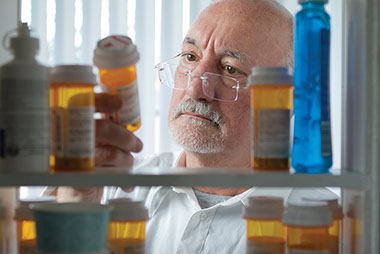
    Image of man looking in his medicine cabinet.

    Question: What is our nation’s most abused drug? Need a hint? It is legal and may be sitting in your medicine cabinet.

    Fatal drug overdoses are an epidemic. Opioid prescription painkiller overdoses account for the majority of these deaths. The National Safety Council revealed these startling facts many people do not know, but need to, about prescription painkiller use:

    *  Forty-five people die every day from opioid prescription painkillers-more deaths than from heroin and cocaine overdoses combined.

    *  In 2010, enough prescription painkillers were provided to medicate every American around the clock for an entire month.

    *  More than 70% of people who abused prescription pain relievers got the pills from friends or relatives.

    *  The U.S. contains only 4.6% of the world’s population but consumes 80% of the world’s opioids and 99% of the world’s hydrocodone.

    *  While middle-aged men and women have the highest prescription painkiller fatal overdose rates, the rates are increasing most rapidly among women. Teen use also is rising. One in 8 high school seniors admits to using prescription painkillers for fun.

    Remove painkillers from your home. Talk with your kids about drugs, including common medications in your home. If you need pain meds, work with your doctor to cut back.

    © American Institute for Preventive Medicine

  • High Blood Pressure And Cold Medicines: A Potentially Bad Combination

    MEDICAL NEWS

    Image of a pharmacist.

    If you have high blood pressure, you need to be cautious when taking over-the-counter (OTC) medicines for coughs, colds, and flu. Most people didn’t know they were at risk if they took certain decongestants, according to a survey by St. Joseph Health Products.

    Here’s the caution:The most common OTC ingredient to avoid: decongestants. OTC cough and cold medicines with decongestants help to reduce nasal swelling in part by narrowing the blood vessels in the nose and facial area. However, the narrowing effect of decongestants can also affect other blood vessels while increasing blood pressure and heart rate, making it a potentially dangerous situation for the millions of Americans who have high blood pressure.

    Talk with your doctor or pharmacist about which cold and cough medications might be better for you if you have high blood pressure.

    © American Institute for Preventive Medicine

  • Melanoma And Skin Cancer Awareness

    MEDICAL NEWS

    Image of father and child walking on the beach with a big blue umbrella.

    Skin cancer is the most common type of cancer in the U.S. Melanoma, the deadliest form of skin cancer, kills one American every 54 minutes.

    The good news is many cases of skin cancer can be prevented. Before you head outside to enjoy the sunshine and fresh air, know how you can protect yourself and your family from skin cancer.

    *There’s no “safe” tan:Getting a “base” tan before vacation isn’t safe. It increases your risk of skin cancer and aging of the skin. Using self-tanners is the only safe way to get a bronze glow.

    *Seek shade:One of the best ways to avoid UV rays is to love the shade. Trees, umbrellas and buildings are easy ways to keep the sun’s rays off your skin, especially between the hours of 10 a.m. and 4 p.m., when rays are strongest.

    *Get vitamin D safely:Though the skin makes vitamin D when it’s exposed to the sun, there are safer ways to get what you need of this nutrient. Eggs, fatty fish, fortified dairy and juice are good ways to get your D.

    *Use caution with water and snow:Swimming and skiing can expose the skin to more UV rays because the sun reflects off water and snow. Be diligent about sun protection during these kinds of activities.

    *Apply (and reapply) sunscreen:Use a sunscreen labeled “broad spectrum” with an SPF of at least 30. Reapply at least every 2 hours, and after swimming or toweling off.

    *Use protective clothing:Sun protective hats, shirts, scarves and more are available to help block UV rays. Look for clothing and swimwear with a “UPF” rating on the label for protection. Use it with sunscreen for optimum protection.

    Finally, contact your doctor if you notice a new, itchy or painful mole. Moles with irregular shapes and borders or those that are black or multicolored should be checked.

    Sources: U.S. Department of Health and Human Services, American Cancer Society, Skin Cancer Foundation

    © American Institute for Preventive Medicine

  • Do You Know The  Signs Of A Drinking Problem?

    MEDICAL NEWS

    Image of a group of friends drinking.

    According to the National Institute on Alcohol Abuse and Alcoholism, more than 15 million adults have an alcohol use disorder (AUD). This means they cannot stop or control their drinking.

    It can be hard to admit that you or someone you love has AUD. Plus, someone with AUD can’t just decide to stop drinking. AUD is a health condition that requires treatment and support. Knowing the signs can help a person seek medical help.

    Alcohol abuse is defined as:

    *  A woman who has more than 7 drinks per week or more than 3 drinks per sitting.

    *  A man who has more than 14 drinks per week or more than 4 drinks per sitting.

    *  A person older than 65 who has more than 7 drinks per week or more than 3 drinks per sitting.

    Questions to ask about alcohol abuse

    If you’re not sure whether your drinking is a problem, ask yourself:

    *  Have I tried to stop drinking, but keep slipping up?

    *  Do I feel that once I start drinking, I can’t stop?

    *  Have I been told by others that my drinking is a problem?

    *  Do I drink in the morning to “get my day started”?

    *  Have I ever hurt myself or others because of my drinking?

    *  Do I ever hide my drinking from others or lie about how much I’ve had?

    *  Do I have “blackouts” or memory lapses  after drinking?

    *  Is drinking interfering with my relationships?

    *  Is my alcohol use getting in the way of success at work?

    If you answered “yes” to any of these questions, you may have AUD. Talk to your doctor about treatment that may help you.

    Preventing alcohol abuse

    Alcohol problems can run in families. If you have a close family member with AUD, you may have to work harder than others to avoid alcohol problems. But, preventing alcohol abuse is possible. Follow these tips to help:

    *  Be extra cautious about signs of AUD and ask yourself the questions in this article on a regular basis.

    *  If you decide to drink, stop after one drink and switch to non-alcoholic beverages.

    *  Get regular checkups with your doctor. Follow any recommended treatment for health conditions.

    *  Avoid people who drink too much or abuse alcohol.

    *  Consider joining a support group.

    Did you know?

    As adults grow older, our bodies are less capable of tolerating addictive substances like alcohol, and are more susceptible to their negative effects.

    Source: American Academy of Family Physicians

    © American Institute for Preventive Medicine

  • The “Truth” About Tv Drug Ads

    MEDICAL NEWS

    Image of "As Seen On TV" logo.

    Be wary when watching those ads for drugs on TV because 6 out of 10 claims could potentially mislead you, say researchers in an article in the Journal of General Internal Medicine.

    False claims are illegal, but some claims were misleading, left out important information, exaggerated facts, provided opinions, or made meaningless links with lifestyle, the researchers found in reviewing TV drug commercials. Their findings also included problems with ads for over-the-counter drugs as well as prescription medication.

    Don’t believe everything you see on TV, and when it comes to making medication decisions, your doctor and pharmacist are your best sources.

    © American Institute for Preventive Medicine

  • Why Do Mosquitoes Always Bite Me?

    MEDICAL NEWS

    Close up image of person itching arm.

    It has to do with how you smell, but scientists still don’t know why some breeds are attracted to different smells, said Jason Pitts, professor of biological sciences at Vanderbilt University.

    The source of the aromatic compounds that produce body odor are bacterial colonies that exist on human skin, particularly in dark, moist areas such as the armpits and between the toes. Pitts and his colleagues have discovered that mosquito antennae are filled with hundreds of tiny odor receptors, which are individually tuned to detect specific odors.

    Just as mosquitoes may love you, they may not love natural repellants such as clove oil, citronella, lemon grass, eucalyptus, castor oil, peppermint, lavender, and cedar oil. But almost all of these are less effective than the synthetic repellant DEET, and they need to be reapplied more frequently.

    Bet you didn’t know these pesky insects have a long-range system that allows them to track down potential prey from more than 100 yards away. The mosquitoes do so, in part, by sensing the carbon dioxide in human breath. When we exhale, our breath contains more carbon dioxide than the surrounding air, and mosquitoes can detect this difference-especially if you’ve had a beer or other alcoholic drink.

    To avoid mosquito bites, CDC gives the following advice:

    *  Use an insect repellant when you go outdoors. The FDA approves ones with DEET, picaridin. IR3535, and oil of lemon eucalyptus. Follow the product label’s directions.

    *  As much as possible, wear long sleeves, long pants, and socks. For extra protection, spray clothes, not your skin, with repellant that contains permethrin.

    *  Avoid outdoor activities from dusk to dawn or take extra care to use insect repellant and protective clothing during these times.

    *  Keep mosquitoes outside the house. Use screens on windows and doors or use air conditioning.

    *  On a regular basis, empty water that collects in outdoor buckets, flowerpots, pool covers and bird baths. Mosquitoes like stationary water.

    © American Institute for Preventive Medicine

  • Eye-Popping Facts

    WELL-BEING

    Image of 2 young brothers using a tablet at bedtime.

    Kids (and adults) are spending hours using electronics such as iPads, video games, computers, and smartphones. How much is too much for your eyes when it comes to digital device use?

    Eye strain or Computer Vision Syndrome (CVS) is a serious condition that can cause back and neck pain, dry eye, and even headaches. Statistics show that 80% of what we learn is through our eyes, which means that digital eyestrain and CVS can have a major impact on productivity and success.

    VSP optometrist, Dr. Nate Bonilla-Warford suggests these eye-easing ways to avoid digital eye strain:

    *Blink often:When looking at a computer or hand-held digital device, it’s common for you to blink 2 to 3 times less than you normally would. This can lead to “dry eye.” Blinking bathes your eyes in tears, and tears are naturally helpful for the eyes.

    *Follow the 20/20/20 rule:When spending long periods in front of a digital device, every 20 minutes, spend 20 seconds looking at something 20 feet away to allow your eyes to rest.

    *Ensure proper lighting:Poor lighting often causes eye strain. To help ease the strain on your eyes, keep bright lighting overhead to a minimum and position your desk lamp to shine on your desk, and not at you.

    *Wear it:If you or your child wears prescription glasses-for digital use or otherwise-make sure to have them on.

    © American Institute for Preventive Medicine

  • How To Keep “Airport Anxiety” From Flying Out Of Control

    WELL-BEING

    Image of mom with 3 children at the airport.

    Traveling Americans are finding stricter airport screening, long waits, security checks, random searches-and you’re not even off the ground yet. Prepare yourself mentally and physically for the added stress. The Pennsylvania Medical Society offers these tips for avoiding airport anxiety:

    Know what to expect.Get information about airport rules from your travel agent, the airline, or online travel sites.

    Don’t prime the anxiety pump.Why work yourself into a frazzle before you even reach the airport? Give yourself plenty of time to get there. Allow for normal delays, like traffic jams and road closings, and for new ones such as restricted airport access.

    Come equipped to wait it out.Bring a folding canvas seat or arrange with the airport for a wheelchair. Pack snacks in your carryon. Also carry your prescription medications with you along with any special dietary snacks you might need.

    Kid-proof your planning.Check what your kids put in their bags if they packed them so the Scout knife or water gun doesn’t cause a scare at the security gate. Make sure you bring extra batteries for the games and CD players.

    Get physical.Instead of sitting at the gate the whole time, get up and walk around. Keep the blood flowing, and you’ll feel more relaxed and less confined.

    Learn and practice relaxation techniques.If you can’t cope with anxiety, ask your doctor about prescribing a medication instead of using alcohol to relieve your fears. Try the drug at home first to prepare for reactions such as grogginess or impaired coordination. Same with drugs for airsickness.

    © American Institute for Preventive Medicine