Category: Uncategorized

  • Health Tests For Men

    Medical Exams

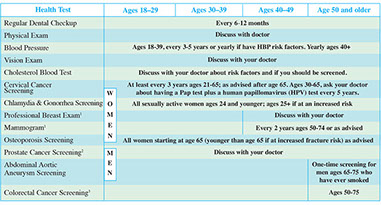
    Abdominal Aortic Aneurysm (AAA) Screening

    Why you need this:

    The aorta is the main artery in the body. It extends upward from the heart, curves behind the heart, and runs downward through the chest and into the abdomen. The part in the abdomen is called the abdominal aorta. An aneurysm is a balloon-like swelling in a blood vessel wall. If this gets too big, the aorta can burst or tear. This is life threatening. Major risk factors for an aneurysm in the aorta are: being male; Being age 65 years or older; and a history of smoking at least 100 cigarettes over a lifetime. An ultrasound test is used to screen for an AAA. This test uses sound waves to get an image of your aorta and other structures in the upper abdomen to check for problems.

    What to do before the test:

    You may need to avoid eating for 8 to 12 hours before the test.

    What to expect:

    The test is usually painless. It does not involve the use of needles, injections, or radiation. You will be given a gown to wear. You lie on your back on an exam table. A warm gel is applied to the skin on your abdomen. The technician firmly presses a hand-held instrument (a transducer) in a back and forth motion over the skin of your abdomen. The test takes about 30 minutes. The gel is wiped off. The test is done.

    What the results mean:

    A radiologist looks at the images and sends a report to your doctor. If a problem is found, your doctor will order follow-up testing or treatment, as needed.

    Prostate Cancer Screening – Digital Rectal Exam

    Why you need this:

    Used as a screening tool for an enlarged prostate gland and for the possible presence of prostate cancer and tumors in the rectum.

    What to expect:

    The doctor inserts a gloved and lubricated finger into the anus to feel the prostate gland through the front wall of the rectum. The doctor feels for lumps or hard areas and for an enlarged prostate. This can feel uncomfortable, but does not usually cause pain.

    What the results mean:

    If a lump or other problem is felt, the doctor may prescribe follow-up tests.

    Prostate Cancer Screening – Prostate Specific Antigen (PSA)

    Why you need this:

    Used as a screening tool for the possible presence of prostate cancer.

    What to do before the test:

    Avoid having sex 24 hours before the test. Find out ahead of time, from your doctor, if you need to delay or skip any medicines you take until after the test.

    What to expect:

    A blood sample is taken, usually from a vein in the arm. The sample is sent to a lab.

    What the results mean:

    The results give the blood level of prostate-specific antigen, (a protein made by the prostate gland) in nanograms per milliliter (ng/mL). The upper limit of “normal” is 4.0 ng/mL. Levels above this do not mean prostate cancer is present for sure.

    Elevated PSA levels can also be from an enlarged prostate and prostate gland infections. Also, cancer can be present at levels below 4.0 ng/mL. Discuss the benefits and risks of PSA testing with your doctor. How much your PSA level changes from year to year, your age, and other medical problems you have are factors your doctor may consider in deciding about extra tests, such as a biopsy for prostate cancer.

    Men's and Women's Self-Care Book. Published by the American Institute for Preventive Medicine.

    © American Institute for Preventive Medicine

  • Never Cycle Without A Helmet

    Personal Safety

    (and Other Tips for Safer Biking)

    Image of family riding bikes with helmets on.

    Wearing a helmet is the single most important thing you can do to prevent serious injury from bicycle accidents. Other injury-preventive measures include wearing gloves, choosing the right size bike, and riding on well- maintained roads. But wearing a helmet is still critical.

    Not just any helmet will do, however. Look for the following features.

    *  Outer layer or shell that is bright yellow, white, orange, or red (so motorists can see you more easily), and is constructed of hard plastic or polycarbonate.

    *  Waterproof finish.

    *  Stiff polystyrene lining.

    *  Securely attached nylon strap and fastener.

    *  A label signifying that the American Standards Institute or the Snell Memorial Foundation has certified the helmet as safe.

    Whatever your cycling style, don’t sacrifice safety for thrills. To be sure your equipment is safe and reliable:

    *  Choose a bike that’s right for your size. When seated, you should be able to put one foot on the ground without leaning the bike to one side or the other.

    *  Brakes should be in good working order-that is, enabling you to stop within 15 feet while riding at 10 miles per hour.

    *  Check tires for worn spots, punctures, or other signs of wear. Fix or repair, as needed.

    *  By law, all bicycles must have red reflectors, visible for 500 feet, on the sides, rear, and pedals.

    *  The bicycle should have headlights.

    *  Rearview mirrors are optional, but helpful.

    Additional tips every bicyclist should bear in mind:

    *  Obey all traffic laws, just as you would if you were driving a car. (Ride with traffic, not against it; observe traffic signs and signals; stay to the right; maintain a safe following distance between you and the vehicle ahead of you; and use hand signals for turning.)

    *  Look behind you before turning or changing lanes.

    *  Consider walking your bike across intersections not governed by traffic signals, especially if traffic is heavy.

    *  Whenever possible, choose routes over smooth pavement.

    *  Drive defensively, anticipating the actions of motorists, pedestrians, and other bikers.

    *  Keep your eyes on the road. Watch for potholes, parked cars, and children or animals entering your path.

    *  Pay attention. Don’t listen to a portable radio or tape player while riding.

    *  Don’t B.W.I.-bike while intoxicated. It’s just as risky as driving under the influence of alcohol or drugs.

    The above rules apply whether you’re biking for exercise, sport, or transportation.

    A Year of Health Hints book by the American Institute for Preventive Medicine. www.HealthyLife.com. All rights reserved.

    © American Institute for Preventive Medicine

  • Antibiotic Resistance

    Medication

    Antibiotics are medicines that kill bacteria or prevent their growth. They are used for bacterial infections. They do not treat viral or other types of infections.

    Antibiotics Come in Many Forms

    *  Pills

    *  Topical ointments

    *  Injections

    *  Through IV’s

    There are many kinds of antibiotics. Some fight off many types of bacteria. These are broad-spectrum ones. Others target specific bacteria. These are narrow-spectrum ones. If you need an antibiotic, your doctor will prescribe one which works against the bacteria that causes the infection you have.

    What is Antibiotic Resistance?

    Some bacteria, which were once fought off by an antibiotic, have become stronger than the medicine. The antibiotic no longer works against them. This is called “antibiotic resistance.” The bacteria “resist” or don’t let the antibiotic do its job. This is not good!

    If your infection does not respond to an antibiotic, your illness may last longer. You may need a different antibiotic. You may need to get it through an IV in a hospital. You can also pass the resistant bacteria germs to other persons. This adds to the problem. Three out of four hospital-acquired infections are from drug resistant bacteria. These infections, such as one called MRSA, are getting harder and harder to treat.

    Certain bacteria have become so resistant that no antibiotic is able to fight them off. Bacterial resistance happens faster than new antibiotics can be developed. This presents a huge public health problem. Diseases that were once treated with antibiotics are now resistant to them. In some cases, an untreatable illness can lead to disability or even death.

    Overuse of Antibiotics Can Cause Resistance

    *  Taking antibiotics often. This allows bacteria to change forms and survive. Much overuse comes from taking antibiotics for viral infections, such as colds and the flu.  Antibiotics do not work against these. Researchers at the Centers for Disease Control estimate that one-third of outpatient prescriptions for antibiotics each year are not needed.

    *  Antibiotics are given to animals that humans eat. Antibiotic resistance may be transferred from animals to humans especially from eating raw and undercooked eggs, meats, fish, and shellfish. Antibacterials are also sprayed on fruit trees. People may pick up resistant bacteria on fruit if it is not washed before eaten.

    *  Antibacterials are added to many cleaning and other products. These include dishwashing liquids and liquid hand soaps. This is not needed. People are using antibacterials in healthy households. Frequent use of these make germs more drug-resistant.

    Misuse of Antibiotics Can Cause Resistance

    *  The biggest misuse is taking antibiotics for viral infections. In spite of this, persons ask for and sometimes demand antibiotics even when they will not help. Don’t do this!

    *  Not taking an antibiotic as prescribed. This can be from skipping doses. It can be from not taking the right dose at the right time. Often, it comes from not taking all of the antibiotic. These things allow the  bacteria to grow, change forms, and survive.

    *  Taking a broad-spectrum antibiotic that targets many bacteria instead of one that targets select types of bacteria. Discuss this with your doctor when he or she prescribes an antibiotic.

    Do Antibiotics Prevent Infections?

    Antibiotics may be prescribed to prevent or reduce the risk for some bacterial infections. This is only for certain reasons, though. Examples are:

    *  To prevent a bacterial infection of the valves of the heart. An antibiotic may be prescribed for persons with certain heart conditions who are having dental work.

    *  To reduce the risk of bacterial infections that comes with some surgeries. Antibiotics may be given before and/or after the surgery.

    For the most part, though, antibiotics should not be taken to prevent infections. Do not ask your doctor for an antibiotic for these reasons:

    *  To prevent getting colds

    *  To prevent getting the flu

    *  To keep from getting another infection when you have a cold or the flu. You may have asked your doctor for an antibiotic in the past for this. Don’t do it anymore.

    *  To prevent getting anthrax. The American Medical Association has advised doctors not to prescribe antibiotics to prevent anthrax or to have them on hand “just in case.” Antibiotics do not prevent anthrax. You should take them only after you are exposed to it.

    *  To prevent getting small pox. A virus causes this. An antibiotic will not treat it.

    When to Use Antibiotics

    Below is a list of conditions and when an antibiotic may or may not be needed.

    For Acne

    MAYBE. Antibiotics may be prescribed if self-care measures aren’t effective. See your doctor.

    For Bronchitis

    MAYBE. Most often, a virus, smoking, or secondhand smoke causes bronchitis and does not need an antibiotic. Bronchitis from a bacterial infection may need an antibiotic if you smoke, are older than 40 years of age, or if you have a condition or take medication that makes it hard for you to fight infections. See your doctor.

    For Common Cold

    NO. Viruses cause colds.

    For Cough

    MAYBE. Most often, coughs are due to cigarette smoke, cold and flu viruses, and allergies. Antibiotics are not needed for these. If the cough is a symptom of bacterial infection, such as pneumonia, an antibiotic is needed. See your doctor.

    For Earache / Ear Infection

    MAYBE. Some earaches and ear infections do not need antibiotics. Some do. See your doctor.

    For Flu

    NO. A virus causes the flu. It does not need an antibiotic. Consult your doctor if flu symptoms do not improve or if they get worse. This is important if you are elderly or have a condition or take medication that makes it hard for you to fight infections.

    For Lyme Disease

    YES. Lyme disease needs to be treated with an antibiotic.

    For Meningitis

    MAYBE. Meningitis can be viral or bacterial. Bacterial meningitis needs antibiotics (often given through an IV). Antibiotics do not treat viral meningitis. Meningitis needs immediate medical care.

    For Peptic Ulcer

    MAYBE. If H. pylori bacteria is the cause, antibiotic therapy is needed. If the cause is repeated use of aspirin, ibuprofen, and similar drugs, antibiotics are not needed.

    Pinkeye “Conjunctivitis”

    MAYBE. Conjunctivitis can be from bacteria, a virus, or an allergic response. A doctor may prescribe antibiotic eye drops for the bacterial and viral forms, since it is hard to tell the two apart. An antibiotic is not needed for an allergic response.

    For Pneumonia

    YES. A bacterial infection usually causes pneumonia.

    Scarlet Fever

    YES. This is a bacterial infection.

    Sexually Transmitted Infections (STIs)

    YES for syphilis, chlamydia, gonorrhea, and trichomoniasis. Antibiotics treat these infections.

    NO for genital herpes, human papillomavirus (HPV), hepatitis B, and HIV. Viruses cause these STDs. They do not need antibiotics.

    Sinus Infection

    MAYBE. Many sinus infections are caused by viruses or fungi. These do not need an antibiotic. Sinus infections caused by bacterial infections, especially ones that are severe and/or last longer than 2 weeks, may need an antibiotic.

    Skin Infection

    YES for bacterial infections, such as strep or staphylococcal ones.

    NO for fungal infections, such as athlete’s foot.

    Sore Throat

    MAYBE. Most sore throats and  bouts of tonsillitis are caused by viruses. These do not need an antibiotic. See your doctor to rule out a strep throat. A rapid strep test or throat culture diagnoses strep  throat, which needs an antibiotic.

    Stomach “Flu”

    MAYBE. Often the cause is a virus (Gastroenteritis) which does not need an antibiotic. If food poisoning is the cause and it comes from listeria, E. coli, or   salmonella bacteria, antibiotic therapy is needed.

    Sty (Eyelid Infection)

    NO. A sty does not need an antibiotic. It can be treated with self-care.

    Urinary Tract Infection (UTI)

    YES. This is a bacterial infection. A sample of your urine may be tested to find out which type of bacteria is the cause of the infection.

    Ways to Prevent Antibiotic Resistance

    Use Antibiotics the Right Way

    *  Follow your doctor’s advice on antibiotic use. Don’t ask your doctor to prescribe an antibiotic for a cold, the flu, or other viral illnesses. The fewer antibiotics you use, the less chance you will have of developing resistant bacteria.

    *  Ask your doctor if a shorter instead of longer course of an antibiotic will treat the infection.

    *  If you have an illness that does not need an antibiotic, ask your doctor what you can do to feel better sooner. You may be told to take medicines to relieve symptoms. These may include ones to help with fever and congestion. A bronchodilator may be prescribed for bronchitis. Ask about herbal medicines that would be helpful and safe for you to take. Find out reasons you should be seen again.

    *  Take a prescribed antibiotic as directed. Take the right dose. Use a medicine spoon for liquid medicines. Don’t skip doses. Ask how the medicine should be taken. With food? Between meals? With plenty of water? Read the directions on the label.

    *  Don’t stop taking an antibiotic if you feel better. Finish all of it. Don’t save pills for later use.

    *  Don’t take leftover antibiotics from a past infection. This can make it harder for your doctor to identify the cause of a current infection.

    *  Limit use of topical antibiotics, such as Neosporin®. Don’t use one for more than five days at a time, unless your doctor tells you to. Follow the directions given on the package.

    *  Don’t take someone else’s antibiotic.

    Stay Healthy to Reduce the Need for Antibiotics

    *  Wash your hands often. Wash them thoroughly with regular soap and water for 10 to 30 seconds. Wash them after you shake hands, before you eat, after you use the bathroom, etc.

    *  Use antibacterial soaps, detergents, mouthwashes, and toys with an antibacterial coating sparingly, if at all. These are not necessary.

    *  Get plenty of rest. Drink plenty of water.

    *  Get recommended vaccinations for your children and yourself. Follow your doctor’s or local health department’s advice.

    *  Don’t smoke. Avoid secondhand smoke. This lowers the risk of getting infections, such as ear infections.

    *  Thoroughly wash raw fruits and vegetables before you eat them to remove possible antibacterial residues.

    *  Store, handle, and prepare foods correctly. This helps to keep them safe from harmful bacteria. To learn more about this, accesswww.fightbac.org.

    *  Avoid close contact with persons who are sick. When you care for a person with an infection or who is ill, take measures to avoid picking up germs. Wash your hands often. Use a paper towel to dry your hands. Wear disposable gloves as advised.

    Tips for Taking Antibiotics

    Tips for Taking Antibiotics

    *  Find out how you should take the medicine. Ask questions if you don’t understand what you are told to do.

    *  Stop taking an antibiotic and get immediate medical care if you get signs of a severe allergic reaction.

    *  Let your doctor know if an antibiotic gives you troubling side effects, such as diarrhea, headaches, a vaginal yeast infection, etc. Tell your doctor right away if you vomit after taking the antibiotic.

    *  Before being prescribed medication, tell your doctor if you are allergic to penicillin, sulfa drugs, etc. Be able to state the name and dose of any prescribed antibiotic you have recently taken. Also, tell the doctor all other medicines, herbals, and vitamins that you take.

    *  Know that antibiotics can make birth control pills less effective. If you take birth control pills, use another birth control method, such as a diaphragm, condom, etc. while you take the antibiotic.

    *  Find out if you should stay out of the sun while you take the antibiotic.

    *  Use and store the antibiotic as advised. Some antibiotics will not work as intended if chewed or crushed. Some that come in capsules should not be opened and stirred into food. Some need to be stored in a cool place. Liquid forms may need to be kept in the refrigerator.

    *  Find out what foods and drinks you should avoid when you take an antibiotic. For example, some kinds of penicillin should not be taken with acidic foods or drinks. These include oranges, apple juice, colas, and alcohol.

    *  For females who get a vaginal yeast infection when taking an antibiotic, use an over-the-counter medicine, such as Monistat®. Or, take medicine as prescribed by your doctor. Also, eat yogurt with live cultures of “lactobacillus acidophilus.” This may prevent a vaginal yeast infection while you take an antibiotic.

    Signs of a Severe Allergic Reaction

    *  A hard time breathing or swallowing

    *  Severe swelling all over, or of the face, lips, tongue, and/or throat

    *  Severe skin rash or hives

    *  Increase in heart rate, dizziness, weakness

    What Do Antibiotics Treat?

    Some persons think that antibiotics “cure” most ailments. This is not true. Antibiotics treat only bacterial infections. They do not fight viruses, fungi, and other kinds of germs.

    Your doctor will diagnose what kind of infection you have. You should not take antibiotics for viral or fungal infections. This could increase the risk for antibiotic resistance.

    Resources

    Alliance for the Prudent Use of Antibiotics (APUA)

    www.tufts.edu/med/apua

    Centers For Disease Control and Prevention

    www.cdc.gov/drugresistance

    U.S. Food and Drug Administration (FDA)

    www.fda.gov

    Search for “Antibiotic Resistance.”

    Antibiotic Resistance brochure by the American Institute for Preventive Medicine. www.HealthyLife.com. All rights reserved.

    © American Institute for Preventive Medicine

  • Cam Safe Use

    Alternative Medicine

    Image of using CAM safely.

    How can you tell if a complementary product or service is one you should use? Follow these tips:

    *  Use credible sources for information:

    – The National Center for Complementary and Integrative Health (NCCIH) athttps://nccih.nih.gov. At this Web site, search for, “How Safe Is This Product or Practice?”

    – PDR for Herbal Medicines. Look for this book at your local library or bookstore.

    – The Food and Drug Administration (FDA). Dietary supplements do not need approval before they are sold. Get more information on dietary supplement safety atwww.fda.gov/food/dietarysupplements.

    – Your doctor, health care provider, or pharmacist. Find out if an herbal product, mega dose of a vitamin, etc. could be harmful with other medicines you take or conditions you have. Ask for a referral or list of practitioners who are trained and certified in the product or practice you want to explore.

    – Local and state medical boards, other health regulatory agencies or boards, and consumer affairs departments. Seek information on a provider’s credentials and about reported problems with products and services.

    *  Avoid products and services that claim to have “secret formulas” or “miraculous breakthroughs.” Just because a product is labeled “natural,” doesn’t mean it’s safe.

    *  Females who are planning to get pregnant, are pregnant, or who breast-feed should take vitamin supplements as advised. They should not use herbal products unless directed by a doctor. For a list of safe and unsafe herbs during pregnancy, search for, “Herbs and Pregnancy” atwww.americanpregnancy.org.

    *  Give nutritional supplements to children as advised by their doctors.

    *  Follow the directions on the product label. Report unwanted side effects to your doctor or health care provider.

    Consider costs, too. Health plans may not pay for complementary methods. Find out if a chiropractor (or other provider) accepts your health insurance. Ask, too, if you need a referral from your doctor for any or all of the costs to be covered.

    Herbs

    Herbs and other nutritional supplements can act in the same way as drugs. Check with your doctor before you take them.

    Health problems using herbs can result from:

    *  The contents of a product. Some have harmful metals, organisms, etc.

    *  Taking too much.

    *  Interactions with medications.

    *  Effects on existing medical conditions.

    Page from the Healthier at Home book by the American Institute for Preventive Medicine. www.HealthyLife.com. All rights reserved.

    © American Institute for Preventive Medicine

  • Gut Check: Tips For Healthy Digestion

    SELF-CARE CORNER

    Person holding a paper with a stomach illustration, one half happy stomach the other half a sick stomach.

    Your digestive system plays a big part in your overall health. It breaks down food and drinks into nutrients. These nutrients are used for energy, growth, cell repair and more.

    But, we all know how digestive problems can be uncomfortable or downright dangerous. Problems like constipation, diarrhea, nausea, heartburn and bloating can quickly sideline your day. Stomach ulcers, gastroesophageal reflux disease (GERD) and bowel problems like Crohn’s Disease can lead to more serious health issues too.

    Help keep your digestion running as smoothly as possible.

    Fiber is first

    One of the best things people can do for better digestion is to eat more fiber. Getting enough fiber is needed to keep bowel movements regular.

    A low-fiber diet can lead to constipation, which can make you feel sluggish and bloated. It can also stretch out the colon over time and lead to serious bowel problems, especially in older adults.

    Get more fiber by eating foods like fruits, vegetables, beans and legumes and whole grains. Aim for 20-30 total grams of fiber each day. But, increase the amount slowly or you could have bloating and gas.

    Drink plenty of water. Taking fiber without enough water can make constipation worse. And, dehydration in general isn’t good for digestion.

    Talk to your doctor about a fiber supplement if you’re not having regular, soft bowel movements.

    Eat less processed foods

    Processed foods often contain very little fiber. Try to shop the four walls of your grocery store. This means avoid the middle grocery store aisles with packaged foods. Instead, buy fresh produce, lean meats, whole grains and dairy products.

    Some food additives may be linked to digestive problems. Research has shown that some food additives may cause inflammation in the gut or may affect its healthy bacteria. Studies are ongoing to find out more about this.

    Probiotics – do they work?

    Probiotics, or friendly gut bacteria, may be helpful in some cases. But experts say we need to learn more about these supplements. There are many different kinds of probiotics and we don’t yet know which ones are the most helpful. Some foods like yogurt with live active cultures, kefir and fermented foods like miso also contain probiotics.

    Ask your doctor before taking probiotic supplements.

    Source: National Institutes of Health

    © American Institute for Preventive Medicine

  • Self-Care For Your Brain

    SELF-CARE CORNER

    Photo illustration of brain with hands reaching out to touch it.

    Your brain needs care just like any other part of the body. As you age, your brain naturally shrinks, and certain hormones and neurotransmitters decline. It’s not uncommon for people to notice changes in their memory, thinking, and other cognitive abilities.

    Healthy lifestyle choices can reduce cognitive decline. When you care for your brain, you protect your ability to focus, remember, and learn new things.

    Your brain needs

    A healthy brain relies on a healthy lifestyle:

    *  Quality nutrients that support brain cells

    *  Omega 3 fats from fatty fish, nuts, seeds, and plant oils such as flaxseed

    *  Vitamins D, E, K, and B vitamins from a variety of fruits, vegetables, and sunshine (Vitamin D)

    *  Minerals such as iron, copper, and magnesium from leafy greens and other plant foods

    *  7-9 hours of good quality sleep each night

    *  Regular exercise and movement to promote blood flow and protect blood pressure

    *  Time to relax and de-stress

    *  Regular mental stimulation and challenge

    Brain drainers

    Some unhealthy choices or physical conditions can worsen mental decline over time. Anything that negatively impacts the health of the body affects the health of the brain, such as:

    *  Smoking and other tobacco and nicotine products, such as chewing tobacco

    *  Excessive alcohol intake

    *  High blood pressure

    *  Being overweight or obese

    *  Lack of physical activity

    *  Poor diet, especially processed foods and lots of red meat

    *  Social isolation and loneliness

    Brain self-care

    Eating a healthy diet that focuses on plants, getting enough physical activity, and sleeping well is good for every part of your body. But, your brain also benefits from self-care to meet its unique needs. Here are some ideas:

    *  Meditate to promote calming brain waves

    *  Learn an instrument to introduce a new skill

    *  Read daily to expand your knowledge

    *  Do a crossword or other type of puzzle to challenge your brain

    *  Pick up a new hobby

    *  Explore a new place

    *  Volunteer for a cause you believe in

    *  Be social and meet new people

    © American Institute for Preventive Medicine

  • Exercise To Lower Blood Sugar

    BE FIT

    Gym shoes, dumb bells, headphones, glucose meter.

    If you have diabetes, physical activity is a great way to keep blood sugar in check. Being active makes your body more sensitive to insulin, which helps lower blood sugar to healthy levels.

    Aim for at least 150 minutes of moderate-intensity physical activity per week. Moderate intensity means your heart rate should be elevated, but you should be able to speak normally. Consider adding strength training a few times a week to help your muscles use insulin.

    Here are more tips:

    *  Check with your doctor for exercises that are best for you.

    *  Check your blood sugar before exercising, especially if you take insulin.

    *  Recheck your blood sugar once you finish exercising.

    *  Drink plenty of water before, during, and after exercise.

    *  Have a snack on hand in case your blood sugar gets low.

    *  Wear good-fitting shoes and socks.

    *  Monitor your feet for sores.

    *  Aim for at least 20 minutes of exercise each day.

    © American Institute for Preventive Medicine