Category: Uncategorized
-
Get Your Iron In The Kitchen!
HEALTHY EATING

Eating healthy foods high in iron may help you avoid getting iron-deficiency anemia. Many delicious foods are good sources of iron.
The best animal sources of iron include:
* Beef or chicken liver
* Lean beef
* Chicken
* Turkey
* Oysters
Good plant food sources of iron include:
* Beans and lentils
* Baked potatoes
* Tofu
* Cashews
* Spinach and other dark green leafy vegetables
* Breakfast cereals that are fortified with iron
* Whole grain breads
You can also cook with a cast iron pan. Some of the iron from the pan absorbs into the foods you cook. Acidic foods like tomato sauces absorb the highest amount from cast iron pans.
There’s another way to get even more iron out of the foods you eat. Eating a high-iron food with a food that contains vitamin C helps your body absorb iron better. Vitamin C-rich foods include:
* Oranges and citrus fruits
* Kiwi fruit
* Mango
* Papaya
* Pineapple
* Strawberries
* Broccoli
* Brussels sprouts
* Bell peppers
* Sweet potatoes
* Tomatoes and tomato juice
See your doctor about iron
You can get your iron levels checked by your doctor with a blood test. Some people already have high iron levels and should not use cast iron pans or take iron supplements. Talk to your doctor about iron, including any recommended diet changes.
Sources: Academy of Nutrition and Dietetics, National Heart, Lung, and Blood Institute, U.S. National Library of Medicine
-
Home-Cooked Mealspromote Family Togetherness
HEALTHY EATING

Busy weeknights often lead parents to skip family meals and instead rely on fast and processed foods, but a growing number of public health officials and parents alike agree that enjoying home-cooked meals as a family promotes health and well-being.
Adolescents who participated in even one or two family meals per week were less likely to be overweight or obese in adulthood as compared to adolescents who never participated in family meals, according to a study in The Journal of Pediatrics.
On this page, try the kid-friendly recipe by Kids Cook Monday, a national nonprofit campaign, which aims to help parents incorporate family meals at least once a week by offering a variety of free online resources. The latest is The Family Dinner Date, an easy-to-navigate e-cookbook featuring recipes that parents and kids can easily prepare together. Download free here:http://bit.ly/TKCMdinner.
Each recipe features the campaign’s signature kid/adult/together instruction format to help parents determine which steps in the cooking process are safe for children to complete.
The Kids Cook Monday is an initiative of The Monday Campaigns, a nonprofit public health organization in association with Columbia Mailman School of Public Health, Johns Hopkins Bloomberg School of Public Health, and the Maxwell School at Syracuse University.
-
Mushrooms: Eat Your Fungi!
HEALTHY EATING

Botanically speaking, mushrooms are not a vegetable, but a type of fungi. However, this doesn’t make them any less nutritious. In fact, mushrooms have some important nutrients and health benefits.
Mushrooms love the sun
Vitamin D has been a hot topic lately in nutrition news. Some research suggests the nutrient may help prevent some types of cancer. It also plays a role in a healthy immune system and building strong bones.
Mushrooms contain a nutrient that turns into vitamin D when exposed to sunlight. Some stores sell mushrooms processed this way. Look for “high vitamin D” mushrooms. Or, you can make them yourself by setting your fresh mushrooms in the sun for a few minutes.
Versatile & healthy
Mushrooms have many other health benefits as well. They add flavor and interest to many recipes without adding many calories. They are very low in fat and sodium, and have fiber and a small amount of protein.
Mushrooms have some B vitamins, and contain the minerals selenium and potassium. Try adding them to pasta, pizza and meat dishes. They can also be eaten as a side dish alone: wash, slice and sauté them in a pan with a splash of olive oil and garlic until they are cooked through.
Portabella mushrooms are large enough to be eaten on a bun as a “portabella burger.” In fact, one whole portabella mushroom has just 18 calories, 1 gram of fiber, and less than half a gram of fat. That’s a healthy burger alternative that’s worth a try!
Mushroom safety
Mushrooms grow almost anywhere that gets enough shade and moisture. But, this doesn’t mean people should pick wild mushrooms and eat them. In fact, many people have gotten sick or worse from eating wild mushrooms.
Many poisonous mushrooms look very similar to those safe to eat. Some types can cause vomiting, diarrhea and kidney damage. They can even cause death in rare cases.
To avoid poisonous mushrooms, only eat those purchased from a reputable supermarket or have been inspected and identified as safe by a mushroom expert.
Some people are allergic to mushrooms and cannot safely eat them. If you have severe allergies and have never eaten mushrooms before, ask your allergist before trying them.
Sources: United States Department of Agriculture (USDA), Produce for Better Health Foundation
-
Salmon’s Health Benefits
HEALTHY EATING

NUTRITION FACTS
* High quality protein
* Vitamins: Niacin, thiamin, B6, B12, and D
* Minerals: Calcium, iron, magnesium, potassium, phosphorus, selenium, and zinc
* Omega-3 fatty acids
HELPS IMPROVE memory and brain function
LOWERS THE RISK of cardiovascular disease and cancers of the colon, kidney and prostate gland
LOWERS INFLAMMATION which can be beneficial for arthritis
AIDS IN MAINTAINING insulin levels in the body
HELPS PREVENT macular degeneration and vision loss
-
The Best Foods To Help You Focus
HEALTHY EATING

You know the right foods are good for your body, but did you know they can help your brain too? Many foods can actually improve brain function, according to the Academy of Nutrition and Dietetics:
*Vegetables.All vegetables can benefit the brain, but certain vegetables seem to be especially helpful. Cruciferous vegetables like broccoli, cabbage or cauliflower boost brain power. Dark leafy greens, such as spinach, kale, mustard greens and dark lettuce, also improve concentration and memory.
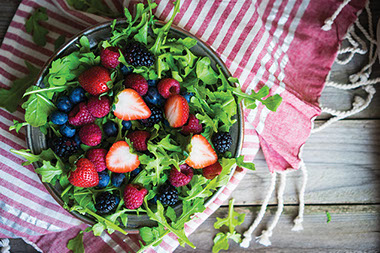
*Dark-colored berries.Blackberries, blueberries and cherries have nutrients that your brain needs for optimal function. Fresh or frozen are great options. If you choose dried fruits, read the label and avoid any with added sugar.
*Omega-3 fatty acids.Fatty fish, such as salmon, bluefin tuna, sardines and herring contain high amounts of omega-3 fatty acids. Vegetarian sources include flaxseeds, chia seeds and walnuts.
In addition, these foods are also great for your heart and overall health. Try working them into your daily diet for maximum brain benefit and a healthier you.
-
Wash And Eat
HEALTHY EATING

Pesticides are compounds that help to protect crops from devastating pests and weeds. Whether conventional or organic, farmers safely and carefully use pesticides as necessary to control insects, weeds, and fungus (organic farming does permit the use of certain pesticides), says the International Food Information Council.
Pesticide residues are tiny amounts of chemicals that may remain on food from their application to crops while being grown on the farm. Some crops are less susceptible to pesticide residues, such as those with a husk (corn), shell (peanuts), or skin (bananas). However, even those without an outer layer are safe to eat, and simply washing raw fruits and vegetables before eating them removes most traces of pesticide residues.
-
Avocado-Green Tea Popsicle
HEALTHY EATING

Ingredients
1 avocado (halved, pitted)
1 banana (peeled, roughly chopped)
1 cup fat-free milk
1/2 cup fat-free, plain Greek yogurt
1 tablespoon green tea matcha powder
1 tablespoon honey
Directions
1. Halve the avocado and remove the pit. Spoon the avocado’s flesh into a food processor or blender. Add the chopped banana, milk, yogurt, matcha powder, and honey.
2. Purée until mixture is smooth.
3. Carefully pour mixture into 6 (4-ounce) popsicle molds. Insert popsicle sticks and freeze until firm, at least 8 hours.
4. Place the outside of the popsicle mold under warm running water to easily remove popsicle from the mold.
Nutrition per serving: Servings 6. Calories 106; Total Fat 5 g; Saturated Fat 1 g; Sodium 27 mg; Total Carbohydrate 13 g; Dietary Fiber 3 g; Protein 4 g.
-
Questions To Ask Before Choosing A Financial Planner
FINANCIAL HEALTH

1. How are you paid? Is it by a fee and commission? Do you fully disclose the fees and the commissions you earn on every investment you make or service you offer? If paid by fees, what is the average fee your clients pay?
2. How many years have you been in the business? How long have you been a financial planner?
3. Can you give me some references of people you have worked with for more than two years?
4. What is your typical client like? Income levels, issues, investment amounts?
5. What training did you have to be a planner? What requirements were needed to attain this degree or title?
6. How many hours of continuing education must you have to keep your degree/designation?
7. What does a completed financial plan look like?
8. What is the most important difference your work made in someone’s life?
9. How many clients do you have?
10. How many support staff do you have? What are their credentials?
11. Do you have a privacy statement? May I have a copy?
12. Is there an agreement among you and your staff to keep information confidential? Have there ever been any violations of that agreement?
13. Do you have a copy of your Form ADV (a required disclosure form from the securities authorities)? Have you been responsible for any securities violations?
14. Do you have a formal contract to define the responsibilities of the clients and those of the planners? Does it also address a protocol to settle differences and to terminate the relationship? How long does the contract last?
Answers you will get to these questions can vary suggests Lynn S. Evans, CFP, author of Power of the Purse: Fear-Free Finances for Baby Boomer Women. You may have other questions that are important to you. Examples include if the offices are nearby and if you can communicate by email).
A question regarding the planner’s investment performance is absent. For good reason: the planner’s average return on an investment is not the key to his or her success. The ability to meet the clients’ goals is what really counts.
Lost without cyberspace?
What if you couldn’t get a Wi-Fi signal on your smartphone? How anxious would you be if you forgot your phone or lost it? Worry about not being able to see instant news and weather? Or freak about a low battery? If you say yes, you may be a nomophobe (that’s having no mobile phone phobia), according to Iowa State University researchers, in the journal Computers in Human Behavior. Take the 20-question test and judge for yourself atwww.news.iastate.edu/news/2015/08/26/nomophobia. It’s not an addiction but an obsession, they say.
-
4 Money Mistakes To Avoid
FINANCIAL HEALTH

Little everyday choices can have a big impact on your finances. If you want to save more or spend less, think about whether you’re making any of these mistakes.
Mistake #1: You put off saving money.
Do you think that you can wait a few more months or even years before you need to save for retirement, your kids’ college or other future needs? Even if you can only put away a few dollars each week, start now. It can add up over time and the sooner you start, the more money you’ll have later.
Mistake #2: You spend too much on “treats.”
We all like to treat ourselves once in a while. But, if you’re spending money on treats often, such as going to the movies or buying yourself a new item, you could be creating money problems. Look for low-cost or free ways to reward yourself. Set aside some time with a friend, take a hot bath, watch a favorite movie at home or check out free museums and concerts.
Mistake #3: You get lots of coupons in your mail and email.
If you get catalogs in the mail and your inbox is filled with coupons and deals, this could be wrecking your money goals. After all, you may not need the items that are advertised. But, they look like such a good deal that you decide to buy them anyway. Do you really need another sweater or pair of jeans, or are you buying them because of the sale? Unsubscribe from email coupons and newsletters, and throw catalogs in the recycling bin. This can help lower the temptation to shop.
Mistake #4: You don’t know how much money you really have.
If you are struggling financially, it can be hard to look at your bank account balances. But, it’s better to know what you can afford than to go deeper into debt. Make a budget of what you have and what you can spend each month after bills are paid. Try to stick to your budget and find ways to cut out unnecessary items.