Category: Uncategorized

  • Choosing Healthy Nut Butters

    HEALTHY EATING

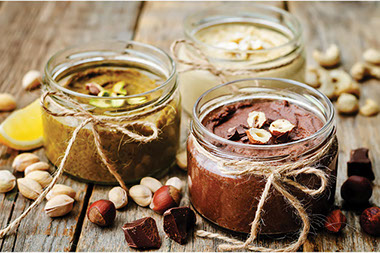
    Image of 3 different nut butter spreads.

    For many years, people thought they should avoid fats to be healthy. But the Academy of Nutrition and Dietetics says eating the right kinds of fat is good for you, and may even be good for your heart.

    Nut butters can be a healthy way to get some of these fats. But with so many different types, how do you choose? Each offers different benefits, so try  eating a variety.

    *Peanut butter:This popular nut butter contains plenty of monounsaturated fat, which has been shown to help lower bad cholesterol. This can reduce your risk of heart disease and stroke.

    *Almond butter:Almonds are an excellent source of vitamin E, which is an important nutrient for your heart and immune system, according to the National Institutes of Health. It also contains an even higher amount of monounsaturated fat than peanut butter.

    *Walnut butter:Although this can be harder to find, some health food stores carry walnut butter. It contains a high amount of polyphenols, which help reduce the risk of heart disease. It also contains omega-3 fats, which reduce inflammation in the body. This is especially good for people with diseases like Crohn’s disease, multiple sclerosis and rheumatoid arthritis.

    Although nut butters are healthy, they are high in calories. Be careful about portion sizes and avoid eating too much. Choose nut butters that have no added sugar or salt listed in the ingredients.

    Source: American Heart Association; USDA National Nutrient Database

    © American Institute for Preventive Medicine
  • Eat Less Without Being Hungry

    HEALTHY EATING

    Image of fruits, vegetables, soup and a sandwich with the words "Healthy Eating".

    If you’re trying to lose weight, you may already know that you need to cut calories. If you consume more calories than your body needs, it stores those extra calories as fat. To lose weight, you actually have to eat fewer calories than your body needs.

    But cutting calories isn’t always easy. Many people don’t stick with diets because of one main reason: hunger. The body’s hunger signals are nearly impossible to ignore. Your stomach growls, you feel tired, and you can’t concentrate. Over time, your hunger becomes harder to fight, and you may give up on your diet or overeat.

    It doesn’t have to be this way. You can eat enough food to stay satisfied while still cutting calories. Experts say it’s the amount and types of food you eat, not the number of calories that fills you up. The key is to choose “low-energy-dense foods,” or foods low in calories that can still satisfy your hunger, according to the CDC. In general, these types of foods have lots of water content, high fiber, and/or very little fat.

    Some of the best low-energy-dense foods include:

    *  Fresh fruits and vegetables

    *  Beans and legumes

    *  Low-fat or fat-free dairy foods

    *  Broth-based soups (not cream-based ones)

    *  Whole grains (look for whole grains and fiber on the food label)

    Think about a side-by-side comparison of low- versus high-energy-dense foods. One cup of french fries has 168 calories. But, one cup of salad with a tablespoon of low-calorie dressing has only 30 calories. You’ve just eaten the same amount of food, and slashed your calorie intake by more than 80 percent.

    It’s also a good idea to keep track of what you eat each day, so you have a clear picture of how many calories you’re consuming. The ChooseMyPlate website atwww.choosemyplate.govhas resources to help you focus on eating the right foods and making gradual, realistic changes to your diet for better health. No crash diets or hunger pangs are needed!

    © American Institute for Preventive Medicine

  • Go With The Grain

    HEALTHY EATING

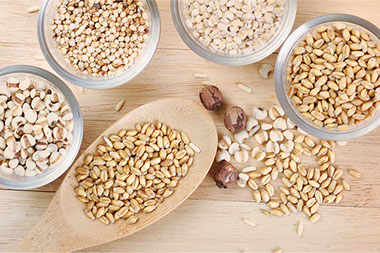
    Image of different grains.

    With one look down the grocery store aisle or a quick glance at a restaurant menu, it’s clear that whole-grain options are popping up everywhere. From quinoa to buckwheat and farro to freekeh, the number of grain possibilities is growing, leaving home cooks and diners puzzled by how to choose the right one and know how to prepare it.

    Not only do whole grains provide an array of health benefits, they can also be an excellent base for hearty dishes that taste great and are remarkably filling. Whether featured in a salad, formed into a patty as a vegetarian burger option, warmed up for breakfast, or used as the base of a thick stew, grains are extremely versatile and can be enjoyed as part of breakfast, lunch, dinner or dessert.

    Although cooking with grains can seem like a daunting task, the chef instructors at Le Cordon Bleu encourage home cooks to soak their long-cooking grains, whether for a few hours or overnight, to minimize the cooking time. This also ensures that any resin left on the grain that can cause a bitter taste will get washed off.

    They also suggest these cooking tips:

    *  Whole-grain options can be customized for each meal of the day. Make a big batch of steel-cut oats on Sunday evening and eat it for breakfast throughout the week. Add quinoa to lunchtime salads-add the dressing in advance so the grain fully absorbs the flavors of the dish. For dinner, add wheat berries or barley to soups for a hearty, filling meal.

    *  Resist the urge to stir grains as they are cooking. Stirring causes whole grains, especially rice, to become sticky and clump together, making it difficult to prepare a fluffy, flavorful dish.

    *  After they are cooked, whole grains stay fresh for several days in the refrigerator. You can cook a large pot of brown rice or quinoa at the beginning of the week and use it in dishes throughout the week to save cooking time.

    © American Institute for Preventive Medicine
  • How Sweet It Is

    HEALTHY EATING

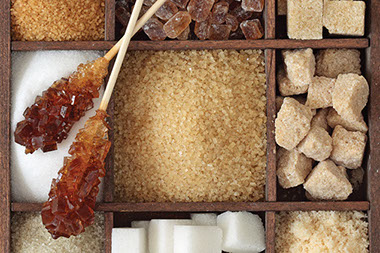
    Image of different types of sweeteners.

    Is sugar really bad for us? How about artificial or low-calorie sweeteners?

    Our bodies need one type of sugar, called glucose, to survive. “Glucose is the number one food for the brain, and it’s an extremely important source of fuel throughout the body,” said Dr. Kristina Rother, pediatrician with the National Institute on Health and expert on sweeteners.

    But there’s no need to add glucose to your diet, because your body can make the glucose it needs by breaking down food molecules like carbohydrates, proteins, and fats. Some sugars are found naturally in foods such as fruits, vegetables, and milk.

    Much of the sugar we eat isn’t found naturally in food but is added during processing or preparation.

    Although sugar itself isn’t bad, said Dr. Rother, “Sugar has a bad reputation that’s mostly deserved because we consume too much of it. It’s now in just about every food we eat.”

    You can cut down on added sugars. NIH in Health offers these suggestions:

    *  Choose water, fat-free milk, or unsweetened tea or coffee instead of sodas, sports drinks, energy drinks, and fruit drinks.

    *  Reduce sugar in recipes. If a recipe says 1 cup, use 2/3 cup.

    *  To enhance flavor, add vanilla, cinnamon, or nutmeg.

    *  Eat fresh, canned, frozen, and dried fruits without added sugar. Choose fruits canned in their own juice rather than in syrup.

    *  Use fruits to top foods like cereal and pancakes rather than sugars, syrups, or other sweet toppings.

    *  Read the ingredients list to pick food with little or no added sugar.

    © American Institute for Preventive Medicine

  • Non-Dairy Calcium-Rich Foods

    HEALTHY EATING

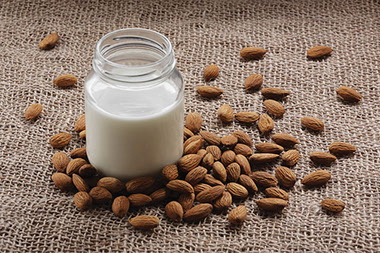
    Image of almond milk.

    Even if you can’t eat dairy, there are plenty of foods that can help you meet your recommended daily calcium intake.

    *  Calcium-fortified soy and almond milk

    *  Tofu

    *  Calcium-fortified orange juice

    *  Sardines

    *  Edamame

    *  Kale, collard greens, broccoli

    *  Figs

    *  White beans

    *  Okra

    © American Institute for Preventive Medicine
  • Shake Salt

    HEALTHY EATING

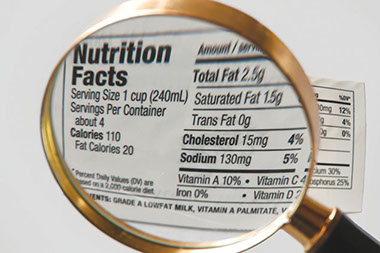
    Image of nutrition label.

    About 75% of the total sodium (salt) you get in your diet comes from sodium already in packaged and restaurant foods, not from the salt shaker, said an FDA deputy commissioner. That makes it very difficult for you to reduce your sodium intake because the foods you have available to you in the marketplace already have high levels in them.

    So what can you do? The FDA offers some advice:

    *  When shopping for food, read food labels and choose foods that are lower in sodium.

    *  Foods providing 5% (Percent Daily Value or %DV on the label) are considered low. And 20%DV is considered high (avoid these foods).

    *  The CDC identified 10 surprising foods as the greatest sources of sodium: breads and rolls; luncheon meat, such as deli ham or turkey; pizza; poultry, fresh and processed, much of the raw chicken bought from a store has been injected with a sodium solution; soups; cheeseburgers and other sandwiches; cheese, natural and processed; pasta dishes; meat dishes, such as meat loaf with gravy; and savory snack foods, such as potato chips, pretzels, and popcorn.

    © American Institute for Preventive Medicine

  • The Salty 6: Hidden Sources Of Salt

    HEALTHY EATING

    Image of a bowl of soup.

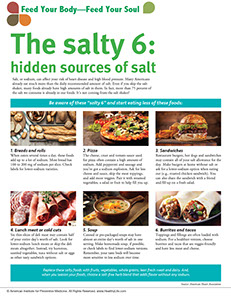
    Salt, or sodium, can affect your risk of heart disease and high blood pressure. Many Americans already eat much more than the daily recommended amount of salt. Even if you skip the salt shaker, many foods already have high amounts of salt in them. In fact, more than 75 percent of the salt we consume is already in our foods. It’s not coming from the salt shaker! Be aware of these “salty 6” and start eating less of these foods:

    1. Breads and rolls

    When eaten several times a day, these foods add up to a lot of sodium. Most bread has 100 to 200 mg of sodium per slice. Check labels for lower-sodium varieties.

    2. Pizza

    The cheese, crust and tomato sauce used for pizza often contain a high amount of sodium. Add pepperoni and sausage and you’ve got a sodium explosion. Ask for less cheese and sauce, skip the meat toppings, and add more veggies. Pair it with steamed vegetables, a salad or fruit to help fill you up.

    3. Sandwiches

    Restaurant burgers, hot dogs and sandwiches may contain all of your salt allowance for the day. Make burgers at home without salt or ask for a lower-sodium option when eating out (e.g., roasted chicken sandwich). You can also share the sandwich with a friend and fill up on a fresh salad.

    4. Lunch meat or cold cuts

    Six thin slices of deli meat may contain half of your entire day’s worth of salt. Look for lower-sodium lunch meats or skip the deli meats altogether. Instead, try hummus, sautéed vegetables, tuna without salt or eggs as other tasty sandwich options.

    5. Soup

    Canned or pre-packaged soups may have almost an entire day’s worth of salt in one serving. Make homemade soup, if possible, or check labels to find lower-sodium versions. Remember, your taste buds will become more sensitive to less sodium over time.

    6. Burritos and tacos

    Toppings and fillings are often loaded with sodium. For a healthier version, choose burritos and tacos that are veggie-friendly and have less meat and cheese.

    Replace these salty foods with fruits, vegetables, whole grains, lean fresh meat and dairy. And, when you season your foods, choose a salt-free herb blend that adds flavor without any sodium.

    Source: American Heart Association

    © American Institute for Preventive Medicine
  • Ways To Improve Heart Health

    HEALTHY EATING

    Images of fruits and vegetables shaped into a heart.

    (With ingredients in the foods you already eat)

    Poor diet increases the risk of high blood pressure, high cholesterol, and poor circulation-3 major factors that affect overall heart health. Know which nutrients and foods in your diet may decrease risk for heart disease-the number one cause of death in the U.S.

    Phytosterols:Compounds similar to cholesterol that are found in all edible plants. They help reduce low density lipoprotein (LDL) cholesterol, which is a main risk factor for heart disease.

    Cocoa flavanols:Can help maintain the elasticity of blood vessels, which contributes to normal blood flow. Quite simply: dark chocolate.

    Omega-3 fatty acids:Primarily found in fish. Have been shown to decrease triglyceride levels, potentially lowering blood pressure.

    Hydroxytyrosol:An antioxidant found in olive oil, protects blood lipids (fats) from oxidative damage.

    Blueberries: May reduce high blood pressure.

    Oat beta-glucan:Daily consumption of at least 3 grams (your morning cereal) effectively lowers cholesterol.

    Grape seed extract:Shown to support blood pressure within a normal range. This is ground up seeds from red wine grapes.

    Vitamin K:Helps to keep excess calcium out of blood vessel walls and improve cardiovascular health. Found in green leafy vegetables.

    Dairy:Daily consumption of low-fat milk products decreases the risk of high blood pressure.

    Almonds:Improves serum fatty acid profiles and decreases the overall risk of heart disease (a handful a day).

    Walnuts:Good source of omega-3 fatty acids and alpha linolenic acid (ALA) which help your heart by preventing dangerous heart rhythms that can lead to heart attacks.

    © American Institute for Preventive Medicine

  • 4 Behaviors For A Healthy Wallet

    FINANCIAL HEALTH

    Concept image of growing leaf with stacked coins.

    1. Make a budget and stick to it.

    Many money experts will tell you that you need to know where your money is going each month. Creating a budget helps to see how much you spend on certain things and where you can cut back to save even more.

    2. Check your credit report each year.

    You are entitled to a free credit report once per year. This is an important step to help spot identity theft early. Your credit report can affect your mortgage rate and ability to get a loan.

    3. Shop around for a good APR on your next loan.

    The annual percentage rate (APR) on a loan is an important number. This is the total cost, including fees and interest, described as a yearly rate. The APR can vary widely between banks or lenders. It pays to take some extra time to find the best rate. Make sure you understand exactly what you will pay.

    4. Put money away for an emergency fund.

    Having an emergency fund offers peace of mind and protection from unexpected costs. Even a few dollars a week can add up, so save what you can.

    Paycheck checkup

    The Internal Revenue Service (IRS) says employees should look at their paycheck withholdings each year. Withholdings are taxes that are taken out of your paycheck.

    It’s especially important to check your withholdings in 2018, the IRS says. The Tax Cuts and Jobs Act, signed in December 2017, may change how much you want withheld.

    The IRS has a withholding calculator on their website at:apps.irs.gov/app/withholdingcalculator. This calculator can help you be sure that you aren’t having too much or too little tax withheld from your paychecks.

    © American Institute for Preventive Medicine
  • Save More, Spend Less

    FINANCIAL HEALTH

    Image of women at kitchen counter with groceries and placing money in a piggy bank.

    According to the American Psychological Association, finances are the number one cause of stress in America. Whether it’s meeting the monthly bills or trying to build a retirement fund, financial worries can be difficult to deal with.

    If you’re looking for ways to stretch your monthly budget, the Federal Trade Commission offers some tips that may help you save more and spend less without feeling the pinch.

    Start with a budget.

    This may not be fun, but it doesn’t have to be long and difficult. You can use something as simple as a two-column sheet of paper. In one column, write your net income for the month. In the other column, record all your expenses: basic monthly bills (mortgage, food, transportation), lifestyle choices (entertainment, eating out, personal care, pets), and other expenses. This will give you a clear idea of how much you need to save or cut back on spending. The FTC website offers a free budget worksheet atwww.consumer.ftc.gov/articles/pdf-1020-make-budget-worksheet.pdf.

    Consider direct deposits into savings accounts.

    Have part of your paycheck go directly into a 401 savings or other type of retirement account. Have additional money put into another savings account for an emergency fund and major expenses as needed.

    Pack lunches.

    A daily $6 spent on lunch adds up to $800 a year. Instead, make extra food for dinner and take leftovers or make your own sandwich. Or, purchase healthy frozen meals when they’re on sale.

    Use free community services.

    Most cities have well-stocked libraries that have books, magazines, music, games, and movies. You can check these items out for free.

    Know that every little bit helps.

    Make small, manageable goals to help you save. Even just $1,000 less on your credit card bill could save you hundreds of dollars in interest each year. Eating out one fewer time each week adds up to big savings in a few months. Rather than being discouraged by a goal that seems impossible, look for small, doable ways to save a few dollars here and there.

    © American Institute for Preventive Medicine