Category: Self-Care Corner

  • Clean Contacts Matter

    SELF-CARE CORNER

    Image of contact solution, case and eye drops.

    If you wear contact lenses, it’s important to keep them clean and care for them properly. Not taking care of your contact lens could cause an eye infection known as keratitis, which can cause serious eye problems. The CDC says 988,000 people had keratitis in 2010. The biggest risk factor was improper care of contact lenses.

    You can greatly reduce your risk of this infection by doing the following things each day:

    *  Wash your hands with soap and water before inserting or removing your lenses.

    *  Use only sterile contact lens solution and disinfectant. Don’t use water, saliva, or other liquids to store or rinse your lenses.

    *  Gently rub your lenses with disinfectant daily.

    *  Remove your lenses before showering, swimming and sleeping.

    *  Use fresh solution every day. Dump out all the old solution.

    *  Don’t wear lenses longer than directed. For instance, some disposable contacts are designed to be worn for one day. Some can be worn for several weeks or longer. Ask your eye care professional if you’re not sure.

    *  Don’t use expired solution or contacts.

    *  Replace your contact lens case every three to six months.

    Source: The American Academy of Ophthalmology

    © American Institute for Preventive Medicine

  • Help For The Indoor Sneezing Season

    SELF-CARE CORNER

    Image of a person cleaning the bathroom sink.

    Sometimes indoor winter air brings a whole new set of allergy and asthma triggers including dust, pet dander, and mold.

    Doctors from the American College of Allergy, Asthma and Immunology offer advice on how to stay sneeze-free and sniffle-free while indoors this winter.

    *  Reduce moisture in your home to keep dust mites in check. Maintain humidity below 55%, and don’t use a humidifier or a vaporizer.

    *  Filter out dust and other allergens by installing a high efficiency furnace filter with a MERV rating of 11 or 12, and be sure to change it every 3 months.

    *  Banish allergens from the bedroom (where you spend a third of your life). Keep pets and their dander out, and encase mattresses and pillows with dust-mite-proof covers. Use blinds instead of curtains.

    *  Allergy sufferers should wear a NIOSH-rated N95 mask while dusting-a chore that should be done regularly. Wash bedding and stuffed animals in hot water every 14 days and use a vacuum with a HEPA filter.

    *  Turn on the fan or open the window to reduce mold growth in bathrooms (while bathing) and kitchens (while cooking). Wear latex-free gloves and clean visible mold with a 5% bleach solution and detergent.

    *  Box up books and knick-knacks and limit the number of indoor plants. When you are buying new furniture, like chairs or sofas, opt for leather or other nonporous surfaces to make cleaning easier.

    © American Institute for Preventive Medicine

  • Nail The Infection

    SELF-CARE CORNER

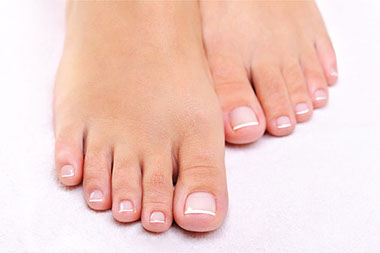
    Image of a women's feet.

    Despite the wealth of over-the-counter products available that claim to treat fungal nail infections (in the toenails and sometimes in the fingernails), the only way to cure an infection is to see a skin doctor (a dermatologist).

    Over-the-counter topical medications don’t penetrate the nail and therefore aren’t as effective as oral prescriptions. A dermatologist can prescribe the proper drugs to get rid of the fungi that are the problem in yellowing and misshapen nails.

    One of the best ways to deal with fungal nail infections is to prevent them from happening. The fungi love warm, damp environments around swimming pools and gym locker rooms-and inside your warm, sweaty socks.

    The best way to nail a nail infection is to keep your feet clean and dry and wear sandals in public shower areas.

    © American Institute for Preventive Medicine

  • Shingles (And We’re Not Talking About Your Roof)

    SELF-CARE CORNER

    Image of shingles the rash on a person's back.

    Shingles is a painful viral infection that affects 30% of Americans every year. It is caused by Varicella Zoster virus, the same virus that causes chicken pox.

    The outbreak occurs mostly in people 50 years of age and older. The virus can lie dormant in the nerve tissue of the body for many years, then becomes activated and causes shingles later in life.

    According to the Centers for Disease Control and Prevention, shingles is not passed from one person to another. However, the virus that causes shingles can spread from a person with active shingles to another person who has never had chicken pox. In such cases, the person exposed to the virus might develop chickenpox, not shingles.

    “If you are diagnosed with shingles, you are contagious as long as you have blisters and ulcers. It is important to cover your rash and wash your hands frequently. It also is important to avoid people who have not received the chicken pox vaccine, pregnant women and anyone with a weak immune system,” said Dr. Khalilah Babino, physician at Loyola University Health System and assistant professor in the Department of Family Medicine at Loyola University Chicago Stritch School of Medicine.

    A shingles outbreak can last several weeks. Before the rash appears, the following symptoms may occur:

    *  Fatigue

    *  Headache

    *  Tingling

    *  Itching

    *  Burning Pain

    After a few days, a blistering rash in clusters appears. The shingles rash is always located along the involved nerve pattern called a dermatome, typically in a band on one side of the body. Most often, the rash is on the chest and/or back, but can occur on other body parts.

    “If you develop shingles on your face, especially near your eye, you should seek immediate medical care as this type may result in loss of vision,” Dr. Babino said. The blisters that form will pop in a few days and become open sores, which are contagious. Usually, these ulcers scab over within 7 to 10 days and the rash goes away within 4 weeks.

    “Fortunately, there is antiviral medication to help slow the virus and speed recovery. The earlier the medication is started, the more effective it is against the virus. I recommend starting these medications within 72 hours of the onset of rash. Since shingles can be very painful, you might also need prescription pain medication,” Dr. Babino said.

    Most people with shingles do not suffer any complications. Still, there is a 10% chance of developing a painful condition called post-herpetic neuralgia after the rash has gone away. The pain can last from a few months to a year.

    You can decrease your risk of developing shingles and its complications by getting the shingles vaccine. One dose of shingles vaccine is advised for adults age 60 years and older, but can be given between the ages of 50 and 59.

    “People who have had shingles previously can still receive the vaccine. If you are above the age of 50 years old, you should talk to your health care provider about the shingles vaccine,” Dr. Babino said.

    © American Institute for Preventive Medicine

  • Tips To Prevent Trips & Falls

    SELF-CARE CORNER

    Image of doctor holding up an eye chart.

    It’s one thing to lose your balance and fall. But it’s especially important to keep elderly people from the hazards of a trip and fall.

    The causes of balance issues could come from a number of different sources-many that don’t have a seemingly direct connection to balance or falls. Dr. Jason Rice, a primary care internist at Loyola University Health System, tells about some surprising reasons you may lose your balance and fall.

    Blood pressure medication.

    Some of these drugs can lead to side effects such as dizziness and lightheadedness, especially when changing positions such as standing up from a seated position. The same mechanism that allows our body to quickly adjust our blood flow after moving to a standing position from a seated or flat position can lead to a change in blood pressure, and several medications actively work to hinder this mechanism, which can lead to unsteadiness or falls when changing positions. Solution: Stand up slowly and get your bearings before walking. Staying hydrated also helps to prevent drops in blood pressure.

    Blood vessel changes.

    Over time the elasticity of blood vessels starts to decline and this can affect blood flow. Similar to blood pressure medication, this can cause you to become dizzy or lightheaded when changing positions, which can lead to falls. Solution: Stand up slowly and hold on to a stable surface before walking.

    Low blood sugar.

    Low blood sugar can cause dizziness, falls, and even loss of consciousness. This is especially true for people with diabetes. If you are taking medication to lower your blood sugar, make sure you take it with an adequate meal so your sugar doesn’t drop too low.

    Declining vision.

    Visual clues are an extremely important part of balance. As we age, our eyesight declines, which can lead to issues with balance. Regular visits to your primary care physician, which includes a vision assessment, is the best way to avoid this problem.

    © American Institute for Preventive Medicine

  • 5 Things About Natural Anxiety Remedies

    SELF-CARE CORNER

    Man getting a chair massage.

    Nearly everyone has anxiety at times. Stressful situations and important events can make you feel edgy or anxious.

    Sometimes, however, anxiety becomes a health problem. It happens frequently and it interferes with your life. This is called an anxiety disorder. If this happens to you, see your doctor. Treatments can help, including therapy and medications. Don’t try natural remedies for an anxiety disorder unless your doctor recommends it.

    People who have mild anxiety or occasional stress may look for “natural” or complementary health remedies.

    1.  Acupuncture is a popular natural anxiety treatment. It involves placing thin needles into the top layer of skin in certain points on the body. If you decide to try acupuncture, see a licensed practitioner who uses sterile, single-use needles.

    2.  Massage therapy can be relaxing and can feel good on tight, tense muscles. It may help some people with mild stress or occasional anxiety.

    3.  Mindfulness meditation is a practice of focusing on the present moment. It involves breathing, guided imagery and other methods. It may benefit people who have occasional stress or anxious feelings.

    4.  Relaxation techniques like deep breathing or relaxing music can lower anxiety before stressful events like medical procedures.

    5.  Don’t try herbs or dietary supplements without talking to your doctor first. Most of them haven’t been proven to help with stress or anxiety. And some can cause health problems or have dangerous interactions with medications.

    If you have anxiety or stress, talk with your health care provider. Together, you can find treatments or options that will help you live a healthy life.

    © American Institute for Preventive Medicine

  • 10 Ways To Get The Most Out Of Midlife

    SELF-CARE CORNER

    Image of couple dancing.

    Are your best years ahead? A national survey of women between the ages of 35 and 49, sponsored in partnership with the National Association of Nurse Practitioners in Women’s Health and Teva Women’s Health shows that more than three-quarters of women in midlife say the best years are ahead, not behind. Yet midlife is notoriously known as a time of crisis. Women’s health expert, Dr. Judith Reichman, tells how women are seizing the midlife moment and making new choices related to their health.

    If you have not already joined the ranks of women enjoying midlife, here are 10 ways to get the most out of these years:

    1. Don’t obsess about those 8 glasses of water each day. Drink when you are thirsty and when you are exercising briskly. Too much water reduces the impact of electrolytes and strains the bladder.

    2. Focus on family bonding. Often midlife crises for women are not an age phenomenon but rather due to the very significant changes that occur in the lives of our growing-up children and our maturing (we hope) partners.

    3. Spend more time with your partner. Don’t wait until the nest is already empty. This is the time to rediscover why you fell in love in the first place.

    4. Rev up the love life. You are free to go on dates with your partner-real dates!

    5. Periodically reevaluate your choice of birth control. The second-highest rates of unplanned pregnancies occur in midlife.

    6. Worry more about you. PMS gets worse with age, and work and family responsibilities continue to rise, so it is important to establish de-stressing routines, including setting aside time to exercise and visit with friends.

    7. Cut down on salt, reduce your caloric intact by 100-200 calories per day and boost your calcium and vitamin D intake. By midlife, most women are at high risk for high blood pressure and heart disease. Cutting salt can save your life and set up your family for healthy habits as they get older.

    8. Embrace your desire to sleep. Now is the time to develop good sleep habits to prepare you for the next stage of life as hormonal changes during menopause increase sleep troubles.

    9. Do something you thought you would never have time for. Take up a new hobby or go back to an activity you love-knitting, dancing, learning, or volunteering. Do something that makes you feel good about yourself.

    10. See your doctor. You have always made sure everyone else in the family gets a yearly check-up, but what about you? Schedule those yearly health screenings and don’t neglect your own health.

    Judith Reichman, MD, is an attending physician in gynecology at Cedars-Sinai Medical Center and author of Slow Your Clock Down: The Complete Guide to a Healthy, Younger You.

    © American Institute for Preventive Medicine

  • Avoid The Aches And Pains Of Technology

    SELF-CARE CORNER

    Image of business man with laptop and smart phone.

    You can prevent BlackBerry thumb and text neck-new ailments that came with devices such as smartphones and BlackBerries and their small keyboards, advises the American Chiropractic Association.

    *  Avoid typing for more than 3 minutes without a break.

    *  Keep messages short and simple; abbreviate.

    *  Practice using other fingers for typing, especially when thumbs hurt.

    *  Don’t slouch when texting.

    *  Keep wrists upright, straight and close to the body when holding a device.

    *  Don’t bend your neck excessively when texting; tuck your chin in instead and look down.

    *  Turn your devices off on the weekends (or at least on Sunday).

    *  Get outside, exercise and enjoy nature too. Balance is key to staying healthy.

    For more tips on proper use of technology and good health, visitwww.TechnoHealthy.com.

    © American Institute for Preventive Medicine

  • Cold, Flu, Or Allergy?

    SELF-CARE CORNER

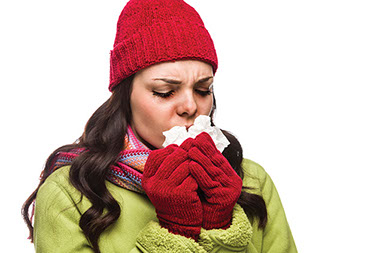
    Image of young women dressed warmly coughing into a tissue.

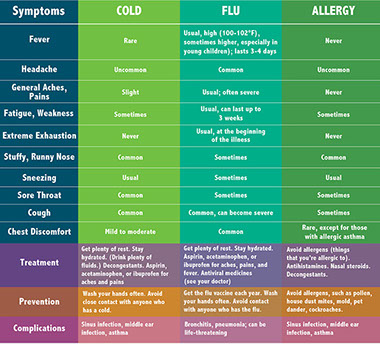
    You’re feeling pretty lousy. You’ve got sniffles, sneezing, and a sore throat. Is it a cold, flu, or allergies? It can be hard to tell them apart because they share so many symptoms. But understanding the differences will help you choose the best treatment, advises the NIH News in Health.

    Chart showing symptoms of a cold vs the flu vs an allergy.

    © American Institute for Preventive Medicine

  • Hey, Want To Improve Your Balance?

    SELF-CARE CORNER

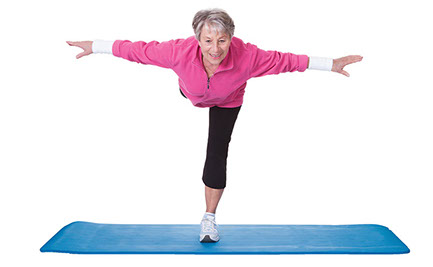
    Image of older women balancing on one leg while bending over half way.

    Everyone wants to prevent falls and improve balance, at any age. NIH in Health offers these daily exercises to steady your balance (and you could do these while talking on the phone or at work too):

    *  Stand on one leg at a time for a minute. Slowly increase the time. Try to balance with your eyes closed or without holding on to anything.

    *  Stand on your toes for a count of 10, and then rock back on your heels for a count of 10.

    *  Move your hips in a big circle to the left, and then to the right. Do not move your shoulders or feet. Repeat 5 times.

    © American Institute for Preventive Medicine