Category: Self-Care Corner

  • Is Lasik Right For You?

    SELF-CARE CORNER

    Female getting her eyes examied.

    If you wear glasses or contacts, it’s possible you may be a candidate for LASIK eye surgery. LASIK stands for laser-assisted in situ keratomileusis, which simply means laser vision correction.

    The procedure uses a laser to correct the shape of your cornea and improve your vision. This type of surgery is used to treat:

    *  Myopia (nearsightedness)

    *  Hyperopia (farsightedness)

    *  Astigmatism (an imperfection in the shape of the cornea)

    Undergoing LASIK eye surgery may reduce or eliminate your need for glasses or contacts. But, it’s not right for everyone.

    How to qualify

    To find out if you are a candidate for LASIK, you first need to talk to your eye doctor. They will do a comprehensive eye exam and make sure you meet certain criteria such as:

    *  Stable vision for at least a year

    *  Eye prescription within the range LASIK can correct

    *  Thick healthy corneas

    *  18 years of age or older

    Some conditions may disqualify you from the procedure. These include:

    *  Severe dry eye

    *  Eye infections

    *  Cataracts

    *  Glaucoma

    *  Poorly controlled diabetes

    *  Pregnancy or breastfeeding

    The procedure

    During the procedure, you will be awake, resting comfortably on a table, and able to see for the majority of the time. It is painless and over in just a few minutes.

    1.  Drops will be put in your eyes to numb them.

    2.  An eyelid holder will be put in place to keep your eyes open.

    3.  A suction ring will be placed on your eye to hold it still. You will feel some pressure, and your vision will briefly fade.

    4.  The ophthalmologist will use a laser to cut a flap in your cornea.

    5.  A laser will precisely reshape your cornea, and the flap will be smoothed back into place.

    After LASIK surgery

    You will need to wear special glasses at first for eye protection and use several types of eye drops for the first few days to weeks until your eyes are healed.

    Side effects from the procedure are often temporary and may include:

    *  Dry eyes

    *  Light sensitivity

    *  Blurry vision

    *  Halos around lights, especially at night

    *  Glare

    Source: American Academy of Ophthalmology

    © American Institute for Preventive Medicine

  • The Causes Of Coughing

    SELF-CARE CORNER

    Man holding his throat and head.

    It’s the season for colds and flu – and that means coughing. Coughing is an important function in your body. It helps clear your airways. Many times, a mild cough will go away on its own. But when should you see a doctor about a cough?

    Common cold

    A common cold may cause some coughing. When you have a runny nose, the fluids drain down your throat. This causes your cough reflex to kick in. It’s a way your body protects your lungs. Although a cough from a cold can be annoying, it usually goes away quickly. Antibiotics won’t help with a cough related to a cold.

    Bronchitis

    Bronchitis is an inflammation in the tiny tubes in the lungs. These tubes are called bronchioles. Viruses and bacteria can get into the bronchioles and make you sick. Chemicals and toxins like tobacco smoke can also invade the bronchioles and lead to bronchitis.

    Symptoms of bronchitis include:

    *  Coughing, especially with mucus

    *  Wheezing or feeling short of breath

    *  Low fever

    *  Chest pain

    Bronchitis is most often caused by a virus so antibiotics will not help. Rest, drinking more fluids and a humidifier can help you feel better.

    Pneumonia

    Pneumonia is an infection in the air sacs inside the lungs. These sacs are called alveoli. Pneumonia can range from mild to serious. If you have pneumonia, you may notice:

    *  Cough with greenish, yellow or bloody mucus

    *  Fever, sweating and chills

    *  Trouble breathing

    *  Stabbing chest pain that hurts when you cough or take a deep breath

    *  Loss of appetite

    *  Feeling weak or tired

    *  Nausea and vomiting (common in small children)

    Many times, a doctor will give you antibiotics for pneumonia. Be sure to take them exactly as your doctor tells you. Pneumonia can be life-threatening if it is not treated effectively.

    Pertussis (Whooping cough)

    Pertussis is very contagious. It may seem like a cold at first. People may have a runny nose or mild cough.

    As it gets worse, pertussis causes a severe cough that can last weeks or even months. The cough makes a high-pitched “whoop” sound. It’s especially dangerous for babies and people with weak immune systems.

    The best way to protect against pertussis is to get vaccinated. If you aren’t sure whether you’re vaccinated, ask your doctor. Pertussis is treated with antibiotics.

    Sources: American Lung Association, Centers for Disease Control and Prevention, National Heart, Lung, and Blood Institute

    © American Institute for Preventive Medicine

  • Daily Habits For A Restful Sleep

    SELF-CARE CORNER

    Clock sitting on night stand.

    Your habits during the day have a significant influence on how well you sleep. From the moment you open your eyes in the morning, the choices you make determine whether your body will be ready to rest at bedtime.

    Creating a sleep-minded daily routine will set the stage for a good night’s rest. If you’re struggling to fall asleep or stay asleep, it’s time to reset your daily rhythm so you wake up refreshed and ready to go.

    Get up at the same time each day

    A consistent sleep schedule lets your body know when to be alert and when to settle down for bed. Getting up at the same time each day is essential to establish a sleep rhythm.

    Think of getting up in the morning as step one of your sleep schedule. If step one is consistent, then all the other steps can fall into place. If you’re tired, it’s better to go to bed early than sleep in late.

    Spend time outside

    Natural light is a signal to the body that it’s time to be awake and alert. Being outdoors stimulates hormones related to your circadian rhythm. These hormones help determine how energetic you feel during the day and how well you sleep at night.

    Exposure to early morning sunlight is ideal for regulating your sleep/wake pattern. If you are unable to get outside, use bright lights early in the day to simulate sunlight.

    Exercise in the morning

    Being physically active first thing in the morning can give you a boost of energy. The more active and energetic you feel during the day, the more likely you will wind down at night.

    If exercising first thing isn’t possible, make sure to get your exercise in as early in the day as you can. Avoid exercising within a few hours of bedtime as it may make you too energized to fall asleep.

    Eat consistent meals

    The timing of your meals is an important part of your sleep cycle. When you eat, you are communicating the time of day to your body. Consistent meals also provide energy so you can be alert and productive during your waking hours.

    Avoid skipping meals or snacking late at night. Eating or drinking close to bedtime sends the wrong signal. At night, you want your energy levels to drop and your body to focus on repair and rest.

    Source: National Heart, Lung, and Blood Institute

    © American Institute for Preventive Medicine

  • Keeping An Eye Out For Cataracts

    SELF-CARE CORNER

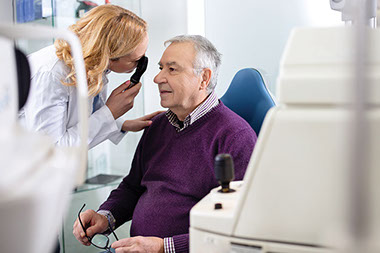
    Eye doctor examining patients eye.

    Most people will have cataracts by the age of 80. But they don’t have to mean loss of vision. They are treatable.

    What is a cataract?

    A normal lens inside the eye is clear. Cataracts happen when the proteins in the eye’s lens start to break down. Then they clump together. This causes cloudiness and problems with your vision.

    Cataracts may occur with normal aging. But they can also happen after an eye injury or if you had eye surgery.

    Signs of cataracts

    People often notice changes in vision when cataracts start to form. These changes include:

    *  Blurry or distorted vision

    *  Being sensitive to light

    *  Seeing a “halo” around lights

    *  Seeing double

    *  Trouble seeing at night or in dimly lit rooms

    *  Seeing colors as dull or yellow-tinted

    Prevention

    The best way to help prevent cataracts is with eye sun protection. Wear sunglasses that block out 100 percent of UV rays when you’re outside during the day. Not all sunglasses offer 100 percent UV protection. Check the packaging to be sure. Wear a wide-brimmed hat to keep sun off your face.

    Smoking increases the risk for cataracts, so quit smoking. Get help quitting if you need it.

    Finally, get a dilated eye exam regularly. Ask your eye care specialist or doctor how often you need one.

    Seeing a doctor

    If you think you might have cataracts, talk to a doctor. You may need an eye exam from an optometrist or ophthalmologist. During the exam, your eye care specialist can perform tests to look for cataracts.

    Treatment options

    If your doctor finds cataracts, don’t panic. There are ways to treat them.

    First, your doctor may recommend new glasses or contacts for mild symptoms. You may also find that using brighter lights or a magnifying lens is helpful for reading or working.

    If your cataracts are interfering with life, you may need surgery. Cataracts surgery involves putting a new artificial lens in the eye. It is a safe surgical procedure and works well for most people.

    Sources: American Academy of Ophthalmology, National Eye Institute

    © American Institute for Preventive Medicine

  • Uv Safety 2

    SELF-CARE CORNER

    Man's sun burn face popping out of swimming tube.

    Sitting in the warm sun can be great for your mental health and your daily dose of vitamin D. But too much sun exposure can pose a big problem. Before you get some rays, plan ahead so your fun in the sun doesn’t end with a painful sunburn.

    *Find shade:You don’t want to be in direct sunlight for too long. Find a shady area or an umbrella to sit under for some respite from the sun.

    *Wear clothing:The right clothes can help reduce sun damage. Choose lightweight, breathable fabrics that cover your arms, legs, chest and back. Find a wide-brimmed hat to cover your face and neck and buy sunglasses with 100% UV protection. Choose clothes with built-in UV protection, as well.

    *Rub in sunscreen:Wearing sunscreen is a habit you should practice year-round. Make sure you choose a sunscreen with at least SPF 15 – SPF 30 is a better choice. Reapply every two hours or immediately after swimming.

    How to soothe a sunburn

    It’s fun to play in the sun. But what do you do when the sun bites back? First things first, get out of the sun! Cover up your skin if you’re outside and find a cool, dark place. Then, get to work helping your skin recover.

    1.Take a cool bath or shower to cool down your skin.Avoid using harsh soaps or body washes, as these could make your skin dry out even more.

    2.Apply a moisturizer or aloe vera to the burn.This helps to trap moisture in your skin, which can help with healing. Aloe vera is anti-inflammatory, promotes circulation and may help stop bacteria from growing.

    3.Drink water.Your body fights a sunburn by drawing water to the surface of your skin. This could lead to dehydration, so be sure to replenish your fluids often.

    4.Take extra care.After a sunburn, it is very important that you stay out of the sun for the next few days so your skin can heal. Wear loose clothing and avoid any itchy fabrics.

    5.See a doctor if…you get severe blistering, develop a fever and chills, or see signs of infection, such as oozing pus or red streaks.

    © American Institute for Preventive Medicine
  • Disappearing Hair: Know About Alopecia

    SELF-CARE CORNER

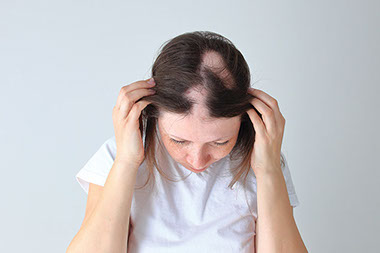
    Women showing hair loss.

    Hair loss is a normal part of life and aging. The average person loses 100 strands of hair from their scalp every day. Usually, these hairs grow back as part of a hair follicle’s lifecycle.

    However, as people get older, hair loss usually outpaces hair regrowth. In addition, some people may be susceptible to losing their hair early in life.

    Alopecia, another name for hair loss, can be frustrating, embarrassing, and tough to manage. But, there may be options available to slow, halt, or reduce the appearance of thinning hair.

    Causes of alopecia

    There are many different types of alopecia, each with a different cause.

    For example, androgenetic alopecia, commonly known as pattern baldness, is linked to your genetics. If your dad or mom experienced pattern baldness, the likelihood is you will too.

    Other causes include:

    *  Aging

    *  Genetics

    *  Hormones

    *  Stress

    *  Thyroid dysfunction

    *  Medications

    *  Chemical hair treatments

    *  Autoimmune reactions

    Treatment options

    The best way to manage hair loss depends on the cause. While some forms of alopecia may be slowed or halted, others are irreversible. Your medical doctor or dermatologist is your best resource when exploring treatments for alopecia.

    Options may include:

    *  Topical medications or shampoos

    *  Oral medications

    *  Corticosteroid injections

    *  Hair transplant

    *  Wigs or hairpieces

    Caring for your hair

    How you treat your hair may contribute to alopecia in some cases. The better care you take of the hair you have, the healthier it will be.

    *  Use a gentle shampoo that won’t remove moisture from your hair.

    *  Apply conditioner after every shampoo.

    *  Limit how long and how often you blow-dry your hair.

    *  Avoid wearing your hair in a tight bun, ponytail, or braid.

    *  Brush or comb your hair gently. Avoid tugging.

    If you are dealing with alopecia, talk to your doctor to find out the cause and discuss the best treatment options for you.

    © American Institute for Preventive Medicine
  • Keeping An Eye Out For Retinal Detachment

    SELF-CARE CORNER

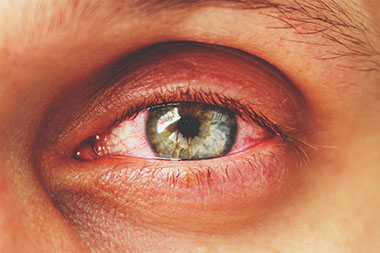
    Close up of eye.

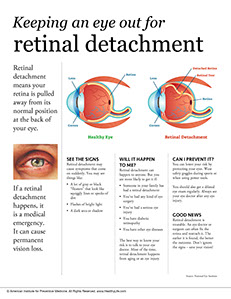
    Retinal detachment means your retina is pulled away from its normal position at the back of your eye. If a retinal detachment happens, it is a medical emergency. It can cause permanent vision loss.

    See the signs

    Retinal detachment may cause symptoms that come on suddenly. You may see things like:

    *  A lot of gray or black “floaters” that look like squiggly lines or specks of dirt

    *  Flashes of bright light

    *  A dark area or shadow

    Will it happen to me?

    Retinal detachment can happen to anyone. But you are more likely to get it if:

    *  Someone in your family has had a retinal detachment

    *  You’ve had any kind of eye surgery

    *  You’ve had a serious eye injury

    *  You have diabetic retinopathy

    *  You have other eye diseases

    The best way to know your risk is to talk to your eye doctor. Most of the time, retinal detachment happens from aging or an eye injury.

    Can I prevent it?

    You can lower your risk by protecting your eyes. Wear safety goggles during sports or when using power tools.

    You should also get a dilated eye exam regularly. Always see your eye doctor after any eye injury.

    Good news

    Retinal detachment is treatable. An eye doctor or surgeon can often fix the retina and reattach it. The earlier it is found, the better the outcome. Don’t ignore the signs – save your vision!

    Source: National Eye Institute

    © American Institute for Preventive Medicine
  • What To Do About Varicose Veins

    SELF-CARE CORNER

    Doctor and patient talking.

    Do you have bulging veins on your legs? The veins may be blue, purple or red in color. If so, you may have varicose veins.

    What are varicose veins?

    Your heart is always pumping blood out to your organs. Then, the blood goes back to the heart through the veins. Veins have special valves that push the blood back toward the heart.

    Sometimes these valves stop working correctly. This may happen if valves get weaker over time. Then the blood pools in the vein, unable to move. Blood that is pooling in a vein may cause the bulge or bump of a varicose vein.

    Not just cosmetic

    Some people don’t like the look of varicose veins. But they can also cause other problems. Varicose veins may itch or cause pain, swelling or heaviness in the legs.

    They can also continue to weaken the vein over time. This can cause skin changes like open sores or hard, thick areas of skin.

    Medical options

    Ask your doctor about medical procedures that can help. Options may include:

    *  Lasers that heat the vein and close it off

    *  Injections that seal the vein closed

    *  Surgery to remove the vein if non-invasive options don’t work

    Helping at home

    If varicose veins bother you, there are some things you can do.

    *  First, work toward a healthy weight. Being overweight puts more pressure on the veins.

    *  Be active. Exercise gets your blood pumping. This helps move blood out of the veins.

    *  Ask your doctor about compression stockings. These can help relieve pain and heaviness for some people. These are available at drug stores and online without a prescription if your doctor gives you the okay to wear them.

    *  Put your legs up. When possible, keep your legs up above your heart.

    *  Don’t wear clothes that are very tight around the waist or upper thighs.

    Source: National Heart, Lung and Blood Institute, National Institutes of Health

    © American Institute for Preventive Medicine
  • Do You Live With A Sleepwalker?

    SELF-CARE CORNER

    Young women sleepwalking.

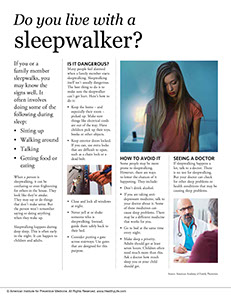
    If you or a family member sleepwalks, you may know the signs well. It often involves doing some of the following during sleep:

    *  Sitting up

    *  Walking around

    *  Talking

    *  Getting food or eating

    When a person is sleepwalking, it can be confusing or even frightening for others in the house. They look like they’re awake. They may say or do things that don’t make sense. But the person won’t remember saying or doing anything when they wake up.

    Sleepwalking happens during deep sleep. This is often early in the night. It can happen to children and adults.

    Is it dangerous?

    Many people feel alarmed when a family member starts sleepwalking. Sleepwalking itself isn’t usually dangerous. The best thing to do is to make sure the sleepwalker can’t get hurt. Here’s how to do it:

    *  Keep the home – and especially their room – picked up. Make sure things like electrical cords are out of the way. Have children pick up their toys, books or other objects.

    *  Keep exterior doors locked. If you can, use extra locks that are difficult to open, such as a chain lock or a dead bolt.

    *  Close and lock all windows at night.

    *  Never yell at or shake someone who is sleepwalking. Instead, guide them safely back to their bed.

    *  Consider putting a gate across stairways. Use gates that are designed for this purpose.

    How to avoid it

    Some people may be more prone to sleepwalking. However, there are ways to lower the chances of it happening. They include:

    *  Don’t drink alcohol.

    *  If you are taking anti-depressant medicine, talk to your doctor about it. Some of these medicines can cause sleep problems. There may be a different medicine that works for you.

    *  Go to bed at the same time every night.

    *  Make sleep a priority. Adults should get at least seven hours. Children often need much more than this. Ask a doctor how much sleep you or your child should get.

    Seeing a doctor

    If sleepwalking happens a lot, talk to a doctor. There is no test for sleepwalking. But your doctor can check for other sleep problems or health conditions that may be causing sleep problems.

    Source: American Academy of Family Physicians

    © American Institute for Preventive Medicine
  • Listen To Your Ears

    SELF-CARE CORNER

    Workers with safety gear protecting head, eyes and ears.

    It’s easy to take hearing for granted. But without proper care of your ears, you could end up with hearing loss or ear problems.

    Worried about wax

    Your body makes ear wax to protect your ears. Wax keeps dust and other particles from getting inside.

    Only clean the outside of your ears with a tissue, washcloth or cotton swab. Never stick anything, including a cotton swab, in your ear. This will push wax farther down into the ear and can create a harmful blockage.

    If you feel that there’s a lot of wax in the ear, you can safely try to soften it with a drop of mineral oil or glycerin. Your doctor can also remove ear wax blockages without damaging your ear.

    Saying no to noise

    One of the most common reasons people lose their hearing is exposure to loud noises. This can happen very quickly after a loud sound like an explosion. Or, it can happen over time if a person is exposed to loud sounds for months or years.

    You can help prevent noise-induced hearing loss with one simple tool: ear plugs. Wear them when going to a loud concert, watching fireworks or attending loud events. Wear them when mowing the lawn or using loud power equipment at home.

    If you have a job where you are exposed to noise, make sure you are using the right hearing protection. You may need something more powerful than ear plugs for certain jobs. Talk about this with your employer.

    Use headphones with care

    The World Health Organization says people should limit how much they use headphones. Don’t use them more than one hour a day. Keep the volume as low as possible, but no louder than 60 percent.

    Noise-cancelling headphones help you keep the volume low because they block out sounds around you. But, you should not use these when driving, cycling or walking because you won’t be able to hear possible dangers nearby.

    Talk to your doctor about your hearing health. Together, you can decide when you may need a hearing test.

    Sources: American Academy of Family Physicians, National Institute on Deafness and Other Communication Disorders

    © American Institute for Preventive Medicine