Category: Self-Care Corner

  • Bloated Belly: Ways To Get Relief

    SELF-CARE CORNER

    Image of tea and different tea leaves.

    Most people have felt a bloated stomach after a big meal. Usually, the belly feels overly full. It can make clothing feel tighter. The belly may look swollen. Bloating is usually caused by too much food or air and gas getting trapped in the intestines.

    But some people get bloated even when they didn’t eat too much. In some cases, it can be downright painful. The best way to address painful bloating is to find the cause and know how you can treat it.

    Bloating culprits

    The most common causes include:

    *  Dairy foods. If you notice bloating after eating cheese, ice cream, or drinking milk, you could have lactose intolerance.

    *  Gum. Swallowing air while chewing can cause bloating.

    *  Eating too much fiber at once. Fiber is great for you, but if your body isn’t used to it, you can get bloated and uncomfortable. Increase the amount you eat gradually.

    *  Bowel problems. Being constipated or having irritable bowel syndrome (IBS) can cause painful bloating. Drinking plenty of water can help with constipation and fiber absorption.

    *  Menstrual cycles. Some women get bloated because their body holds extra water before or during their periods.

    Treat bloating at home

    Many times, bloating can be managed at home. Here’s how:

    *  Write down what you eat and drink. Record when you get stomach pain or bloating.

    *  Cut back on gum.

    *  Avoid carbonated drinks.

    *  Drink plenty of water to keep the bowels moving. Don’t use a straw when drinking.

    *  Eat enough fiber. Start with fruits and vegetables. Eat only small amounts of beans, lentils and other gas-causing foods until you get used to them.

    *  Watch out for sugar-free foods. Some artificial sweeteners can cause bloating and gas.

    *  Ginger, peppermint, chamomile or fennel herbal teas may help. Always ask a doctor before using herbs if you have a health condition or take any medicines.

    *  Over-the-counter anti-gas medicines with simethicone help move gas bubbles out of the body.

    When to see your doctor

    Call a doctor or seek immediate medical care if you notice bloating with:

    *  Blood with bowel movements (stool)

    *  Losing weight without making an effort

    *  Nausea or vomiting

    *  For women: menstrual bleeding between periods or after menopause

    *  Fever

    *  Severe pain that won’t go away

    These could be signs of a serious health issue that needs treatment.

    Source: American Academy of Family Physicians

    © American Institute for Preventive Medicine

  • Health Screenings For Women

    SELF-CARE CORNER

    Stethoscope and female symbol pills on pink top view.

    Women are at risk for a unique set of health issues. Every woman should visit their primary care and OB-GYN provider every year for a checkup that includes the recommended screenings.

    Ask your doctor what screenings are right for you. Your doctor will decide which screenings you need based on your age, family history, health history, and other risk factors.

    Women aged 18 to 39

    *  Blood pressure screening

    *  Cholesterol screening

    *  Diabetes screening

    *  Immunizations

    *  Infectious disease screening including STI’s

    *  Physical exam

    *  Breast cancer screening

    *  Cervical cancer screening

    *  Skin self-exam

    *  Dental and eye exams

    *  Early and regular prenatal care during pregnancy

    Women aged  40 to 64

    *  Blood pressure screening

    *  Cholesterol screening

    *  Diabetes screening

    *  Immunizations

    *  Infectious disease screening including STI’s

    *  Physical exam

    *  Breast, colon, and lung cancer screenings

    *  Cervical cancer screening

    *  Osteoporosis screening

    *  Skin cancer screening

    *  Dental and eye exams

    Women aged 65 and over

    *  Blood pressure screening

    *  Cholesterol and heart disease screening

    *  Diabetes screening

    *  Immunizations

    *  Infectious disease screening including STI’s

    *  Physical exam

    *  Breast, colon, and lung cancer screenings

    *  Cervical cancer screening may no longer be needed. Check with your doctor.

    *  Osteoporosis screening

    *  Skin cancer screening

    *  Hearing test

    *  Dental and eye exams

    © American Institute for Preventive Medicine

  • Should You Be Taking Daily Aspirin?

    SELF-CARE CORNER

    An open pill bottle with aspirin spilled out.

    Taking a low dose aspirin every day can lower the chance of a heart attack. But that doesn’t mean that a daily aspirin is right for everyone. The National Institutes of Health says some people take aspirin each day – but they shouldn’t. The NIH has new guidelines about who should or should not take it.

    What does aspirin do?

    Aspirin is a non-steroidal anti-inflammatory drug (NSAID). It is a pain reliever for headaches and other aches and pains.

    Aspirin also thins the blood. This can prevent clots that can lead to a heart attack or stroke. Taking a low-dose aspirin every day can be life-saving for many people. However, aspirin also has risks. It can cause bleeding in the stomach and brain bleeding in rare cases.

    New guidelines to follow

    Researchers think many people are taking aspirin without their doctor’s approval. This can mean they could put themselves in danger of bleeding or stomach problems. Aspirin can also interact with other medications or supplements.

    Experts no longer think everyone over age 70 should take daily aspirin. People who have a low risk of heart attack or stroke may not need it. Also, people who have a higher risk of bleeding – no matter what age – should not take it.

    People who benefit from daily aspirin have a higher risk of heart attack or stroke. They may have already had a heart attack or stroke in the past. They may have a family history of heart problems or other risk factors.

    The best protection

    If you don’t need daily aspirin, you can help prevent heart disease with simple healthy habits.

    *  Get more exercise.

    *  Eat a heart-healthy diet.

    *  Don’t smoke.

    *  Get regular cholesterol and blood pressure checks.

    What’s the bottom line?Don’t start taking daily aspirin unless your doctor says you should. And, tell your doctor and pharmacist about all medications and supplements you take.

    Sources: American Heart Association, National Institutes of Health

    © American Institute for Preventive Medicine

  • Help For Restless Legs

    SELF-CARE CORNER

    Close up feet laying in bed.

    Do you feel a twitchy, jumpy feeling in your legs when you sit or lie down? Do you have an urge to move your legs when you go to bed at night? If so, you may have restless legs syndrome (RLS).

    What is RLS?

    RLS is known as a sleep disorder, although it can happen when you’re awake or asleep. It occurs when you’re resting or lying still, and is more common at night. Because it can interfere with sleep, RLS is linked to:

    *  Daytime sleepiness

    *  Memory problems or trouble concentrating

    *  Mood changes

    *  Job performance issues

    *  Problems with personal relationships

    RLS affects people of any age, but tends to cause more problems in older adults.

    What causes it?

    RLS can run in families, especially if your symptoms began before age 40. Experts believe RLS may be related to a problem in the part of the brain that controls movement. It may be linked to certain health problems, including:

    *  Low iron in your blood (iron deficiency anemia)

    *  End-stage renal (kidney) disease

    *  Neuropathy (nerve damage)

    Most of the time, though, there’s no clear cause of RLS.

    Self-care tips for restless legs

    You may be able to manage mild RLS at home. Try these tips:

    *  Avoid caffeine. Drinks like coffee, tea, energy drinks and cola usually contain caffeine.

    *  Don’t smoke. Ask your doctor if you need help quitting.

    *  Avoid alcohol.

    *  Get moderate exercise early in the day. Don’t exercise right before bedtime.

    *  Try relaxation techniques like deep breathing, meditation or yoga before bed.

    *  Make sleep a priority. Go to bed and get up at the same time each day. Aim for seven to eight hours of sleep each night.

    See your doctor regularly and tell your doctor about any symptoms you’re having. You may also want to ask if you should get your iron levels checked. Doctors sometimes treat more severe cases of RLS with medications.

    Sources: American Academy of Family Physicians, National Institute of Neurological Disorders and Stroke, Restless Legs Syndrome Foundation

    © American Institute for Preventive Medicine

  • Snoring And Your Health

    SELF-CARE CORNER

    Women sleeping while wearing a CPAP machine.

    Occasional snoring is often harmless. It may happen when a person has a stuffy nose or is lying on their back. But if you snore every night, talk with a doctor. Long-term snoring can lead to health problems.

    Sleep suffers

    Snoring can make you wake up many times during the night. You probably won’t remember these awakenings. They interfere with your body’s ability to get good, sound sleep.

    Without quality sleep, you may feel tired nearly every day. This can lead to problems at work, school or home. In severe cases, it can lead to dangers like car collisions if you fall asleep at the wheel.

    Obstructive sleep apnea

    Sometimes snoring is a sign of a health problem called obstructive sleep apnea (OSA). Signs of OSA include:

    *  Loud snoring that happens nearly every night

    *  Pauses in breathing during sleep (this can happen hundreds of times per night)

    *  Choking or gasping for air during the night

    *  Feeling very tired even after a full night’s sleep

    *  Trouble concentrating or being irritable

    *  Waking up with a headache

    OSA can also cause heart problems because it can increase a person’s risk of high blood pressure, stroke or heart disease. It can also cause an irregular heartbeat, known as an arrhythmia.

    How to fix snoring

    There are many ways to reduce or eliminate snoring. First, see a doctor to get checked for any health problems. Your doctor may recommend:

    *  If you smoke, quit. Smoking can make snoring worse and leads to other serious health problems.

    *  Limit or avoid alcohol. Don’t drink alcohol close to bedtime. Alcohol relaxes throat muscles and can cause more snoring and pauses in breathing.

    *  Work toward a healthy weight if you are overweight. Being overweight often makes snoring worse.

    If these measures don’t help, ask your doctor about other options. Certain devices and surgery can help some people quit snoring.

    Relationship problems

    Snoring can cause social problems too. Some people find that their marriage or domestic partnership suffers. Partners may not be able to sleep in the same room because of the noise.

    Sources: American Academy of Otolaryngology – Head and Neck Surgery

    © American Institute for Preventive Medicine

  • Can You Lower Triglycerides Naturally?

    SELF-CARE CORNER

    Illustration of blood cells.

    Triglycerides are a type of lipid, or fat, in your blood. Everyone has some triglycerides. But high triglycerides, when combined with high “bad” cholesterol and low “good” cholesterol, could be bad for heart health.

    How do I know my triglyceride levels?

    High triglycerides have no signs or symptoms. The only way to know whether you have high triglycerides is through a blood test.

    Ask your doctor how often you should get this test. Most adults need a cholesterol or “lipid” test at least every four to six years. But if you have a family history of heart disease or other risk factors, your doctor may recommend the test more often.

    If your cholesterol tests shows that triglyceride levels are high, you may be able to bring them down by making some lifestyle changes.

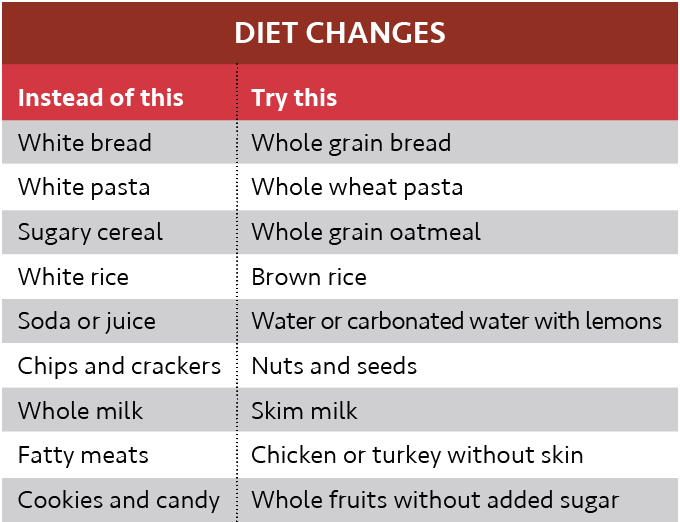
    Chart of Diet Changes - Try this instead of this.

    Heart healthy changes are key

    Talk to your doctor about your triglyceride levels. Your doctor may recommend making certain diet and exercise changes to improve your heart health. If you have diabetes, ask your doctor how you can keep blood sugar levels under good control.

    Exercise and weight loss

    Exercise is great for overall health, and it can lower your triglycerides. Try to walk or do another exercise you enjoy for 30 minutes, five days a week.

    Even a small amount of weight loss can improve triglyceride levels. Losing just 5 percent of your weight can boost your health and lower heart disease risk. Ask your doctor or nutritionist for tips on how to lose excess weight.

    Limit or Avoid Alcohol

    Your doctor may also recommend you limit or avoid alcohol to lower your triglyceride levels.

    Prescription Medicine

    In addition to making lifestyle changes, prescription medicines may also be recommended to bring triglycerides down.

    Sources: Centers for Disease Control and Prevention, National Lipid Association

    © American Institute for Preventive Medicine

  • How To Build Strong, Healthy Nails

    SELF-CARE CORNER

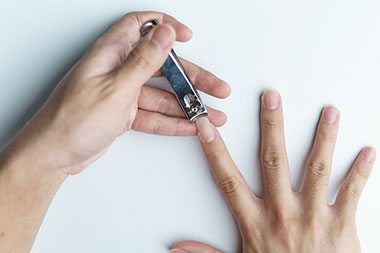
    Close up of hands clipping nails.

    Taking proper care of your nails is more than a matter of looks. Clear, strong nails are a marker of good physical health. They reflect everything from your level of stress to the quality of your diet.

    It may seem like a simple thing, but caring for your nails is an essential part of a comprehensive self-care routine. Healthy nails don’t happen by chance. Here is what you need to know to keep your nails in excellent condition.

    Keep nails trimmed and shaped

    Don’t wait for nails to break or become jagged before giving them a good trim. Fingernails, in particular, need frequent grooming to maintain a healthy shape.

    For best health, cut nails straight across. Then, use an emery board to give them a rounded shape at the tips. This will prevent breakage and minimize the risk of ingrown nails.

    The nails on your fingers grow three times faster than the nails on your toes. Plan to trim and shape them more often than your toenails.

    Care for your cuticles

    The cuticle seals the skin of your finger around the nail. Never trim or move the cuticles as this disrupts the seal and increases your risk of a nail infection. If you go for a manicure, let the technician know to leave the cuticles alone.

    Cuticles benefit from extra moisture, especially in the winter months. You can use a special cuticle moisturizer. Or, even simple hand lotion massaged into the nail area will improve cuticle health.

    Limit manicures and pedicures

    Harsh nail products and regular use of polish weaken your nails. Wearing artificial nails can make your nails thin and brittle, as well as increase the risk of infection.

    Enjoy manicures and pedicures on occasion, but make sure to give your nails a break in between. Letting your nails enjoy time without polish or products will keep them healthy and less prone to breakage.

    If you really love artificial nails, save them for special occasions and opt for a simple french manicure whenever possible.

    Don’t forget your toenails

    Because toenails do not grow as fast, they often don’t get as much care and attention. But don’t fall into the habit of ignoring them.

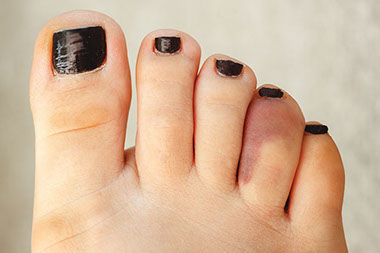
    Inspect toenails regularly and watch for sharp edges or ingrown nails. Also, keep a close eye out for changes in nail color which could signal a nail problem or even an infection.

    Wear comfortable shoes that don’t pinch the toes and use flip-flops at public showers or pools. These steps will keep the toenails clean and healthy.

    © American Institute for Preventive Medicine

  • Stop Snoring

    SELF-CARE CORNER

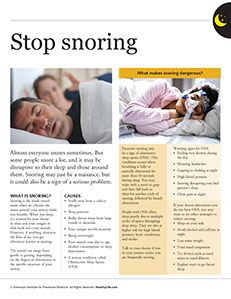
    Women wearing a CPAP mask while sleeping.

    Almost everyone snores sometimes. But some people snore a lot, and it may be disruptive to their sleep and those around them. Snoring may just be a nuisance, but it could also be a sign of a serious problem.

    What is snoring?

    Snoring is the harsh sound made when air vibrates the tissue around your airway while you breathe. When you sleep, it’s normal for your throat to relax and your tongue to slide back into your mouth. However, if anything obstructs the flow of air, you get vibrations known as snoring.

    The sound can range from gentle to grating, depending on the degree of obstruction or the specific structure of your airway.

    Causes

    *  Stuffy nose from a cold or allergies

    *  Sleep position

    *  Bulky throat tissue from large tonsils or adenoids

    *  Your unique mouth anatomy

    *  Being overweight

    *  Poor muscle tone due to age, alcohol consumption, or sleep deprivation

    *  A serious condition called Obstructive Sleep Apnea (OSA)

    What makes snoring dangerous?

    Excessive snoring may be a sign of obstructive sleep apnea (OSA). This condition occurs when breathing is fully or partially obstructed for more than 10 seconds during sleep. You may wake with a snort or gasp and then fall back to sleep for another cycle of snoring, followed by breath obstruction.

    People with OSA often sleep poorly due to multiple cycles of apnea disrupting deep sleep. They are also at higher risk for high blood pressure, heart conditions, and stroke.

    Talk to your doctor if you or your partner notice you are frequently snoring.

    Warning signs for OSA:

    *  Feeling very drowsy during the day

    *  Morning headaches

    *  Gasping or choking at night

    *  High blood pressure

    *  Snoring disrupting your bed partner’s sleep

    *  Chest pain at night

    If your doctor determines you do not have OSA, you may want to try other strategies to reduce snoring:

    *  Sleep on your side.

    *  Avoid alcohol and caffeine at night.

    *  Lose some weight.

    *  Treat nasal congestion.

    *  Try devices such as nasal strips or nasal dilators.

    *  Explore ways to get better sleep.
    © American Institute for Preventive Medicine

  • Age Successfully

    SELF-CARE CORNER

    Image of older couple.

    Successful aging means more than good health. It means taking charge of your personal well-being so that you can continue to live a vibrant, independent life, regardless of your age, according to Dr. Terri Ginsberg of the Institute for Successful Aging at the University of Medicine and Dentistry of New Jersey.

    “Successful aging isn’t difficult, but it does require a personal commitment to active living,” says Ginsberg. To help them age successfully, Ginsberg recommends that adults of all ages follow these “10 Resolutions for Healthy Aging:”

    1.Sleep at night.Avoid frequent daytime naps, late night snacks or watching television in bed.

    2.Eat lots of colors.Vibrantly colored fruits and vegetables on your plate mean a healthy diet that keeps your body moving.

    3.Get checked out.Catch up on any health screenings your doctor has recommended and don’t forget eye and dental check-ups.

    4.Worry less.It really is possible to “worry yourself sick.” Excessive worrying can lead to high blood pressure, digestive problems, chronic headaches and unhealthy weight gain.

    5.Stay in touch.Living alone doesn’t mean being alone. Reach out to friends, neighbors and relatives.

    6.Move more.Exercise improves heart health, and good heart health helps prevent a range of related disorders, including blood clots and depression.

    7.Read more.You can “exercise your brain” with newspapers, books, magazines or puzzles.

    8.Laugh and sing.Is there a better way to enjoy life? And both will help you to worry less.

    9.Take control.Be proactive about your own health. Ask your doctor questions about your health and for advice on positive lifestyle changes.

    10.Get involved.Local organizations of all types need volunteers. Helping others is the best tonic for feeling good about yourself.

    © American Institute for Preventive Medicine