Category: Well-Being

  • This Home Fix Can Save Your Life

    WELL-BEING

    Illustration of a house.

    It’s odorless, colorless, and causes lung cancer. You could be breathing it every day and not know it. It’s radon, and it’s a major health threat in nearly all areas of the country.

    What is radon?

    Radon is a naturally occurring gas that is found in soil. It makes its way into buildings through cracks, joints, and gaps in the basement or foundation. Once inside, it can build up and result in dangerously high levels. High levels of radon can cause lung cancer. The Surgeon General has warned that radon is the second leading cause of lung cancer in the U.S. today. Only smoking causes more deaths from lung cancer.

    The CDC estimates that more than 20,000 people die every year from lung cancer caused by radon. Even people who have never smoked can get lung cancer from radon. But, if you smoke, your chance of lung cancer is even higher.

    How do I know if my house has radon?

    The only way to detect radon in your house is through a radon test. Many hardware stores carry these tests, or you can get a test through your state’s radon office. Follow the instructions exactly as listed on the test. The tests are not expensive and are easy to use. Usually you need to leave the test in your house for a set amount of time. Then, you’ll follow instructions to mail it to a lab to get your results.

    No level of radon is safe. But, if your test shows a level of 4 or higher, you need to fix your house.

    How do I get rid of radon?

    There is an effective way to get radon out of your house and keep it from coming back. A radon mitigation system involves putting a special pipe device in your basement. The pipe has a fan inside that blows the radon back outside.

    Every state has radon removal companies who can install these systems. The Environmental Protection Agency says you should use a company that is accredited by the National Radon Safety Board or the National Radon Proficiency Program.

    Radon is one health problem no one should live with. Get a radon testing kit today. Your health and life are worth it.

    Take action against radon

    To order a radon test kit, call: 1-800-SOS-RADON

    (1-800-767-7236)

    For answers to radon questions, call: 1-800-55-RADON (557-2366)

    For questions about fixing radon levels in your house, call: 1-800-644-6999.

    © American Institute for Preventive Medicine

  • 8 Commandments For Living Long And Living Well

    WELL-BEING

    Image of a group of people with exercise balls.

    You won’t live forever, but you can’t live like there’s no tomorrow, because tomorrow is coming. You can prepare for tomorrow today by making smart lifestyle choices or changing poor health habits-it’s never too late to do that, says Dr. Edward Creagan in his book How Not to Be My Patient: A Physician’s Secrets for Staying Healthy and Surviving Any Diagnosis. Here are Dr. Ed’s eight commandments:

    1. Form stable long-term relationships.

    2. Maintain ideal body weight.

    3. Eat a plant-based diet.

    4. Be active.

    5. No smoking.

    6. Use alcohol in moderation, if at all.

    7. Foster a sense of spirituality and a sense of connectedness to nature or your higher power or force.

    8. Find meaning and purpose in life.

    © American Institute for Preventive Medicine

  • Don’T Be A Slouch, Posture Matters

    WELL-BEING

    Image of business women sitting at desk with correct posture.

    Just like the average coach airplane seat is uncomfortable for most people, office chairs and desks may not fit you either. Arrange your laptop, computer, and tablet so they fit you, urges Dr. Erik Peper, professor at San Francisco State University’s Institute for Holistic Health Studies. Don’t let an incorrectly adjusted chair or table height force you to work in an awkward body position.

    For working at a computer:Sit in a chair with your feet on the floor. Keep your elbows bent at 90 degrees with your hands, wrists, and forearms straight, in line, and roughly parallel to the floor so that your hands can be on the keyboard while the top of the monitor is level with your eyebrow.

    For working with a laptop:You will always compromise body position. If the screen is at eye level, you have to bring your arms and hands up to the keyboard, or, more commonly, you will look down at the screen while at the same time raising your hands to reach the keyboard. The solution is to use an external keyboard so that the keyboard can be at your waist position and the laptop screen eye level.

    For working with tablets and smartphones.You have little choice. You either look down or reach up to touch the screen. As much as possible tilt and raise the tablet so that you do not have to slouch to see the screen.

    © American Institute for Preventive Medicine

  • Harmful Hookahs

    WELL-BEING

    Image of a hookah.

    Despite warnings from the CDC that hookah smoking can be just as dangerous as cigarettes, many young adults believe that using the water pipes is not harmful to their health, according to a UCLA School of Nursing study.

    Researchers visited three Southern California hookah lounges and asked patrons between the ages of 18  and 30, “Do you believe smoking a hookah is harmful  to your health?”

    Fifty-seven percent said they thought that it was not. When asked why they thought hookahs were not harmful, 47% said they believed that the smoke gets filtered through water, and 35% said they thought that fruit used to flavor the tobacco would detoxify tobacco’s harmful chemicals. Still others, 16%, said they assumed hookahs are not harmful because the tobacco is not addictive and does not contain nicotine.

    Unfortunately, none of those beliefs is true.

    © American Institute for Preventive Medicine

  • Kids And Cavities: What You Can Do

    WELL-BEING

    Image of toddler with tooth brush.

    Although children will lose many of their first teeth as they are replaced with permanent adult teeth, the “baby” teeth are still important. Cavities and decay, even in those first teeth, can lead to speech and eating problems and crooked adult teeth, says the American Dental Association (ADA). Follow these tips to keep your child’s teeth in the best possible condition:

    *  Don’t let baby go to bed with a bottle. Even milk contains natural sugars that can sit on the teeth and cause cavities.

    *  If you have an infant, gently wipe his or her teeth daily with a soft cloth or a toothbrush designed for babies. No toothpaste is necessary at this age.

    *  Toddlers will need help brushing with a small, soft toothbrush. Just water is fine – no toothpaste is needed yet.

    *  Once your child reaches age 3, they should be brushing twice daily with a pea-sized amount of fluoride toothpaste. You should supervise brushing until age 7 to ensure they are reaching all sides of the teeth.

    *  Teach your child to floss. There are easy-to-grip flossers designed for kids that may help them get used to the habit.

    *  Take your child to the dentist. The ADA recommends you start when your child is 1 year old, and every six months after that. This is a good time to discuss dental care, examine your child’s teeth, and get them familiar with seeing the dentist.

    Help your child adopt healthy habits now, and they’ll thank you with a beautiful smile that lasts a lifetime.

    © American Institute for Preventive Medicine

  • Simple Ways To Get Better Sleep

    WELL-BEING

    Image of man sleeping.

    Lack of sleep can affect the body in many ways. Beyond just feeling tired, long-term sleep deprivation may be linked to health problems such as heart disease, obesity and depression. Try these tips to get better sleep each night:

    *Have a consistent schedule.Get up at the same time each morning and go to bed at the same time each night. This will help to set your body’s internal clock. Over time, you’ll fall asleep quicker and may sleep better throughout the night.

    *Skip screens.The light given off by smartphones, tablets and computers can actually keep you awake. Avoid electronics in the evening, at least 2 hours before bedtime.

    *Think about skipping naps.Although a nap may feel great when you’re tired, it could be causing more sleep problems. Napping can interfere with your sleep schedule and make you too alert at bedtime. If you have trouble falling asleep at night, skip the nap and get to bed a little sooner.

    *Get moving.Exercise during the day has been shown to improve sleep quality. Walking, jogging, or any activity you enjoy can be helpful. Don’t exercise within 2 hours of bedtime, though, if you have trouble falling asleep.

    *Be careful about caffeine.That afternoon cup of coffee could still be in your system at bedtime, making it difficult to fall asleep. Try to avoid soda, tea and coffee after lunch.

    *Don’t smoke.Nicotine interferes with sleep and harms your health in many other ways. If you need help quitting, talk to your doctor or visitsmokefree.govfor free help with quitting. It’s never too late to quit.

    *Don’t eat a big meal before bed.Heavy meals can interfere with sleep and make you restless. Eat dinner about 2 to 3 hours before bedtime. If you need a snack, make it small and light, such as yogurt and fruit or a handful of nuts.

    Source: National Sleep Foundation

    © American Institute for Preventive Medicine

  • The Line On Fallen Power Lines

    WELL-BEING

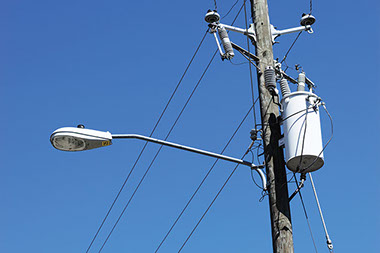
    Image of a telephone poll and power lines.

    High winds and storms can cause power lines to fall. Be alert and always assume all fallen lines are energized, says MidAmerican Energy. Stay away from anything that is touching the line, such as a tree, fence, or vehicle.

    *  Do not touch someone who is being shocked by a fallen power line.

    *  Report the downed line to 911.

    *  Shuffle, don’t run, from a fallen line. Shuffle with your feet together and on the ground. Warn others not to run. When a live wire touches the ground, electricity travels through the ground in all directions. If you run or take large steps, you increase the chance you could be shocked.

    *  Stay safe inside your car if a line comes down on or near your vehicle. Don’t touch metal parts of the car such as the radio. Wait until electrical workers turn off the power and tell you it’s safe to leave the vehicle.

    © American Institute for Preventive Medicine

  • What’S Parked In Your Garage?

    WELL-BEING

    Image of items stored in a garage, such as a ladder.

    Gasoline and other poison hazards may be stored unsafely in your garage. The Home Safety Council and the American Association of Poison Control Centers promote safe practices around hazardous products in the garage and storage areas:

    *  In homes with young children, see that child-resistant caps are on all dangerous products. These include charcoal lighter fluid, paint thinner, antifreeze, and turpentine. Store the products out of sight and reach-or better yet, locked up.

    *  Store only a small amount of gasoline and always in an approved container designed and labeled for gasoline. Never bring gasoline indoors.

    *  Keep all products in original containers with original labels.

    *  Never transfer dangerous products to glass jars, soft drink bottles, or other containers.  Harmful products could look like common drinks and be taken by mistake. Also, containers may leak or break. It is easy to forget what product was placed in which container.

    *  Use a siphon hose if you must transfer gasoline. Never try to siphon gasoline or other fuels by mouth.

    Every Poison Control Center in the country can be reached by calling the nationwide hotline at (800) 222-1222. Post the hotline near home phones and on your cell phone.

    © American Institute for Preventive Medicine