Category: Well-Being

  • Find Unclaimed Money

    WELL-BEING

    Image of the word 'Scam' spread across money.

    Uncle Sam may actually owe you money. How? If the government owes you money, and you do not collect it, it becomes unclaimed money. This can happen because of bank or credit union closures, investment funds, pensions, tax refunds, or savings bonds, among others.

    But before you assume that there has to be unclaimed money out there for you, beware, says USA.gov, a government information website.

    There are people out there who will contact you, claim to be the government, saying they will send you unclaimed money for a fee. This is a scam. Legitimate government agencies will not contact you about unclaimed money or assets.

    Right now, there is no single government site for finding unclaimed money by name, social security number, or state. You need to visit each site separately and perform a search.

    After searching, if you are owed funds, there will be instructions and steps to follow to collect your money.

    For more information on unclaimed money, or other government resources, visitUSA.gov.

    © American Institute for Preventive Medicine

  • “I Know Where You Are”

    WELL-BEING

    Illustration of smartphone next to a shield with the word "security".

    The new you may not be you at all. Hackers and cyber criminals steal millions of records and identities, according to the consumer advocacy nonprofit Privacy Rights Clearinghouse.

    Stay safer online by following these practices:

    *Assume you’ve already been compromised.Whether it’s your baby monitor, your Smart TV, the webcam on your laptop, or apps you installed on your smartphone or tablet, your antivirus is not enough protection. It’s time to take their privacy policies, and the permissions you grant them, much more seriously.

    *Change your passwords.All of them. Now. And do it as frequently as you can tolerate. Also, if you don’t want to change it often, then use any unique characters you can think of, such as a dollar sign ($) or exclamation mark (!), or replace an “oh” with a “zero” (0). This goes a long way in preventing attacks against your password.

    *Turn off wireless and geolocation services.Protect your smartphones and tablets by turning off WiFi, Bluetooth, NFC and GPS, except when you need them. That way, if you are at a local coffee shop or in a shopping mall, no one can spy on you using nearby (proximity) hacking attacks, and they can’t track where you were and where you are going on your GPS.

    *Assume most of your apps are creepware.This is malware that spies on you and your online behavior. Do you really need them? Delete all of the apps you aren’t using too often.

    Source: Gary S. Miliefsky is CEO of SnoopWall and the inventor of SnoopWall spyware-blocking technology. He is a founding member of the U.S. Department of Homeland Security.

    © American Institute for Preventive Medicine

  • Quit Bugging Me

    WELL-BEING

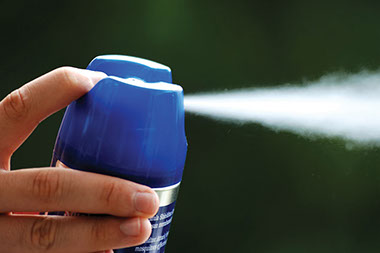
    Image of insect repellant.

    As you enjoy the great outdoors, you may not see a bear, but you might encounter biting and stinging critters such as ticks, mosquitoes, and other insects.

    Bring along your own make-at-home first aid kit that includes assorted bandages and basic medicines such as a 1 percent hydrocortisone anti-itch cream, suggests Dr. Janyce Sanford, an ER doctor at the University of Alabama at Birmingham.

    Use insect repellant with DEET. Include tweezers to remove ticks (the best way is to pull straight up in an easy motion). And if anyone is sensitive to bee or wasp stings, carry an epinephrine auto-injector (EpiPen) when camping or hiking.

    Find out who in your party knows CPR before you might need it. Carry emergency supplies of food and light, and make sure you practice common sense.

    © American Institute for Preventive Medicine

  • Stop The Spending Cycle

    WELL-BEING

    Image of colorful shopping bags.

    Going overboard on one shopping trip, especially around the holidays, does not mean you have a shopping addiction. It’s normal to overdo it once in a while. And, everyone buys things that aren’t truly needed at times.

    But, if you think you or a loved one might have a shopping addiction, there is help. Often times, a shopping addiction is the result of another health issue like depression. Talk with your doctor about your feelings and symptoms. Antidepressants or other medications may be helpful.

    Or, you may wish to talk with a counselor about things that are bothering you. Sometimes, emotional burdens or troubles can make you look for happiness in things like shopping. If you are able to deal with those problems, you may not feel the need to shop as much.

    There are also support groups for people with a variety of addictions. Debtors Anonymous can help people who have gone into debt from too much spending.

    Don’t be afraid to seek help. The sooner you can address the problem, the sooner you can get your life back on track.

    © American Institute for Preventive Medicine

  • Unexpected Ways To Be Happy (And Healthy)

    WELL-BEING

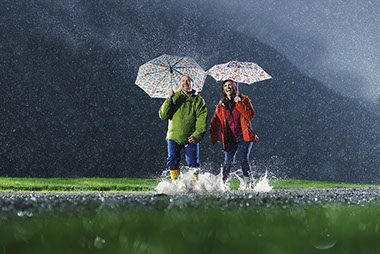
    Image of a couple jumping in a puddle while it's raining.

    *It’s easy being green.Make vegetables a central part of your diet. Dark green foods provide essential vitamins and nutrients to your body that protect you from many of life’s worst diseases. The FDA recommends 3 to 5 servings a day for pristine health. This is not as hard to accomplish as it sounds. Examples of one serving include 2 broccoli spears, 3 tablespoons of green beans, or 3 sticks of celery.

    *Brush your teeth.Brushing and flossing your teeth not only prevents tooth decay but gum disease, which has been linked to heart attacks and strokes. Healthy gums are one more way to keep that heart pumping strong.

    *Hear ye, hear ye!Pick up your local newspaper once in a while. There is more information out there than you can imagine. Sift through the bounty of news because when it comes to your health and health care, no one is more responsible than you are. Take time to understand what’s going on in the world.

    *Be a small fry.Order smaller portions. Even the small fries at fast food drive-throughs.

    *Give yourself a break.Not only are vacations an important part of maintaining your sanity, but there are many other positives about getting away. Studies  have shown that employees come back  to work post-vacation more creative and more productive.

    *Scrub a dub dub.The easiest way to avoid infectious diseases-a common cold, the flu-is by washing your hands often.

    *Then lend a hand.A study at Vanderbilt University found that volunteer work was good for both mental and physical health. People of all ages who volunteered were happier and had better physical health and less depression. Think about something you like to do in your spare time and find a match atwww.volunteermatch.org.

    © American Institute for Preventive Medicine

  • 3 “S”S For Taking Supplements

    WELL-BEING

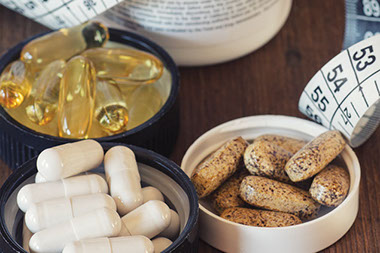
    Close up image of hand with supplements.

    Many people use vitamins, herbs, and other supplements. But sometimes, supplements aren’t safe or helpful. Follow these 3 S’s before you take vitamins, herbs, or natural remedies.

    1.Say something to your doctor.Supplements can interact with medications. Some are not safe if you have health conditions. Your doctor can tell you whether certain supplements are safe for you.

    2.Skip them if pregnant or breastfeeding.Some supplements are not safe for women who are pregnant or breastfeeding. Always ask your obstetrician or gynecologist before taking supplements.

    3.Stop taking them before surgery.Some supplements can cause problems if you take them before surgery. They may make bleeding worse or change how you respond to medicines. You may need to stop them two weeks or more before your surgery.

    © American Institute for Preventive Medicine

  • Beware Of Hidden Weight-Loss Ingredients

    WELL-BEING

    Image of different supplements.

    Many so-called miracle supplements and foods (including teas and coffees)-often touted for weight loss-don’t live up to their claims, says the FDA. Worse, they can cause serious harm.

    Hundreds of products are marketed as dietary supplements but actually have hidden active ingredients contained in prescription drugs, unsafe ingredients that were in drugs that have been removed from the market, or compounds that have not been adequately studied in humans.

    Many of these tainted products are imported, sold online, and heavily promoted on social media sites. Some can also be found on store shelves.

    And if you’re about to take what you think of as “natural” dietary supplements, such as bee pollen or Garcinia cambogia, you should be aware that the FDA has found some of these products also have hidden active ingredients contained in prescription drugs.

    The only natural way to lose weight is to burn more calories than you take in by combining healthy eating with physical activity.

    Under the Federal Food, Drug and Cosmetics Act (as amended by the Dietary Supplement Health and Education Act of 1994), dietary supplement firms do not need FDA approval before marketing their products. It is the company’s responsibility to make sure its products are safe and that any claims made about such products are true.

    Bottom line:

    Just because you see a supplement product on a store shelf does not mean it is safe.

    Look for these potential warning signs of tainted products:

    *  Promise of a quick fix, for example, “lose 10 pounds in one week”

    *  Use of the words guaranteed or scientific breakthrough

    *  Marketed in a foreign language or through mass emails

    *  Touted as herbal alternatives to an FDA-approved drug or as having effects similar to prescription drugs

    © American Institute for Preventive Medicine

  • Foot Health Tips For Summer

    WELL-BEING

    Image of bare feet on grass.

    When warm weather arrives, many people break out the flip-flops, sandals or forego shoes altogether. But the American College of Foot and Ankle Surgeons says this can be harmful to your feet if you’re not careful.

    Many flip-flops and summer shoes contain little to no support or protection. This increases your chances for foot injuries. They can also aggravate conditions such as plantar fasciitis, bunions, and other painful foot problems.

    You can still enjoy summer and keep your hard-working feet healthy by following these tips:

    *  Don’t go barefoot in public bathrooms. If you have a cut on your foot, it can get infected. You could also get a foot fungus or plantar wart. Use flip-flops in these cases to protect your feet.

    *  If you have diabetes or neuropathy, never go barefoot – even indoors.

    *  Don’t rely on flip-flops for daily wear. Use them in place of going barefoot around the pool, or in public bathrooms. Instead, choose sandals or lightweight shoes that have good arch support and are designed for comfort.

    *  Use sunscreen on the tops and bottoms of your feet any time they are exposed.

    *  Wear closed-toed shoes to mow the lawn or do yard work.

    *  If sandals are rubbing or causing blisters, don’t wear them. Don’t pop blisters. This leaves the foot open to an infection.

    *  Wear proper walking shoes and socks to the airport when traveling for summer vacation. Never try out new shoes on vacation. Pack shoes that you know are comfortable and won’t rub or cause blisters or pain.

    © American Institute for Preventive Medicine