Category: Well-Being

  • I Love My Cellphone

    WELL-BEING

    Image of a smart phone on a bench.

    You’ve done it: driven back home to search for your forgotten phone. Dug under the car seats. Called yourself to find a lost phone. Or, worse, watched your phone ring silently when you were in a situation where you couldn’t answer it.

    Cellphone use has become a common part of life as mobile devices have become one of the most popular ways to communicate. Research from the University of Missouri has found that cellphone separation can have serious psychological and physiological effects on iPhone users, including poor performance on mental tests.

    The researchers say these findings suggest that iPhone users should avoid parting with their phones during daily situations that involve a great deal of attention, such as taking tests, sitting in conferences or meetings, or completing important work assignments, as it could result in poorer mental performance on those tasks. But use common sense and proper business etiquette about texting, talking, and checking emails in those venues.

    © American Institute for Preventive Medicine

  • Making Your Health Care Wishes Known

    WELL-BEING

    Image of doctor talking to patient.

    It’s a tough topic to think about, but also a necessary one. What are your wishes for your own health care if you were unable to communicate?

    Most people don’t think about this kind of scenario, especially if they are healthy. But if you are in a serious accident or become severely ill, you may not be able to tell your family what you want. This is when an “advance directive” can be very useful for you and your family.

    Advance directives: what are they?

    An advance directive is a document that states your desires about your care when you cannot speak for yourself. If you are admitted to the hospital, the doctor may ask if you have an advance directive. It may describe:

    *  Care you want if you have an illness that won’t get better.

    *  What you want if you are permanently in a coma or unconscious.

    *  Treatment that you don’t want to receive.

    *  Treatment you do want, regardless of how sick you are.

    Advance directives can have different parts that help in different ways. You may have one or more of these:

    *A living will.This is a written, legal document. It covers what treatment you want if you were terminally ill or would not wake up from a coma. It can list specific things you would like done depending on how sick you are.

    *Durable power of attorney (DPA).It names a person to make health care decisions for you. A DPA becomes active any time you cannot make medical decisions for yourself. Sometimes it is called a Medical Power of Attorney or health care proxy. Only use a DPA if you have someone you trust to make these decisions. Talk to your DPA about their role and your health care wishes.

    *Do not resuscitate order (DNR).If a person’s heart stops or they stop breathing, hospital staff will give CPR, or cardiopulmonary resuscitation. If you have a DNR, you are telling hospital staff that you do not want CPR given to you. You do not have to have a living will or DPA to have a DNR.

    Some states do not consider living wills or DPAs to be official legal documents. Even if it’s not legal, an advance directive or DPA can be very helpful. It can help your family and/or doctor make decisions you want so you get the care you desire. Your doctor or an attorney can tell you about your state’s laws. All states recognize and honor DNR orders that are in a patient’s medical record. An attorney does not have to do a DPA or living will. Many people fill them out themselves.

    What do I put in an advance directive?

    If you’re thinking about getting an advance directive, you may be wondering what it should say. Your doctor or an attorney can help you, and you may want to think about it for a while.

    Health care items that are often listed in a living will include:

    *  Ventilation (artificial breathing machines)

    *  Dialysis (machines that work for kidneys that are failing)

    *  Tube feeding (used when a person  cannot eat or drink)

    *  Palliative care (care that keeps you comfortable, such as pain relief measures)

    *  Organ donation or donating organs to be used for research

    Why do I need an advance directive?

    Most medical experts agree that an advance directive is helpful. It makes your preferences about medical care known before you become sick or injured. It means your loved ones will not have to make hard decisions about your care while you are sick.

    An advance directive can give you peace of mind. If you feel strongly about receiving certain treatments, an advance directive helps ensure that your wishes will be honored. It gives you more control over your own health care.

    Where do I start?

    An advance directive doesn’t have to be hard. It can be short and simple. You can:

    *  Get a form from your doctor.

    *  Write down your own wishes yourself.

    *  Discuss your wishes with your DPA.

    *  Meet with an attorney to write an advance directive.

    *  Get a form from your local health department or Area Agency on Aging in your area.

    It’s a good idea to have your doctor or an attorney look at your advance directive. This ensures your wishes are in line with state laws. It also gives you a chance to answer questions and make sure your wishes are understood. When you are done, have your advance directive notarized. Give copies to your family and your doctor.

    You can change or cancel your advance directive. This can be done when you are of “sound mind,” which means you are able to think and communicate clearly. Any changes you make must be signed and notarized according to the laws in your state. Make sure that your doctor and family members know about the changes.

    Sources: Medicare.gov, American Academy of Family Physicians

    © American Institute for Preventive Medicine

  • Ragweed

    WELL-BEING

    Image of ragweed.

    Maybe you’ve never been allergic to ragweed. You may not be miserable at the end of summer during ragweed season like a lot of other people.

    But even if you’ve never had a problem with seasonal hay fever caused by ragweed, don’t assume that runny nose and itchy eyes are caused by a cold.

    The truth, according to the American College of Allergy, Asthma and Immunology, is that anyone can develop an allergy-including an allergy to ragweed-later in life.

    Scientists think it may be you’ve always had the allergy, but it might have taken exposure to another allergen to trigger your symptoms. If symptoms won’t go away, lasting more than 2 weeks, you probably have allergies.

    Common allergy symptoms include itchy eyes and nose, as well as sneezing, but the mucus is typically clear.

    You’ll want to talk with your doctor first about over-the-counter medications to try to relieve those annoying symptoms.

    © American Institute for Preventive Medicine

  • Stranded In A Storm?

    WELL-BEING

    Image of young women looking out the car window.

    Whether you’re stuck in your car or at home or elsewhere, know how to extend your cell phone’s battery life, advises the Auto Club Group.

    In an emergency, do this:

    *  Turn the phone off. Only turn it on when you are expecting or making a call.

    *  If you’re in an area with no reception, turn off the phone to prevent it from constantly searching for service. Even with automatic power-save features, this function can take up to 30 minutes and it is depleting your battery.

    *  Limit use of the vibrate function on your phone. Use a ring tone because it uses less of the battery’s power.

    *  Don’t use extra features such as the Internet, WiFi, GPS, a camera, and a hands-free device.

    © American Institute for Preventive Medicine

  • Use Spirituality To Boost Wellness

    WELL-BEING

    Image of women sitting in open field reading a book.

    Good physical health involves eating right, exercise and getting enough sleep. But many medical experts believe good health goes beyond physical things. There is some evidence to suggest that healthy spirituality can be linked to overall well-being.

    First, think about what spirituality is to you. It is something that connects your mind and spirit to something bigger than yourself. It can be your religion, morals, or something you’re passionate about, such as music, art or nature. Spirituality differs for everyone.

    An important part of overall health

    The American Academy of Family Physicians says a person’s spirituality can play a role in how they feel physically. Things like positive thinking, religious beliefs, prayer, meditation and other mindful activities can help you feel better and even help prevent some health problems.

    Spirituality may also help you cope better with stressful events and illnesses. While spirituality alone cannot heal illnesses or injuries, it may help in supporting a person’s overall health.

    How to improve spiritual health

    Anyone can work to improve their spiritual health. Think about things in your life that help you feel peaceful, comforted, joyful or connected. Make time regularly to do the things that fulfill you spiritually:

    *  Go to a religious meeting or service

    *  Take a meditation or yoga class

    *  Play your favorite sport

    *  Read a book

    *  Take a walk in a peaceful place

    *  Listen to relaxing or inspiring music

    Good spiritual health can help you live a healthier life. When you have a healthy spirit, you may be able to deal with challenges, such as a chronic illness or stressful events. Though it can’t solve all of life’s problems, spiritual practices can help you feel better and manage some of life’s struggles.

    © American Institute for Preventive Medicine

  • 4 “S”S For Smooth Skin

    WELL-BEING

    Young female with a jar of lotion.

    Winter is hard on your skin. Dry indoor air, frequent washing and cold outside air can make skin itchy and painful. Your skin is the largest organ in your body and an important barrier. Protect it!

    1.  Stay safe with germs: Don’t skip handwashing because your hands are dry. You could end up sick or may spread germs to others. Instead, keep hand cream in your purse, pocket or desk. Apply the cream after you wash your hands.

    2.  Short showers: A long, hot shower strips skin of its protective oils. Keep showers and baths short and not too hot.

    3.  Slather moisturizer: After bathing, apply a rich cream or ointment before skin is fully dry. Petroleum jelly is a low-cost and effective choice.

    4.  Skip harsh soaps: Many products contain drying detergents. These can leave skin feeling irritated and dry. Look for products that don’t contain alcohol or fragrances.

    © American Institute for Preventive Medicine

  • Books And Bedtime Routine

    WELL-BEING

    Image of a mom reading a book to her young toddler.

    Whatever happened to the good old-fashioned bedtime story? Not an iPad app or a TV show before bed. But a real story, read in bed to a child by a parent.

    Seems that bedtime routines help kids sleep better, say researchers at Penn State in this NIH-funded study. They say well-established rules such as a regular bedtime and no caffeine drinks led to children getting adequate sleep for their age. In contrast, when parents and kids had electronic devices in the bedroom after bedtime, lack of sleep was more likely.

    Poor sleep could lead to behavioral problems, impaired learning and school performance, sports injuries, mood issues, and health problems such as obesity.

    © American Institute for Preventive Medicine

  • Forget Shouting

    WELL-BEING

    Image of 2 men talking.

    While many people try to steer clear of arguments with family members, two Vanderbilt University philosophy professors offer a better solution.

    Scott F. Aikin and Robert B. Talisse co-wrote Why We Argue (and How We Should): A Guide to Political Disagreement. The trend to avoid arguments with loved ones has more to do with how bad we are at arguing than how strong our beliefs are, according to Aikin. “The better solution would be to improve our skill at making arguments in ways that allow for better, more reasoned exchange.”

    Aikin and Talisse suggest the following:

    *  Remember that reasonable and intelligent people disagree about important matters. Keep this in mind even when your relative says something appalling.

    *  When arguing, be sure to acknowledge your family member’s good points.

    *  Be prepared to say what it would take for you to change your mind. Consider what evidence would make your view wrong.

    *  Know the weak points about your view. Be able to articulate what the best arguments against your view are.

    “Acknowledging the opposition’s good points and seeing troubles for your own side are too often taken to be a sign of weakness,” Aikin said. “But it’s that attitude that actually makes us bad at argument and makes argumentative exchange so unpleasant and dogmatic. Instead, these habits make exchanges more reasonable and productive.”

    © American Institute for Preventive Medicine

  • I Resolve …

    WELL-BEING

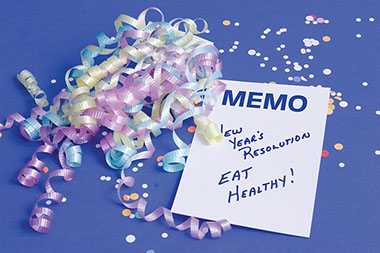
    Image of a memo with the note saying 'New year's resolution eat healthy!'

    Have your New Year’s resolutions to maintain a healthy weight started out strong? Only to fizzle about now?

    Get back on track with these points from the University of Houston Texas Obesity Research Center:

    *Document the evidence.Write down what and how much you eat of everything. Writing things down helps you to stay in control and remember what you are eating and doing every day.

    *Keep on moving.Get at least 30 minutes of physical activity every day. Daily physical activity significantly improves your body functioning, on a cellular level, and your body is better able to lose and avoid gaining weight.

    *Preempt the tempt.Avoid situations where you are going to be hungry and at risk for making high-calorie choices. Eat a small snack every 3 hours. The snack should include some protein such as a small piece of reduced calorie cheese or a small handful of nuts.

    *Tell a friend.Enlist the help and support of your friends and family. They may serve as a kind ear when you need to vent, or may have similar physical activity and eating goals as you.

    *Busy hands.Keep your hands and mind busy. The key is to keep busy and not spend too much time thinking about eating. Try knitting, wood crafts or card games.

    *Plan ahead.Anticipate and make a plan for what you will do in high-risk situations. Decide whether you are going to decline the chocolate pecan torte, have a bite or have a piece. If you decide to have a piece, plan in advance to eat a little less of something else.

    *Talk yourself into it.You have talked yourself into plenty of things before, why should this be any different? Tell yourself you can do it. Every day, think to yourself, “I am doing great,” “I can stick to my plan,” “I am maintaining a healthy weight,” and “I can stay on track.”

    *Practice relaxing.Stress is a prime cause of overeating. Prioritize time to reflect and relax every day.

    *Keep it real.Don’t expect dramatic weight loss immediately-not a realistic goal. Stay on track, keep focused and make small sustainable steps toward your goal.

    *Don’t despair.If you have fallen off the wagon, forgive yourself. And get back on again.

    © American Institute for Preventive Medicine

  • Miles To Go

    WELL-BEING

    Image of a glass of soda.

    Would you choose that soda if you were told how many miles you needed to walk to burn off the calories?

    You’d choose a lower calorie drink if you saw signs explaining how many miles you would need to walk to burn off the calories in that sugary drink. Research at Johns Hopkins, reported in the American Journal of Public Health, found that simply showing calories is not enough to change bad eating habits.

    But when calories are tied to miles of walking, then behavior changes.

    Teens who shopped in neighborhood stores in Baltimore were presented facts on signs about various soft drinks. Researchers found that the teens who saw the signs either bought lower-sugar choices or smaller bottles.

    A typical 20-oz. soda or sports drink has 16 teaspoons of SUGAR and would take 50 minutes of RUNNING or 5 MILES of WALKING for a 110-pound adolescent to burn off the calories.

    © American Institute for Preventive Medicine