Category: Well-Being

  • Go Dark For Better Sleep – And Better Mornings

    WELL-BEING

    Image of a young female using a tablet in the dark.

    Your nighttime habits may be hurting your morning routine. Many electronic devices, such as smartphones, computers and tablets, give off blue light. This type of light boosts energy – and can interfere with sleep.

    If you wake up feeling groggy in the morning, try shutting off the electronics two to three hours before bedtime. And, make sure you get out and see some daylight and other bright lights during your waking hours. This can help set your body’s internal clock, telling you when to wind down at bedtime and then rise the next day.

    Source: Harvard Medical School

    © American Institute for Preventive Medicine

  • Is 3D As Dangerous As The Warnings?

    WELL-BEING

    Illustration of a TV with wild animlas appearing to come out of the television set.

    Have you read the warnings on a 3D TV or gaming system? Can 3D actually cause altered vision, lightheadedness, twitching, nausea, disorientation, especially for children and the elderly?

    Through these disclaimers, companies may have been scaring away the customers they seek, but medical evidence does not back up the claims.

    Professional eye photographer Timothy Bennett of Penn State Hershey Eye Center said there are no health issues associated with 3D imaging. Some people experience headaches or dizziness, but these are temporary. The images may be disorienting, but as soon as you stop looking at 3D, the feelings clear up.

    He recommends sitting far from the screen, especially if you are sensitive, and take breaks from gaming or watching 3D TV.

    Some people experience headaches or dizziness, but these are temporary.

    © American Institute for Preventive Medicine

  • Dealing With Nausea & Vomiting In Pregnancy

    WELL-BEING

    Image of pregnant women feeling nausea.

    Pregnancy is a time of big changes in a woman’s body. As hormones shift and the body works to nourish the baby, a number of uncomfortable symptoms can arise. One of the most common is nausea and vomiting, commonly called morning sickness.

    Fortunately, many women find some relief with some diet and lifestyle changes. They include:

    *Start taking a prenatal vitamin while trying to get pregnant.Your body may get used to taking it before you have to deal with morning sickness. Plus, some nutrients are important to have in the early stages of pregnancy.

    *Take your prenatal multivitamin with food.Some nutrients, such as iron, can cause nausea if taken on an empty stomach.

    *Eat dry toast or crackers in the morning before you get out of bed.This helps settle your stomach.

    *Drink plenty of fluids.Dehydration isn’t good for you, and can lead to more nausea and fatigue. It may be helpful to drink fluids separately from eating foods.

    *Eat small,frequent meals instead of three large meals throughout the day.

    *Use ginger.This spice has been used for hundreds of years to help with nausea. Ginger capsules or tea made with real ginger are good choices.

    *Avoid smellsthat bother you.

    Talk to your doctor

    Be sure to tell your doctor you have nausea and vomiting. Your doctor will want to monitor you and your baby, and may offer medical treatment if the problem is severe. Some medications that may help include:

    *Vitamin B6 and doxylamine.Vitamin B6 alone may help with nausea. It may be combined with doxylamine, which is found in some sleep aids. Be sure to check the label and ask your doctor before taking any medicines during pregnancy.

    *Prescription drugs.Some drugs, known as antiemetics, prevent vomiting. Some are considered safe during pregnancy. You and your doctor can decide what is best.

    Severe nausea & vomiting

    In some women, nausea and vomiting can become severe, leading to lack of nutrition and dehydration. This is known as hyperemesis gravidarum (HG), and it happens in about three percent of all pregnancies.

    A woman with HG who cannot keep food or liquids down may need hospital care. Often, getting rehydrated with IV fluids and vitamins will help.

    Though it can be miserable, most women get through morning sickness without serious complications. In most cases, nausea and vomiting that isn’t severe will not harm you or your baby. But, controlling symptoms with safe and effective home remedies can make pregnancy much more enjoyable.

    Source: American College of Obstetricians and Gynecologists

    © American Institute for Preventive Medicine

  • Secrets To A Successful Life

    WELL-BEING

    Image of older man smiling.

    What do America’s elder citizens say about living a happy, healthy, and successful life? A Cornell University professor, Karl Pillemer, asked hundreds of seniors and gives their advice in his book 30 Lessons for Living: Tried and True Advice from the Wisest Americans.

    *Take risks to avoid regret.People in their 70s, 80s, 90s, and beyond endorse taking risks when you’re young, contrary to a stereotype that elders are conservative. They say that you are much more likely to regret what you didn’t do than what you did. Say yes to opportunities.

    *Make the most of a bad job.Pillemer said, “Remember that many of these folks who grew up in the Great Depression had bad jobs early on-in fact, their bad jobs make our bad jobs look like good jobs! They found, however, that they learned invaluable lessons from these less-than-ideal work situations. You can learn how the industry works, about communicating with other employees, and about customer service.

    *Choose excitement over money.Choose a career for its basic value rather than how much money you will make. Our elders are keenly aware of how short life is, and they think it’s a mistake to waste precious time in work you don’t like. According to our elders, you need to be able to get up in the morning excited about work, so choose your career with that in mind.

    *Regrets?Embrace travel, especially when you are young.

    © American Institute for Preventive Medicine

  • Take The Hectic Out Of Mornings

    WELL-BEING

    Image of family enjoying breakfast and the morning paper.

    Do you find your mornings feel rushed and stressful? There are some things you can do to make them better. A few simple steps can help your mornings go more smoothly.

    Get up at the same time each day.

    Having a regular wake-up time sets your body’s internal clock. This helps you fall asleep on time and get up feeling refreshed. Even if you don’t have to be up that early on the weekends, it’s good to set your alarm and get up anyway. This will keep your sleep routine consistent.

    Stretch your muscles.

    Stretches are relaxing and can be energizing. Stretching for just 15 minutes a day can improve your sleep by up to 30 percent.

    Eat right in the morning.

    A healthy breakfast gives you more energy. It may also help you set the tone for healthy habits throughout your day. Up to 500 milligrams of caffeine (about four cups of coffee) is okay for most people, but don’t exceed this amount. Too much caffeine makes it hard to fall asleep at bedtime, setting you up for a sleepy morning.

    Move your body.

    Just 30 minutes of exercise can help boost your energy and improve your sleep. This sets you up for a more restful night and a better morning. People who exercise in the morning may have less trouble falling asleep.

    Sources: National Sleep Foundation; Produce for Better Health Foundation

    © American Institute for Preventive Medicine

  • What Do You Do 100 Times A Day?

    WELL-BEING

    Image of man on his smart phone.

    You check your smartphone 100 times a day, or spend 2 or more hours every day on a digital device, says The Vision Council. The result: digital eye strain.

    Digital eye strain-experienced by a majority of American adults-is characterized as temporary physical discomfort such as redness, irritation or dry eyes, blurred vision, eye fatigue, back and neck pain, and headaches.

    Several environmental factors can contribute to the condition, including the size of the text on screens, time spent at devices, posture, computer setup, existing vision issues, and the blue light emitted from digital screens and lighting.

    Relieve digital eye strain this way:

    *  Remember the 20/20/20 rule: every 20 minutes, take a 20-second break and look at something 20 feet away.

    *  Build an optimal workspace to lessen stressors-this includes adjusting lighting, computer screen height, and your posture.

    *  Increase the text size on your devices to better define the content on your screen.

    *  Visit an eye care provider to learn more about computer eyewear and lens options that can help reduce symptoms of digital eye strain and improve vision

    © American Institute for Preventive Medicine
  • The Dangers Of Distracted Driving

    WELL-BEING

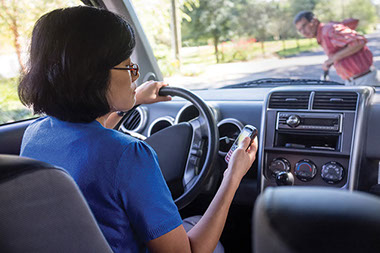
    Image of women driving while looking at her phone about to hit a pedestrian.

    Though driving a car may seem like a simple task, it requires quick reflexes, concentration and reasoning. When a driver is distracted, some – or all – of these important skills can be lost.

    Distracted driving means the driver is doing something other than focusing on the road ahead. It can be anything that takes the driver’s mind off of driving, hands off the wheel or eyes off the road. In the age of smartphones, tablets and other electronic devices, it’s easy to get distracted when driving – even for just a second.

    Though it seems harmless, a quick glance at a phone to read a text can be dangerous or even deadly. The National Highway Traffic Safety Administration (NHTSA) says sending or reading a text takes your eyes off the road for 5 seconds. That’s like driving the length of an entire football field with your eyes closed if you’re going 55 miles per hour. In that amount of time, a driver can hit a pedestrian, run a red light or stop sign, or crash into another vehicle.

    The NHTSA says nearly 3,500 people died and almost 400,000 were injured in 2015 due to distracted driving crashes. Here’s what we can do to help stop distracted driving:

    *  Never use a phone while driving. Put it in the back seat or out of reach to reduce the urge to look at it “just for a second.”

    *  Talk with your teens about distracted driving and tell them that the texts can wait. Lead by example.

    *  Sign a pledge to not drive distracted and stick to it. Ask family members and friends to sign it too. The “It Can Wait” pledge is available atitcanwait.usaa.com.

    Did you know?

    There are laws that prohibit distracted driving. Talking on a hand-held cellphone while driving is banned in 15 states and the District of Columbia. Text messaging is banned for all drivers in 47 states and the District of Columbia.

    To learn about your state laws, go towww.iihs.org/iihs/topics/laws/cellphonelaws.

    © American Institute for Preventive Medicine

  • Grab On

    WELL-BEING

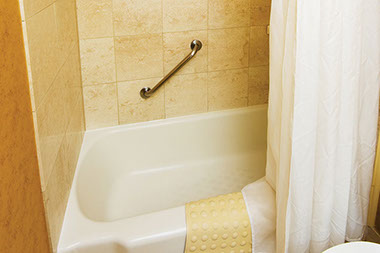
    Image of tub and shower with grab bars.

    You don’t have to be a senior to risk falling in a steamy, slippery bathroom. Grab bars provide extra support through unique anchoring systems that can support up to 500 pounds of pressure, depending on the manufacturer, according to Lifetime Products.

    When installing safety grab bars, look for places where you are most likely to lose your balance:

    *Tub/Shower.Install grab bars at a lower level to help bathers with raising and lowering. A grab bar at waist level or slightly higher is ideal to help with stepping in and out of the tub, as well as to hold for extra balance while washing and shampooing when showering.

    *Toilet.Install a grab bar on the wall near the toilet for support when sitting down and standing up. Some toilet-paper holders are specifically designed to double as safety bars.

    *Towel racks.Regular towel racks aren’t designed to support the weight of someone leaning on them and will loosen over time and eventually detach from the wall, which could lead to serious injury. Install safety towel bars and/or towel shelves that are designed to provide support.

    © American Institute for Preventive Medicine

  • Is Bad Breath A Health Problem?

    WELL-BEING

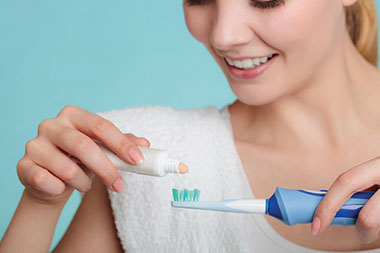
    Image of women placing tooth paste on tooth brush.

    After eating foods like onions or garlic, your mouth may smell less than pleasing to those around you. Usually, brushing, flossing and using mouthwash or sugar-free mints can get your mouth fresh again. Although bad breath is sometimes just bad luck, it can also be a sign of a health problem.

    When bad breath is normal

    Many people have bad breath in the morning. Even if you brushed and flossed well before bed, you may not have great-smelling breath when you wake up. This is because bacteria in the mouth multiply and make sulfur compounds while you sleep. These sulfur compounds usually smell stinky.

    Morning breath may be worse than normal if you slept with your mouth open. This is because the bacteria and sulfur compounds thrive in a dry mouth. If you have a stuffy nose from a cold, your morning breath may be worse for a few days. Floss at night before bed to help minimize morning breath.

    Other ways to help prevent dry mouth include drinking plenty of water throughout the day and avoid using tobacco products.

    Tooth decay and gum disease

    Tooth decay, also known as cavities, can smell bad because bacteria can live inside the holes or cavities in the teeth.

    Not brushing and flossing every day can lead to gum disease. This is sometimes called gingivitis or periodontitis. With gum disease, sticky bacteria called plaque collects in the mouth. Plaque smells bad, and people with gum disease usually have more plaque than normal.

    Besides persistent bad breath, signs of tooth decay and gum disease include:

    *  Tooth pain

    *  A very sensitive tooth

    *  Red, swollen or bleeding gums

    *  Loose teeth

    *  Gums pulling away from the teeth

    See your dentist if you notice these problems. Gum disease and cavities can be treated, but it’s better if you catch these problems early. Most people should see their dentist every six months for a checkup and cleaning.

    Health problems and bad breath

    Bad breath can be a sign of a health problem. If bad breath continues despite good dental care, it may be a sign of a sinus or throat infection. Breath that smells fruity or like rotten apples can be a sign of diabetes. In rare cases, breath that smells like ammonia or rotten eggs can be a sign of a serious kidney or liver problem.

    Your breath may be trying to tell you something. See your dentist and doctor if you’re concerned about bad breath so you can find out the cause and get treatment if needed.

    Sources: American Dental Association, National Institutes of Health

    © American Institute for Preventive Medicine